
Le Nez takes its name from the French word for nose, and the concept holds: aroma organises the entire experience. A Michelin Plate holder in both 2024 and 2025, this Higashishinsaibashi French restaurant draws on the produce of Wakayama prefecture, threading seasonal fragrance through each course. At ¥¥¥, it sits a tier below Osaka's upper-end French counters and offers a more grounded, regionally rooted alternative.
Pearl is the En Primeur Club membership app — saves, bookings, and concierge access live there. Same editors, same standards.
- Address
- Japan, 〒542-0083 Osaka, Chuo Ward, Higashishinsaibashi, 1 Chome−3−29 East Shinsaibashi K.M Building, 2階
- Phone
- +81 6-6243-8500
- Website
- lenez-osaka.com
- Directions
- Get directions
 Saves & bookings on Pearl
When Smell Leads the Menu
Le Nez is a restaurant in Osaka's Higashishinsaibashi, on the second floor of the East Shinsaibashi K.M Building. Most restaurants ask you to look first, at the plating, the room, the chef at the pass. The name is French for nose, and the kitchen takes that literally. Before the food arrives, the room carries the scent of it: ingredients in season, the faint char of charcoal, the herbal undertow of something just brought from the cold. In a city where French cooking has largely moved toward technical spectacle, this is a more olfactory argument.
Osaka's French dining scene has stratified sharply in recent years. At the upper tier, restaurants like La Cime and Différence operate at ¥¥¥¥ price points, with cooking that competes against Tokyo's most ambitious French tables. Le Nez sits in the ¥¥¥¥ bracket. That positioning matters: it signals a different kind of ambition, less about technical arms races, more about coherent, ingredient-grounded dining.
The Wakayama Thread
Regional sourcing has become a credible organizing principle in Japanese French cooking, and Le Nez builds its identity around a specific geography: Wakayama prefecture, a coastal province south of Osaka known for its citrus, plums, and charcoal. The Nanko plum, a speciality of Minabe, the chef's home town, appears with regularity, as does Kishu-binchotan, the white charcoal from the Kishu region that burns at high, even heat and is regarded by many Japanese chefs as the superior fuel for grilling meat and fish.
Binchotan cooking has a sensory signature that distinguishes it from gas or electric: the heat is radiant rather than convective, which means less moisture loss and a cleaner caramelisation on the surface of proteins. When the kitchen uses it here, the result drifts into the dining room as warm, faintly sweet smoke, present but not aggressive. It is the kind of detail that most diners register without identifying, the ambient evidence of considered technique.
The relationship between Osaka's French kitchens and regional Japanese produce is not new. La Bécasse and LE PONT DE CIEL have long demonstrated that classical French structure can carry Japanese seasonal logic without friction. Le Nez works the same territory but with a more pronounced sensory thesis: every course is framed, at least in part, by what it smells like before it tastes like anything.
Hakoniwa and Seasonal Framing
The amuse-bouche here is named Hakoniwa, a Japanese word for miniature garden, the kind assembled in a tray or box, with stones, moss, and small plants arranged to suggest a landscape in miniature. The dish takes its name seriously. It arrives as a compact, seasonal construction, presenting the flavours and fragrances of the current moment in concentrated form. In a menu structured around aroma, it functions as a tuning fork: it sets the olfactory register before the longer courses arrive.
This kind of opening gesture has precedents in haute cuisine, the multi-bite amuse that previews the kitchen's vocabulary, but the botanical framing is distinctly Japanese. It draws on the aesthetic of miniature gardens, which prioritise suggestion over literalism, and translates that into food. The result is a course that rewards attention rather than speed.
Where Le Nez Fits in Osaka's French Hierarchy
The Michelin Guide recognized Le Nez with Plates in both 2024 and 2025. In Osaka, that group includes a significant number of French and European restaurants, many of which operate in the same Chuo Ward corridor. The Plate is not a star, but it does confirm the kitchen's consistency at a level the guide considers worth noting.
For context, Osaka's French dining at star level includes restaurants with national and international recognition. Le Nez, by contrast, sits in a more accessible register, ¥¥¥ pricing, a Chuo Ward address on the edge of the Shinsaibashi shopping corridor, and a concept specific enough to have a point of view without requiring the planning overhead of the top tier.
For those building a broader picture of Western fine dining in Japan, the comparison set extends well beyond Osaka. Sézanne in Tokyo represents the capital's most discussed French address; Hotel de Ville Crissier provides the European benchmark from which much of Japan's classical French training traces. akordu in Nara shows how the Kansai region handles European cooking in a more intimate, terroir-driven register. These are useful frames for understanding where Le Nez positions its own argument.
The Shinsaibashi Address
Higashishinsaibashi is the eastern half of Osaka's most commercially dense shopping district, an area that at ground level reads as retail and nightlife but contains a higher density of serious restaurants than the foot traffic suggests. The second-floor location in a K.M Building address is typical of how Osaka's mid-tier French restaurants present themselves: no street-level signage designed to capture walk-in business, an entrance that requires intention. This is not obscurity for its own sake; it is the standard format for a category of Osaka dining that prefers known guests over passing ones.
Those extending their Kansai trip will find relevant parallels at Gion Sasaki in Kyoto, and for Japanese fine dining beyond the region, Harutaka in Tokyo, Goh in Fukuoka, 1000 in Yokohama, and 6 in Okinawa each represent distinct regional approaches to fine dining in Japan.
Know Before You Go
- Address: East Shinsaibashi K.M Building, 2F, 1 Chome-3-29 Higashishinsaibashi, Chuo Ward, Osaka 〒542-0083
- Price tier: ¥¥¥
- Cuisine: French
- Awards: Michelin Plate 2024, Michelin Plate 2025 7 (42 reviews)
- Getting there: A short walk from Shinsaibashi Station (Midosuji Line) or Namba Station
- Note: Second-floor access; the entrance is not street-facing retail. Allow time to locate the building on first visit.
What Regulars Order
Given that the kitchen structures its menu around aroma as a deliberate organising principle, the courses that draw most repeat attention are those where fragrance and flavour arrive in sequence rather than simultaneously. The Hakoniwa amuse-bouche anchors the opening of the meal and functions as a reliable signal of the season's direction. The grilled meat course, prepared over Kishu-binchotan charcoal, is where the kitchen's sourcing logic becomes most tangible: the Wakayama charcoal gives the cooking a specific aromatic register that is identifiable across visits. The Nanko plum element, wherever it appears in the menu, connects the cooking explicitly to the prefecture that grounds the restaurant's identity. These are the courses that give Le Nez its coherence as a dining experience, rather than its breadth.
Comparable Spots, Quickly
Comparable venues nearby, for context on price, style, and recognition.
| Venue | Cuisine | Price | Awards | Notes |
|---|---|---|---|---|
| Le NezThis venue — the venue you are viewing | Modern French with Japanese Seasonal Influences | $$$$ | Michelin Plate | Not listed |
| Varier | Modern French with Japanese Influences | $$$$ | Michelin Plate | Kita |
| Michino Le Tourbillon | Avant-Garde French | $$$$ | Michelin Plate | Fukushima |
| LOUISE | Modern French-Japanese Fusion | $$$$ | Michelin Plate | Nishi |
| macua | Modern French Fine Dining | $$$$ | Michelin Plate | Chūō |
| Oryori Matsumura | Modern Japanese Omakase | $$$$ | Michelin Plate | Jōtō |
Recognition history
Dated appearances from independent guides and award organizations, with the underlying list record or original source where available.
Michelin Plate
Michelin
Michelin Plate
Michelin
Michelin Plate
Michelin
Continue exploring
More in Osaka
Restaurants in Osaka
Browse all →




Bars in Osaka
Browse all →


Hotels in Osaka
Browse all →



Wineries in Osaka
Browse all →
At a Glance
- Intimate
- Elegant
- Sophisticated
- Date Night
- Special Occasion
- Celebration
- Chefs Counter
- Open Kitchen
- Private Dining
- Sake Program
- Local Sourcing
Current opening hours
- Monday
- 12–3 PM, 6–10 PM
- Tuesday
- 12–3 PM, 6–11 PM
- Wednesday
- 12–3 PM
- Thursday
- 12–3 PM, 6–11 PM
- Friday
- 12–3 PM, 6–11 PM
- Saturday
- 12–3 PM, 6–11 PM
- Sunday
- 12–3 PM, 6–11 PM
Hours can change for holidays and private events. Last verified .
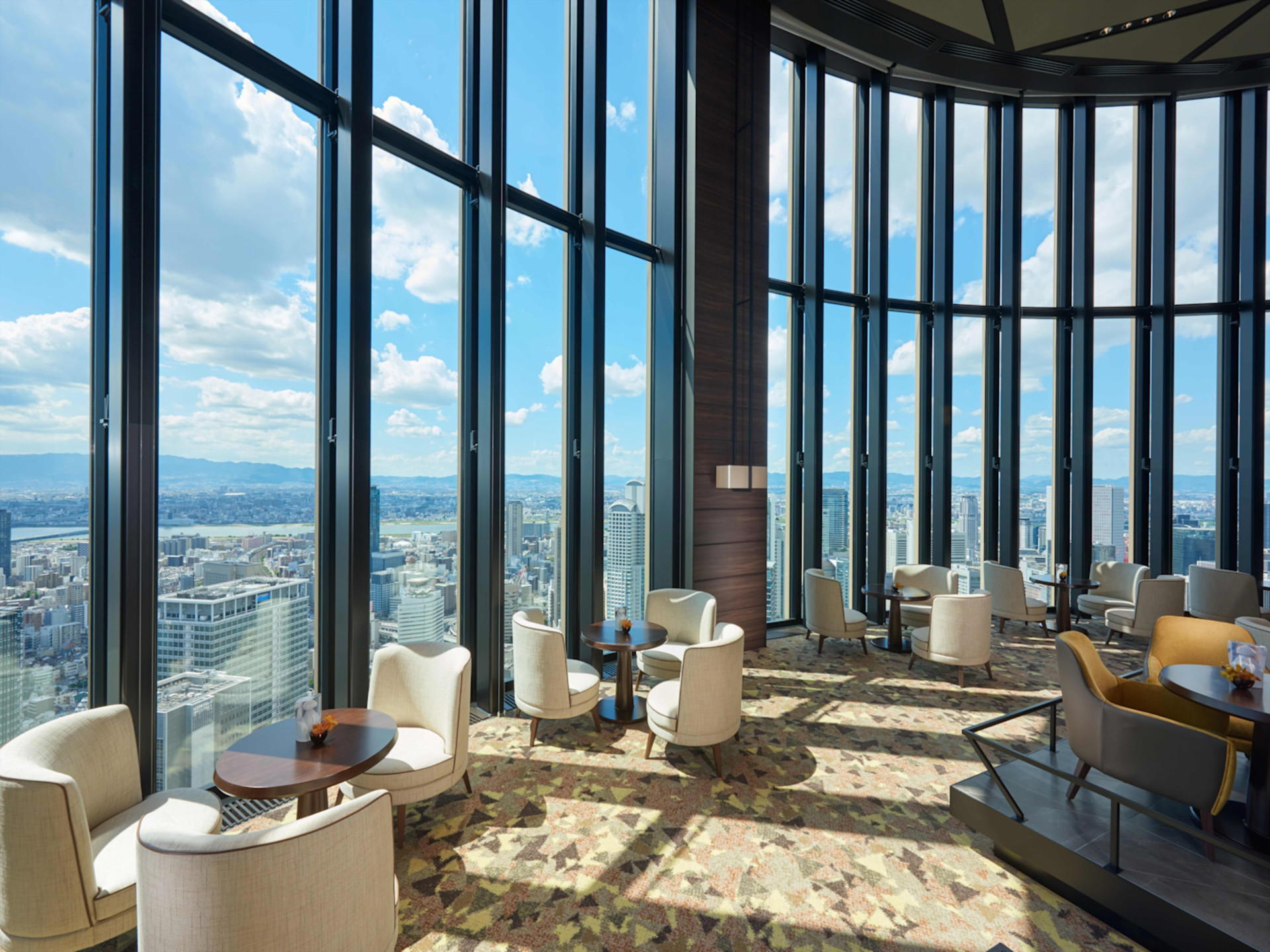
Stylish, warm, and intimate setting with refined decor that creates a memorable sensory experience; the space is redolent with seasonal ingredients and fresh cooking aromas.