Our verdict
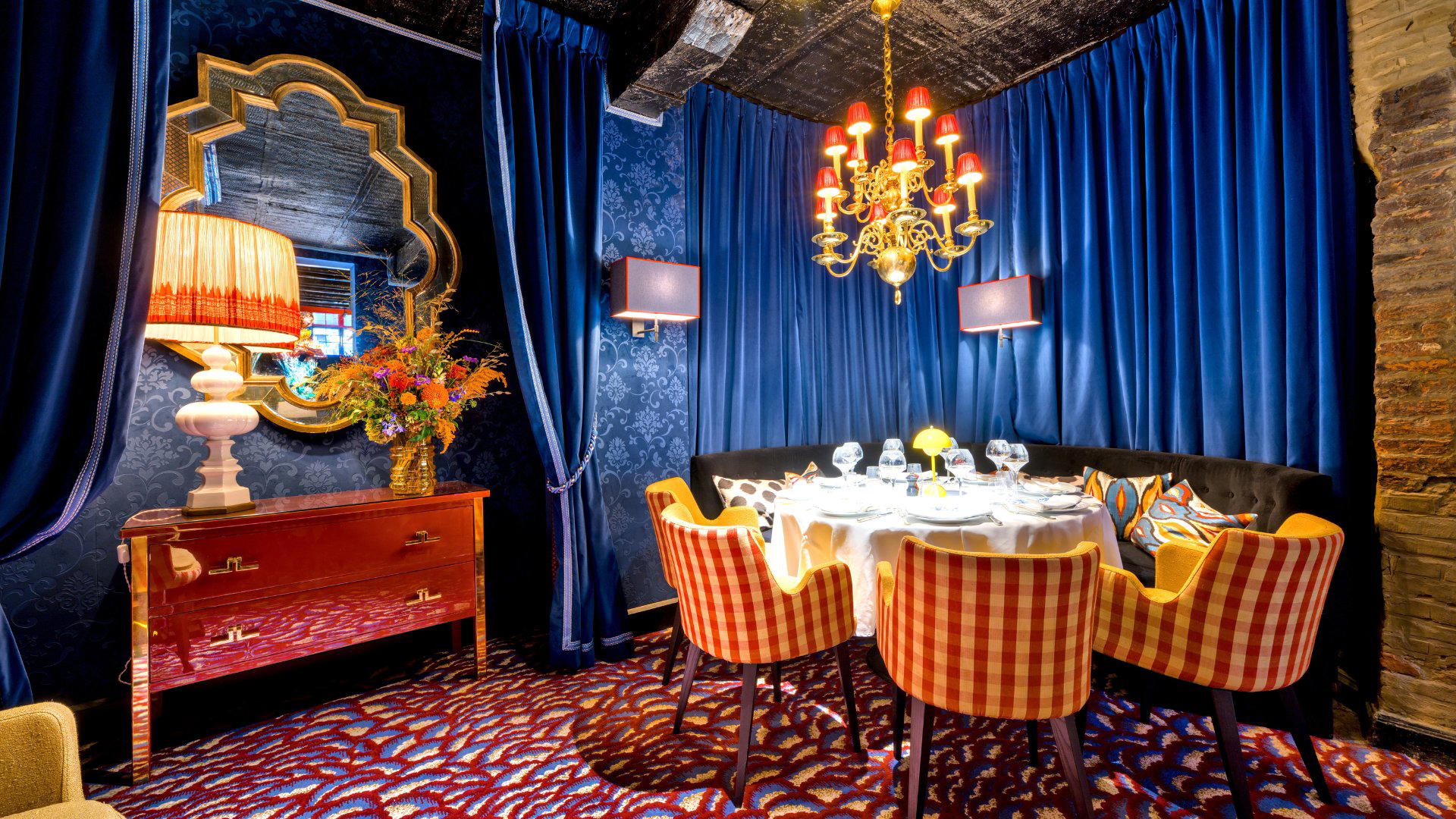
On Rue des Minimes in Brussels' Sablon quarter, Le Corbier occupies a corner of the city where neighbourhood institutions earn loyalty through consistency rather than spectacle. The address sits within walking distance of the antique dealers and chocolate houses that define upper Sablon, positioning it in a dining tier where regulars return for what they already know works rather than what surprises them.

Pearl is the En Primeur Club membership app — saves, bookings, and concierge access live there. Same editors, same standards.
- Address
- Rue des Minimes 51, 1000 Bruxelles, Belgium
- Phone
- +3227055995
- Hours
- Mon ClosedTue–Sat 7–11 PMSun Closed
- Website
- lecorbier.be
- Directions
- Get directions
- Booking
- Book on Zenchef
The menu
What to order
- Moules-Frites
- Carbonnade Flamande
- Wood-fired meats
Rue des Minimes and the Sablon Dining Register
The Sablon district operates on a different frequency from Brussels' Grand Place tourist belt or the newer creative clusters around Châtelain and Saint-Gilles. Its dining character is shaped by a clientele that includes antique dealers, gallery visitors, weekend market browsers, and the kind of Brussels professional who treats a good table as a fixed point in the week rather than an occasion. Rue des Minimes, where Le Corbier sits at number 51, cuts through that neighbourhood logic: it connects the lower Sablon square to the upper, threading past townhouses and small specialist shops in a way that rewards those who know the area rather than those consulting a map. Restaurants that survive here do so because they read that room correctly.
Within Brussels' broader dining spectrum, the Sablon sits between the grand institutional tables — places like Comme chez Soi, whose French-Belgian classical tradition carries decades of accumulated weight, or Bozar Restaurant at the fine arts complex — and the more experimental addresses that have emerged in Brussels' younger dining neighbourhoods. Le Corbier's position on that spectrum, based on address and neighbourhood context alone, points toward a table that earns its following through reliability, familiarity, and the particular satisfaction of a place that knows what it is.
What Regular Clientele Actually Returns For
In Brussels, as in most European capitals with a strong bourgeois dining culture, the most durable restaurants are not necessarily those with the longest award lists. They are the ones where a regular can walk in and feel the room has been held for them, not in any literal sense, but in the way the menu doesn't lurch seasonally into unfamiliar territory, the way the pacing hasn't been restructured around a new concept, and the way the staff have absorbed enough familiarity with the room to make introductions unnecessary. The Sablon quarter breeds exactly this kind of loyalty, and an address like Rue des Minimes 51 benefits from that neighbourhood contract.
Belgium's dining culture broadly supports this pattern. The country produces a disproportionate density of serious restaurants relative to its size: three-star institutions like Hof van Cleve in Kruishoutem and Boury in Roeselare operate at European level, while Antwerp's Zilte and coastal addresses like Bartholomeus in Heist and Willem Hiele in Oudenburg have extended the country's culinary reputation well beyond the capital. Within Brussels itself, the award-facing end is populated by places that require advance booking and occasion framing. Le Corbier, by its address and neighbourhood character, reads as something different: a table that regulars fold into their rhythm rather than schedule around.
The distinction matters because it shapes how you approach the reservation. The question is not what dishes have been acclaimed, but what the room does consistently well and what a second or third visit reveals that the first does not. Brussels has a number of tables operating at that register, Barge in the organic category, Eliane at the creative end, where the draw is sustained rather than promotional. Le Corbier's longevity on a street that has seen considerable turnover in neighbouring retail and hospitality suggests it belongs to that category of address.
Placing Le Corbier in the Brussels Context
Brussels' restaurant market has absorbed considerable pressure over the past decade: rising costs, a more visible international dining population, and increasing competition from younger addresses in neighbourhoods that were largely residential a generation ago. The restaurants that have held their position in this environment share certain characteristics. They have a clientele that identifies with the address rather than treating it as one option among many. They have service structures that don't depend entirely on any single individual. And they occupy a neighbourhood with enough pedestrian life and genuine local attachment to sustain lunch trade alongside dinner.
Rue des Minimes and the surrounding Sablon streets fit that profile. The weekend antiques market on the upper square draws a crowd that has money to spend and time to sit. The galleries and specialist dealers that line nearby streets bring a mid-week clientele with professional hours and an appetite for lunch at a proper table. For venues operating in Belgian Walloon and broader francophone culinary tradition, a tradition that also supports places like d'Eugénie à Emilie in Baudour and L'air du temps in Liernu, this neighbourhood provides exactly the kind of ambient cultural validation that keeps a regular clientele loyal without requiring constant reinvention.
At the fine dining end of Brussels, addresses like La Villa Lorraine by Yves Mattagne operate in a different register entirely: destination tables with structured tasting menus, full wine programs, and the kind of formal dress expectation that frames the meal as ceremony. Le Corbier, based on its address and neighbourhood positioning, does not appear to compete in that register. It occupies the tier where the meal is serious without being theatrical, where the wine list supports the food without demanding its own study, and where the regulars have already done the work of choosing.
For visitors building a broader picture of Belgian fine dining, the country's reach extends well beyond Brussels. Castor in Beveren, De Jonkman in Sint-Kruis, and La Durée in Izegem all demonstrate how serious cooking has distributed itself across the country rather than concentrating in the capital. Brussels remains the gravitational centre, but the comparison set for any Sablon address now includes tables across Flanders and Wallonia that have their own loyal regional followings. For international context, the sustained technical ambition visible at places like Le Bernardin in New York City or the fermentation-led precision of Atomix represent the outer edge of what dedicated regular clientele can sustain over time. Le Corbier operates at a different scale and ambition level, but the underlying dynamic, a room held together by people who return because they trust what they know, is the same.
Planning a Visit
Le Corbier is located at Rue des Minimes 51, 1000 Brussels, in the Sablon quarter, within walking distance of the Place du Grand Sablon and accessible from central Brussels by foot or metro. Given the neighbourhood's weekend peak around the antiques market, a reservation for Saturday lunch or Sunday is advisable for first-time visitors. For a broader orientation to Brussels dining, the EP Club Brussels restaurants guide covers the full range of options across price tiers and neighbourhoods.
Frequently asked questions
Where exactly is Le Corbier?
Le Corbier is located at Rue des Minimes 51, 1000 Bruxelles, Belgium, Brussels.
Is Le Corbier a good choice for a sit-down meal near Place du Grand Sablon?
Located at Rue des Minimes 51 in Brussels, Le Corbier is within walking distance of Place du Grand Sablon, putting it at the centre of a dining quarter with a strong local following rather than a tourist-facing orientation. The Sablon's restaurant register skews toward established, neighbourhood-anchored venues, and Le Corbier fits that profile. For visitors based near the Sablon or approaching from the upper town, it is a geographically logical and contextually appropriate choice.
What do people recommend at Le Corbier?
The venue data does not specify current dishes, and menu details shift with the kitchen's direction. Given Le Corbier's position in the Sablon quarter at Rue des Minimes 51, regulars in Brussels' established dining circles tend to return for consistency rather than novelty — the kind of cooking that rewards repeat visits. Check directly with the restaurant for what the kitchen is currently focusing on.
Should I book Le Corbier in advance?
Le Corbier sits in the Sablon district, one of Brussels' most active dining neighbourhoods, where tables at address-specific restaurants fill quickly on weekends and during the city's frequent event calendar. Booking ahead is advisable, particularly for Thursday through Saturday evenings.
What makes Le Corbier worth seeking out?
Le Corbier's address at Rue des Minimes 51 places it squarely in the Sablon quarter, which operates at a different register from Brussels' tourist-facing dining belt around the Grand Place. The neighbourhood's clientele skews local and repeat, which tends to keep kitchens honest over time. In a Brussels market that has seen considerable turnover over the past decade, longevity in the Sablon is itself a signal.
Booking and Cost Snapshot
Comparable venues nearby, for context on price, style, and recognition.
| Venue | Cuisine | Price | Awards | Notes |
|---|---|---|---|---|
| Le CorbierThis venue — the venue you are viewing | Modern French-Belgian Bistro | $50–100 | Not listed | Not listed |
| Emily | Refined French-Italian Fine Dining | $100–150 | Not listed | near Avenue Louise, Refined French-Italian Fine Dining |
| Lola | Modern French Brasserie | $50–100 | Michelin Plate | Pl. de Brouckere, Modern French Brasserie |
| Serra | Sustainable Plant-Based | $50–100 | We're Smart World 3 Radishes | Pl. de Brouckere, Sustainable Plant-Based |
| Vincent | Traditional Belgian Brasserie | $50–100 | Not listed | Pl. de Brouckere, Traditional Belgian Brasserie |
| Chaga | French Contemporary Fine Dining | $300–500 | Michelin Plate · We're Smart World 4 Radishes | Porte de Namur, French Contemporary Fine Dining |