Located at 1 bis Rue Augereau in the 7th arrondissement, Le Comptoir de la Traboule occupies a corner of Paris where the neighbourhood's residential character shapes what regulars return for rather than what critics are sent to review. The address sits within walking distance of the Champ de Mars, placing it in a tier of Left Bank dining rooms that trade on consistency and familiarity over ceremony.
Pearl is the En Primeur Club membership app — saves, bookings, and concierge access live there. Same editors, same standards.
- Address
- 1 bis Rue Augereau, 75007 Paris, France
- Phone
- +33143190208
- Website
- comptoirdelatraboule.fr
- Directions
- Get directions
 Saves & bookings on Pearl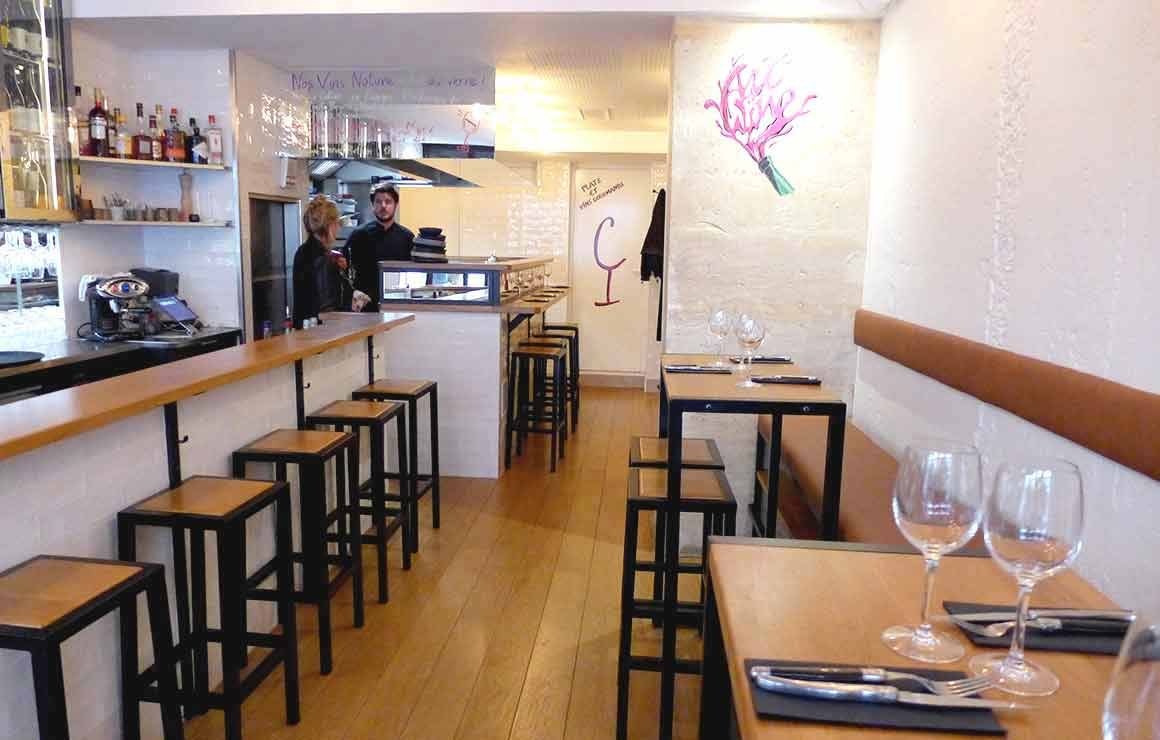
The 7th Arrondissement and the Restaurants That Locals Actually Use
Paris's 7th arrondissement has a complicated relationship with restaurant culture. Its proximity to the Eiffel Tower, the Musée d'Orsay, and several ministry buildings means it attracts significant tourist traffic, yet the neighbourhood retains a residential density that sustains a parallel dining economy: the kind of room that fills on a Tuesday because the same thirty people come back every two weeks, not because they are chasing the latest opening. Le Comptoir de la Traboule, at 1 bis Rue Augereau, sits within that residential circuit.
The address is a short walk from the Champ de Mars and within the gravitational pull of the Rue Saint-Dominique, a street that has long served as the 7th's practical dining spine. That placement matters. Restaurants on or near Rue Saint-Dominique tend to be calibrated for the neighbourhood rather than for visitors: they hold a loyal clientele across decades rather than refreshing their audience each season. The regulars who anchor these rooms are, collectively, particularly demanding critics a Paris restaurant ever faces, not because they are hostile, but because they will simply stop coming if something slips.
What Keeps a Room Like This Running
The regulars' perspective, at a neighbourhood address in the 7th, is shaped by a specific set of priorities. Consistency across visits matters more than the occasional notable dish. Recognition, the sense that the room knows who you are and roughly what you want, functions as a form of service that no tasting menu at Alléno Paris au Pavillon Ledoyen or Arpège can replicate, because those rooms are not built for repetition at the same table every fortnight. The proposition at a neighbourhood counter like Le Comptoir de la Traboule is fundamentally different from the proposition at Le Cinq or L'Ambroisie: one is built for occasion, the other for frequency.
That distinction matters when assessing what the room is actually for. The French dining tradition has always maintained this two-tier structure, even if international attention overwhelmingly focuses on the formal end. The regional houses that built France's culinary reputation, Troisgros, Auberge de l'Ill, Bras, Paul Bocuse, drew their authority in part from deep local rootedness, from rooms that the surrounding community treated as their own before critics arrived. The neighbourhood bistro is the urban expression of the same principle.
The Name and What It Signals
The word traboule is worth pausing on. Traboules are the covered passageways, most associated with Lyon, that thread through old residential buildings and connect streets that appear unrelated from outside. Their historical function was practical: silk workers used them to transport goods while avoiding weather and, during the Second World War, the Resistance used them to move between buildings without appearing on the street. The name carries a particular register in French cultural memory, it implies interior knowledge, passage through spaces that are not immediately visible to those who do not already know the way.
Applied to a Paris address, the reference is less geographical than atmospheric. It signals a room that positions itself as something to be found rather than stumbled upon, and that aligns it with a broader Parisian tradition of addresses that resist obvious visibility. This is not the same category as the grand-brasserie institution that occupies a corner everyone can see from the boulevard. This is the address you hear about from someone who already goes.
Positioning in the Paris Dining Tier
In the context of Paris restaurant tiers, the address at Rue Augereau sits below the formal three-star circuit that includes Kei and the Michelin-decorated rooms of the 8th, and operates outside the creative-contemporary bracket that draws international reservation traffic. That is not a limitation; it is a category definition. The rooms that function at this level in Paris, neighbourhood-scale, consistent, regulars-driven, are the ones that survive economic cycles precisely because they are not dependent on tourism or critical attention to fill seats.
For international context, the equivalent tier in other cities produces particularly respected addresses in the world. Le Bernardin in New York operates at a different price point but draws from the same logic of repeat professional clientele. Atomix represents the opposite end: the room built for destination dining rather than frequency. The neighbourhood bistro in the 7th is neither, and that is its structural advantage.
The broader French regional table, from Mirazur in Menton to Flocons de Sel in Megève, from AM par Alexandre Mazzia in Marseille to Assiette Champenoise in Reims and Au Crocodile in Strasbourg, commands international attention because those rooms offer something formally distinct. The 7th arrondissement bistro offers something informally distinct: the accumulated texture of a neighbourhood relationship.
Addresses like Auberge du Vieux Puits in Fontjoncouse built their standing through years of regional rootedness before earning formal recognition. The path in Paris is less linear, proximity to the critical apparatus means recognition can come quickly and fade equally fast, but the underlying principle holds: rooms that survive in the 7th do so because a local community decided they were worth protecting.
What the Repeat Visitor Knows
For the first-time visitor, any neighbourhood room in the 7th carries a degree of opacity that the regular has already resolved. The regulars at an address like this have, over time, established an informal understanding of the menu's reliable anchors: the dishes that appear in some form regardless of season, the wine list's value tier, the service rhythms that make a Tuesday lunch feel different from a Friday dinner. That knowledge is the real product of repeat visiting, and it is not published anywhere.
The practical implication for the non-regular is to approach this kind of room with the same curiosity you would bring to any address operating outside the formal review circuit. Ask questions. Follow what the table next door ordered. Treat the first visit as the beginning of a longer relationship rather than a single transaction.
Know Before You Go
- Address: 1 bis Rue Augereau, 75007 Paris, France
- Arrondissement: 7th (Left Bank, near Champ de Mars)
- Nearest Metro: École Militaire (line 8) or La Tour-Maubourg (line 8)
- Booking: Contact details not listed; approach in person or check current aggregators for availability
- Price: about $30 per person
- Hours: Mon to Fri 12-3 PM and 6-11 PM; Sat and Sun 12-11 PM
Cuisine Lens
Comparable venues nearby, for context on price, style, and recognition.
| Venue | Cuisine | Price | Notes |
|---|---|---|---|
| Le comptoir de la trabouleThis venue — the venue you are viewing | Creative French Bistro | $$ | Not listed |
| Paul Chene | Traditional French Bistro | $$ | 16th arrondissement |
| La Parenthèse | Classic French Brasserie | $$ | Montparnasse |
| Dupin | Modern French Bistro | $$ | Notre-Dame-des-Champs |
| Arty | French Bistro | $$ | 2nd arrondissement (between Madeleine and Opéra) |
| CUISINE | Modern French-Italian Small Plates | $$ | 9th Arr. |
Continue exploring
More in Paris
Restaurants in Paris
Browse all →
Bars in Paris
Browse all →
Hotels in Paris
Browse all →
Wineries in Paris
Browse all →
At a Glance
- Cozy
- Lively
- Elegant
- Date Night
- Casual Hangout
- Open Kitchen
- Terrace
- Natural Wine
Current opening hours
- Monday
- 12–3 PM, 6–11 PM
- Tuesday
- 12–3 PM, 6–11 PM
- Wednesday
- 12–3 PM, 6–11 PM
- Thursday
- 12–3 PM, 6–11 PM
- Friday
- 12–3 PM, 6–11 PM
- Saturday
- 12–11 PM
- Sunday
- 12–11 PM
Hours can change for holidays and private events. Last verified .
Warm, convivial atmosphere with an open kitchen view, high tables, and bistro charm.