On Boulevard du Montparnasse in the 15th arrondissement, La Parenthèse operates within the neighbourhood register that defines this part of Paris: less concerned with destination status than with consistent local presence. The address sits west of the quarter's historic brasserie core, placing it in a more residential dining context than the trophy corridors of the 8th. Confirmed cuisine, pricing, and awards data are not currently on record; direct contact is advised before visiting.
Pearl is the En Primeur Club membership app — saves, bookings, and concierge access live there. Same editors, same standards.
- Address
- 32 Bd du Montparnasse, 75015 Paris, France
- Phone
- +33142841607
- Website
- laparenthese15.fr
- Directions
- Get directions
 Saves & bookings on Pearl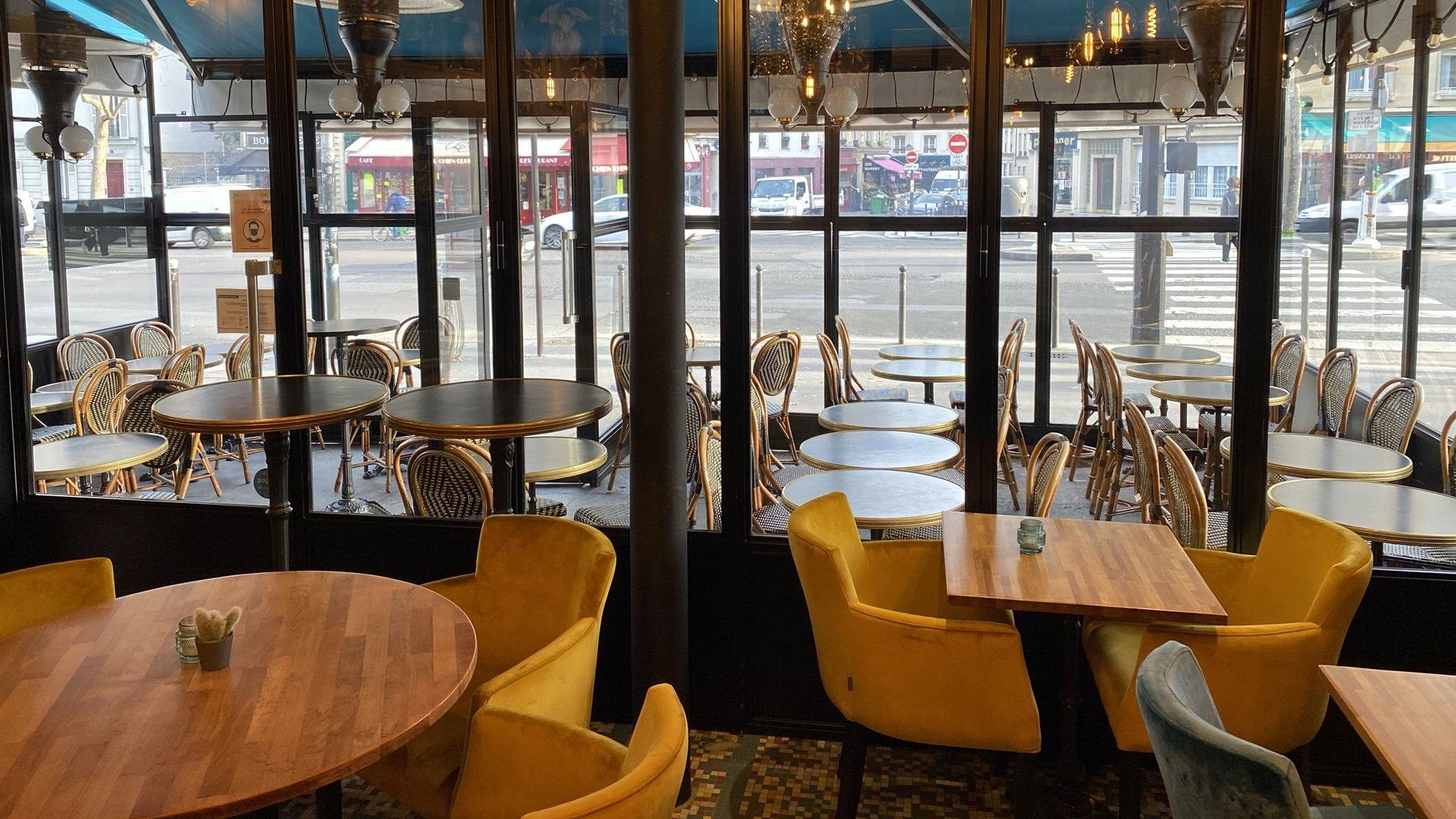
Montparnasse, Reframed
Boulevard du Montparnasse has a long memory. The avenue that once drew Hemingway, Picasso, and Simone de Beauvoir to its brasseries still carries that accumulated weight, though the dining scene along its length has shifted considerably in the decades since. The quarter now occupies a middle ground in the Paris dining map: less frenetic than the Marais, less rarefied than the 8th arrondissement's trophy corridor, and considerably more neighbourhood-oriented than either. It is precisely this character that gives a restaurant at this address its particular identity. A room on the boulevard is not announcing itself to the international circuit in the way that, say, Le Cinq at the Four Seasons George V or Alléno Paris au Pavillon Ledoyen must. It is speaking, first, to a local constituency.
La Parenthèse sits at 32 Boulevard du Montparnasse, in the 15th arrondissement, just west of the intersection that has historically marked the heart of the quarter. The address places it between two distinct gravitational pulls: the literary-café legacy of the boulevard's eastern end, and the quieter, more residential texture of the 15th, one of Paris's largest and most self-contained arrondissements. That positioning is not incidental to the experience. A restaurant in this part of Paris is not competing on spectacle or destination status. It is competing on whether it belongs to its neighbourhood — and whether it rewards the visitor who seeks it out specifically.
The 15th and Its Dining Register
The 15th arrondissement operates outside the primary circuits that most international visitors travel. Its dining culture is largely composed of neighbourhood anchors: restaurants that fill consistently because residents return, not because any particular guidebook has foregrounded them this season. This is a different economy of trust from the one that sustains a three-Michelin-starred address like Arpège in the 7th, or the institution-grade reputation of L'Ambroisie on the Place des Vosges.
Across France, the most durable restaurants are often those that have built this kind of local legitimacy rather than chasing national recognition. Auberge de l'Ill in Illhaeusern has held Michelin stars continuously since 1967 partly because it is woven into the fabric of its Alsatian setting. Bras in Laguiole draws visitors willing to make a specific journey because the surrounding landscape is inseparable from what arrives on the plate. The dynamic in an urban neighbourhood like the 15th is compressed into a smaller radius, but the underlying logic is the same: sustained presence in a place eventually becomes its own credential.
Along the broader Montparnasse boulevard and into the surrounding streets, the dining register skews toward French bistro formats, some Italian and Japanese addresses, and the surviving grand brasseries that have been a fixture since the interwar period. A restaurant called La Parenthèse — the name translating roughly as an aside, a pause, a digression from the main text, suggests something with a lighter footprint than those landmarks, something intended as a counterpoint rather than a statement.
Approaching the Room
The physical address on the boulevard means the restaurant sits on one of Paris's wider, tree-lined stretches, with Métro access from Montparnasse-Bienvenüe nearby and a significant amount of pedestrian traffic relative to side-street addresses in the same quarter. Arriving from the Métro, the walk along the boulevard has a different pace from the dense shopping corridors further north: less compressed, more residential in feel as you move westward. The room at number 32 is encountered within this context, not as a marquee destination but as a considered stop, the kind of place that rewards attention from those who look for it rather than those who pass it by chance.
That experience of deliberate arrival separates the Montparnasse restaurant from the format that has come to define high-end dining in the 8th: the grand room designed to signal its own importance before a dish is served. The contrast with addresses like Kei, which operates in the 1st arrondissement and carries three Michelin stars with a corresponding formal register, is instructive. Different parts of Paris produce different expectations at the door, and a boulevard address in the 15th carries none of the ceremonial weight of the triangle d'or.
La Parenthèse in the Wider French Context
For a reader who cross-references Paris restaurants against France's broader dining map, the Montparnasse address places La Parenthèse in a category worth understanding clearly. France's most celebrated restaurants increasingly occupy specific regional contexts: Mirazur in Menton commands its clifftop above the Mediterranean; Flocons de Sel in Megève is inseparable from its Alpine setting; Troisgros in Ouches has relocated precisely to deepen that regional specificity. Even within Paris, the restaurants that generate the most international attention tend to cluster in arrondissements with established prestige coordinates.
The 15th operates outside that logic, which means a restaurant there is evaluated on different terms. The question is not whether it belongs to a recognized constellation, it almost certainly does not, but whether it holds its own within the neighbourhood's internal hierarchy and delivers consistently for the reader prepared to seek it out. The same editorial test applies to addresses like Auberge du Vieux Puits in Fontjoncouse or AM par Alexandre Mazzia in Marseille: location shapes expectation, and expectation shapes the read of what arrives on the table.
For Paris readers who also follow the international circuit, the comparison with Le Bernardin in New York or Atomix in the same city underlines how much context calibrates judgment. A restaurant in a residential Parisian arrondissement is making a different proposition from a destination address with a global waiting list, and it should be read accordingly.
Planning Your Visit
The table below positions La Parenthèse against several Paris restaurants across key logistics. Note that specific hours, booking methods, and price data for La Parenthèse are not confirmed in current records; contact the restaurant directly before visiting.
| Venue | Arrondissement | Price Range | Awards | Booking Approach |
|---|---|---|---|---|
| La Parenthèse | 15th | Not confirmed | Not listed | Contact directly |
| Kei | 1st | €€€€ | Michelin-starred | Advance reservation required |
| L'Ambroisie | 4th | €€€€ | Three Michelin stars | Book well in advance |
| Le Cinq | 8th | €€€€ | Michelin-starred | Hotel concierge or direct |
For a broader orientation to what Paris's dining scene currently looks like across arrondissements, price tiers, and cuisine formats, our full Paris restaurants guide covers the competitive field in detail. Regional comparison points from outside the capital, including Assiette Champenoise in Reims, Au Crocodile in Strasbourg, and Paul Bocuse in Collonges-au-Mont-d'Or, are useful for understanding where neighbourhood Paris restaurants sit relative to the country's starred tier.
How La Parenthèse Paris compares with similar nearby venues.
| Venue | Cuisine | Price |
|---|---|---|
| Joséphine "Chez Dumonet" | Luxury Bistro | Not listed |
| Anicia, table nature | Modern Cuisine | €€€ |
Continue exploring
More in Paris
Restaurants in Paris
Browse all →
Bars in Paris
Browse all →
Hotels in Paris
Browse all →




At a Glance
- Cozy
- Classic
- Business Dinner
- Casual Hangout
- After Work
- Standalone
- Local Sourcing
Current opening hours
- Monday
- 8:30 AM–12 AM
- Tuesday
- 8:30 AM–12 AM
- Wednesday
- 8:30 AM–12 AM
- Thursday
- 8:30 AM–12 AM
- Friday
- 8:30 AM–12 AM
- Saturday
- 9:30 AM–12 AM
- Sunday
- Closed
Hours can change for holidays and private events. Last verified .
Friendly and spacious brasserie atmosphere with beautiful decor, suitable for casual meals and afterwork.
Know Before You Go
- Getting there
- 32 Bd du Montparnasse, 75015 Paris, France