Le Bistroquet
Le Bistroquet occupies a Flatiron address at 50 W 22nd St, placing it inside one of Manhattan's most contested dining corridors. The French bistro format here operates within a New York scene that has increasingly rewarded restaurants aligning classical technique with considered sourcing practices. For diners tracking where the city's French-leaning mid-to-upper tier is heading, this address merits attention.
Pearl is the En Primeur Club membership app — saves, bookings, and concierge access live there. Same editors, same standards.
- Address
- 50 W 22nd St, New York, NY 10010
- Phone
- +16466929282
- Website
- lebistroquetnyc.com
- Directions
- Get directions
 Saves & bookings on Pearl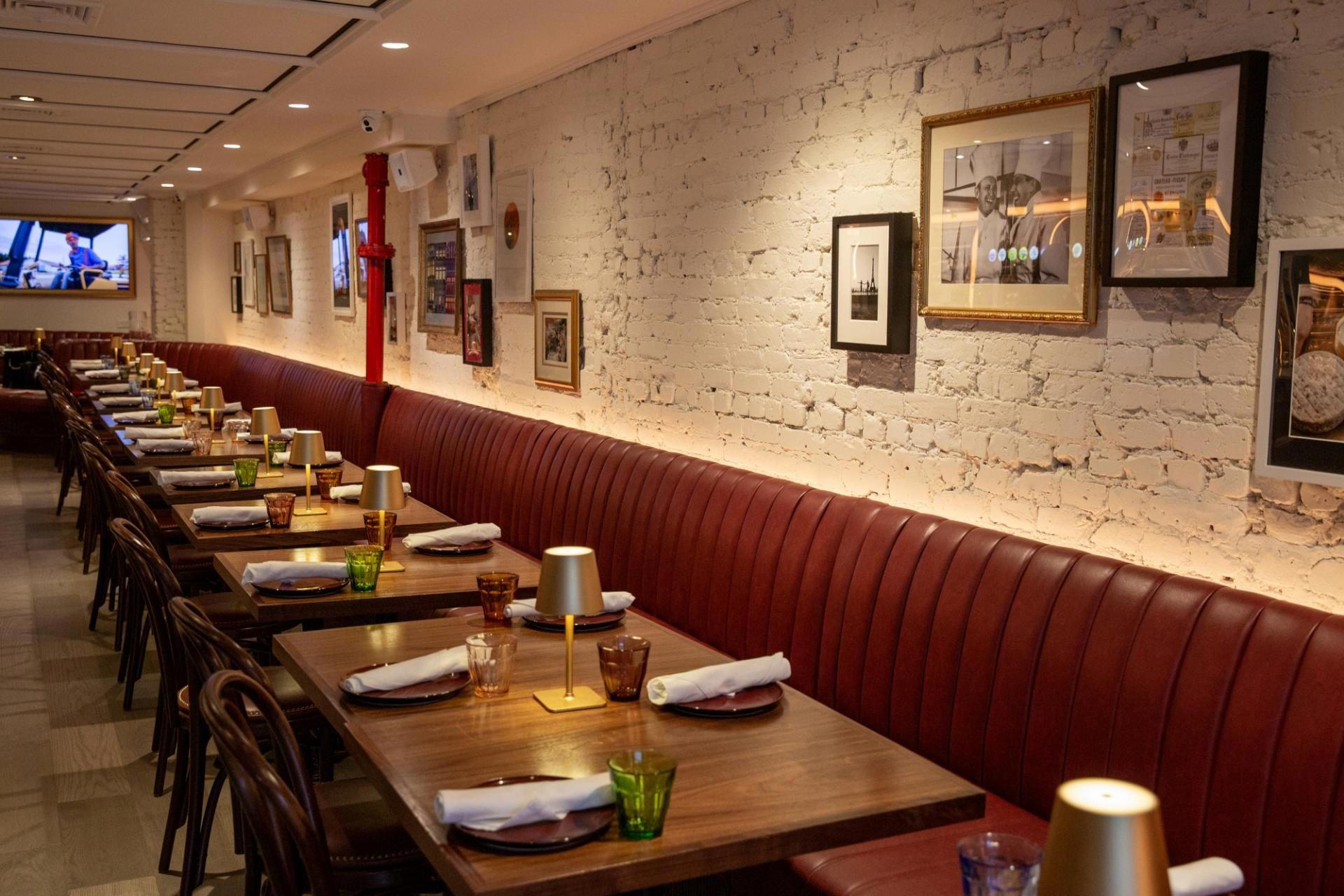
The Flatiron Dining Context
The stretch of West 22nd Street in Manhattan's Flatiron district sits at the intersection of two competing dining currents. On one side, the neighbourhood has absorbed a generation of high-concept, heavily capitalized openings that treat the room as a performance space. On the other, a smaller cohort of French-inflected restaurants has quietly held ground by emphasising craft over spectacle. Le Bistroquet, at 50 W 22nd St, occupies that second current. The Flatiron's density of covers and its proximity to both the tech-adjacent Nomad corridor and the older Gramercy dining establishment means a French bistro format here competes not just on food, but on a clear sense of what it is and what it is not.
French bistro as a category has undergone significant repositioning in New York over the past decade. The white-tablecloth French canon, represented at its apex by addresses like Le Bernardin and Per Se, now operates in deliberate contrast to a more casual French register that prizes market sourcing, shorter menus, and cooking that doesn't perform its own technique. Le Bistroquet's positioning in the Flatiron suggests it belongs closer to the latter category, though the address and the neighbourhood's price expectations mean it occupies a middle tier where execution is scrutinised with the same rigour applied to rooms with longer tasting menus.
Sourcing, Seasonality, and the Ethics of the French Kitchen
The consequential shift inside New York's French dining tier over the past several years has not been stylistic, it has been sourcing-driven. Restaurants operating in the French bistro and brasserie register have increasingly differentiated themselves through supply chain decisions: which farms they contract with, how they handle whole-animal purchasing, whether their seafood appears on sustainability watchlists, and how kitchen waste is structured. This is not a trend confined to New York. Properties like Blue Hill at Stone Barns in Tarrytown and Single Thread Farm in Healdsburg have built their entire identities around closed-loop sourcing models, and their influence on how diners at every price tier now think about a restaurant's relationship with its ingredients is measurable.
For a French bistro operating in the Flatiron, the expectations that follow from that broader shift are specific. Diners in this part of Manhattan are familiar with sourcing language on menus, and they are also increasingly capable of distinguishing between restaurants that use that language as decoration and those that have made structural commitments: direct farm relationships, seasonal menu cycles driven by availability rather than preference, and kitchen protocols that treat trim and secondary cuts as assets rather than waste. The French kitchen tradition, at its most rigorous, has always been attentive to this, the classical brigade model built nose-to-tail use into its economics long before the term became a marketing signal. Restaurants in New York that reconnect to that lineage, rather than adopting sustainability as an overlay, tend to occupy a more credible position in their competitive set.
That same sourcing seriousness is visible across the American fine dining tier more broadly. The French Laundry in Napa has operated a garden programme that directly informs its kitchen for years. Providence in Los Angeles has built its seafood programme around verified sustainability certifications. Addison in San Diego leans on Southern California's agricultural density for a seasonally structured menu. The pattern across these addresses is consistent: ethical sourcing is no longer a differentiator at the upper end of the American dining market, it is an admission requirement.
Where Le Bistroquet Sits in the New York French Scene
New York's French restaurant category is broader and more internally divided than its public reputation suggests. The Michelin-recognised ceiling, anchored by Le Bernardin and Per Se, operates at a price and formality register that defines one end of the spectrum. Below that, a crowded mid-tier includes everything from technically accomplished bistros to neighbourhood rooms that trade on French nomenclature without the kitchen rigour to support it. Le Bistroquet's Flatiron address places it in a neighbourhood where the competitive pressure from non-French formats is significant: the surrounding blocks include Korean tasting-menu destinations like Atomix and Jungsik New York, both operating at the $$$$ tier with strong critical recognition. For a French bistro to hold position in that context, it needs to be doing something the surrounding formats are not, and one credible answer, given the broader trends, is a kitchen that connects French classical discipline to a sourcing practice that reflects the neighbourhood's expectations.
Internationally, the French bistro format with serious sourcing credentials finds comparators in addresses operating under different scale conditions. Alain Ducasse's Louis XV in Monte Carlo has documented its commitment to Mediterranean and Alpine sourcing for decades. Closer to home, Bacchanalia in Atlanta has built a decades-long reputation on farm-direct sourcing in a Southern context. The comparison point matters: sourcing-led French cooking is not a New York invention, and restaurants that understand their position within a longer tradition tend to be more consistent over time than those chasing a cycle.
The Case for the Bistro Format in 2025
There is a broader argument to be made for why the bistro register, as opposed to the tasting-menu format or the large brasserie model, is where interesting French cooking in American cities is currently happening. Tasting menus at addresses like Masa and Alinea in Chicago demand full evenings and significant spend. The brasserie model, conversely, often prioritises volume over precision. The bistro sits between those poles: small enough to cook with attention, flexible enough for diners who want a two-course dinner at a reasonable hour, and economically structured in a way that supports direct farm relationships without requiring a twelve-course format to absorb the cost. Lazy Bear in San Francisco and Emeril's in New Orleans each represent a different resolution to the tension between scale, sourcing, and format, and the bistro model that restaurant represents offers its own answer to those same questions.
The restaurant at 50 W 22nd St is worth tracking as part of a wider picture of how the Flatiron's French dining tier is evolving. The address is accessible by multiple subway lines, and the surrounding neighbourhood offers pre- and post-dinner options in a concentrated area. The Inn at Little Washington and 8½ Otto e Mezzo Bombana in Hong Kong represent what French-inflected fine dining looks like when it scales into destination territory; the restaurant operates in a more immediate register, where the value proposition is a well-executed room within walking distance of a significant slice of Manhattan.
Quick reference: the restaurant, 50 W 22nd St, New York, NY 10010. Flatiron district. French bistro format. Hours, reservations, and pricing are listed in the venue details.
Cost and Credentials
Comparable venues nearby, for context on price, style, and recognition.
| Venue | Cuisine | Price | Notes |
|---|---|---|---|
| Le BistroquetThis venue — the venue you are viewing | Not listed | $$$ | Not listed |
| Levant on Smith | Not listed | $$$ | Carroll Gardens-Cobble Hill-Gowanus-Red Hook, French-Mediterranean Bistro |
| The Consulate Midtown | Not listed | $$$ | Midtown-Times Square, French-American Brasserie |
| George McNally restaurant | Not listed | $$$$ | Tribeca, Modern French with Marseille, Italian, and Greek influences |
| Petit Chou | Not listed | $$ | East Village, French Pastry & Choux Specialty |
| Chez Josephine | Hell's Kitchen, Classic French Bistro | $$$ | Not listed |
Continue exploring
More in New York City
Restaurants in New York City
Browse all →
Bars in New York City
Browse all →
Hotels in New York City
Browse all →





At a Glance
- Cozy
- Intimate
- Classic
- Elegant
- Date Night
- Brunch
- Late Night
- Open Kitchen
- Extensive Wine List
Current opening hours
- Monday
- 12–10 PM
- Tuesday
- 12–10 PM
- Wednesday
- 12 PM–1 AM
- Thursday
- 12 PM–2 AM
- Friday
- 12 PM–2 AM
- Saturday
- 12 PM–2 AM
- Sunday
- 12–10 PM
Hours can change for holidays and private events. Last verified .
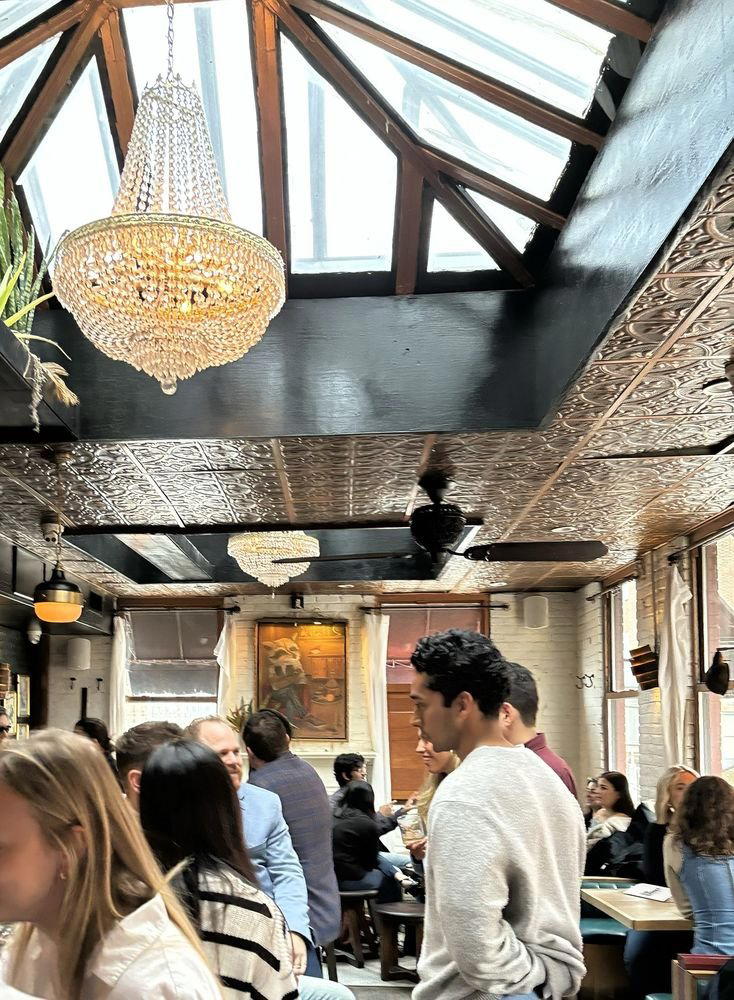
Warm, intimate Parisian-inspired atmosphere with cozy seating and a neighborhoody vibe.