Tabelog 100 #78
Our verdict
Lamp wakazou sits in Osaka’s udon conversation at the everyday end of the spectrum: a small Neyagawa counter-and-table room recognized in Tabelog’s 2024 Udon WEST 100. The draw is not ceremony for its own sake, but the Kansai noodle-house ritual: quick pacing, focused bowls, tempura and ten-don alongside udon, and a format that works for solo diners, families, and regular local meals.

Pearl is the En Primeur Club membership app, where members save venues, book tables and use the concierge.
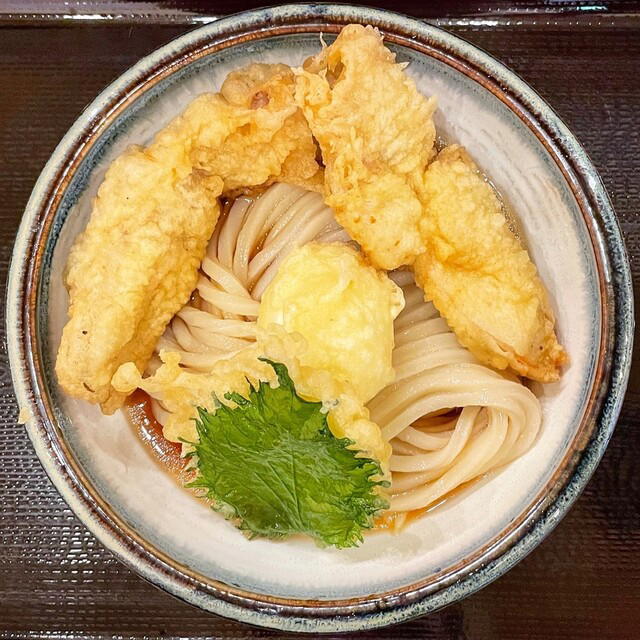
The first read is practical rather than theatrical: an Osaka udon specialist with the rhythm of a casual shop built for repeat use. In Osaka, that matters. Udon here is not only a dish category but a daily grammar: arrive, choose quickly, eat while the noodles are at their proper texture, then clear space for the next diner. Lamp wakazou belongs to that tradition, with 2024 recognition from Tabelog Hyakumeiten placing it inside a field where craft is judged through consistency more than spectacle.
Osaka dining often gets flattened into takoyaki, okonomiyaki, and late-night excess, but its noodle culture is quieter and more exacting. Udon can prize broth, wheat texture, and pacing over display. A shop that also lists tempura and ten-don belongs to a familiar local pattern: noodles anchor the meal, fried items add substance, and the experience stays close to everyday dining rather than formal tasting-menu culture. That is the useful frame for reading this Osaka address. It is not trying to compete with destination counters or long-form dining rooms; it competes with the city’s disciplined casual specialists.
Udon as a timed ritual, not a long lunch
The meal format is part of the point. Udon rewards attention to timing in a way that many visitors underestimate. The bowl is not meant to sit while the table negotiates conversation or photographs every angle. Noodle shops often run on a sharper cadence: order, receive, eat, leave. That cadence shapes the experience as much as the cooking does. The appeal is direct, practical, and built around the moment when the noodles and broth are at their best.
The 2024 Tabelog Hyakumeiten recognition gives the shop a clear trust signal without changing its category. This is still an accessible udon, tempura, and ten-don specialist rather than a luxury room with a long-form menu. The more interesting comparison is with affordable Osaka peers such as Gyoza no Yuta, Ue o Muite, Ikemen Tomikura, and Teuchi Soba Noda: all sit in the city’s low-friction dining layer, where a meal can be planned around one strong craving rather than a multi-course commitment. Lamp wakazou’s distinction is the noodle-house lane, recognized through Tabelog rather than through broader fine-dining awards.
For travelers, that distinction is useful. Osaka rewards people who make room for small-format meals between bigger reservations. A noodle stop in Osaka will not serve the same role as the city’s more formal rooms, bakery browsing, casual cafe pacing, pork buns, or pizza-focused meals. It belongs to the itinerary as a focused regional staple, not as a substitute for a long dinner.
How to read a small Osaka udon shop
The better approach is to judge the format on its own terms. A noodle shop asks for a different kind of attention than a restaurant built around service choreography. The category itself points to a place designed for ordinary use: udon at the center, tempura and ten-don adding substance, and a meal that stays close to daily dining. That ordinary quality is not a weakness. In Japan, some of the sharpest food experiences happen inside categories that remain affordable and routine: soba, curry rice, gyoza, onigiri, bakery counters, and udon.
The public score of 3.64 on Tabelog is another useful clue when read correctly. In Japan’s user-rating culture, scores above the mid-threes can indicate serious local confidence, particularly in narrow categories where regulars compare shops dish by dish. The stronger signal, however, is the 2024 Tabelog Hyakumeiten recognition, because it places the restaurant in a category-specific context rather than a general popularity frame. For an Osaka visitor, that means the meal is worth considering when the goal is to understand how the city eats outside the most obvious tourist circuits.
That same logic applies across Japan. A traveler who understands why an udon room matters will also read other focused formats with more accuracy, from curry and onigiri counters to sake-bar dining and other casual specialists. The lesson is not that every casual specialist is equal. It is that narrow formats carry their own standards, and udon has standards that become visible only when the meal is treated as a craft category rather than a quick carbohydrate stop.
Where it fits in an Osaka itinerary
Lamp wakazou is best treated as a deliberate Osaka meal rather than a generic between-sights fallback. That makes it useful for travelers who already plan around food or who want a meal that says something about Osaka everyday dining. The city’s best-known areas will always supply easy options, but smaller casual specialists often reveal how daily dining actually functions: tighter formats, fewer distractions, and less performative service.
Use the meal as a contrast point. Pairing a focused udon stop with broader Osaka planning gives the city more texture: restaurants through Our full Osaka restaurants guide, hotels through Our full Osaka hotels guide, drinking rooms through Our full Osaka bars guide, regional bottles through Our full Osaka wineries guide, and cultural programming through Our full Osaka experiences guide. For cross-country context, compare the role of focused specialists in other Japanese cities and neighborhoods. Lamp wakazou is strongest when approached with that lens: a concise, category-specific meal that clarifies one strand of Osaka’s everyday food culture.
Frequently asked questions
Where do I go for Lamp wakazou?
Osaka.
What should I budget for a meal at Lamp wakazou?
Pricing at Lamp wakazou is listed as - JPY 999 - JPY 999.
What are the opening hours for Lamp wakazou?
Specific opening hours are not provided here; check directly with Lamp wakazou before visiting.
What is Lamp wakazou known for?
Lamp wakazou is known for udon, tempura, and ten-don in Osaka, and it has 2024 recognition from Tabelog Hyakumeiten.
What if I have allergies at Lamp wakazou?
Because the listed categories include udon (wheat noodles) and tempura, guests with allergies should confirm ingredients and preparation details directly with the restaurant before ordering.
Compact Comparison
Comparable venues for context, by category and price tier.
| Venue | Cuisine | Price | Awards | Notes |
|---|---|---|---|---|
| Lamp wakazouThis venue (the venue you are viewing) | Japanese Udon | $1–10 | Tabelog 100 #78 | Not listed |
| Gyoza no Yuta | Japanese Gyoza Specialty Shop | $10–20 | Tabelog 100 #7 | JPY 1,000 - JPY 1,999 - JPY 999 View spending breakdown |
| Ue o Muite | Japanese Udon | $1–10 | Tabelog 100 #64 | JPY 1,000 - JPY 1,999 |
| Embellir | Modern French Fine Dining | $100–150 | Not listed | Not listed |
| Ikemen Tomikura | Creative Udon & Tempura | $10–20 | Tabelog 100 #30 | JPY 1,000 - JPY 1,999 - JPY 999 |
| Teuchi Soba Noda | Traditional Hand-made Soba | $20–30 | Tabelog 100 #32 | JPY 1,000 - JPY 1,999 JPY 1,000 - JPY 1,999 View spending breakdown |
Recognition history
Dated appearances from independent guides and award organizations, with the underlying list record or original source where available.
Tabelog 100 #78 · No. 78
Tabelog · Tabelog 100 - Udon - WEST - 2024