
Tabelog Bronze #223
Our verdict
An eight-seat French counter in Shirokane, L'Algorithme has earned Tabelog Bronze recognition every year from 2019 through 2026 and holds a place on the Tabelog French Tokyo 100 list for 2021, 2023, and 2025. The omakase format runs six to ten courses at prices that sit well below comparable counters in Ginza, making it one of the more accessible entry points into Tokyo's serious French dining tier.

Pearl is the En Primeur Club membership app, where members save venues, book tables and use the concierge.
The menu
What to order
- Tokyo Lobster Bisque
- Charred Duck with Sansho Pepper
French at Counter Scale: Where Shirokane Fits in Tokyo's Dining Map
Tokyo's French restaurant scene has, since the early 2000s, organized itself into two largely separate tiers. The upper tier clusters in Ginza and Marunouchi, operates at Michelin three-star price points, and addresses an international clientele as much as a local one. The second tier, quieter and harder to locate, runs smaller rooms in residential neighbourhoods, charges prices calibrated to regular Japanese diners, and often earns its reputation entirely through Tabelog's review ecosystem rather than international award cycles. L'Algorithme, which opened in Shirokane on 9 September 2017, belongs to that second tier, and the consistency of its recognition there is the more interesting story.
Shirokane sits in Minato Ward, roughly equidistant between the restaurant clusters of Hiroo and Shirokanedai. It is a low-rise, tree-lined residential area without the foot traffic that sustains Ginza's volume-dependent restaurants. Counters here succeed or fail on repeat local custom, which makes a sustained Tabelog score of 3.95 across multiple review cohorts a more reliable signal than a single award cycle. For context, a Tabelog score above 3.5 places a restaurant in roughly the leading five percent of all listed venues in Tokyo.
The Omakase Format Applied to French Cuisine
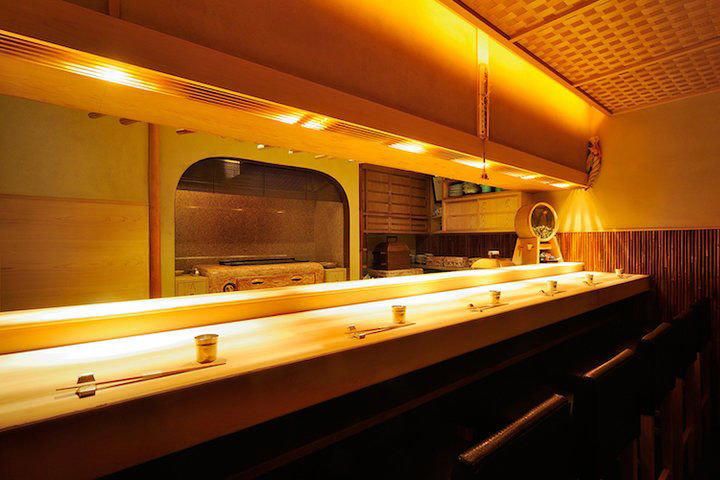
The omakase model, perfected in Japanese sushi and kaiseki traditions, has migrated into French cooking at a handful of Tokyo counters over the past decade. The logic is clear: a small room, a single sourcing focus, and a chef who can adjust each course to the individual guest's profile produces a level of precision that à la carte service cannot match. L'Algorithme runs this model at eight seats, all at the counter, with reservation notes that explicitly request allergy information, ingredient dislikes, and the dining history of each guest before they arrive.
This is not a format borrowed from French tradition. Classical French restaurants, even at the highest level, have historically offered choice. The omakase counter that happens to serve French food is a Tokyo invention, and L'Algorithme represents it at a price point that keeps the format accessible. The standard dinner course runs nine to ten dishes at JPY 14,500 (tax included, before the five percent service charge), placing it well below the JPY 30,000-plus per-person spend at three-Michelin-star French counters such as L'Effervescence or Sézanne. Lunch is a further compression: six to seven courses at JPY 8,000.
Local Ingredients, French Architecture
The intersection of Japanese produce and French cooking method is where Tokyo's most interesting non-kaiseki work is currently happening. Japan's ingredient culture, built around hyper-regional seasonality and producer relationships developed over generations, gives a French-trained kitchen access to raw material that would be difficult to source in Lyon or Paris. The venue's Tabelog profile notes a particular emphasis on fish, which in this context likely means Japanese coastal and river species prepared through classical French technique: stocks, butter-mounted sauces, careful temperature control applied to fish that have no direct French equivalent.
This cross-system approach has precedents elsewhere in Japan. HAJIME in Osaka and akordu in Nara both apply European method to Japanese product, and the results in each case diverge sharply from what either tradition produces alone. At the counter scale L'Algorithme operates, that intersection becomes granular: a single fish course can be adjusted per guest based on the pre-visit questionnaire, sharpening what would otherwise be a general proposition into something closer to a conversation between kitchen and diner.
The wine program aligns with this approach. A sommelier is on-site, and the pairing options are specific: five glasses at lunch (JPY 7,500), seven at dinner (JPY 10,500), with a non-alcoholic parallel track available at both services. The specificity of the pour count matters because it signals intentional sequencing rather than ad hoc glass service, the difference between a wine program built around the food and one that runs alongside it independently.
Sustained Recognition and What It Signals
The Tabelog Award Bronze designation, held by L'Algorithme in 2019, 2020, 2025, and 2026, functions differently from a Michelin star. Michelin operates on inspector visits and a tiered system that rewards a defined set of criteria; Tabelog Bronze aggregates user reviews weighted by reviewer credibility and filters for consistency over time. A restaurant that holds Bronze across multiple non-consecutive award years is demonstrating stable execution, not a single exceptional period. The Tabelog French Tokyo 100 selection in 2021, 2023, and 2025 adds a category-specific layer: within Tokyo French restaurants specifically, the venue ranks among the hundred most recommended by the platform's review community.
For comparison, the counters that attract international media attention in Tokyo's French scene, places like Crony with its two Michelin stars, operate at a higher price point and with a different guest mix. RyuGin and Harutaka represent the highest tier of Japanese fine dining in Tokyo, and the fact that L'Algorithme holds its standing in a different category at a fraction of those price points says something about the value density on offer here.
The parallel is worth drawing to other cities where French technique meets hyper-local ingredient sourcing at counter scale. Atomix in New York City and Le Bernardin each represent versions of this problem resolved differently, and neither operates at the price compression L'Algorithme achieves. The eight-seat counter model simply cannot sustain the overhead of a larger room, which in Tokyo's context means quality-to-price ratios that would be structurally impossible at larger scales.
Planning Your Visit
L'Algorithme is reservation-only and the booking process requires detailed pre-visit information: allergies, ingredient dislikes, accompanying guest details, and dining history. Reservations are made via the restaurant's website at lalgorithme.com or by phone at 03-6277-2199. The venue is a twelve-minute walk from both Shirokanedai Station and Shirokane-Takanawa Station, or a five-minute taxi from Ebisu or Hiroo. No parking is available on-site, though coin parking exists nearby. Credit cards are accepted (Visa, Mastercard, JCB, Amex, Diners); electronic money and QR code payments are not. Sunday is closed; some Mondays are also closed. Guests under eighteen are not accepted for general reservations. Men are asked to avoid shorts and sandals.
At a Glance: How L'Algorithme Compares
| Venue | Cuisine | Seats | Approx. Dinner (JPY) | Recognition |
|---|---|---|---|---|
| L'Algorithme | French, omakase | 8 | 14,500 + pairing | Tabelog Bronze 2026, French Tokyo 100 |
| L'Effervescence | French | N/A | 30,000+ | Michelin 3 Stars |
| Sézanne | French | N/A | 30,000+ | Michelin 3 Stars |
| Crony | Innovative French | N/A | 20,000+ | Michelin 2 Stars |
| RyuGin | Kaiseki | N/A | 30,000+ | Michelin 3 Stars |
Frequently asked questions
What is the leading approach to ordering at L'Algorithme?
There is no à la carte menu. Every visit follows the omakase course format, with six to seven dishes at lunch and nine to ten at dinner. The reservation process is where your preferences matter most: the kitchen requests allergy details, ingredient dislikes, and dining history in advance and customizes the course accordingly. Wine pairing is available at both services, as is a non-alcoholic parallel track. If a particular course structure or pairing matters to you, communicate it during booking rather than on arrival.
What do critics and reviewers highlight about L'Algorithme?
Tabelog's review community has flagged the venue consistently enough to award it Bronze status in 2019, 2020, 2025, and 2026, and to include it in the French Tokyo 100 list in 2021, 2023, and 2025. The sustained recognition across non-consecutive years suggests the kitchen maintains a stable standard rather than performing well in a single cycle. The fish focus and the precision of the pre-visit customization are the elements most frequently noted in the context of what distinguishes it within its price tier.
Can L'Algorithme accommodate vegetarian requests?
The reservation system is designed to handle dietary specifics: guests are asked to submit allergy information and disliked ingredients when booking. Given the venue's stated emphasis on fish as a core ingredient, a pescatarian or fish-forward menu is structurally central to the offering. Fully plant-based requests are worth raising directly with the restaurant before booking via lalgorithme.com or 03-6277-2199, since the extent of substitution possible within a nine-to-ten-course omakase depends on the kitchen's sourcing at that time.
For further reading on Tokyo's dining scene, explore our full Tokyo restaurants guide. You can also browse our Tokyo hotels guide, our Tokyo bars guide, our Tokyo wineries guide, and our Tokyo experiences guide. Beyond Tokyo, comparable precision-led counters worth considering include Gion Sasaki in Kyoto, Goh in Fukuoka, 1000 in Yokohama, and 6 in Okinawa.
Comparable Spots, Quickly
Comparable venues nearby, for context on price, style, and recognition.
| Venue | Cuisine | Price | Awards | Notes |
|---|---|---|---|---|
| L'ALGORITHMEThis venue (the venue you are viewing) | Modern French Fine Dining | $150–200 | Tabelog Bronze #223 | Not listed |
| Ode | Modern French Omakase with Japanese Ingredients | $200–300 | Not listed | Shibuya |
| ラチュレ | Modern French Game Meat Fine Dining | $300–500 | 1 Michelin Star · Black Pearl 1 Diamond | Shibuya |
| ボンシュマン | Modern French with Japanese Influences | $50–100 | Michelin Plate | Meguro |
| ギンザ カンセイ | French Fine Dining | $150–200 | Not listed | Chūō |
| ル・サロン・プリべ | Modern French Fine Dining | Not listed | Not listed | Minato |
Recognition history
Dated appearances from independent guides and award organizations, with the underlying list record or original source where available.
Tabelog Bronze #223
Tabelog
Full recognition history (3 entries)
Tabelog Bronze
Tabelog
Tabelog 100 #83 · No. 83
Tabelog · Tabelog 100 - French - TOKYO - 2025
Continue exploring
More in Tokyo
Restaurants in Tokyo
All restaurants in Tokyo →


Bars in Tokyo
All bars in Tokyo →






Details
- Intimate
- Elegant
- Modern
- Sophisticated
- Minimalist
- Date Night
- Special Occasion
- Business Dinner
- Chefs Counter
- Open Kitchen
- Extensive Wine List
- Local Sourcing
- Tasting Menu
- Counter Dining
- Wine Program
- Vegetarian Friendly
Current opening hours
- Monday
- 12–9 PM
- Tuesday
- 12–9 PM
- Wednesday
- 12–9 PM
- Thursday
- 12–9 PM
- Friday
- 12–9 PM
- Saturday
- 12–9 PM
- Sunday
- 12–9 PM
Hours can change for holidays and private events. Last verified .
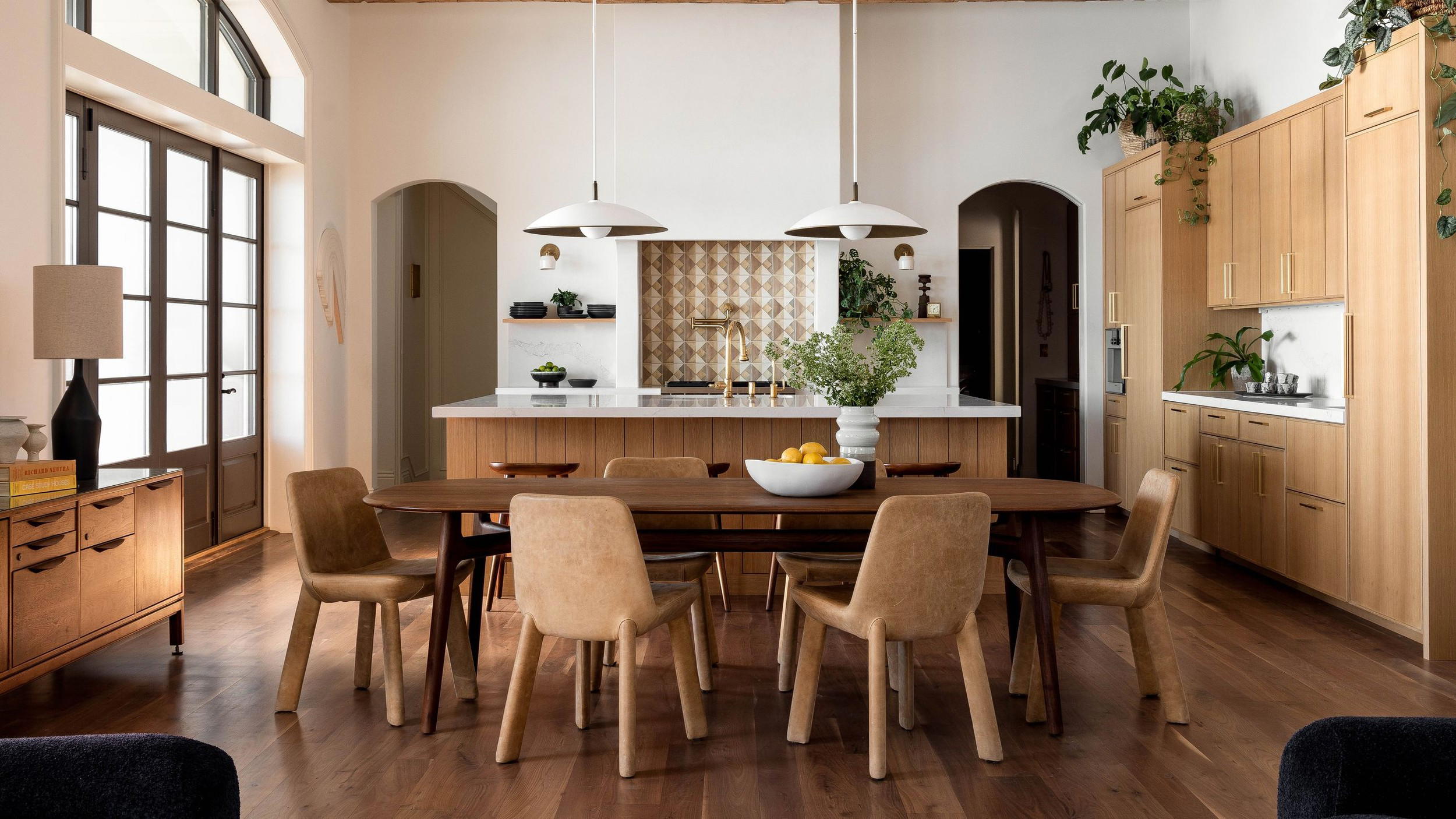
Compact, warm dining room with soft lighting, comfortable counter seating, and low conversation levels focused on the food.