On a quiet residential street in central Dijon, L'AbenFant occupies a position in the city's mid-tier dining scene, sitting between the neighbourhood bistros of the old quarter and the formal tasting-menu addresses that dominate Dijon's fine dining conversation. A neighbourhood address with a local following, it represents the less-heralded but genuinely important middle register of Burgundian restaurant culture.
Pearl is the En Primeur Club membership app — saves, bookings, and concierge access live there. Same editors, same standards.
- Address
- 32 Rue Amiral Roussin, 21000 Dijon, France
- Phone
- +33379556432
- Website
- restaurantlabenfant.fr
- Directions
- Get directions
 Saves & bookings on Pearl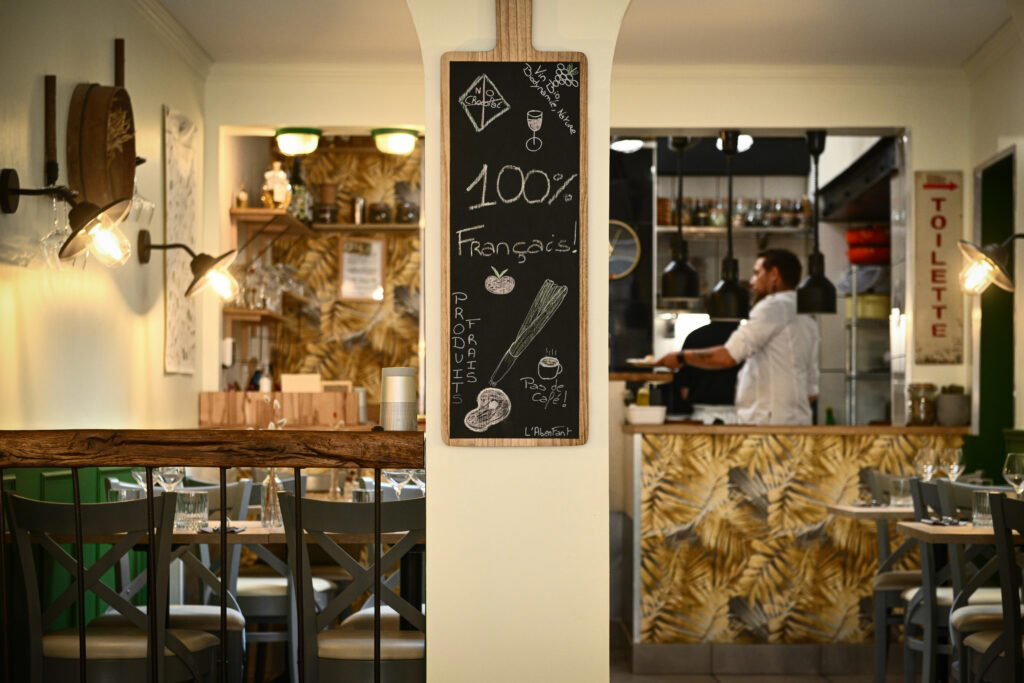
Where Rue Amiral Roussin Fits Into Dijon's Dining Hierarchy
Dijon's restaurant scene operates across distinct registers. At the upper end, addresses like William Frachot and Origine anchor the city's fine dining identity with tasting menus, serious wine lists, and cooking that engages directly with classical French technique and its contemporary extensions. Below that tier, a looser constellation of neighbourhood tables serves the city's daily life: simpler formats, lower price points, and rooms where locals return weekly rather than annually. L'AbenFant is a Modern French Locavore Bistro at 32 Rue Amiral Roussin, Dijon, with a recommended reservation policy and an average price of about $35 per person. The street itself is residential and unhurried, several minutes' walk from the market hall and the more tourist-trafficked corridors around Place François Rude. That remove is not incidental. In most French provincial cities, the restaurants that survive on quieter residential streets do so because the surrounding neighbourhood sustains them, not because passing trade keeps the covers full.
This neighbourhood orientation shapes what a visit to L'AbenFant is likely to involve. The atmosphere on streets like Rue Amiral Roussin tends toward the unperformative: fewer design statements, more of the functional warmth that French restaurant culture at this register does well. Approaching such an address, you are not walking toward spectacle. You are walking toward a room that has earned its regulars.
The Middle Register of Burgundian Restaurant Culture
French provincial cities have long maintained a stratum of dining that international visitors frequently overlook in favour of the headline addresses. In Dijon, the pull of Loiseau des Ducs or the technical ambition of L'Aspérule draws attention upward, while the casual end of the market, brasseries, wine bars, covers the other flank. The middle tier, represented by tables without national award profiles but with genuine neighbourhood permanence, is where much of daily Burgundian dining actually happens. This is not a consolation prize. The French tradition of the serious neighbourhood restaurant, the kind of place that sources properly, cooks without shortcuts, and charges fairly for its ambition, has produced particularly satisfying meals available in cities like Dijon. L'AbenFant, based on its address and local positioning, occupies that space.
Burgundy as a culinary region sets a baseline that even its mid-tier restaurants must respect. The proximity to some of France's most important wine production, the regional insistence on quality charcuterie, mustard, and cheese, and the area's deep literacy in classical French technique all impose expectations on kitchens operating at every price point. A neighbourhood table in Dijon is not the same as a neighbourhood table in a city without this culinary infrastructure. The local sourcing culture, the market at Les Halles de Dijon a short walk away, and the presence of serious competition at multiple price tiers all condition what the dining public here expects. For context on the upper end of that spectrum, Troisgros in Ouches and Auberge de l'Ill in Illhaeusern represent the standard of French regional dining that the broader tradition benchmarks against. Bras in Laguiole and Paul Bocuse in Collonges-au-Mont-d'Or define the historical weight of what French provincial cooking has produced. The restaurant operates nowhere near those tiers, but it operates within a regional culture shaped by them.
Positioning Against Dijon's Competitive Set
Among Dijon's restaurants with a local rather than destination audience, comparison is instructive. Akatsuki takes a different approach, bringing Japanese sensibility to Dijon's dining mix, while Cave operates in the traditional cuisine register at accessible price points. The restaurant's address places it in a quieter zone of the city where the competitive conversation is less about format competition and more about local loyalty. Restaurants on residential streets in French provincial cities typically compete for a neighbourhood clientele that values consistency and reliability over novelty. The dining public that walks down Rue Amiral Roussin on a Tuesday evening is not comparison-shopping the way a visitor arriving for a weekend might. That constancy tends to produce kitchens that cook to a steady standard rather than performing for the occasion.
For visitors oriented toward the destination end of the Dijon dining spectrum, the city's formal tasting-menu tier, from the creative cooking at Origine to the classical French register at William Frachot, represents a different kind of experience. But that concentration on the headline addresses misses the texture of what makes a provincial French city's dining scene genuinely functional. The restaurant represents access to that texture. Internationally, the contrast is even sharper: kitchens like Alléno Paris au Pavillon Ledoyen, Mirazur in Menton, AM par Alexandre Mazzia in Marseille, and Assiette Champenoise in Reims define one pole of French regional ambition. Flocons de Sel in Megève and Au Crocodile in Strasbourg each represent a different expression of the same broader tradition. The restaurant is not in conversation with those addresses, but they are part of the national culinary culture that frames every French restaurant's context, regardless of tier.
For visitors arriving from further afield with reference points at the level of Le Bernardin in New York or Atomix, the restaurant offers something categorically different: the kind of low-register local address that rewards curiosity about how a city actually eats, rather than how it presents itself to the world.
Planning a Visit
The restaurant is located at 32 Rue Amiral Roussin in central Dijon, within walking distance of the city's main attractions and market hall.
The Quick Read
Comparable venues nearby, for context on price, style, and recognition.
| Venue | Cuisine | Price | Notes |
|---|---|---|---|
| L'AbenFantThis venue — the venue you are viewing | old Dijon, Modern French Locavore Bistro | $$$ | Not listed |
| The Garden of the bells | Place Darcy, Modern French Bourgogne | $$$ | Not listed |
| Le Pré aux Clercs | Not listed | $$$ | Place de la Libération, Traditional French Burgundian Brasserie |
| Le Piano Qui Fume | Not listed | $$$ | centre historique, Traditional French Bistro |
| La Maison des Cariatides | Not listed | $$$ | quartier des antiquaires, Modern French Fine Dining |
| Masami | Centre-ville, Authentic Japanese Sushi | $$$ | Not listed |
Continue exploring
More in Dijon
Restaurants in Dijon
Browse all →
Bars in Dijon
Browse all →
Hotels in Dijon
Browse all →
At a Glance
- Cozy
- Rustic
- Intimate
- Classic
- Family
- Casual Hangout
- Special Occasion
- Terrace
- Natural Wine
- Local Sourcing
- Organic
- Street Scene
Current opening hours
- Monday
- Closed
- Tuesday
- 12–1:30 PM, 7:15–9 PM
- Wednesday
- 12–2 PM, 7:15–9 PM
- Thursday
- 12–2 PM, 7:15–9 PM
- Friday
- 12–2 PM, 7:15–9 PM
- Saturday
- Closed
- Sunday
- Closed
Hours can change for holidays and private events. Last verified .
Cozy family atmosphere with recuperated decoration, vintage touch, old crockery, and warm welcoming service.