La Pausa sits on Neubaugasse in Vienna's 7th district, a street that has become one of the city's more interesting corridors for neighbourhood dining away from the tourist-facing first district.
Pearl is the En Primeur Club membership app — saves, bookings, and concierge access live there. Same editors, same standards.
- Address
- Neubaugasse 70, 1070 Wien, Austria
- Phone
- +434315222897
- Website
- lapausa.at
- Directions
- Get directions
 Saves & bookings on Pearl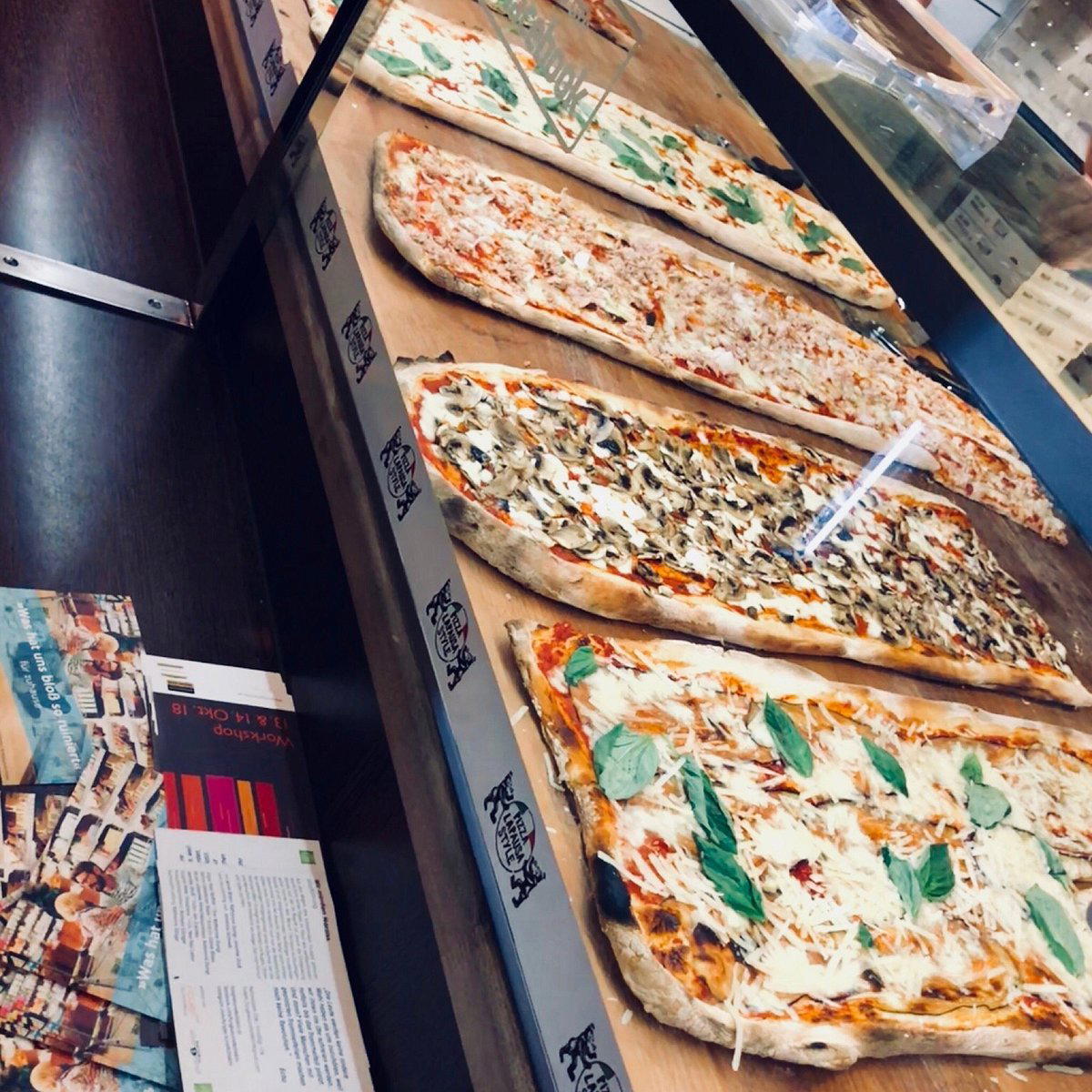
Neubaugasse and the Seventh District's Dining Character
Vienna's 7th district, Neubau, occupies a particular position in the city's dining geography. It is neither the grand-boulevard restaurant territory of the 1st, with its formal service traditions and tourist-facing pricing, nor the rougher experimental fringe of the 2nd and 16th. Neubaugasse itself runs through a neighbourhood defined by independent retail, mid-century apartment buildings, and a density of residents who eat out regularly and locally. Restaurants here tend to answer to a repeat-customer logic rather than a destination-dining one, and that shapes everything from menu length to the degree of formality at the door.
That context matters when reading La Pausa's address. Neubaugasse 70 sits toward the quieter end of the street, past the boutique concentration closer to Mariahilfer Strasse, in a stretch where the foot traffic is more residential than transient. In a city where the €€€€ tier, represented by names like Steirereck im Stadtpark, Amador, and Konstantin Filippou, occupies its own clearly demarcated altitude, a Neubau address signals something different: a restaurant likely built for neighbourhood loyalty rather than occasion-dining prestige.
What Menu Architecture Signals in This Setting
The editorial angle most useful for reading a restaurant in this position is not the chef biography or the décor brief, but the structure of the menu itself. In neighbourhood-oriented restaurants across European cities, menu architecture tends to reveal the restaurant's actual proposition more honestly than any press description. A short menu with daily specials typically signals a kitchen working with market availability and a small brigade. A longer, more fixed menu signals either ambition toward destination dining or a desire for operational predictability across a broader customer base.
For a venue on a street like Neubaugasse, the likely model is the former: a concise, rotating format that keeps regulars returning and keeps procurement costs manageable. This is the dominant structural logic for independent restaurants in Vienna's middle districts, and it contrasts meaningfully with the tasting-menu-only format deployed by Mraz & Sohn or the extended à la carte range at Doubek. Those formats presuppose a diner who has made a specific choice to be there; the neighbourhood format presupposes a diner who arrives with fewer preconceptions and more flexibility.
The name La Pausa itself carries Italian-language resonance, suggesting either Italian cuisine or at minimum an Italian-inflected sensibility. In Vienna, Italian restaurants occupy a specific niche: the city has a long relationship with northern Italian cooking through its historical trade and cultural ties to the former Habsburg territories in what is now northern Italy. A Viennese interpretation of Italian cuisine, particularly one focused on the pause, the break, the unhurried meal, would sit in a tradition that values simplicity and ingredient quality over technical elaboration. That positioning, if accurate, would place La Pausa in a different competitive register than the creative Austrian kitchens that define the city's fine-dining conversation.
Vienna's Broader Restaurant Tier and Where Neighbourhood Dining Fits
To understand where a restaurant like La Pausa sits, it helps to map the full altitude range of Vienna dining. At the summit, venues like Steirereck and Mraz & Sohn operate with Michelin recognition and multi-course tasting formats that price against international fine dining rather than local competition. One level below, restaurants like Doubek offer serious cooking with slightly less ceremony. Further down the altitude scale, neighbourhood restaurants in districts like Neubau, Josefstadt, and Alsergrund do the essential daily work of feeding residents well without theatrical production.
This lower tier is not a consolation category. In cities with strong food cultures, the neighbourhood restaurant stratum is often where honest cooking happens, because the customer base is unforgiving in a different way: they will not return if the pasta is mediocre, regardless of how attractive the room looks. The pressure is consistency and value rather than novelty and spectacle.
Austria's broader restaurant geography extends well beyond Vienna. The country's mountainous western regions have their own serious dining culture, represented by venues like Döllerer in Golling an der Salzach, Griggeler Stuba in Lech, Gourmetrestaurant Tannenhof in Sankt Anton am Arlberg, Ikarus in Salzburg, Kräuterreich by Vitus Winkler in Sankt Veit im Pongau, Landhaus Bacher in Mautern an der Donau, Obauer in Werfen, Ois in Neufelden, Restaurant 141 by Joachim Jaud in Mieming, and Schwarzer Adler in Hall in Tirol. That regional spread underlines that serious Austrian dining is not a Vienna-only phenomenon, though the capital remains the primary reference point for international visitors.
For comparative reference outside Austria, the tasting-menu discipline practiced at venues like Le Bernardin in New York City or the precision-driven format of Atomix in New York City represents a different structural philosophy entirely: one where every element of the menu is engineered toward a single climactic experience. Neighbourhood restaurants in European cities operate on an opposite logic, one of accumulation and return rather than singular occasion.
Know Before You Go
| Address | Neubaugasse 70, 1070 Wien, Austria |
|---|---|
| District | 7th District (Neubau), Vienna |
| Phone | not listed, contact via local directory |
| Website | Not currently available, verify directly |
| Hours | Not confirmed, check before visiting |
| Price Range | About $15 per person |
| Booking | Method not confirmed, walk-in or phone advised |
Budget Reality Check
Comparable venues nearby, for context on price, style, and recognition.
| Venue | Cuisine | Price | Notes |
|---|---|---|---|
| La PausaThis venue — the venue you are viewing | Neubau, Neapolitan Pizza | $$ | Not listed |
| Forno | Josefstadt, Italian Focaccia and Pizza | $$ | Not listed |
| Pizzeria Mar | Franz Josefs Bahnhof, Neapolitan Pizza | $$ | Not listed |
| La Pasteria | Not listed | $$ | Franz Josefs Bahnhof, Authentic Italian Trattoria |
| Verde | Stephansdom, Modern Italian | $$ | Not listed |
| Ombra Cafe & Osteria | Innere Stadt, Italian Cafe & Osteria | $$ | Not listed |
Continue exploring
More in Vienna
Restaurants in Vienna
Browse all →
![[aend] restaurant in Vienna](https://cdn.enprimeurclub.com/storage/v1/object/public/images/locations/recsVyRkMfzCxPmp0/hero2.jpg?width=3840&quality=75)
Bars in Vienna
Browse all →
Hotels in Vienna
Browse all →
At a Glance
- Lively
- Trendy
- Casual Hangout
Current opening hours
- Monday
- 11 AM–11 PM
- Tuesday
- 11 AM–11 PM
- Wednesday
- 11 AM–11 PM
- Thursday
- 11 AM–11 PM
- Friday
- 11 AM–11 PM
- Saturday
- 11 AM–11 PM
- Sunday
- 3–10 PM
Hours can change for holidays and private events. Last verified .
Casual and hectic atmosphere in a small, busy space ideal for quick bites with a lively street-side vibe.