
A Queen Street West fixture since the 1990s, La Palette delivers classic French bistro cooking in a room that trades on atmosphere as much as plate. The wine list leans earnest and the kitchen stays honest to its bistro brief. Come for dinner, stay for live jazz and dancing that carries the night well past midnight.
Pearl is the En Primeur Club membership app — saves, bookings, and concierge access live there. Same editors, same standards.
- Address
- 492 Queen St W, Toronto, ON M5V 2B2, Canada
- Phone
- +1 416-929-4900
- Website
- lapalette.ca
- Directions
- Get directions
 Saves & bookings on Pearl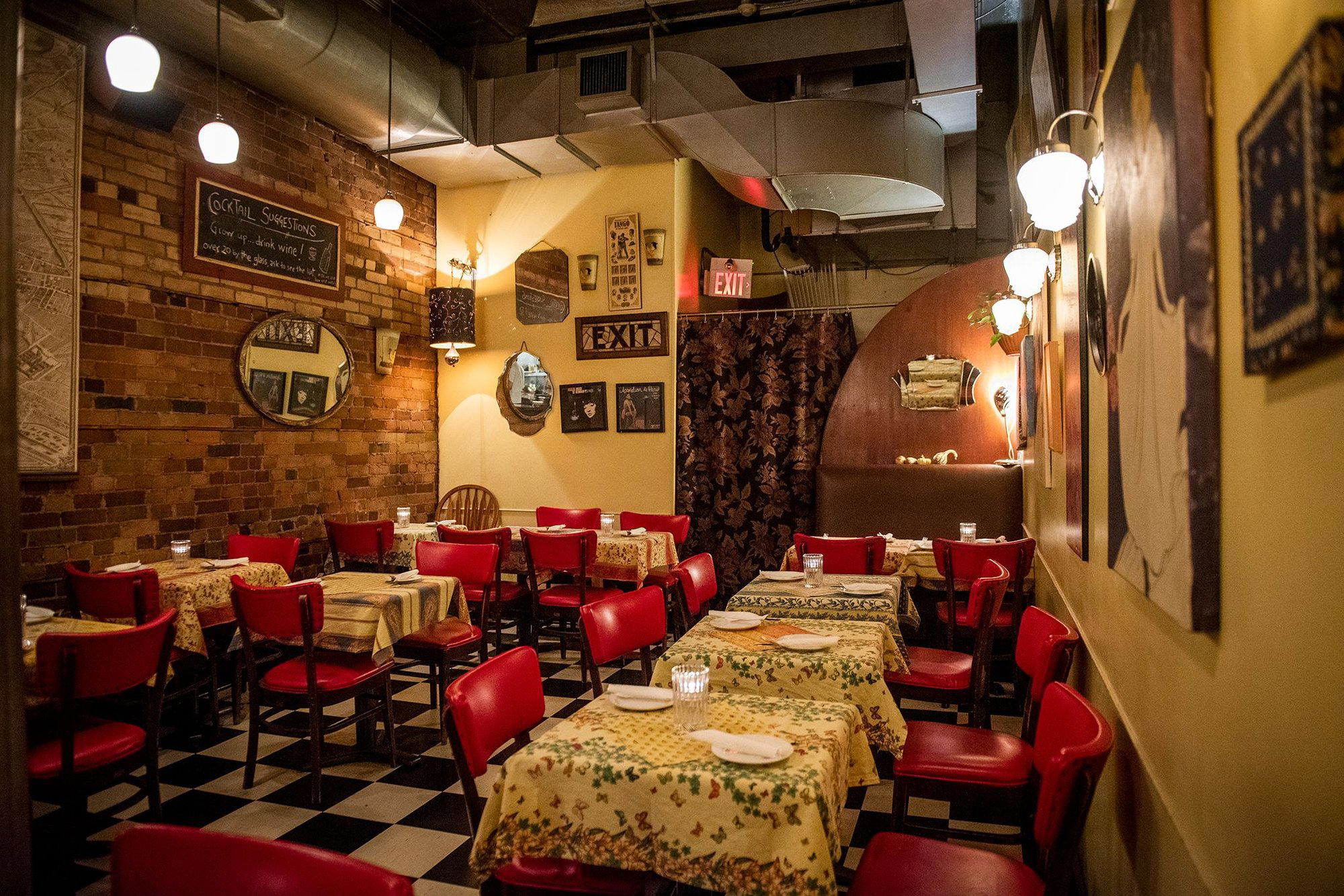
The French Bistro Tradition on Queen Street West
Queen Street West has cycled through more dining concepts than most cities see in a generation, but a particular kind of room has always survived the churn: the neighbourhood anchor that refuses to reinvent itself. French bistro culture, transplanted to North America, tends to find its footing in exactly this way. The formula is not complicated, a convivial room, a wine list built for drinking rather than collecting, and a kitchen that understands the difference between cooking and performing.
Toronto's French dining scene sits in a distinct tier below the tasting-menu operators. Where restaurants like Alo price against international fine dining peers and operate with multi-month booking queues, the bistro category serves a different civic function: it is where a city eats regularly, not ceremonially. La Palette has built its reputation squarely in that space, and the room's persistent energy, described consistently across years of observation as ever-bustling, is the evidence.
What the Room Feels Like
Approaching La Palette on a weekday evening, the street-level energy is already doing the work. The block between Spadina and Bathurst on Queen West runs dense with foot traffic, and the restaurant has long benefited from and contributed to that density. Inside, the atmosphere tilts toward the Parisian model of controlled informality: a room that feels lived-in rather than designed, where the noise level signals occupation rather than chaos. This is not the hushed precision of Aburi Hana or the counter-driven intensity of Sushi Masaki Saito. It is something closer to what the French call a brasserie de quartier, a room that belongs to its neighbourhood in a proprietary sense.
Live jazz arrives later in the evening, and the night extends into dancing. This is not common in Toronto's restaurant scene. Most operators treat the post-dinner hour as a liability and clear the room accordingly. La Palette leans the other way, letting the night develop its own character. That programming decision, sustained over years, is a meaningful part of why the venue has accumulated the reputation it has.
Reputation Built Over Time
The language around the restaurant in the public record is consistent: a Queen Street staple. That designation, in a city with Toronto's rate of restaurant turnover, represents a genuine credential. Longevity on Queen West is not automatic. The street has absorbed and discarded hundreds of concepts across the same period, and the restaurants that endure do so because they serve a function that the neighbourhood actually needs, not one it was briefly persuaded to want.
Classic French bistro fare, executed with consistency, is that function here. The comparison set is instructive. Toronto's high-end Italian rooms, including DaNico and Don Alfonso 1890, operate at the $$$$ tier with tasting formats and formal service structures. The restaurant operates on a different axis entirely. The bistro model prices for frequency, not occasion, and the wine list is built accordingly: a list described as earnest rather than encyclopedic, designed to support a meal rather than anchor it.
Across Canada, the French bistro format has shown notable durability in cities with established culinary cultures. In Montreal, restaurants such as Jérôme Ferrer - Europea demonstrate how French culinary influence can scale upward into fine dining ambition. In Quebec City, Tanière³ represents the contemporary Canadian interpretation of French technique applied to regional ingredients. The restaurant sits at neither extreme. It occupies the middle ground where the bistro tradition actually lives: consistent, unpretentious, and built for the long run.
The Wine Program
In the bistro model, the wine list is infrastructure rather than spectacle. A well-run bistro list prioritizes drinkability over prestige, keeps the by-the-glass selection broad enough to support varied tables, and prices to encourage a second bottle. The restaurant's wine program fits within this tradition. The wine program fits within this tradition, built for the room rather than the cellar. For the category, that is the correct instinct. The French comparison points, from neighbourhood wine bars in Lyon to the zinc-countered bistros of the 11th arrondissement in Paris, all share this orientation: wine as companion to the evening, not subject of it.
For those whose interest runs to Ontario's wine-producing regions, Restaurant Pearl Morissette in Lincoln represents the farm-to-table winery dining model at its most serious.
Where La Palette Sits in Toronto's Dining Picture
Toronto's restaurant scene in the 2020s has developed a clear bifurcation. On one side, the tasting-menu tier has grown more technically ambitious and internationally competitive. On the other, the neighbourhood dining category has fragmented under cost pressure, with many mid-market operators struggling to hold their positioning. The French bistro, when it survives this environment, tends to survive because its model was never predicated on the assumptions that the mid-market made: elaborate decor budgets, large-format menus, and the assumption that diners would come in for novelty.
The restaurant's durability on Queen West is evidence of this. A room built around atmosphere, a consistent bistro kitchen, and a night that extends into jazz and dancing is not trying to compete with Alo's tasting format or the kaiseki discipline of Aburi Hana. It is competing with itself, year over year, maintaining the standard that built its reputation in the first place. For international context, the model has parallels in rooms like Le Bernardin in New York City, where a defined culinary identity sustains decades of relevance, or in the community-rooted character of Emeril's in New Orleans. The scale is different; the principle is similar.
Planning Your Visit
The restaurant is at 492 Queen St W. The restaurant runs into the late hours, particularly on evenings with live jazz, making it a practical choice for a night that does not need to end at ten. Given its reputation as a neighbourhood staple with a busy room, arriving with a reservation for dinner service is the sensible approach, particularly on weekends.
A Quick Peer Check
Comparable venues nearby, for context on price, style, and recognition.
| Venue | Cuisine | Price | Notes |
|---|---|---|---|
| La PaletteThis venue — the venue you are viewing | Classic French Bistro | $$$ | Not listed |
| Jazz Bistro | French Bistro with Live Jazz | $$$ | Downtown Yonge |
| Biff's Bistro | Classic French Bistro | $$$ | Church-Yonge Corridor |
| Batifole | Authentic French Bistro | $$$ | Riverdale |
| Domaine MaMo | French-Italian Regional | $$$ | Davisville Village |
| L'avenue on Parliament | Classic French Bistro | $$$ | Cabbagetown |
Recognition history
Dated appearances from independent guides and award organizations, with the underlying list record or original source where available.
Star Wine List
Star Wine List
Continue exploring
More in Toronto
Restaurants in Toronto
Browse all →
Bars in Toronto
Browse all →
Hotels in Toronto
Browse all →

At a Glance
- Cozy
- Intimate
- Classic
- Lively
- Date Night
- Special Occasion
- Open Kitchen
- Extensive Wine List
Current opening hours
- Monday
- 5 PM–1 AM
- Tuesday
- Closed
- Wednesday
- 5 PM–1 AM
- Thursday
- 5 PM–2 AM
- Friday
- 5 PM–2 AM
- Saturday
- 12 PM–2 AM
- Sunday
- 12 PM–1 AM
Hours can change for holidays and private events. Last verified .
Cozy and intimate with warm lighting, lively yet charming Parisian bistro atmosphere.