Our verdict
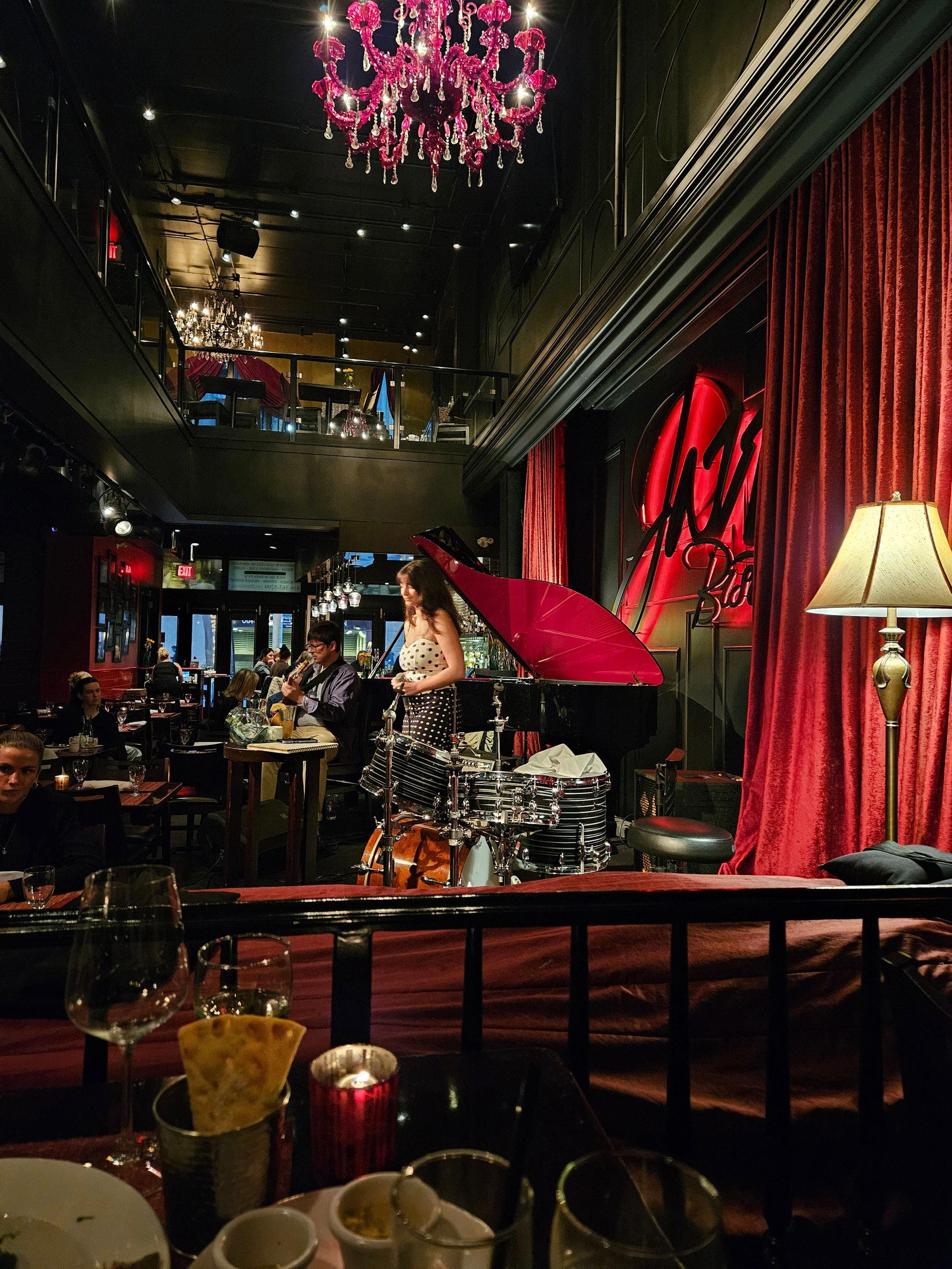
Jazz Bistro occupies a distinctive corner of Toronto's downtown dining scene, pairing live music programming with a kitchen that draws from North American bistro traditions. Located on Victoria Street in the Garden District, it sits at a crossroads where the city's appetite for locally sourced ingredients meets a long-standing commitment to supporting Canadian artists and producers. An evening here moves between the plate and the stage with equal intention.

Pearl is the En Primeur Club membership app, where members save venues, book tables and use the concierge.
The menu
What to order
- Braised Short Ribs
- Oven Roasted Lamb Rack
- Burrata Salad
Victoria Street After Dark: Where Toronto's Dining and Music Cultures Converge
On Victoria Street, a short walk from Yonge and Dundas, the Garden District has quietly become one of downtown Toronto's more interesting cultural corridors. It lacks the marquee density of King West or the culinary prestige of Ossington, but what it offers instead is a certain functional seriousness: spaces that serve a purpose beyond trend capture. Jazz Bistro fits that mould. The room announces itself through sound before you've ordered anything, and that sonic context shapes how the kitchen's output lands. Dining rooms built around live performance occupy a particular niche in North American food culture, one where the menu must hold attention between sets rather than compete with silence.
That challenge, of feeding a room with a dual program, has pushed a number of Canadian venues toward more intentional sourcing and production approaches. When the theatre of the evening is already accounted for by the performers, the kitchen tends to focus its energy on quality of ingredient rather than spectacle of technique. It is a discipline that aligns, whether by design or circumstance, with the broader shift in Canadian dining toward provenance transparency and reduced-waste kitchen practice.
The Canadian Move Toward Ethical Sourcing: Where Jazz Bistro Sits in the Conversation
Across Canada, the premium dining tier has increasingly oriented itself around sourcing commitments that go beyond seasonal menus. Restaurants like Eigensinn Farm in Singhampton built their entire model on farm-to-table integration before the phrase became a marketing category. In Quebec, Tanière³ in Quebec City and Narval in Rimouski have pressed further into hyper-regional ingredient sourcing, turning the constraints of northern geography into a culinary identity. In Ontario's wine country, Restaurant Pearl Morissette in Lincoln treats the farm and cellar as inseparable parts of the same ethical system.
Toronto itself has a split personality on this front. The city's most-discussed fine dining rooms, including Alo and the Japanese-format counters like Sushi Masaki Saito and Aburi Hana, operate at the very best of the price bracket and draw their sustainability credibility from ingredient specificity and kitchen precision. The Italian contingent, represented by venues like DaNico and Don Alfonso 1890, tends to frame sustainability through the lens of culinary heritage: using whole animals, preserving traditional techniques, minimising waste through classical preparation methods.
Jazz Bistro operates at a different register than these rooms but participates in the same citywide conversation. A bistro format, by its nature, demands efficiency: the menu should be compact enough to allow the kitchen to source thoughtfully rather than broadly. Fewer SKUs, handled well, is both an economic and an environmental argument. Venues that programme live music six or seven nights a week also face particular logistical pressures that tend to consolidate kitchen operations and reduce excess production runs.
North American Bistro Traditions and the Logic of the Live-Music Room
The bistro format has a long North American lineage that is often underappreciated. In Montreal, venues like Jérôme Ferrer - Europea demonstrate how French-influenced bistro traditions can carry serious culinary weight without tipping into formal fine dining. Elsewhere on the eastern seaboard, the jazz-and-dinner format has historically served as one of the primary vehicles for mid-market quality cuisine: a format where the kitchen's job is to turn comfortable, seasonal food that doesn't demand full attention but rewards it when given.
For international comparisons at the high end of the music-dining intersection, rooms like Le Bernardin in New York City demonstrate how a serious kitchen can operate within an environment shaped by cultural context rather than pure culinary competition. Closer to the bistro tier, AnnaLena in Vancouver represents the Canadian approach to ingredient-led casual-fine dining that Jazz Bistro's format also touches.
What to Order, and When to Go
What can be said is that bistro kitchens running a full live-music program typically anchor their menus around proteins and preparations that hold well across service windows, which tends to favour braises, boards, charcuterie, and dishes that benefit from resting. Vegetarian requests in this format are usually accommodated with advance notice, though the kitchen's depth on plant-forward options may vary by season. Contacting the venue directly before visiting is the clearest route to confirming current menu scope and dietary flexibility.
Timing matters more at Jazz Bistro than at a conventional restaurant. Sets typically anchor the room to specific arrival windows, and arriving mid-performance affects both your experience and the room's atmosphere. Booking in advance, particularly for weekend evenings when the music program draws a fuller room, is the practical baseline. For context: Toronto's higher-demand dining rooms, including Alo, operate with booking windows of several weeks to months; Jazz Bistro's bistro-and-music format likely operates on a shorter but still competitive weekend window.
For a broader view of the city's dining options, EP Club's full Toronto restaurants guide maps the scene across price tiers, cuisine types, and neighbourhoods. For those extending travel beyond Toronto, The Pine in Creemore and Barra Fion in Burlington represent the Ontario regional dining circuit worth incorporating into a longer itinerary.
Planning Your Visit: Jazz Bistro vs. Peer Formats
| Venue | Format | Price Tier | Booking Lead Time |
|---|---|---|---|
| Jazz Bistro | Bistro + Live Music | Mid-range (unconfirmed) | |
| Alo | Contemporary tasting menu | $$$$ | Several weeks to months |
| Sushi Masaki Saito | Omakase counter | $$$$ | Months in advance |
| DaNico | Italian, casual fine | $$$ | 1-2 weeks typical |
| Atomix (NYC) | Korean tasting counter | $$$$ | Months in advance |
Frequently asked questions
Where is Jazz Bistro in Toronto?
Jazz Bistro is located at 251 Victoria St, Toronto, ON M5B 1T8, Canada, Toronto.
Does Jazz Bistro in Toronto offer live music every night of the week?
Confirmed programming schedules for Jazz Bistro are not available at time of publication. Live-music bistros in downtown Toronto typically concentrate performances on Thursday through Saturday, with lighter or acoustic programming mid-week. Contact Jazz Bistro directly at 251 Victoria St to verify current performance nights before planning your visit.
What should I eat at Jazz Bistro?
Confirmed current menu data for Jazz Bistro is not available at time of publication, so specific dish recommendations would be speculative. Bistro kitchens operating alongside a live-music program typically run a format that works across service windows, appetisers, mains, and shareable plates that hold timing flexibility. Check the venue directly at 251 Victoria St or via their current listings before visiting.
Do I need a reservation for Jazz Bistro?
For weekend jazz sets at a downtown Toronto venue like Jazz Bistro, booking ahead is advisable, walk-in availability tightens considerably when live acts are scheduled. The address is 251 Victoria St in the Garden District, a corridor that draws significant foot traffic from Yonge and Dundas. check the venue's official channels to confirm current booking policy.
What's the defining dish or idea at Jazz Bistro?
The organizing idea at Jazz Bistro is the live-music dining room itself, a format that places equal weight on the kitchen and the bandstand rather than treating one as background to the other. This positions it differently from both standalone jazz clubs and restaurants that use recorded music as atmosphere. In North American terms, the closest structural peers are venues like Montreal's Jérôme Ferrer - Europea, which have demonstrated that serious food and live performance can coexist without either compromising the other.
Can Jazz Bistro handle vegetarian requests?
Bistro kitchens at this format level generally carry plant-forward dishes alongside their main menu, but that cannot be stated as fact here.
Is Jazz Bistro overpriced or worth every penny?
What can be said is that Toronto's live-music dining tier typically prices for the combined experience, kitchen plus performance, which places it above a standard bistro spend but below a dedicated concert-venue ticket plus separate dinner. The Victoria St location in the Garden District positions Jazz Bistro within a neighbourhood rather than a high-rent corridor, which historically moderates pricing pressure.
Where It Fits
Comparable venues nearby, for context on price, style, and recognition.
| Venue | Cuisine | Price | Awards | Notes |
|---|---|---|---|---|
| Jazz BistroThis venue (the venue you are viewing) | French Bistro with Live Jazz | $50–100 | Not listed | Not listed |
| L'avenue on Parliament | Classic French Bistro | $50–100 | Not listed | Cabbagetown |
| EPOS Cafe Couture | French-Inspired Fusion with Mediterranean and Asian Influences | Not listed | Not listed | Yorkville |
| Le Sélect Bistro | Classic French Bistro | $50–100 | Star Wine List · Wine Spectator Best of Award of Excellence | Fashion District |
| La Palette | Classic French Bistro | $50–100 | Star Wine List | Queen West |
| Cafe Boulud | French Brasserie | $50–100 | Wine Spectator Best of Award of Excellence · Forbes Recommended | Yorkville |