Biff's Bistro occupies a prime address at 2 Front Street East in Toronto's St. Lawrence corridor, where the bistro format has long served as a counterweight to the city's tasting-menu ambitions. The kitchen works within a classic bistro register, positioning itself between the neighbourhood's casual dining options and the $$$$-tier contemporary rooms that define Toronto's upper bracket.
Pearl is the En Primeur Club membership app — saves, bookings, and concierge access live there. Same editors, same standards.
- Address
- 2 Front St E, Toronto, ON M5E 1G4, Canada
- Phone
- +14168600086
- Website
- biffsbistro.com
- Directions
- Get directions
 Saves & bookings on Pearl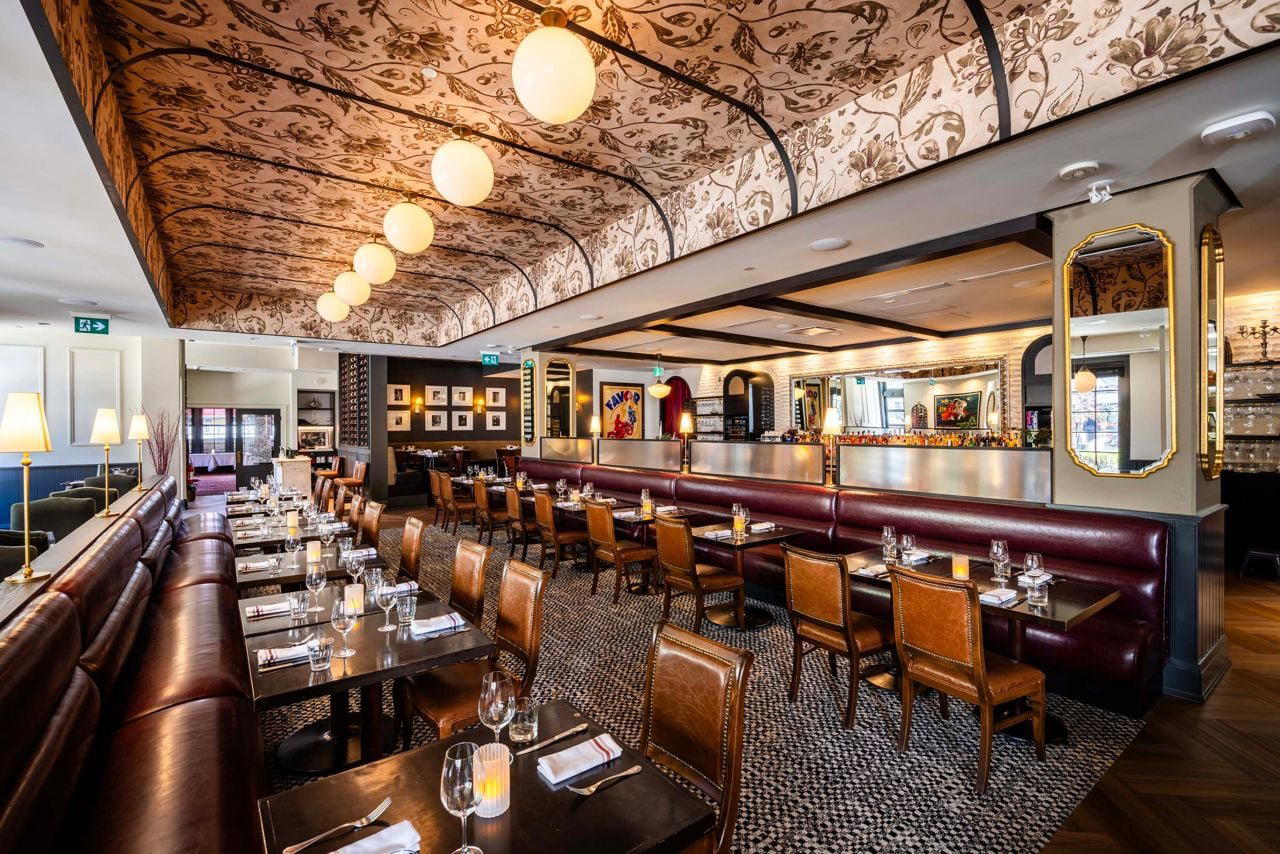
Front Street and the Bistro Tradition
Toronto's dining corridor along Front Street East sits at an interesting tension point in the city's culinary map. To the west, the Financial District draws expense-account clientele toward formal rooms and tasting counters. To the east, the St. Lawrence Market neighbourhood has historically supported a more grounded register of dining, where the bistro format, with its emphasis on repeatable, well-executed plates over theatrical progression, has consistently found its audience. Biff's Bistro, at 2 Front Street East, is a Classic French Bistro in Toronto,325 reviews and a price tier of $$$.
The bistro format itself carries specific expectations that differ sharply from the omakase counters or multi-course contemporary rooms that dominate Toronto's award conversation. Where venues like Alo (Contemporary) or Sushi Masaki Saito build their identities around sequenced, chef-directed narratives, a bistro places ordering authority back in the diner's hands. The menu is a grid, not a story, and the kitchen's skill is measured against consistency rather than surprise.
How the Menu Is Structured
The bistro menu architecture communicates a specific set of priorities. Rather than the elongated tasting format that positions itself as destination dining, the bistro signals its values through the breadth and balance of its à la carte selection. A well-constructed bistro menu tends to read in three registers: the quick-decision starters that reward returning diners who know what they want, the anchor mains that define the kitchen's technical range, and a dessert tier that either leans classical French or locates itself in something more personal.
At the upper end of Toronto's bistro tier, this structure often involves a degree of Franco-European anchoring, with the protein preparations, sauce work, and side compositions drawing from a tradition that runs through Parisian brasseries and classic North American interpretations of the same. That lineage is evident not just in flavour profile but in portion logic: a bistro portion communicates generosity without excess, and the menu's pricing tends to reflect a value proposition that feels earned rather than aspirational. Compared to the $$$$-tier rooms represented by DaNico or Don Alfonso 1890 (Contemporary Italian), the bistro format competes on familiarity and frequency of return rather than occasion-dining exclusivity.
The à la carte structure also communicates something about the kitchen's confidence. A menu that attempts to span too many flavour traditions often signals insecurity; a focused bistro menu, holding steady to a defined set of techniques and seasonal inputs, signals a kitchen that knows its lane. The leading examples of this in Canada appear at venues far outside the metropolitan centre, places like Eigensinn Farm in Singhampton or The Pine in Creemore, where the reduced-option format functions as editorial conviction rather than limitation. In a city context, the challenge is different: the bistro must hold its identity against a competitive field that includes kaiseki specialists like Aburi Hana and the full spectrum of Toronto's neighbourhood dining.
The St. Lawrence Context
Location shapes expectation in ways that a menu alone cannot. The St. Lawrence corridor has a pre-theatre character baked into its geography: the Sony Centre and other nearby venues pull early-evening diners who need a reliable room that can hold a reservation time without friction. This is a different pressure than the destination-dining model, where the meal itself is the evening's event. It rewards kitchens that can operate at pace without sacrificing plate quality, and front-of-house teams that manage table turns without making that management feel administrative.
The neighbourhood also connects to a wider Canadian dining conversation. Quebec City's Tanière³ and Montreal's Jérôme Ferrer - Europea represent a Francophone strand of this tradition where bistro discipline intersects with more ambitious seasonal sourcing. Vancouver's AnnaLena represents a West Coast interpretation. Biff's sits within the Toronto expression of that broader conversation, one that is more pragmatic, more volume-oriented, and more squarely positioned for the working-week diner.
For diners tracking Canada's broader dining geography, the contrast between a Front Street bistro and a remote destination room like Fogo Island Inn Dining Room in Joe Batt's Arm or Restaurant Pearl Morissette in Lincoln is instructive. The latter pair require journey and commitment; the bistro format's proposition is the opposite, availability and ease of repeat engagement.
Where It Sits in Toronto's Tier Structure
Toronto's restaurant tier structure has compressed and stratified simultaneously over the past decade. The $$$$ bracket has expanded as more ambitious rooms have opened, raising the cost ceiling and the experiential expectations at the leading. Mid-tier dining, of which the bistro format is a reliable representative, has in some ways benefited: as the tasting-menu format becomes more associated with occasion spending, the à la carte bistro fills a weekly-dining gap that the market needs.
Internationally, the bistro's closest analogues are the neighbourhood institutions that anchor city blocks in Paris, Brussels, or New York, rooms where the menu is secondary to the accumulated reliability of the experience. Le Bernardin in New York City represents the extreme end of French-influenced formal dining in that same geography; the bistro tradition is what exists between that ceiling and the casual end of the market. In San Francisco, Lazy Bear represents a different response to the same underlying question: what format leading matches the city's dining culture? Toronto's answer, at least along Front Street, has often been the reliable, well-stocked bistro.
Planning Your Visit
Price Lens
Comparable venues nearby, for context on price, style, and recognition.
| Venue | Cuisine | Price | Notes |
|---|---|---|---|
| Biff's BistroThis venue — the venue you are viewing | Not listed | $$$ | Not listed |
| La Palette | Queen West, Classic French Bistro | $$$ | Not listed |
| Rooftop at Le Germain Mercer | Not listed | $$$ | Entertainment District, New-World French Rooftop |
| Maison T | Not listed | $$$$ | Davenport, French Bistro with Japanese Influences |
| Cafe Boulud | Not listed | $$$$ | Yorkville, Modern French Brasserie with Rotisserie |
| Bonjour Brioche | South Riverdale, French Bakery & Brunch | $$ | Not listed |
Continue exploring
More in Toronto
Restaurants in Toronto
Browse all →
Bars in Toronto
Browse all →
Hotels in Toronto
Browse all →

At a Glance
- Classic
- Cozy
- Elegant
- Date Night
- Business Dinner
- Casual Hangout
- Terrace
- Craft Cocktails
- Street Scene
Current opening hours
- Monday
- Closed
- Tuesday
- 11:30 AM–10 PM
- Wednesday
- 11:30 AM–10 PM
- Thursday
- 11:30 AM–10 PM
- Friday
- 11:30 AM–11 PM
- Saturday
- 4–11 PM
- Sunday
- 4–9 PM
Hours can change for holidays and private events. Last verified .
Dark and moody atmosphere evoking 1930s Paris with framed 19th-century posters and warm lighting.