1 Michelin Star · Tabelog 100 #35
Our verdict
In Nihonbashi's basement-level dining room, La Paix frames French cuisine through a distinctly Japanese lens, drawing on five thematic pillars that include harmony, spirit, and the senses. The chef's Wakayama roots surface in sourced ingredients like Kishu Ume, while preparations such as a Blancmange of Tartary Buckwheat set the kitchen apart from Tokyo's broader French field. A considered address for those tracking where French technique and Japanese regionality genuinely converge.

Pearl is the En Primeur Club membership app — saves, bookings, and concierge access live there. Same editors, same standards.
- Address
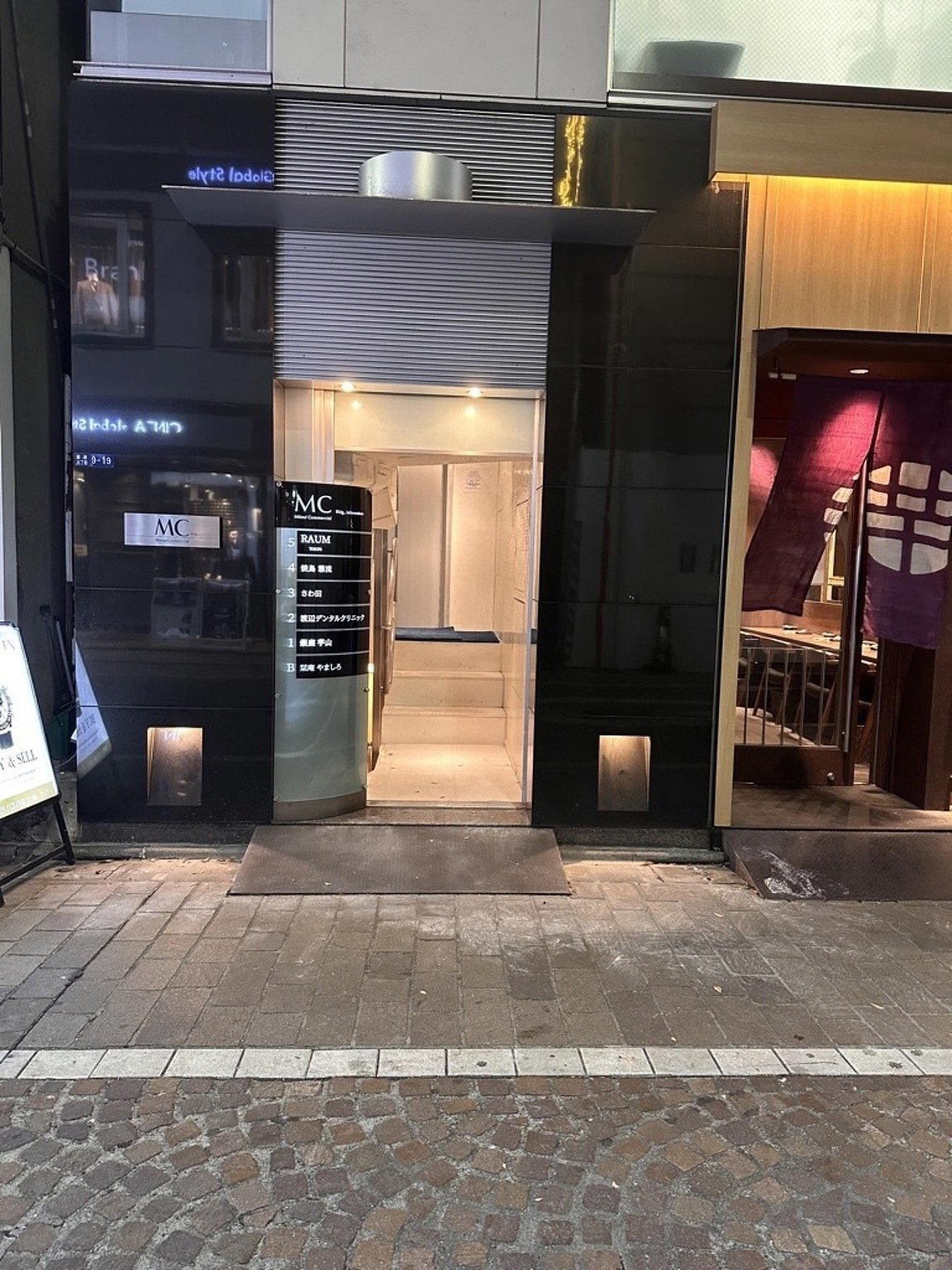
- Japan, 〒103-0022 Tokyo, Chuo City, Nihonbashimuromachi, 1 Chome−9−4 B1F
- Phone
- +81 3-6262-3959
- Hours
- Mon 11:30 AM–2:30 PM, 6–10 PMTue ClosedWed–Sun 11:30 AM–2:30 PM, 6–10 PM
- Website
- lapaix-m.jp
- Directions
- Get directions
- Booking
- Book on TableCheck
Where Nihonbashi Locates Tokyo's French-Japanese Argument
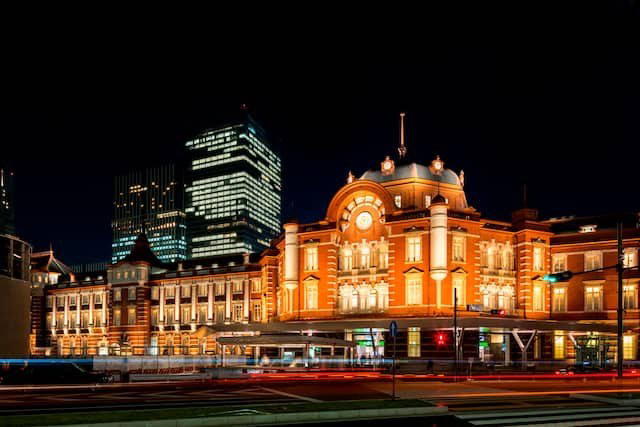
The debate over what Franco-Japanese cuisine actually means has played out differently depending on which district you're standing in. In Roppongi and Minami-Aoyama, French cooking tends to absorb Japanese ingredients as accents, seasonal gestures that sharpen a fundamentally European framework. In Nihonbashi, that calculus shifts. The historic merchant district, which served as Edo's commercial and cartographic centre for centuries, has long operated as a site where old and new Japan negotiate terms. It is a fitting address for a kitchen that doesn't treat the two cuisines as equals in a blended middle, but rather asks what French cuisine looks like when it is genuinely grown from Japanese soil.
La Paix sits at basement level in Nihonbashimuromachi, a short distance from the stone bridge that gave the neighbourhood its name. The location is not incidental. Nihonbashi's culinary identity has sharpened considerably over the past decade as the area has drawn serious independent restaurants alongside its older, deeply entrenched traditional houses.
Five Pillars and What They Actually Mean in Practice
La Paix structures its creative approach around five thematic elements: Japan, harmony, spirit, connection, and the senses. These are framework terms, and the risk with any such framework is that it becomes decorative language rather than a genuine operating logic. At La Paix, the pillars appear to function as editorial principles that govern sourcing, technique, and presentation decisions rather than as marketing shorthand.
The Japan pillar is the most legible from the outside. The chef, a native of Wakayama Prefecture, sources Kishu Ume from that region, a variety of Japanese plum with a tart, complex profile that differs markedly from the stone fruit references more familiar in classical French preparation. Incorporating a regional Japanese ingredient at this level of specificity, one tied to the chef's own geography rather than to national cliché, is the difference between a kitchen that gestures toward Japan and one that arrives there from a specific place.
The butter produced from Kishu Ume is a further step. Transforming a Japanese acidic fruit into a foundational French preparation without erasing either reference point is the kind of technical decision that signals kitchen confidence. It is not fusion in the soft, compromising sense; it is a deliberate argument about where two traditions can share logic.
The Buckwheat Preparation as Editorial Proof
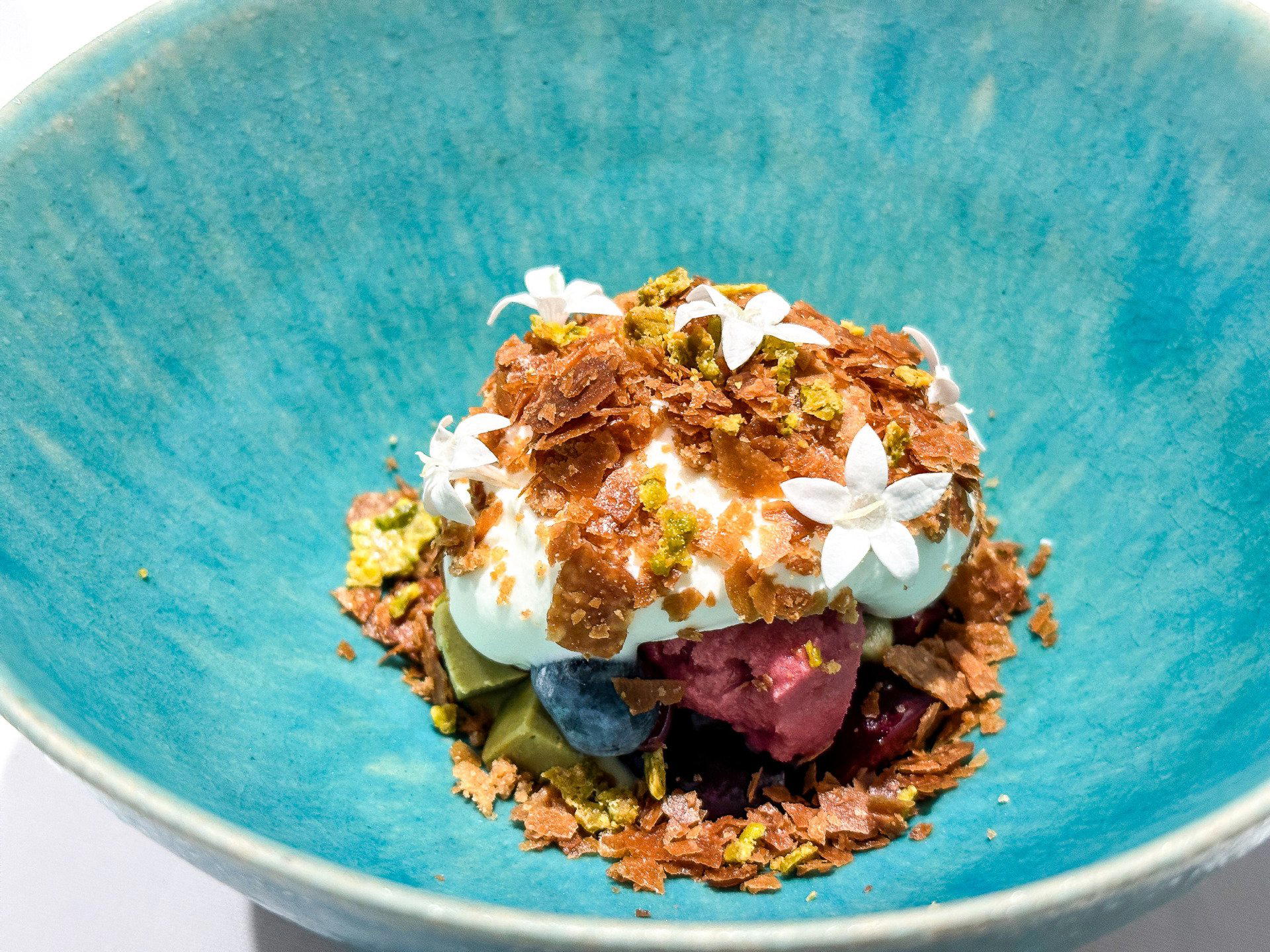
Blancmange of Tartary Buckwheat is a preparation described in the venue's own framing as something found nowhere else. Blancmange as a classical form is a cold-set, milk-based preparation with origins in medieval European cooking that French technique refined into a dessert register. Tartary Buckwheat, a variety distinct from common buckwheat with a higher rutin content and a more bitter, nutty profile, is grown across parts of Japan and is not a standard ingredient in either classical French or contemporary fusion kitchens.
Decision to combine these two references, one a European classical preparation with strong historical lineage, the other a Japanese grain variety with limited mainstream visibility, is precisely the kind of move that defines a chef working with genuine intellectual intent rather than surface-level borrowing. Within Tokyo's French dining scene, where L'Effervescence (French) holds three Michelin stars and operates at the ¥¥¥¥ tier with a nature-driven philosophy, and where the French-leaning end of the market broadly competes on both technique and seasonal sourcing, La Paix's decision to work at the ¥¥¥ price point with ingredient choices this particular is a clear signal about its priorities.
How La Paix Sits in Tokyo's French Dining Tier
Tokyo's French restaurant field is larger, more competitive, and more technically accomplished than most cities outside France itself. The city has held more Michelin stars simultaneously than Paris in multiple survey years, and its French kitchens range from classical Escoffier descendants to radically reimagined contemporary formats. Within that spectrum, La Paix occupies a considered position.
At the ¥¥¥ price level, it operates below the ¥¥¥¥ tier occupied by L'Effervescence (French) and the innovative French-leaning kitchens further up the recognition ladder. This is not a limitation; it reflects a different relationship with the dining public, one where the experience is demanding and specific without requiring the full commitment of Tokyo's most expensive tasting menus. For comparison, Den, which holds two Michelin stars and operates at the ¥¥¥ tier with an innovative Japanese framework, demonstrates that strong critical positioning is entirely achievable without maximum price-point positioning.
Other notable French or Franco-influenced rooms in the city, including au deco, Madame Toki, and Patous, each approach the Franco-Japanese conversation from different angles. La Paix's distinction within this peer group is the regional Japanese specificity of its sourcing and the five-pillar framework that makes its creative logic legible to the attentive diner.
Nihonbashi as Context, Not Coincidence
Understanding why La Paix works as well as it does requires taking Nihonbashi seriously as a culinary neighbourhood rather than treating it as a convenient central address. The district has attracted a cluster of restaurants in recent years that operate with long reference points, whether to Japanese culinary history, craft traditions, or, as here, to a philosophical framework that treats cuisine as something with roots rather than as a set of interchangeable techniques.
For visitors working through Tokyo's dining geography, Nihonbashi functions as a counterweight to the more internationally visible dining corridors of Ginza and Niyonzaka. Harutaka (Sushi) represents the depth of Tokyo's sushi tradition at the three-star level, while La Paix makes the case for French cooking as something genuinely transformed by Japanese place. Both arguments are worth hearing, and Nihonbashi is a district where both can be made credibly.
For those extending their Japan dining itinerary beyond Tokyo, the regional French-Japanese conversation continues in different registers at HAJIME in Osaka, Gion Sasaki in Kyoto, and akordu in Nara, each approaching the intersection of European technique and Japanese ingredient culture from distinct regional starting points. Further south, Goh in Fukuoka and 6 in Okinawa demonstrate how Japanese hospitality and regional produce drive serious kitchens across the archipelago. Internationally, the Japanese-influenced French table has also shaped rooms like Le Bernardin in New York City and Atomix in New York City, where cross-cultural precision operates at a comparable level of intent.
Planning a Visit
La Paix is located at basement level in Nihonbashimuromachi 1-chome, a walkable position from Mitsukoshimae Station on the Tokyo Metro Ginza and Hanzomon lines. Given the kitchen's specificity and Nihonbashi's growing dining reputation, reservations well in advance are advisable. The ¥¥¥ price positioning places it within reach of a broader range of diners than the top tier of Tokyo French, though the menu's ambition does not reflect any concession to accessibility. For wider context on Tokyo's restaurant scene, see our full Tokyo restaurants guide. Visitors planning a fuller stay can also consult [our full Tokyo hotels guide](), [our full Tokyo bars guide](), [our full Tokyo wineries guide](), and our full Tokyo experiences guide.
Frequently asked questions
What style of cooking does La Paix do?
Where is La Paix located?
La Paix is located at Japan, 〒103-0022 Tokyo, Chuo City, Nihonbashimuromachi, 1 Chome−9−4 B1F, Tokyo.
What distinctions does La Paix have?
La Paix has received recognition including: La Paix is supported by five thematic elements: Japan, harmony, spirit, connection and the senses. The element of Japan enters in the form of ‘French cuisine from Japan’. As a native of Wakayama Prefecture, the chef sources Kishu Ume and ma….
What's the must-try dish at La Paix?
The Blancmange of Tartary Buckwheat is the preparation La Paix itself describes as something found nowhere else. Classical French blancmange rendered through a Japanese ingredient signals exactly what the kitchen is arguing: that French technique gains specificity when filtered through local sourcing. The Kishu Ume butter, sourced from the chef's native Wakayama Prefecture, is a second concrete expression of the same logic.
When is La Paix open?
Hours at La Paix: Location.
What has La Paix built its reputation on?
La Paix has built its identity around a structured creative framework: five thematic pillars of Japan, harmony, spirit, connection, and the senses, all expressed through French cooking informed by Japanese ingredients. The kitchen's use of Kishu Ume from Wakayama and the Tartary Buckwheat blancmange give those framework terms a practical form. Sited in Nihonbashi, the restaurant positions itself at a neighbourhood that has historically functioned as a bridge between old and contemporary Tokyo.
Why does La Paix source ingredients from Wakayama Prefecture specifically?
The sourcing connection to Wakayama is biographical: the chef comes from the prefecture, and Kishu Ume, one of Japan's most documented regional plum varieties, is processed into a house butter that anchors the French menu in a specific Japanese provenance. This is a different proposition from generic Franco-Japanese fusion, where the Japanese element is often atmospheric rather than ingredient-driven. Nihonbashi, where the restaurant operates at basement level in Chuo City, reinforces that specificity through its own history as a commercial and cultural crossroads.
In Context: Similar Options
A compact comparison to help you place this venue among nearby peers.
| Venue | Cuisine | Price | Awards | Notes |
|---|---|---|---|---|
| La PaixThis venue — the venue you are viewing | Modern French with Japanese Influences | $150–200 | 1 Michelin Star · Tabelog 100 #35 | Not listed |
| Harutaka | Edo-Style Omakase Sushi | $200–300 | 3 Michelin Stars · World's 50 Best #76 | Sushi |
| RyuGin | Modern Kaiseki | $500+ | 3 Michelin Stars · World's 50 Best #41 | Kaiseki, Japanese |
| L'Effervescence | Modern French with Japanese Influences | $200–300 | 3 Michelin Stars · World's 50 Best #69 | French |
| HOMMAGE | Modern French with Japanese Influences | $150–200 | 2 Michelin Stars · World's 50 Best #78 | Innovtive French, French |
| MAZ | Innovative Peruvian-Japanese Fusion | $150–200 | 2 Michelin Stars · World's 50 Best #28 | Innovative |
Recognition history
Dated appearances from independent guides and award organizations, with the underlying list record or original source where available.
Michelin 1 Star
Michelin
Tabelog 100 #35 · No. 35
Tabelog · Tabelog 100 - French - TOKYO - 2025