La MARGUERIA sits on Avenue du 16 Septembre 1947 in Tende, a small Alpine town where the French-Italian border has shifted more than once, leaving a cuisine that belongs fully to neither tradition. The restaurant occupies that cultural fold, drawing on the Roya Valley's dual heritage in a corner of the southern Alps that most travellers pass through rather than stop in.
Pearl is the En Primeur Club membership app — saves, bookings, and concierge access live there. Same editors, same standards.
- Address
- 19 Av. du 16 Septembre 1947, 06430 Tende, France
- Phone
- +33493356408
- Website
- facebook.com
- Directions
- Get directions
 Saves & bookings on Pearl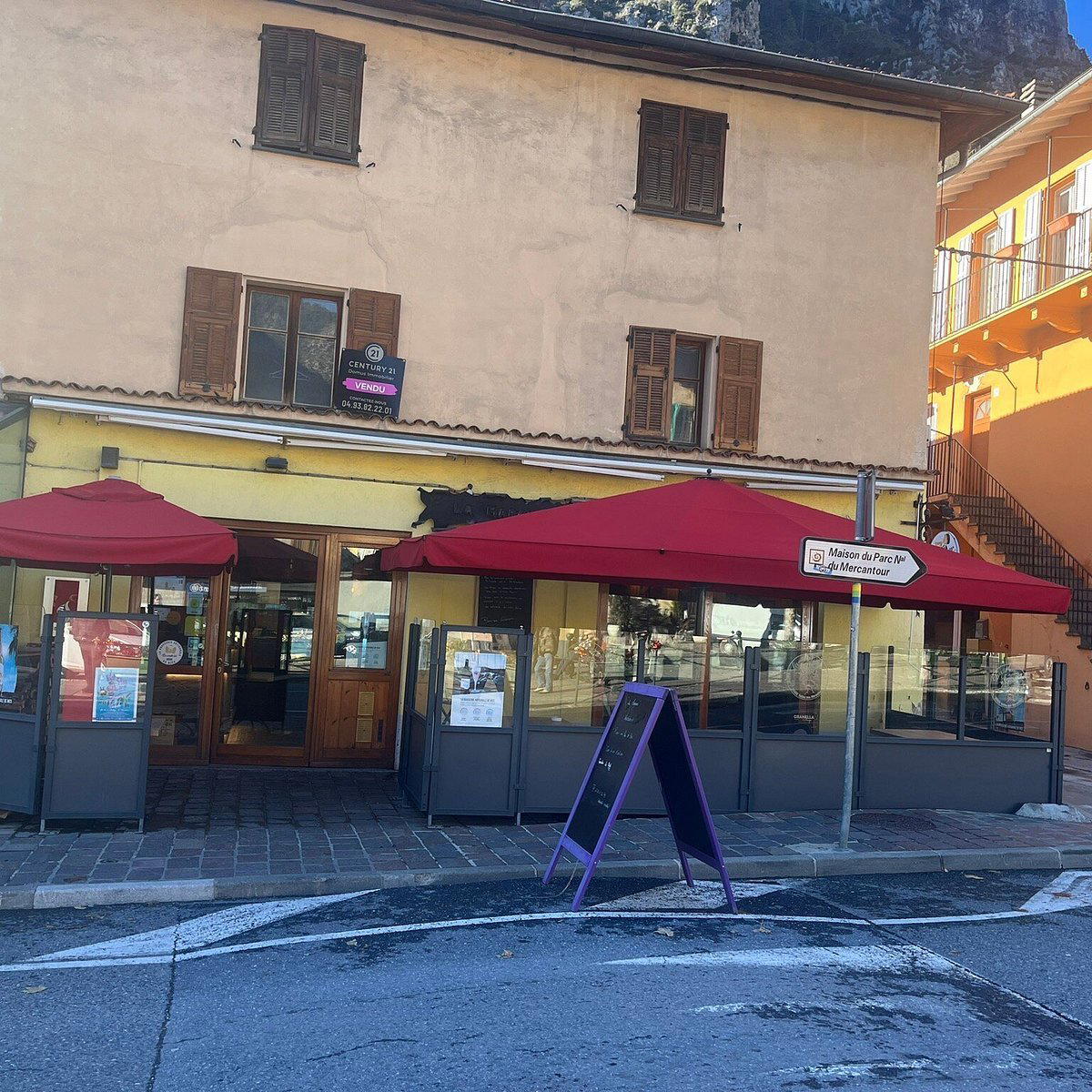
Where the Border Has Always Been Negotiable
Tende sits at an altitude where the southern Alps begin their descent toward the Ligurian coast, and its culinary identity reflects that geography with unusual honesty. The town changed hands between Italy and France in 1947, a fact still encoded in the street address of La MARGUERIA itself: Avenue du 16 Septembre 1947, named for the date the referendum made Tende officially French. That date is not merely administrative history. It marks a cultural boundary that the local table has never fully respected, and restaurants in this valley continue to cook from both sides of it.
This is the context in which La MARGUERIA operates. The Roya Valley, which connects Tende to the Ligurian coast and the broader arc of Liguria below, has always been a corridor rather than a destination, and its food reflects that transit: the chestnut flour and stockfish of inland Liguria, the slow-cooked daubes and herb-heavy preparations of the Provençal hinterland, and the pasta traditions that survived the border redraw intact. A restaurant in Tende is, almost by definition, cooking from multiple inherited vocabularies.
The Roya Valley Table and Its Franco-Italian Register
In the wider category of Franco-Italian Alpine cooking, the Roya Valley occupies a niche that differs materially from the mountain cuisine found in Savoie or the Valle d'Aosta. There is less dairy weight here, more olive oil, more anchovy, more of the preserved and dried pantry that characterises coastal Ligurian cookery. The mountains around Tende provide chestnuts, wild mushrooms, game, and aromatic herbs, while the corridor to the sea keeps Ligurian fish preparations in the local repertoire.
This is a culinary tradition with documented depth. Brandacujun, the Ligurian salt cod preparation, appears in versions across this valley. Barbagiuan, the fried pastry filled with Swiss chard and ricotta that is now best known as Monaco's national dish, has roots in exactly this borderland. Tende's own chestnut festival each autumn draws attention to the ingredient that historically sustained the valley's population through winter, and chestnut flour still appears in local preparations in ways that distinguish this area from the wheat-dominant lowlands. For readers comparing this culinary zone to the haute cuisine corridors of Mirazur in Menton or AM par Alexandre Mazzia in Marseille, Tende represents the unrefined end of the same regional continuum, closer to source, further from formal technique.
Dining at Altitude in a Town That Tourism Forgot
Tende is not a dining destination in the way that Menton or Nice functions for visitors arriving with restaurant itineraries. The town's appeal is structural: it is the gateway to the Mercantour National Park and the Vallée des Merveilles, the prehistoric rock-carving site that draws hikers and archaeologists rather than food tourists. Restaurants here serve a local population, seasonal hikers, and the occasional traveller who has stopped rather than passed through. That context sets realistic expectations about format and ambition.
La MARGUERIA, at 19 Avenue du 16 Septembre 1947, is positioned in the town's main artery rather than tucked into a side street. Practical logistics for visiting Tende are worth understanding before arrival: the town is accessible by train on the Cuneo-Ventimiglia line, a scenic route that crosses the border and connects the valley to both the French Riviera and the Italian Piedmont side. By road, the approach from Nice takes roughly ninety minutes via the D6204 through the Roya gorge. Neither route is casual, which means that dining in Tende tends to be purposeful rather than spontaneous.
For those combining a Tende stop with broader regional dining, Hotel Chamois d'Or offers an additional reference point within the town, and our full Tende restaurants guide maps the options across price points. The contrast with the haute cuisine tier represented by Flocons de Sel in Megève or Auberge de l'Ill in Illhaeusern clarifies what Tende does and does not offer: this is not a destination for tasting menus with wine pairings, but for cooking that carries genuine territorial identity.
France's Regional Dining Outside the Starred Circuit
The bulk of France's serious regional cooking happens outside the Michelin starred circuit. The country's most awarded tables, from Alléno Paris au Pavillon Ledoyen in Paris to Troisgros - Le Bois sans Feuilles in Ouches and Bras in Laguiole, represent one tier of that tradition, and they are well documented. The other tier, comprising the village restaurants, family-run auberges, and market-driven tables that sustain daily life in communities like Tende, is less documented but no less structurally important to understanding how French regional food actually works.
Tende's Franco-Italian position makes it particularly legible as a case study. The town's cooking does not try to resolve its dual inheritance into a single clean identity, and that ambiguity is the interesting thing. You encounter the same productive ambiguity at Auberge du Vieux Puits in Fontjoncouse or L'Oustau de Baumanière in Les Baux, where Provençal identity is interpreted rather than simply repeated. In Tende, interpretation happens without the scaffolding of formal gastronomy, which makes it feel more contingent and, in its own way, more honest about where it sits.
For comparison across France's wider dining range, Paul Bocuse - L'Auberge du Pont de Collonges in Collonges-au-Mont-d'Or, Georges Blanc in Vonnas, Assiette Champenoise in Reims, Au Crocodile in Strasbourg, and Christopher Coutanceau in La Rochelle each anchor a different regional pole. Tende is not competing in that register, but it belongs to the same national conversation about what regional cooking means and where it survives.
Planning Your Visit
The restaurant is a casual restaurant at 19 Avenue du 16 Septembre 1947, 06430 Tende, France, with recommended reservations and an average price of about $25 per person. Arriving in Tende outside peak hiking season, between October and May, means a quieter town and a restaurant scene oriented toward local regulars rather than summer visitors, which tends to produce more representative cooking. Those travelling from the Riviera for a single-day excursion should factor in return journey timing, as the Roya Valley road closes to traffic unpredictably in winter weather.
Budget and Context
Comparable venues nearby, for context on price, style, and recognition.
| Venue | Price | Notes |
|---|---|---|
| La MARGUERIAThis venue — the venue you are viewing | $$ | Not listed |
| Hotel Chamois d'Or | $$ | Casterino, Traditional French-Italian Mountain Bistro |
| Le Local | $$ | Nice Historique, Italian Sicilian Trattoria |
| Little Italy By Fratelli IAQUINTA | $$ | Pont De L'Arc, Authentic Calabrian Italian & Neapolitan Pizza |
| Jamie Oliver's Pizzeria | $$ | Nice Ouest, Jamie Oliver's Italian Pizzeria |
| Burger Casa Fernando & co. La Puccia, le Burger à l'italienne | $$ | Simiane-Collongue, Italian-Style Puccia & Smash Burgers |
Continue exploring
More in Tende
Restaurants in Tende
Browse all →
Bars in Tende
Browse all →
Hotels in Tende
Browse all →

At a Glance
- Cozy
- Rustic
- Classic
- Family
- Casual Hangout
- Terrace
- Natural Wine
- Local Sourcing
- Mountain
Current opening hours
- Monday
- 12–2:15 PM, 7–9:30 PM
- Tuesday
- Closed
- Wednesday
- 12–2:15 PM, 7–9:30 PM
- Thursday
- 12–2:15 PM, 7–9:30 PM
- Friday
- 12–2:15 PM, 7–9:30 PM
- Saturday
- 12–2:15 PM, 7–9:30 PM
- Sunday
- 12–2:15 PM, 7–9:30 PM
Hours can change for holidays and private events. Last verified .
Cozy and family-friendly atmosphere with terrace offering mountain views above the roofs.