Google: 4.2 · 3,130 reviews

Established in 1999 in Rome's Trastevere-adjacent Monteverde district, La Gatta Mangiona is credited with shifting local expectations of what pizza can be. Giancarlo Casa's approach to dough experimentation and high-quality ingredients defined a category of 'd'autore' pizza in the city well before the style became common. The craft beer and wine list is treated with the same seriousness as the food.
 Discover on Pearl
Pearl is the En Primeur Club membership app — saves, bookings, and concierge access live there. Same editors, same standards.
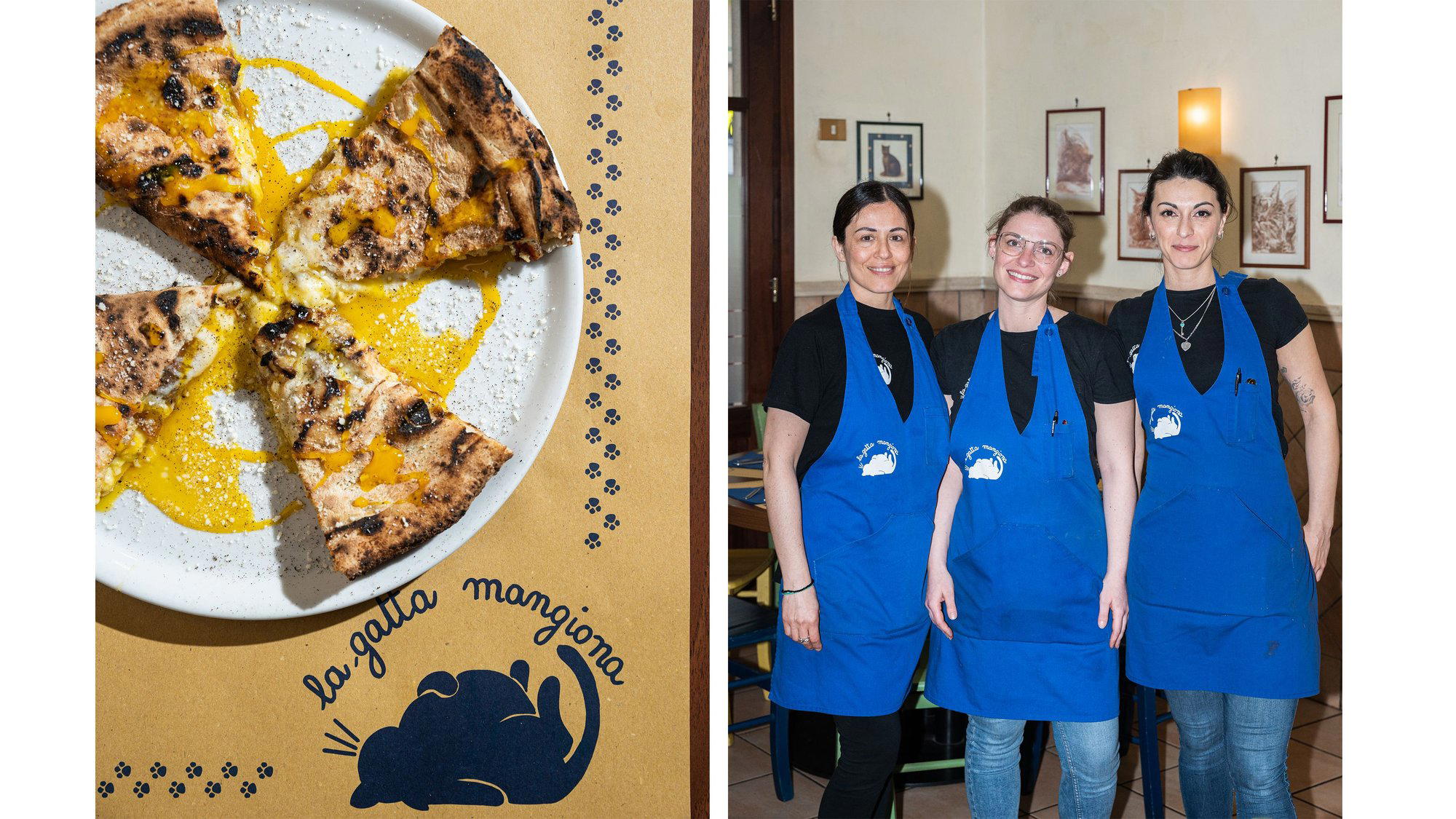
Where Rome Started Taking Pizza Seriously
The Monteverde neighbourhood, west of Trastevere along Via Federico Ozanam, does not draw the crowds that cluster around the centro storico. That distance from the tourist circuit is precisely what has allowed a particular kind of serious, neighbourhood-rooted dining to take hold here. La Gatta Mangiona, open since 1999, is the clearest example of that pattern: a pizzeria that built its reputation among Romans who were willing to travel across the city for it, long before 'd'autore' pizza became a category that guidebooks tracked.
Walking into the room on a busy evening, the sensory register is immediately different from the high-turnover pizzerias closer to the Colosseum or Campo de' Fiori. The air carries the particular yeast-forward warmth of a kitchen that treats its dough as an ongoing project rather than a daily commodity. The noise level is the low roar of a full house of regulars rather than the sharper clatter of tourist throughput. It reads, in other words, as a place that has an established clientele with expectations, and that has been meeting them for over two decades.
What 'D'Autore' Pizza Actually Means in Practice
Roman pizza culture has historically split into two broad schools: the thin, crackerlike pizza romana baked in electric ovens, and the thicker, more irregular pizza al taglio sold by weight. La Gatta Mangiona arrived in 1999 proposing a third register — what its menu describes as pizza d'autore, or signature pizza — in which the dough itself is treated as a variable rather than a constant. Giancarlo Casa, who operates under the informal title of 'pizza engineer', applies a technical focus to fermentation, hydration, and flour selection that was unusual in Rome at the time of opening and remains a distinguishing characteristic now.
The significance of that timing matters. When pizza d'autore became a recognisable movement in Italian cities through the 2000s and into the 2010s, La Gatta Mangiona was already twenty-five years into the project. Newer Rome addresses working in this space, including 180 Grammi Pizzeria Romana, Angelo Pezzella – Pizzeria con Cucina, and Avenida Calò Enopizzeria Roma, are working within a tradition that La Gatta Mangiona helped define in the capital. That founding position gives it a different kind of authority than addresses with more recent credentials.
The supplì , Roman fried rice croquettes , are a parallel thread worth noting. Where many pizzerias treat them as perfunctory starters, here they carry the same ingredient attention as the pizzas themselves. For anyone benchmarking Roman fried snacks across the city, the version here is a reasonable reference point against which to measure others.
The Drink List as a Signal
Italian pizza restaurants at the higher end of the price-quality spectrum have increasingly taken their beverage programs seriously, and La Gatta Mangiona's craft beer and wine selection operates on that logic. In a city where the default pairing for pizza is a direct lager or a generic house red, a curated craft beer list signals an audience that is engaged beyond the food. The wine selection functions similarly: it suggests a kitchen that expects its guests to make considered choices at the table rather than simply defaulting to the cheapest available bottle.
This approach places La Gatta Mangiona in a peer set closer to Rome's enopizzerie , a format that foregrounds the wine list alongside the pizza , including addresses like Avenida Calò Enopizzeria Roma and Extremis , than to traditional neighbourhood pizzerias. The distinction is worth knowing in advance, because it affects both the bill and the pace of the meal.
Context Within Rome's Broader Dining Scene
Rome's restaurant scene spans a wide range beyond pizza. At the formal end, Italian fine dining has multiple reference points nationally, from Osteria Francescana in Modena to Enoteca Pinchiorri in Florence, Le Calandre in Rubano, Dal Pescatore in Runate, and Atelier Moessmer Norbert Niederkofler in Brunico. In Milan, Enrico Bartolini represents a different model of urban Italian fine dining. Internationally, tasting-menu restaurants like Le Bernardin in New York City and Atomix in New York City set their own benchmarks in technique-driven cooking. La Gatta Mangiona operates at a completely different register from all of these, but the underlying principle is comparable: sustained focus on a narrow category, executed at a level that rewards regular return visits.
Within Rome specifically, the neighbourhood pizzeria with serious dough credentials is a category that has grown considerably since 1999. Crunch represents a newer entry in Rome's evolving fried and baked formats. La Gatta Mangiona's position is less about competing with those addresses than about having set the terms that made the conversation possible. See our full Roma restaurants guide for a broader map of where the city's dining is currently strong.
Planning a Visit
La Gatta Mangiona is located at Via Federico Ozanam 30-32 in the Monteverde district, accessible from the centre by tram or a short taxi ride from Trastevere. The address has operated since 1999, which means it carries the particular atmosphere of a place that has outlasted trends and continued to refine its position on its own terms. Given its standing among Roman pizza enthusiasts, booking ahead is advisable, particularly on weekend evenings when the room fills with a mix of regulars and visitors who have come specifically for the pizza. Walking in without a reservation on a Friday or Saturday evening carries real risk of a wait. Midweek visits are generally more relaxed and offer a clearer read on the room's baseline character.
For visitors building a wider Rome itinerary, the Roma hotels guide, Roma bars guide, Roma wineries guide, and Roma experiences guide cover the broader picture across categories.
Peers You’d Cross-Shop
A compact peer snapshot based on similar venues we track.
| Venue | Cuisine | Price | Notes |
|---|---|---|---|
| La Gatta Mangiona | This venue | ||
| 180 Grammi Pizzeria Romana | |||
| Angelo Pezzella – Pizzeria con Cucina | |||
| Avenida Calò Enopizzeria Roma | |||
| Crunch! | |||
| Extremis |
Continue exploring
More in Rome
Restaurants in Rome
Browse all →
Bars in Rome
Browse all →
Hotels in Rome
Browse all →

Wineries in Rome
Browse all →
At a Glance
- Cozy
- Lively
- Hidden Gem
- Rustic
- Casual Hangout
- Group Dining
- Family
- Date Night
- Open Kitchen
- Extensive Wine List
- Beer Program
- Local Sourcing
Brightly lit dining rooms decorated with cat pictures, buzzing with conversation from locals, couples, groups, and families.