La Fusta
La Fusta sits on Baxter Avenue in Elmhurst, Queens, inside one of New York City's most concentrated corridors of South American cooking. The address places it in a neighbourhood where Argentine parrilla culture has taken genuine root far from Manhattan's dining circuit, making it a reference point for wood-fire grilling traditions in a borough that rewards those willing to travel for the real thing.
Pearl is the En Primeur Club membership app — saves, bookings, and concierge access live there. Same editors, same standards.
- Address
- 80-32 Baxter Ave, Queens, NY 11373
- Phone
- +17184298222
- Website
- lafustarestaurant.com
- Directions
- Get directions
 Saves & bookings on Pearl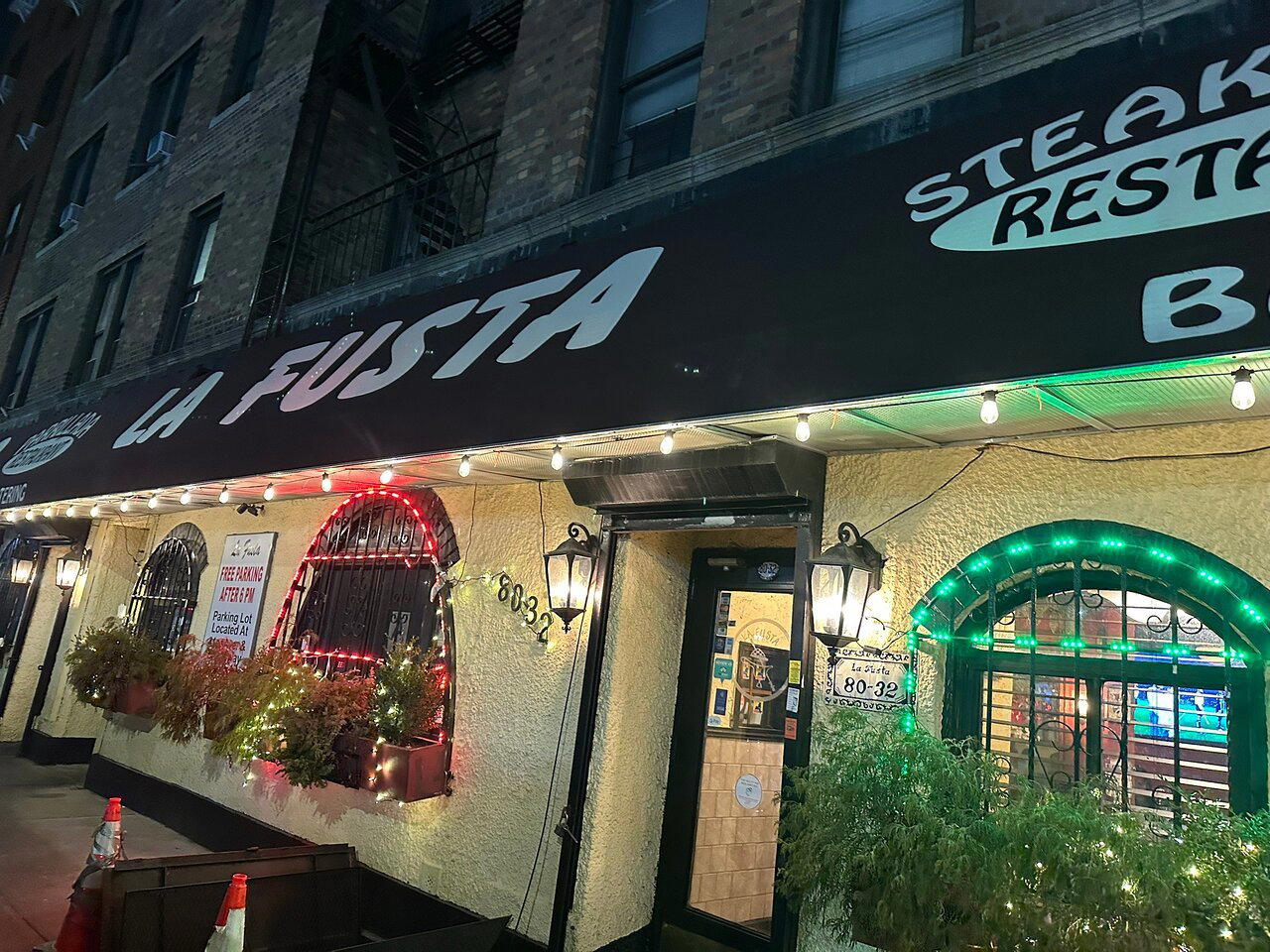
Elmhurst and the Argentine Table
Queens has long functioned as New York City's most reliable index of global cooking, not because it collects restaurants as trophies, but because its neighbourhoods sustain genuine culinary communities. Elmhurst and the surrounding Jackson Heights corridor represent among the more concentrated zones of South American dining in the five boroughs, where Argentine, Ecuadorian, Colombian, and Peruvian kitchens operate side by side for a local clientele that holds them to a different standard than novelty-seeking visitors from across the East River. La Fusta, on Baxter Avenue, sits inside that context. Its address alone signals something about what to expect: this is a restaurant answering to a community, not to a downtown critic.
The parrilla tradition that shapes places like La Fusta is worth understanding before you arrive. Argentine grilling is not a technique so much as a ritual system, one built around time, heat management, and the unhurried reduction of fire to embers. The asado, as practised in Argentina, treats a meal as a social occasion that unfolds over several hours rather than courses timed to a reservation window. Cuts are brought to the table in sequence, beginning with offal and sausage, moving through short ribs and flank, and finishing with the larger prime cuts. The logic is cumulative. Arriving hungry and leaving when you feel like it is not a casual suggestion; it is the operating premise of the meal. New York's Argentine restaurants that honour this structure occupy a distinct tier from those that adapt it for speed and turnover.
The Ritual of the Meal
South American steakhouses in New York have historically clustered in two categories: the expansive, white-tablecloth rooms that price against Manhattan's chophouse circuit, and the neighbourhood parrillas that serve the diaspora on weekday evenings and families on Sunday afternoons. La Fusta belongs to the second category, and that positioning matters for how you approach a visit. The dining ritual here is less about performance and more about sequence and patience. Chimichurri and bread arrive early, not as decoration but as the opening movement of a meal that will take time. The expectation is that you will let it.
For context on where this fits within New York's broader dining hierarchy, the city's most formally structured tasting menus, Le Bernardin, Per Se, Masa, operate at a different price tier and with a different set of conventions. The Argentine parrilla tradition is not lesser; it is simply governed by different rules. Where Atomix or Jungsik New York structure a meal around a chef's editorial point of view, the parrilla structures it around the fire and around the social contract between the table and the grill. The asador's timing is the kitchen's menu.
Queens as a Dining Destination
The subway ride from Midtown to Elmhurst takes roughly twenty to twenty-five minutes on the E, M, or R trains, a commute that most Manhattan-based diners would accept without hesitation for a French bistro in the West Village but often resist for Queens. That resistance is worth examining, because the trade-off runs strongly in the outer borough's favour when it comes to neighbourhood Argentine cooking. The concentration of South American restaurants along Roosevelt Avenue and its surrounding streets means that the restaurant operates in genuine competition with a local comparable set, which tends to keep both quality and value oriented toward the regular customer rather than the occasional visitor.
This pattern repeats across American cities where diaspora communities sustain specific culinary traditions: the leading version of a regional cuisine often operates inside that community rather than at a remove from it. The same logic applies to the Argentine restaurants of New Orleans-adjacent South American pockets, or the farm-to-table commitments that shape places like Blue Hill at Stone Barns in Tarrytown, where the community surrounding the restaurant sets its standards. Audience shapes kitchen culture in ways that awards and press attention rarely replicate.
Planning Your Visit
Baxter Avenue in Elmhurst is accessible without a car, which matters in New York. The neighbourhood is dense, unpretentious, and active at mealtimes, particularly on weekends when families from the surrounding South American community tend to occupy the larger tables. Visiting on a Saturday or Sunday afternoon, when the parrilla culture is most fully in effect, gives a more complete picture of how the restaurant functions at its own pace. Weekday evenings are quieter and faster; the Sunday asado rhythm is a different experience entirely. Because specific booking information for the restaurant is not available through verified channels, calling ahead or arriving during off-peak hours is the practical approach for securing a table without a long wait.
For those building a broader Queens or New York itinerary, our full New York City restaurants guide maps the city's dining by neighbourhood and category, which helps in planning around the restaurant rather than treating it as a standalone detour. The Elmhurst area rewards an afternoon rather than a rushed dinner: the surrounding blocks offer enough culinary variety to make a longer visit worthwhile.
For comparison across American cities, the structured dining experiences at Alinea in Chicago, Lazy Bear in San Francisco, Single Thread Farm in Healdsburg, The French Laundry in Napa, Providence in Los Angeles, Addison in San Diego, The Inn at Little Washington, and Bacchanalia in Atlanta each represent a formal, tasting-menu approach to the American dining ritual. The restaurant occupies a completely different register, one defined by communal pacing and fire rather than by chef-authored progression, and that difference is the point. Internationally, the distinction maps onto the gap between, say, the grand dining rooms of Alain Ducasse at Louis XV in Monte Carlo or 8½ Otto e Mezzo Bombana in Hong Kong and the neighbourhood trattoria that feeds the same city block every evening. Both matter; they simply answer different questions.
Budget Reality Check
Comparable venues nearby, for context on price, style, and recognition.
| Venue | Cuisine | Price | Notes |
|---|---|---|---|
| La FustaThis venue — the venue you are viewing | Elmhurst, Authentic Argentine Steakhouse | $$ | Not listed |
| Toné Cafe | Not listed | $$ | Brighton Beach, Traditional Georgian cafe & bakery |
| Kalye | Not listed | $$ | Lower East Side, Authentic Filipino Street Food |
| Chococo Café (Upper East Side location) | Not listed | $$ | Upper East Side, Artisan Chocolate Café & British Chocolatier |
| Ariston Floral Boutique | Not listed | $$ | East Midtown-Turtle Bay, Floral Cafe with Coffee and Pastries |
| Kafana | East Village, Authentic Serbian | $$ | Not listed |
Continue exploring
More in New York City
Restaurants in New York City
Browse all →
Bars in New York City
Browse all →
Hotels in New York City
Browse all →





At a Glance
- Cozy
- Rustic
- Intimate
- Family
- Group Dining
- Casual Hangout
- Standalone
- Extensive Wine List
Current opening hours
- Monday
- 12–10 PM
- Tuesday
- 12–10 PM
- Wednesday
- 12–10 PM
- Thursday
- 12–10 PM
- Friday
- 12–11 PM
- Saturday
- 1–11 PM
- Sunday
- 1–10 PM
Hours can change for holidays and private events. Last verified .
Warm and inviting with old-world beauty, equestrian decor, and a cozy atmosphere divided into intimate rooms.