In Salernes, a Var village better known for its terracotta floor tiles than its restaurant scene, La cuisine des halles occupies a Cours Théodore Bouge address that puts it at the commercial heart of a working Provençal market town. The cooking draws from the same regional supply lines that feed the weekly market stalls outside, placing it firmly within the ingredient-led tradition of southern French bistro cooking.
 Discover on Pearl
Pearl is the En Primeur Club membership app — saves, bookings, and concierge access live there. Same editors, same standards.
- Address
- 17 Cr Théodore Bouge, 83690 Salernes, France
- Phone
- +33633369679
- Website
- facebook.com
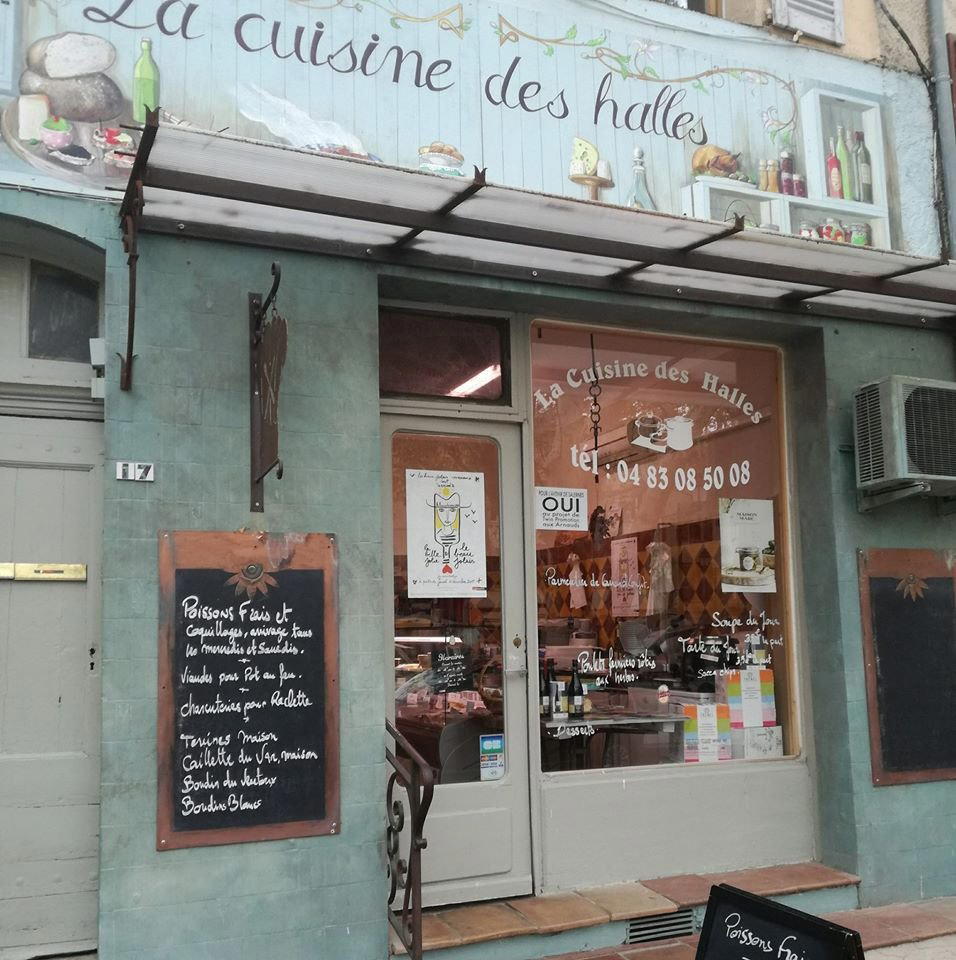
A Market Town, and What It Means to Cook in One
Salernes sits in the Var interior, roughly equidistant between the coastal crowds of the Côte d'Azur and the lavender plateaus of the Luberon. It is not a destination town in the resort sense. The economy here still turns on ceramics, agriculture, and the rhythms of a twice-weekly market that draws producers from across the Haut-Var. That market context matters when thinking about where and how a restaurant like La cuisine des halles positions itself. Its address on the Cours Théodore Bouge places it directly within that commercial fabric, a few steps from stalls selling local honey, olives, chèvre, and seasonal vegetables that change week to week as the Provençal growing calendar advances.
This is not the setting you find at the large-format French dining institutions further afield. Compare it against the gravity of a place like Mirazur in Menton, where the restaurant's garden terraces and sea views are as much the subject as the food, or the long-established grandeur of Auberge de l'Ill in Illhaeusern, and the contrast tells you something important about how French regional dining actually works below the Michelin-starred tier. The great majority of good eating in France happens in exactly this kind of setting: a market square, a modest façade, a room that prioritises the plate over the production.
Ingredient Sourcing and the Var Supply Chain
The Var département is one of the more self-sufficient agricultural zones in southern France. Olive oil production is concentrated around Draguignan and the Massif des Maures. Market gardens in the valley floors supply courgettes, aubergines, tomatoes, and peppers through a growing season that runs longer here than anywhere north of Lyon. Hill farms above Salernes produce lamb and kid on terrain that flavours the meat in ways flat-country livestock farming cannot replicate. Mushroom foraging, particularly cèpes and girolles in autumn, is embedded in the local food culture at a practical level, not a gastronomic performance level.
A restaurant named for the halles, the covered market hall that has been the distribution point for this kind of produce for centuries in French provincial towns, is making an implicit statement about sourcing. The name signals orientation toward the market supply chain rather than toward imported or prestige ingredients. It is a positioning you see across the better bistros of inland Provence: the menu follows what is available locally rather than constructing dishes around a fixed creative concept. This contrasts with the approach at places like Alléno Paris au Pavillon Ledoyen, where the creative architecture of each dish operates independently of regional seasonality. Neither approach is superior in absolute terms, but they represent genuinely different culinary philosophies, and the market-led model tends to produce cooking that reads most clearly in place, at the right time of year.
For the Var specifically, that means spring menus weighted toward asparagus from the coastal plains and young artichokes from around Brignoles, summer cooking built around tomatoes and peppers at their peak ripeness, and autumn tables where wild mushrooms and game from the surrounding hills shift the register toward something earthier and more substantial. The ingredient calendar in this part of France is not a marketing device. It is the actual constraint around which the cooking is organised.
Where La cuisine des halles Sits in the Regional Picture
Salernes has no Michelin-starred restaurants, which means La cuisine des halles operates in a comparable set defined by quality bistro cooking rather than tasting-menu ambition. The comparison set for a market-town address in the Var interior is the reliable regional table that locals return to weekly and visitors from the coast discover during day trips into the Var backcountry. That is a different kind of value proposition, and one that French food culture has always taken seriously alongside the haute cuisine tradition represented by institutions like Paul Bocuse - L'Auberge du Pont de Collonges or Georges Blanc in Vonnas.
The bistro tier in inland Provence tends toward generous portions, direct saucing, and a wine list that prioritises the Var appellation, particularly Côtes de Provence rosé and the more structured reds from Bandol to the south. Pricing at this level reflects local economic reality rather than destination premiums, which makes these addresses considerably more accessible than their coastal counterparts. For visitors staying in the area during the summer season, the Haut-Var offers an alternative to the price inflation that affects restaurants along the Corniche and in the larger coastal towns.
Other French regional tables worth knowing from our coverage, which collectively map the range from village bistro to grand maison, include Bras in Laguiole, Auberge du Vieux Puits in Fontjoncouse, Flocons de Sel in Megève, Troisgros in Ouches, and Assiette Champenoise in Reims. For readers also tracking the French seafood tradition specifically, Christopher Coutanceau in La Rochelle and La Marine in Noirmoutier-en-l'île represent the coastal end of that spectrum. Beyond France, the conversation about what ingredient proximity does to a menu extends globally: Le Bernardin in New York City and Atomix in New York City each demonstrate, in different ways, how sourcing discipline shapes creative output at the highest level. Closer to home, Au Crocodile in Strasbourg illustrates how Alsatian regional identity anchors a restaurant's identity across decades.
Planning Your Visit
Salernes is most practically reached by car from Draguignan, approximately 20 kilometres to the east, or from Aix-en-Provence to the west via the A8 motorway. The town's market day schedule, typically Tuesday and Saturday mornings, is worth aligning with a visit, since the produce stalls on the Cours give direct context for what local kitchens are working with that week. Summer in the Var runs long and hot, so lunch timing matters: the post-market midday service in a shaded dining room is the natural rhythm of eating well in inland Provence during July and August. The restaurant is recommended for reservations and follows these hours: Mon: Closed; Tue: Closed; Wed: 12 to 1:30 PM, 7 to 8:30 PM; Thu: 12 to 1:30 PM, 7 to 8:30 PM; Fri: 12 to 1:30 PM, 7 to 9 PM; Sat: 12 to 1:30 PM, 7 to 9 PM; Sun: 12 to 2 PM.
In Context: Similar Options
Comparable venues nearby, for context on price, style, and recognition.
| Venue | Cuisine | Price | Awards | Notes |
|---|---|---|---|---|
| La cuisine des hallesThis venue — the venue you are viewing | French Market Bistro | $$ | , | |
| Café.Germain | Provençal French Bistro | $$ | , | Grand Place |
| Le Safran | French Mediterranean Bistro | $$ | , | Trets center |
| Café Maxime | French Brasserie & Café | $$ | , | centre of town |
| Café des Arts | Provençal Brasserie | $$ | , | Place des Lices |
| Le Directoire | Traditional French Bistro with Pizza | $$ | , | Fréjus Plage |
Continue exploring
More in Salernes
Restaurants in Salernes
Browse all →
Bars in Salernes
Browse all →
Hotels in Salernes
Browse all →
At a Glance
- Cozy
- Rustic
- Intimate
- Family
- Casual Hangout
- Date Night
- Terrace
- Natural Wine
- Local Sourcing
- Street Scene
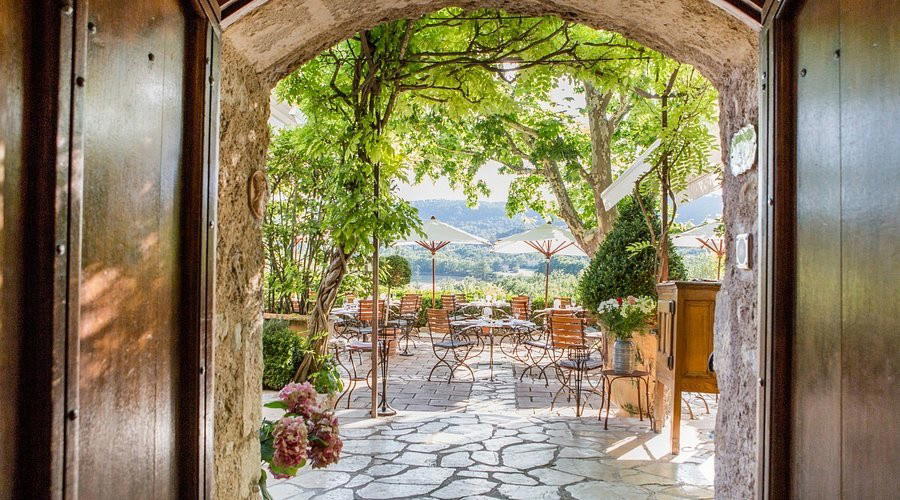
Warm, convivial atmosphere like home with a welcoming duo of owners, cozy interior, and shaded terrace on the village square.