La Chata de Guadalajara
Our verdict
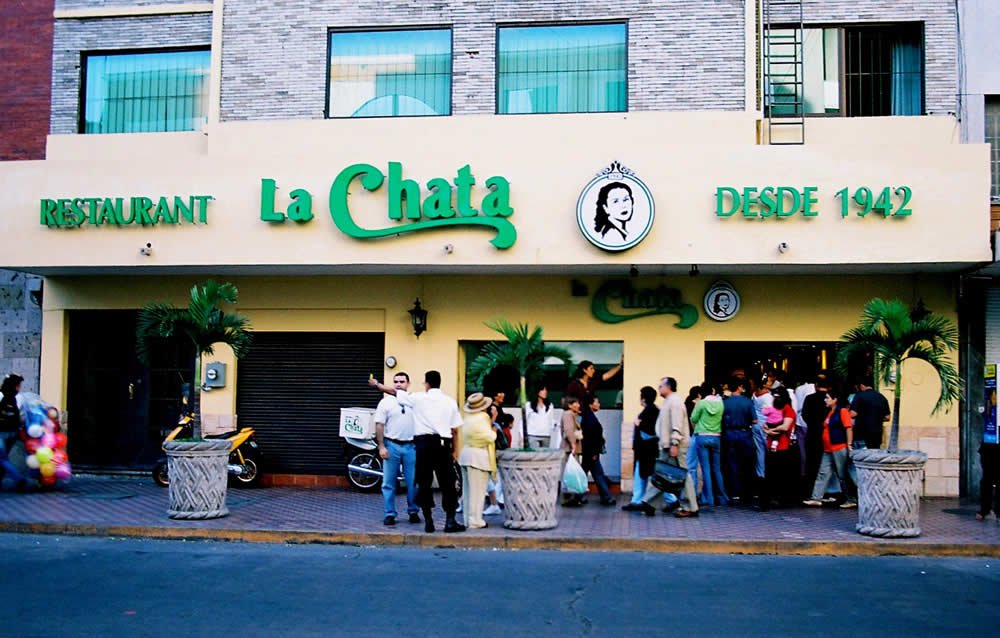
La Chata de Guadalajara has anchored Centro Histórico's traditional Mexican dining scene for generations, drawing locals and visitors alike to its Ramón Corona address for the kind of Jaliscan cooking that defines the region's table — birria, pozole, and chile-laced antojitos served without ceremony or compromise. It operates squarely in the old-school cantina tradition, where the ritual of the meal matters as much as what arrives on the plate.

Pearl is the En Primeur Club membership app — saves, bookings, and concierge access live there. Same editors, same standards.
- Address
- Av. Ramón Corona 126, Zona Centro, 44100 Guadalajara, Jal., Mexico
- Phone
- +52 33 3613 0588
- Hours
- Daily 7 AM–12 AM
- Website
- lachata.com.mx
- Directions
- Get directions
The menu
What to order
- Flautas
- Platillo jalisciense
- Pozole
- Torta ahogada
Where Guadalajara's Dining Ritual Begins
There is a particular grammar to eating in Guadalajara's Centro Histórico that visitors from Mexico City or abroad take a meal or two to absorb. The pace is deliberate. The order of dishes follows an unspoken logic. Tortillas arrive hot and unannounced. Salsas come in sets, not as afterthoughts. At addresses like La Chata de Guadalajara on Avenida Ramón Corona, that grammar is not a selling point — it is simply how lunch has always worked in this part of the city. The room does not perform tradition; it enacts it.
Guadalajara's centro sits within a broader Mexican dining conversation that has grown considerably more complex in recent years. Pujol in Mexico City and the Baja California wine-country circuit around Animalón in Valle de Guadalupe draw international attention to avant-garde technique. At the other end of the spectrum, neighbourhood taquerías operate on pure volume. Somewhere between those poles sits a category of established traditional restaurants — higher in formality and consistency than a street stall, grounded in regional specificity rather than contemporary experimentation. La Chata occupies that middle ground in one of Jalisco's most historically significant dining corridors.
The Logic of the Jaliscan Table
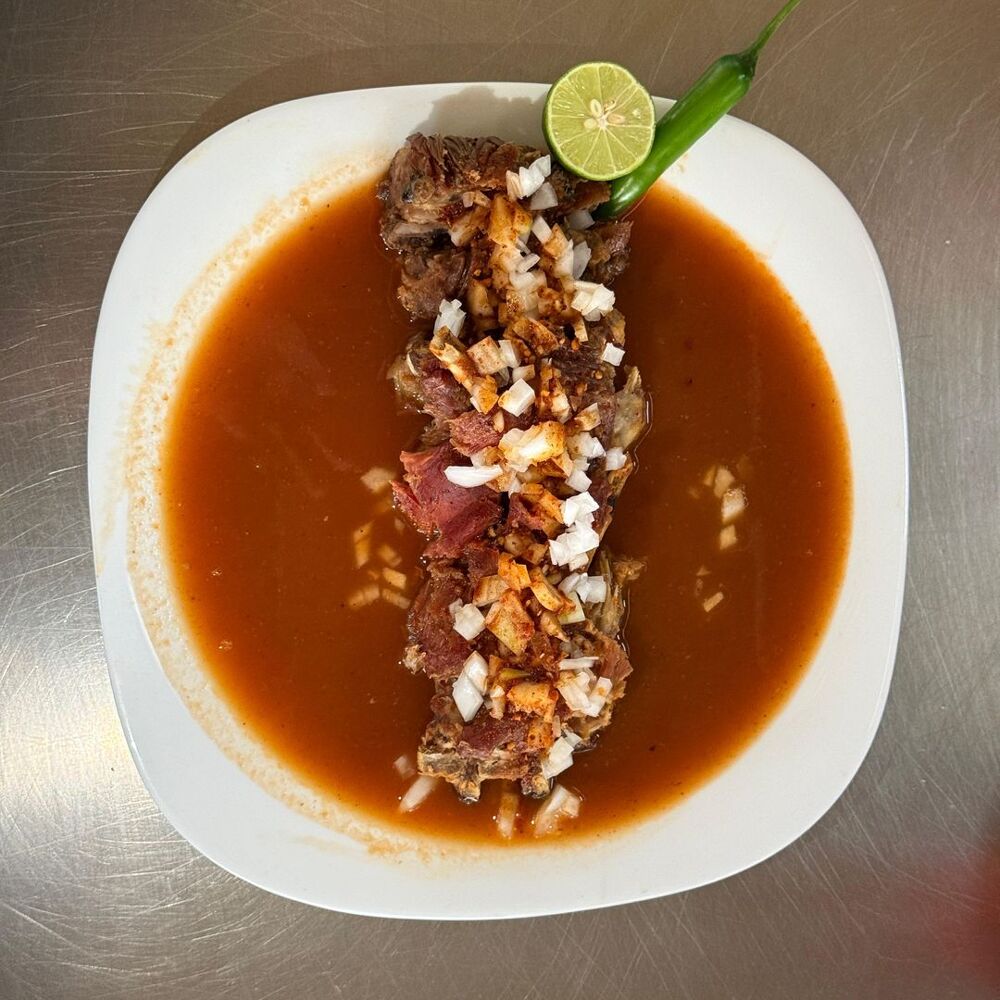
Jalisco cuisine is one of Mexico's most codified regional traditions. The state gave the country birria, braised goat or beef, deeply spiced, slow-cooked until the fat has melted into the broth, and pozole, the hominy soup that predates the colonial period and still anchors Sunday tables across the region. These are not dishes that reward shortcuts. They require time and orthodoxy, and the restaurants that earn reputations for them tend to do so across decades rather than seasons.
The dining ritual around these dishes carries its own set of expectations. A proper Jaliscan meal does not begin with bread. It begins with a basket of corn tortillas, often a cup of consommé, and the understanding that the main event will arrive heavy and slow. Condiments, dried chiles, raw onion, oregano, lime, are applied according to personal preference, not the kitchen's instruction. That autonomy is structural, not optional. Restaurants that honour it tend to feel less like performances and more like extensions of the domestic table. That quality is increasingly rare as Guadalajara's dining scene adds more cosmopolitan layers, with addresses like Alcalde and Bruna pulling the city's culinary conversation toward modern Mexican and European territory.
For the broader regional picture across Mexico, the conversation around traditional cooking is just as active in Oaxaca, where Levadura de Olla has built a reputation around pre-Hispanic technique, and in Monterrey, where KOLI Cocina de Origen grounds its menu in Northern Mexican heritage. The shared thread is restaurants that treat regional specificity as a discipline rather than a marketing position.
The Centro Histórico Setting
Ramón Corona runs through Guadalajara's historic core, flanked by colonial-era architecture and close enough to the cathedral and Mercado San Juan de Dios to place La Chata squarely in the city's most foot-trafficked cultural zone. Centro dining in Guadalajara operates on a different rhythm than the Providencia or Chapultepec corridors: lunches run long, tables turn slowly, and the crowd skews toward locals on extended midday breaks rather than the international visitors who cluster around the city's newer restaurant districts.
That neighbourhood character shapes the experience more than any single element of the menu. Eating well in Centro Histórico is less about discovery and more about participation in something that has been running continuously for a long time. La Chata's address on Ramón Corona places it within walking distance of several of Guadalajara's most visited plazas, which matters for visitors who want to anchor a day of city exploration around a proper sit-down lunch rather than a quick street snack.
For contrast within Guadalajara's traditional dining tier, Birriería las 9 Esquinas and Birrieria Chololo Las Juntas each operate with a narrower, more single-dish focus. Asador La Vaca Argentina Pérgolas pulls in a different direction entirely, toward grilled meat with South American framing. La Chata's proposition is broader, a fuller survey of Jaliscan cuisine rather than a specialist's deep cut on one preparation. That breadth is either an asset or a dilution depending on what a diner is after.
Eating Here: Pacing and Expectations
The rhythm of a meal at a traditional Jaliscan restaurant like this one differs from the tasting-menu cadence at, say, Le Chique in Puerto Morelos or the fire-led progression at Arca in Tulum. There is no orchestration here. A table is set, dishes are ordered from a conventional menu, and the meal proceeds at whatever pace the kitchen runs and the diner prefers. The value in that is real: no timed seatings, no predetermined arc, no sense that the experience has been engineered.
For visitors accustomed to the precision of internationally recognised restaurants like Le Bernardin in New York City or Lazy Bear in San Francisco, the shift in register is considerable. What traditional Guadalajaran dining offers instead is legibility: a menu that reflects the actual food culture of the region, without translation or reinterpretation. That is its own form of authority.
Walk-in access is generally practical given the Centro location and the restaurant's scale as an established traditional address, though weekend lunches in Guadalajara's historic centre tend to fill quickly as families settle in for extended afternoon meals. For a wider view of where La Chata fits within Guadalajara's broader restaurant ecosystem, the EP Club Guadalajara restaurants guide maps the city across price tiers and neighbourhood clusters. Elsewhere in western Mexico's wine and fine-dining circuit, Olivea Farm to Table in Ensenada, Lunario in El Porvenir, and HA' in Playa del Carmen represent different points on the spectrum of how Mexican regional food is being interpreted at the moment. Pangea in San Pedro Garza García offers another reference point for how traditional Mexican hospitality translates into a more formal dining format in northern Mexico.
Frequently asked questions
Is La Chata de Guadalajara good for families?
Traditional Jaliscan restaurants of this format in Guadalajara's Centro Histórico are generally structured around communal, multi-generational dining, and La Chata fits that pattern. The address on Ramón Corona places it close to the cathedral and central plazas, making it accessible before or after family outings in the historic core. The format is relaxed and portion-oriented rather than tasting-menu formal, which suits mixed groups.
What's the vibe at La Chata de Guadalajara?
Expect a workaday Centro atmosphere: tiled walls, busy midday service, and a clientele that skews toward local workers and families rather than tourists seeking spectacle. Ramón Corona 126 sits in Guadalajara's historic core, so the surrounding architecture is colonial and the foot traffic is consistent. The energy is purposeful rather than leisurely — people come to eat well and efficiently.
How does La Chata de Guadalajara fit into Guadalajara's wider food scene?
Guadalajara has produced some of Mexico's most documented regional dishes, and La Chata on Ramón Corona 126 in Zona Centro occupies the traditional end of that spectrum, distinct from the contemporary Jalisco cooking emerging in Chapultepec and Providencia neighbourhoods. It belongs to a category of established Centro institutions that anchor the city's culinary identity in technique and tradition rather than innovation. For anyone tracing Jalisco cuisine from its source, this is where the institutional record sits.
What should I eat at La Chata de Guadalajara?
Jalisco's canonical dishes are the reference point here: birria (slow-braised spiced meat, historically goat), pozole, and the torta ahogada, a Guadalajara-specific sandwich submerged in salsa. These are the dishes that define the Jaliscan table regionally, and a restaurant operating in the Centro Histórico under this identity is expected to execute them as the core of the menu.
Where is La Chata de Guadalajara located?
La Chata de Guadalajara is located at Av. Ramón Corona 126, Zona Centro, 44100 Guadalajara, Jal. Mexico, Guadalajara.
Can I walk in to La Chata de Guadalajara?
Walk-in dining is standard practice at traditional Jaliscan restaurants at this address level in Guadalajara's Centro. Midday on weekdays tends to be the busiest window, coinciding with the comida corrida hour roughly between 2pm and 4pm.
What is La Chata de Guadalajara known for?
La Chata is a reference point for Jalisco's codified regional cuisine in Guadalajara's Centro Histórico, operating on Ramón Corona in the city's most historically dense district. It represents a style of Mexican regional dining built around dishes the state exported to the rest of the country: birria, pozole, and torta ahogada. For visitors orienting themselves to Guadalajara's food culture, it functions as a baseline for understanding the Jaliscan table before exploring the broader scene.
Category Peers
| Venue | Cuisine | Price | Awards | Notes |
|---|---|---|---|---|
| La Chata de GuadalajaraThis venue — the venue you are viewing | Traditional Jalisco Mexican | $10–20 | Not listed | Not listed |
| Alcalde | Modern Mexican Fine Dining | $100–150 | 1 Michelin Star · World's 50 Best #51 | Mexican |
| Xokol | Modern Mexican Corn-Focused Tasting Menu | Not listed | 1 Michelin Star · The Best Chef Two Knives | Not listed |
| Hueso Restaurante | Modern Mexican | $50–100 | Not listed | Not listed |
| I Latina | Mexican-Asian Fusion | $30–50 | Not listed | Not listed |
| Restaurante Lula Bistro | Modern French-Mexican Fusion | Not listed | Not listed | Not listed |
Continue exploring
More in Guadalajara
Restaurants in Guadalajara
Browse all →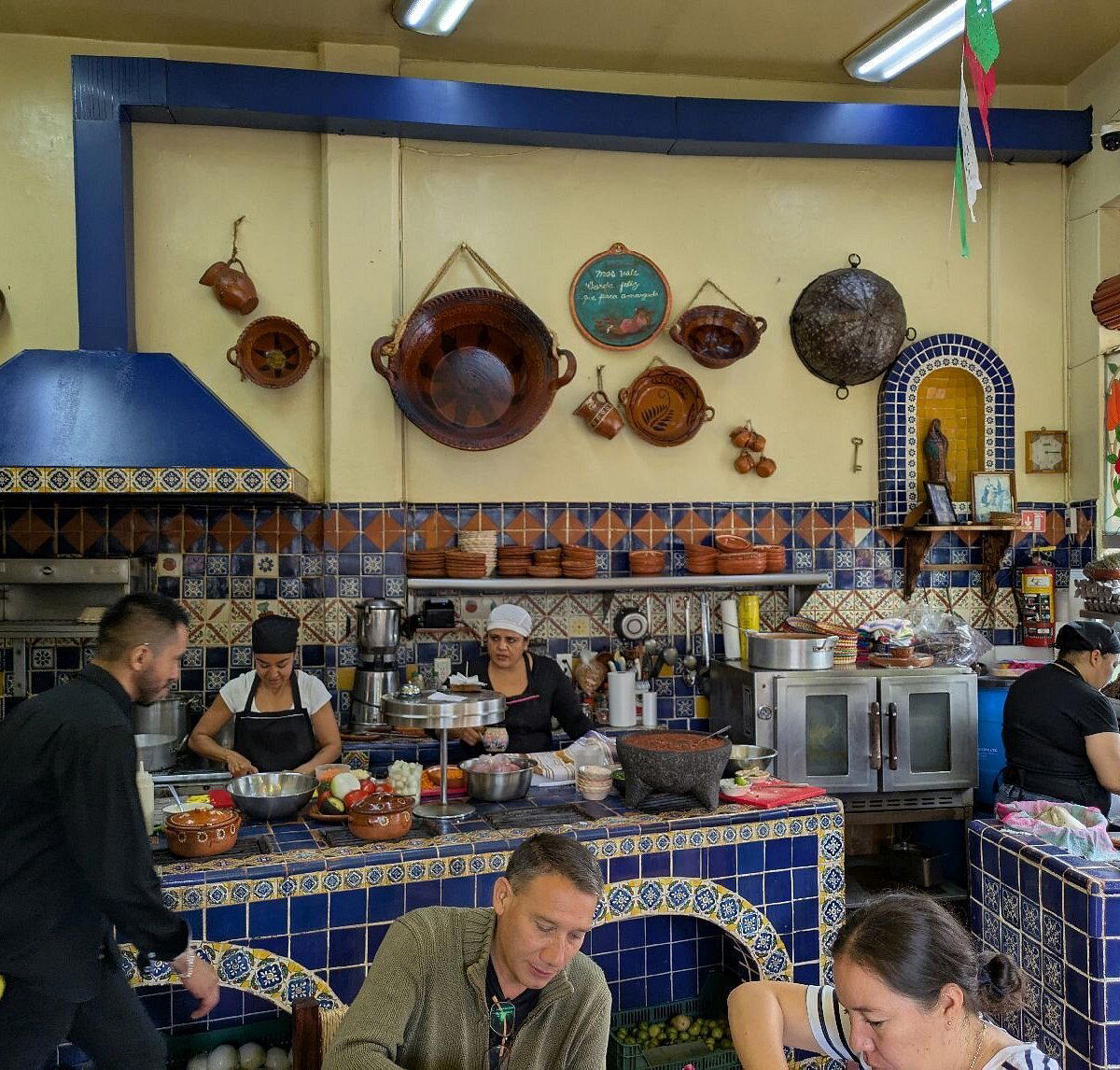
Bars in Guadalajara
Browse all →
Hotels in Guadalajara
Browse all →



Details
- Classic
- Rustic
- Well Known
- Family
- Casual Hangout
- Group Dining
- Historic Building
- Open Kitchen
- Beer Program
- A La Carte
- Vegetarian Friendly
Current opening hours
- Monday
- 7 AM–12 AM
- Tuesday
- 7 AM–12 AM
- Wednesday
- 7 AM–12 AM
- Thursday
- 7 AM–12 AM
- Friday
- 7 AM–12 AM
- Saturday
- 7 AM–12 AM
- Sunday
- 7 AM–12 AM
Hours can change for holidays and private events. Last verified .
Old-school diner-style with open kitchen, warm hospitality, and lively traditional atmosphere.