Asador La Vaca Argentina Pérgolas
Our verdict
An Argentine-style asador in Guadalajara's Ladron De Guevara neighbourhood, Asador La Vaca Argentina Pérgolas brings the open-fire beef tradition of the Southern Cone to Jalisco. The pergola setting signals a dining format built around smoke, time, and the unhurried pace that proper asado demands. It occupies a distinct niche in a city better known for birria and contemporary Mexican cuisine.

Pearl is the En Primeur Club membership app — saves, bookings, and concierge access live there. Same editors, same standards.
- Address
- Calle Tomás V. Gómez 25, Ladron De Guevara, 44650 Guadalajara, Jal., Mexico
- Phone
- +523336301160
- Hours
- Mon–Sat 1:30–11 PMSun 1:30–7 PM
- Website
- lavaca-argentina.com
- Directions
- Get directions
- Booking
- Book on OpenTable
The menu
What to order
- Tomahawk steak
- Ribeye
- Arrachera skirt steak
- Grilled octopus
Fire, Smoke, and the Argentine Grill in Guadalajara
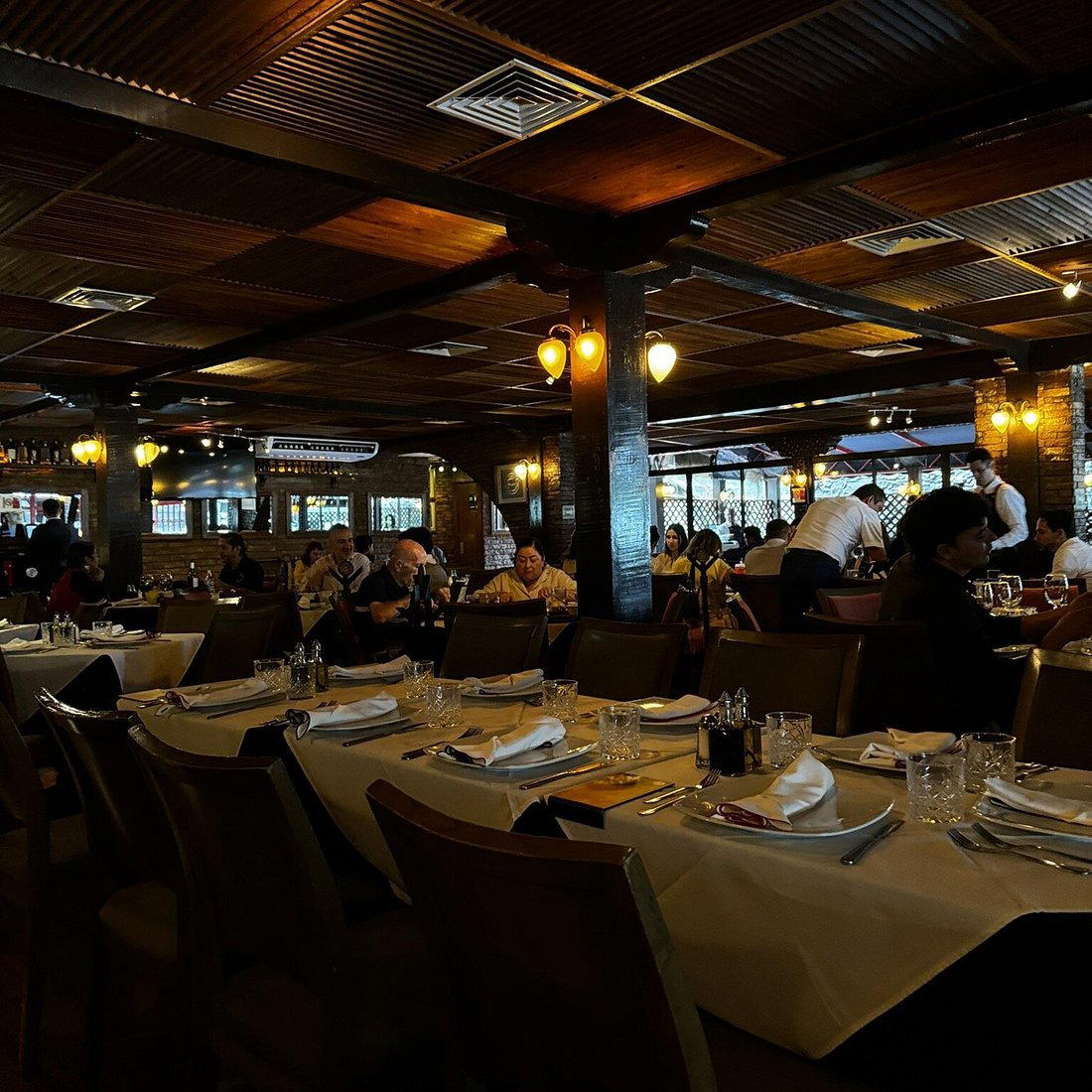
There is a particular ritual to Argentine asado that no amount of culinary translation fully captures: the patient building of the fire, the slow collapse of the quebracho coals, the long wait before a single cut reaches the grill. In Guadalajara, a city whose dining identity is anchored in birria, tortas ahogadas, and an increasingly serious contemporary Mexican scene, Asador La Vaca Argentina Pérgolas occupies an unusual position. It is a Southern Cone tradition planted in the heart of Jalisco, operating under conditions that reward diners who understand what an asador is actually doing. The pergola format gives the whole operation an open-air character that reinforces the smoke-and-char logic of the cooking: this is not a steakhouse in the North American sense, but a grill culture with its own grammar.
The Ladron De Guevara address places the restaurant inside one of Guadalajara's more established residential and commercial corridors, a neighbourhood that sits between the historic centre and the upscale density of Providencia. It is an area that has long supported mid-to-upper-tier dining, and the Argentine asador tradition, which elsewhere in Mexico tends to cluster around Mexico City or border cities, finds a quieter foothold here. The outdoor pergola structure means the experience shifts meaningfully with the season: Guadalajara's dry-season months, roughly November through April, offer the conditions most suited to extended outdoor dining, when the city's famously mild evenings make a long table under open sky a genuine pleasure rather than a concession.
The Asador Tradition and What It Demands of a Diner
Argentine parrilla culture is, at its core, a patience-based cuisine. The cuts that define it, entraña, vacío, asado de tira, mollejas, require different heat intensities and different resting times. A well-run asador sequences these across a meal rather than delivering everything simultaneously, which means the format suits diners willing to surrender the clock. This is worth understanding before you arrive: a rushed table at an asador is a misaligned table. The smoke character that develops in a proper open-fire setup is not replicable in a gas or infrared kitchen, and the reason venues like this one attract regulars is precisely the consistency of that process over time.
In the broader Mexican dining scene, Argentine grilling sits in a specific niche. It is not the same as the Sonoran carne asada tradition, which favours thin, quickly seared cuts over mesquite, nor is it the elaborate wood-fire theatrics increasingly common at destination restaurants like Animalón in Valle de Guadalupe or Lunario in El Porvenir. Those properties use fire as one element in a larger fine-dining proposition. A traditional asador uses fire as the proposition itself. The comparison that matters is not with Guadalajara's contemporary restaurants, places like Alcalde or Bruna, but with the small number of Argentine-format grill houses operating in Mexican cities at a similar register.
Where It Sits in Guadalajara's Dining Map
Guadalajara has developed a dining scene complex enough to support a genuinely wide range of formats. At one end, the city's tapatío street food traditions remain intact and serious: the birria counters at Birrieria Chololo Las Juntas and Birriería las 9 Esquinas represent cooking that is embedded in local identity in a way no imported tradition can replicate. At the other end, Alcalde has positioned Guadalajara alongside Mexico City in terms of contemporary Mexican ambition, and venues like Campomar have extended the city's international dining range. Asador La Vaca Argentina Pérgolas occupies a different register entirely: it is not competing with contemporary fine dining, nor is it a casual taquería. It offers a format-specific experience, the Argentine open-fire meal, that has its own internal logic and its own returning clientele.
For visitors who have covered the major stops in Mexico's contemporary dining circuit, from Pujol in Mexico City to Le Chique in Puerto Morelos to KOLI Cocina de Origen in Monterrey, the asador format represents a deliberate change of register. No tasting menu structure, no modernist technique, no tableside theatrics. What it offers instead is the slower, more elemental pleasure of fire-managed protein, done correctly. The full Guadalajara restaurants guide maps this range more completely, but within the city's dining geography, this address occupies a specific and relatively uncontested position.
Planning Your Visit
The Calle Tomás V. Gómez address in Ladron De Guevara is accessible by taxi or ride-share from most central Guadalajara neighbourhoods, and the area is navigable on foot from nearby hotel corridors. Given that the venue operates a pergola format, the dry season window from late October through March represents the most comfortable period for the full outdoor experience; during Guadalajara's summer rainy season, afternoon and early evening showers can interrupt open-air dining, so timing dinner for later in the evening reduces that risk. Dress expectations at Argentine asadors in this region tend toward smart casual, appropriate for an outdoor setting where the cooking environment is present rather than concealed.
For those building a broader itinerary around serious grilling and fire-based cooking in Mexico, the comparison set extends well beyond Guadalajara. The wood-fire propositions at Arca in Tulum, the coastal grill work at Olivea Farm to Table in Ensenada, and the technique-focused programmes at Pangea in San Pedro Garza Garcia all use fire differently, in service of different culinary propositions. None of them is doing what a traditional asador does. That distinction is, ultimately, the reason this format retains its own audience.
Frequently asked questions
What part of town is Asador La Vaca Argentina Pérgolas in?
Asador La Vaca Argentina Pérgolas is located at Calle Tomás V. Gómez 25, Ladron De Guevara, 44650 Guadalajara, Jal. Mexico, Guadalajara.
How does an Argentine asador in Guadalajara differ from a standard Mexican steakhouse?
The distinction sits in method and cut selection rather than just origin. Argentine asado relies on lower, slower heat from wood or charcoal embers rather than the direct high-heat grilling common to Mexican steakhouses, which changes the texture and fat rendering of cuts like asado de tira and vacío considerably. At a dedicated asador like the one on Calle Tomás V. Gómez, the menu reflects the Buenos Aires parrilla tradition, including offal courses like mollejas, that rarely appear on Mexican carne-focused menus. For Guadalajara diners, it represents a substantially different eating structure from the city's own tapatío grilling culture.
What do regulars order at Asador La Vaca Argentina Pérgolas?
The asador format at Calle Tomás V. Gómez 25 centres on the cuts that define Argentine parrilla: entraña (skirt steak), vacío (flank), asado de tira (short rib), and mollejas (sweetbreads). Each requires a different cooking time and position over the fire, so regulars tend to order across several of these rather than a single centrepiece. The mollejas, in particular, demand patience from both grill and diner.
What's the best way to book Asador La Vaca Argentina Pérgolas?
No booking phone or website is currently listed for this address at Calle Tomás V. Gómez 25, Ladron De Guevara. Arriving directly or checking local reservation platforms for Guadalajara is the most reliable approach. Walk-in availability tends to be better at midday than in the evening at Argentine-style asadors in this part of the city.
What has Asador La Vaca Argentina Pérgolas built its reputation on?
The venue's identity is rooted in the Argentine asado method: slow, wood-fire cooking applied to the traditional cuts of the parrilla rather than the quick-grill approach common across much of Mexico's steakhouse sector. In Guadalajara's Ladron De Guevara neighbourhood, where tapatío dining options are wide-ranging, positioning around a specific national grill tradition is a deliberate choice that gives the kitchen a defined lane.
Can Asador La Vaca Argentina Pérgolas accommodate dietary restrictions?
The kitchen is organised around a meat-forward Argentine grill tradition, which means the core menu is built on beef, offal, and fire. Plant-based or pescatarian diners will find the format a poor fit.
Comparable Venues
Comparable venues nearby, for context on price, style, and recognition.
| Venue | Cuisine | Price | Awards | Notes |
|---|---|---|---|---|
| Asador La Vaca Argentina PérgolasThis venue — the venue you are viewing | Authentic Argentine Steakhouse | $30–50 | Not listed | Not listed |
| La Estancia Gaucha | Authentic Argentine Steakhouse | $30–50 | Not listed | 1403900011768 |
| Restaurante Lula Bistro | Modern French-Mexican Fusion | Not listed | Not listed | 1403900015652 |
| I Latina | Mexican-Asian Fusion | $30–50 | Not listed | 1403900011556 |
| Restaurante Save Av. Guadalupe | Sinaloa-Style Seafood | $20–30 | Not listed | 1403900011753 |
| Restaurante Allium | Farm-to-Table Mexican Contemporary | $50–100 | Michelin Plate | 1403900010308 |
Continue exploring
More in Guadalajara
Restaurants in Guadalajara
Browse all →
Bars in Guadalajara
Browse all →

Hotels in Guadalajara
Browse all →




Details
- Elegant
- Rustic
- Sophisticated
- Business Dinner
- Date Night
- Group Dining
- Special Occasion
- Open Kitchen
- Extensive Wine List
- A La Carte
- Family Style
- Wine
- Beer
- Gluten Free Options
Current opening hours
- Monday
- 1:30–11 PM
- Tuesday
- 1:30–11 PM
- Wednesday
- 1:30–11 PM
- Thursday
- 1:30–11 PM
- Friday
- 1:30–11 PM
- Saturday
- 1:30–11 PM
- Sunday
- 1:30–7 PM
Hours can change for holidays and private events. Last verified .
Comfortable and elegant atmosphere well-suited for business meetings or romantic dinners with moderate noise levels.