Birriería las 9 Esquinas


Michelin Plate
Our verdict
Birriería las 9 Esquinas anchors itself in Guadalajara's Zona Centro as one of the city's most recognizable addresses for birria, the slow-braised goat stew that defines Jalisco's culinary identity. The menu is built almost entirely around a single preparation, which is both the kitchen's discipline and its argument. For anyone tracing Mexico's regional stew traditions back to their source, this address on Calle Colón is a logical starting point.

Pearl is the En Primeur Club membership app — saves, bookings, and concierge access live there. Same editors, same standards.
- Address
- C. Colón 384, Zona Centro, 44100 Guadalajara, Jal., Mexico
- Phone
- +52 33 3327 2043
- Hours
- Daily 8 AM–9 PM
- Website
- las9esquinas.com
- Directions
- Get directions
The menu
What to order
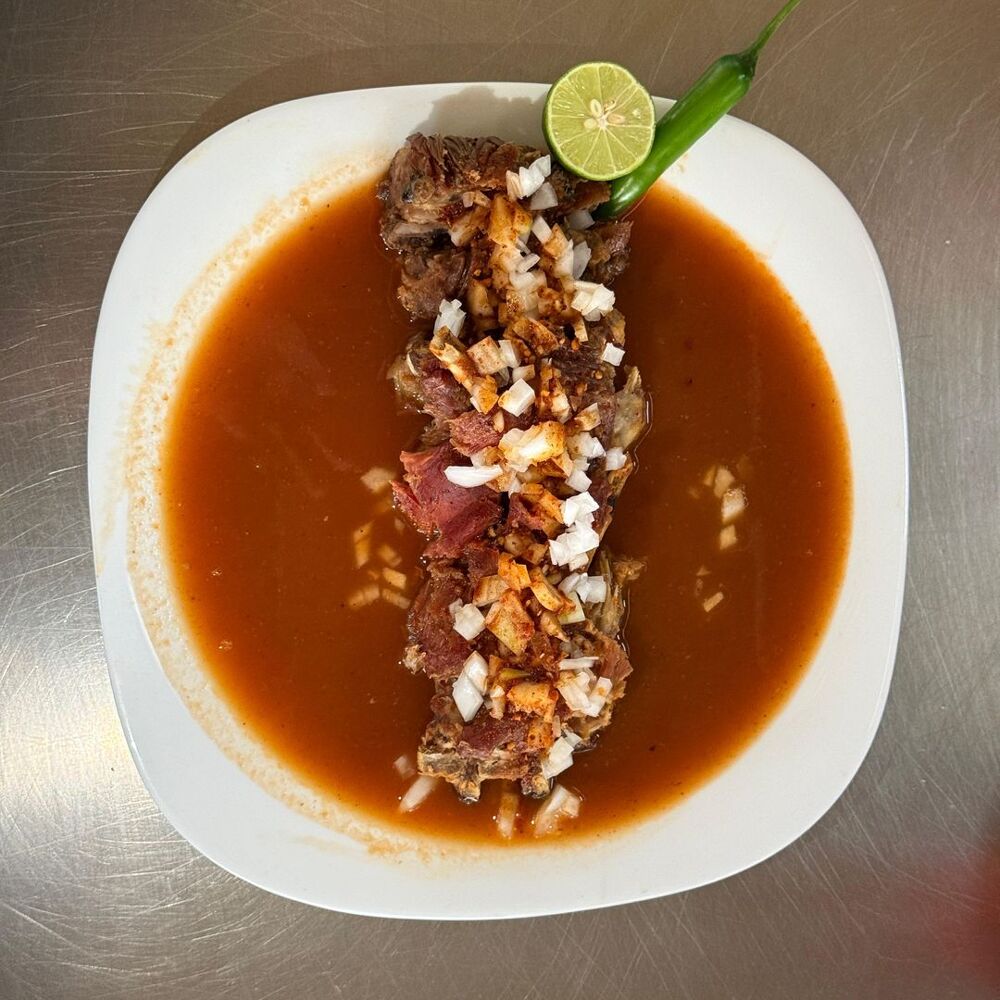
- Birria de Chivo
- Tacos de Birria
- Barbacoa de Borrego
Where a Single Dish Becomes the Entire Menu
In most cities, a restaurant built around one dish reads as a gimmick. In Guadalajara, it reads as a statement of seriousness. Birria — slow-braised goat, seasoned with dried chiles, herbs, and spices, cooked until the fat renders and the broth turns a deep, rust-orange — is Jalisco's contribution to Mexico's canon of great stews, and the birrerías that serve it well do so with a focus that more eclectic kitchens rarely achieve. Birriería las 9 Esquinas, on Calle Colón in the Zona Centro, operates within that tradition. The menu is not structured around variety. It is structured around depth: one protein, one preparation, rendered across the formats that generations of tapatíos have used to eat it.
That editorial logic, a menu that says more through what it excludes than what it includes, places the restaurant in a specific competitive tier. It is not competing with Guadalajara's contemporary Mexican tables like Alcalde or the ingredient-driven rooms at Bruna. It is competing with the city's other birrerías, where the differences between kitchens come down to spice ratios, fat rendering technique, broth clarity, and the quality of the tortillas served alongside. Those are narrow distinctions, but they matter considerably to the people who care about this dish.
The Architecture of a Birria Menu
Birria menus follow a logic that differs fundamentally from tasting-menu formats or à la carte restaurants with broad category structures. The central question is not which dish to order, but which form. Birria is typically served as a taco, the braised meat folded into a corn tortilla, often dipped in consome before griddling to achieve a lacquered, crisp exterior, or as a bowl of stew accompanied by tortillas, raw onion, cilantro, and lime. Some kitchens also offer consomé as a standalone, a broth-forward option that reveals the depth of the spice blend and the quality of the long cook without the distraction of the meat itself.
This structure means the kitchen's skill is exposed across every component. The tortilla quality is not incidental. The consome-to-fat ratio in the dipping bowl signals how the broth was built. The chile backbone, typically guajillo, ancho, and pasilla in Jalisco interpretations, should be present but not aggressive, providing color and depth rather than heat. A well-made birria broth is a slow accumulation of decisions, not a single technique, and a menu built around it makes each of those decisions visible.
Birria's reach has extended well beyond Jalisco's borders over the past decade. The dish became a global phenomenon through the birria taco's spread across the United States, where quesabirria, cheese-filled, consome-dipped, griddle-finished, became the dominant format. The Guadalajara birrería experience is a different register: less maximalist, closer to the original braised-stew tradition, and oriented toward the consome as a core element rather than a dipping sauce afterthought. That distinction matters when situating the dish in its regional context versus its international interpretation.
Zona Centro and the Geography of Tapatío Food Traditions
The address on Calle Colón places the restaurant inside a part of Guadalajara where food traditions and urban history overlap. The Zona Centro contains some of the city's oldest market infrastructure, including the Mercado San Juan de Dios nearby, and the neighborhood's dining character reflects a mix of long-established tapatío institutions and more recent arrivals. Birrerías in this part of the city tend to draw both residents and visitors, the latter often working through Guadalajara's recognized food addresses as a way of understanding the city's regional identity.
Guadalajara's broader restaurant scene has diversified considerably over the past decade. Contemporary tables focused on Jalisco ingredients and technique, among them Alcalde and the seafood-forward rooms like Campomar, have positioned the city alongside Mexico City and Oaxaca as a destination for serious eating. That development makes the traditional birrerías more visible rather than less: visitors who arrive having read about Mexico's restaurant moment are often specifically seeking the regional dishes that precede and inform the contemporary wave. For context on how Guadalajara's full range maps out, the EP Club Guadalajara restaurants guide covers both ends of that spectrum.
The birría tradition itself connects to a broader network of Mexico's great regional stews, carnitas from Michoacán, barbacoa from Hidalgo, cochinita pibil from the Yucatán, each tied to a geography and a technique developed over centuries. Restaurants dedicated to one preparation within that canon occupy a specific place: they are not trying to tell the story of Mexican cuisine broadly, in the way that a table like Pujol in Mexico City does, but rather to execute one chapter of it with precision and consistency.
Comparing Guadalajara's Birria Options
The city has multiple birrerías, and the differences between them are worth understanding before choosing. Birrieria Chololo Las Juntas represents another point in the city's birria map, operating in a different neighborhood with its own following. The choice between birrerías in Guadalajara often comes down to location, format preference (sit-down versus market-style), and familiarity with a specific kitchen's spice profile. There is no universal consensus on which kitchen produces the definitive Guadalajara birria, which is itself a useful signal: the tradition is alive enough to support genuine debate.
For visitors also interested in Guadalajara's wider meat-focused cooking, Asador La Vaca Argentina Pérgolas represents the Argentine-influenced asado tradition that coexists with tapatío cooking in the city, while Bruna operates in an entirely different register of Guadalajara dining. The city's range, from traditional birrerías to contemporary destination tables, is part of what makes it a more interesting food city than its international profile sometimes suggests.
Mexico's regional restaurant moment extends well beyond Guadalajara. In Oaxaca, Levadura de Olla Restaurante applies a similar single-tradition discipline to Oaxacan cooking. In Monterrey, KOLI Cocina de Origen and Pangea define a different regional register. Baja California's wine country produces its own interpretation of the tradition at places like Animalón in Valle de Guadalupe and Lunario in El Porvenir. Each of these represents a regional argument about what Mexican cooking is, made through discipline and specificity rather than eclecticism.
Planning a Visit
Birriería las 9 Esquinas is located at Calle Colón 384 in the Zona Centro. Given the restaurant's profile as a traditional birrería rather than a contemporary dining destination, the practical expectation is counter or table service without formal reservations for most visits, though peak weekend hours in the Zona Centro can create waits at the most established addresses. Morning and midday are the conventional windows for birria in Jalisco: the dish is traditionally a breakfast and lunch preparation, and the leading kitchens are often at full production before noon. Arriving early also means the consome is freshest and the tortilla supply is at its peak.
Frequently asked questions
Where do I go for Birriería las 9 Esquinas?
Birriería las 9 Esquinas is located at C. Colón 384, Zona Centro, 44100 Guadalajara, Jal. Mexico, Guadalajara.
How does Birriería las 9 Esquinas in Guadalajara's Zona Centro differ from birria spots in other Mexican cities?
Jalisco-style birria uses goat or beef slow-cooked in a dried chilli and spice braise, a preparation that differs structurally from the consomé-heavy, quesabirria taco formats that spread through northern Mexico and the United States. The Guadalajara version, particularly in historic-centre birrerías, tends to be served with consomé as a companion broth rather than a dipping sauce. Las 9 Esquinas sits in the Zona Centro, the district where this Jalisco tradition has been maintained closest to its original civic and market-day context.
What dish is Birriería las 9 Esquinas famous for?
The restaurant is built entirely around birria, Jalisco's slow-braised meat preparation that has been Guadalajara's defining regional dish for generations. Unlike multi-category menus, the kitchen commits the full operation to this single preparation. In the Zona Centro address on Calle Colón, that focus is read locally as a mark of seriousness rather than limitation.
Should I book Birriería las 9 Esquinas in advance?
Traditional birrerías in Guadalajara operate on walk-in culture rather than reservation systems, and las 9 Esquinas fits that pattern. Arrival timing matters more than advance booking: weekend mornings and midday see the heaviest local traffic at spots in the Zona Centro. No phone or booking portal is listed which aligns with the format.
What's Birriería las 9 Esquinas best at?
The kitchen's strength is a tight, traditional birria preparation served in a neighbourhood that carries real Tapatío food history. The Zona Centro location on Calle Colón places it in a district where local food culture has run alongside urban civic life for over a century. That context produces a version of birria rooted in Guadalajaran tradition rather than adapted for outside audiences.
Credentials Lens
Comparable options at a glance, pulled from our tracked venues.
| Venue | Cuisine | Price | Awards | Notes |
|---|---|---|---|---|
| Birriería las 9 EsquinasThis venue — the venue you are viewing | Traditional Guadalajara Birria | $10–20 | Michelin Plate | Not listed |
| Alcalde | Modern Mexican Fine Dining | $100–150 | 1 Michelin Star · World's 50 Best #51 | Mexican |
| Xokol | Modern Mexican Corn-Focused Tasting Menu | Not listed | 1 Michelin Star · The Best Chef Two Knives | Not listed |
| Hueso Restaurante | Modern Mexican | $50–100 | Not listed | Not listed |
| I Latina | Mexican-Asian Fusion | $30–50 | Not listed | Not listed |
| La Chata de Guadalajara | Traditional Jalisco Mexican | $10–20 | Not listed | Not listed |
Recognition history
Dated appearances from independent guides and award organizations, with the underlying list record or original source where available.
Michelin Plate
Michelin
Opinionated About Dining Cheap Eats in North America Ranked #131
Opinionated About Dining
Continue exploring
More in Guadalajara
Restaurants in Guadalajara
Browse all →
Bars in Guadalajara
Browse all →
Hotels in Guadalajara
Browse all →



Details
- Rustic
- Well Known
- Lively
- Casual Hangout
- Family
- Group Dining
- Historic Building
- A La Carte
Current opening hours
- Monday
- 8 AM–9 PM
- Tuesday
- 8 AM–9 PM
- Wednesday
- 8 AM–9 PM
- Thursday
- 8 AM–9 PM
- Friday
- 8 AM–9 PM
- Saturday
- 8 AM–9 PM
- Sunday
- 8 AM–9 PM
Hours can change for holidays and private events. Last verified .
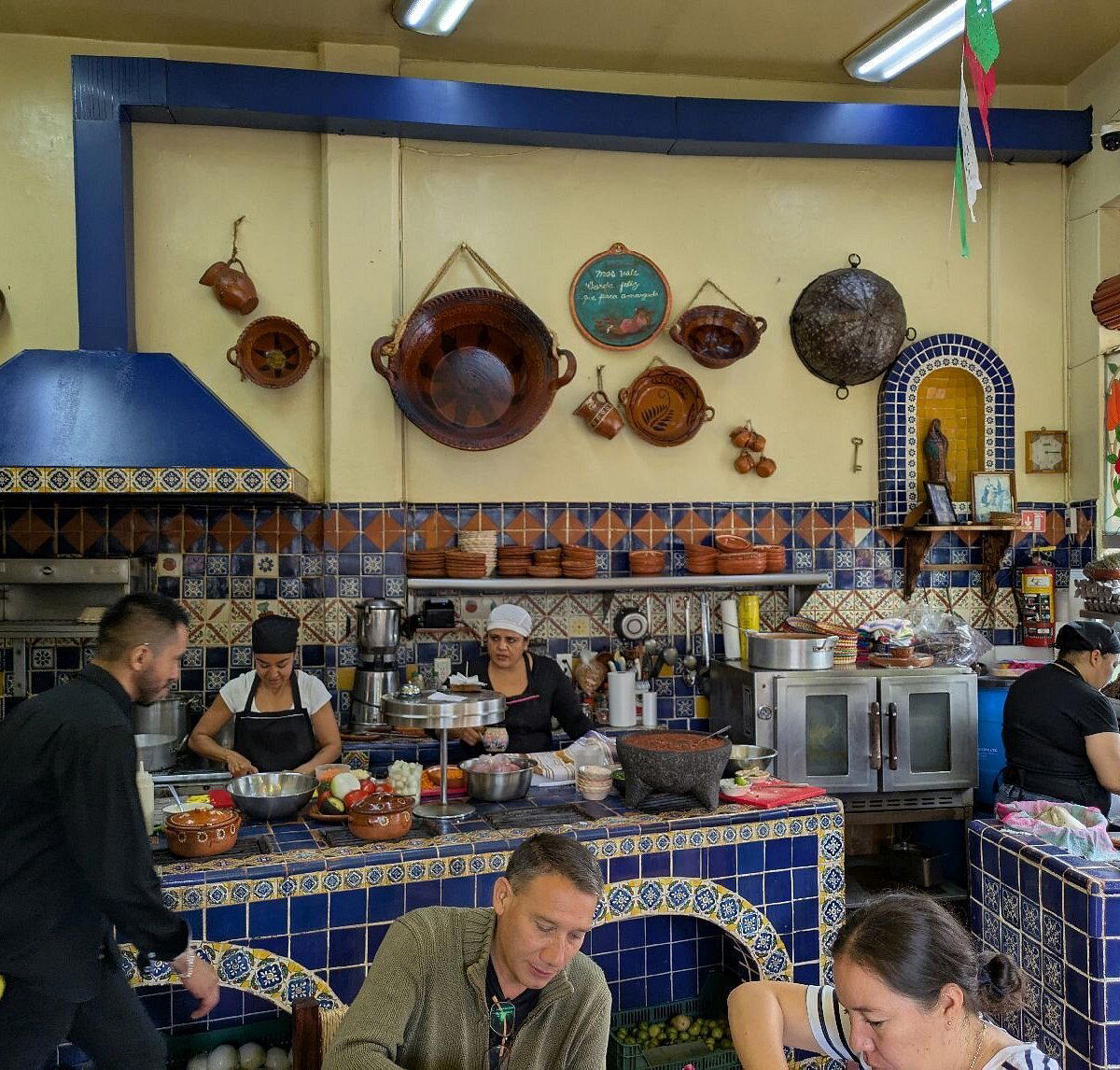
Casual chaotic atmosphere with cheerful local crowds enjoying hearty traditional dishes.