I Latina
Our verdict
I Latina occupies a Vallarta Poniente address in Guadalajara, positioning itself within the city's broader conversation about Latin American culinary identity. The restaurant draws on the shared pantry and technique traditions that connect Mexico to the wider continent, making it a point of reference for diners interested in how regional Latin cuisines translate into a Tapatío context.

Pearl is the En Primeur Club membership app — saves, bookings, and concierge access live there. Same editors, same standards.
- Address
- Av Inglaterra 3128, Vallarta Poniente, 44110 Guadalajara, Jal., Mexico
- Phone
- +52 33 3647 7774
- Hours
- Mon ClosedTue–Sat 7 PM–1 AMSun 1:30–6:30 PM
- Website
- i-latina.mx
- Directions
- Get directions
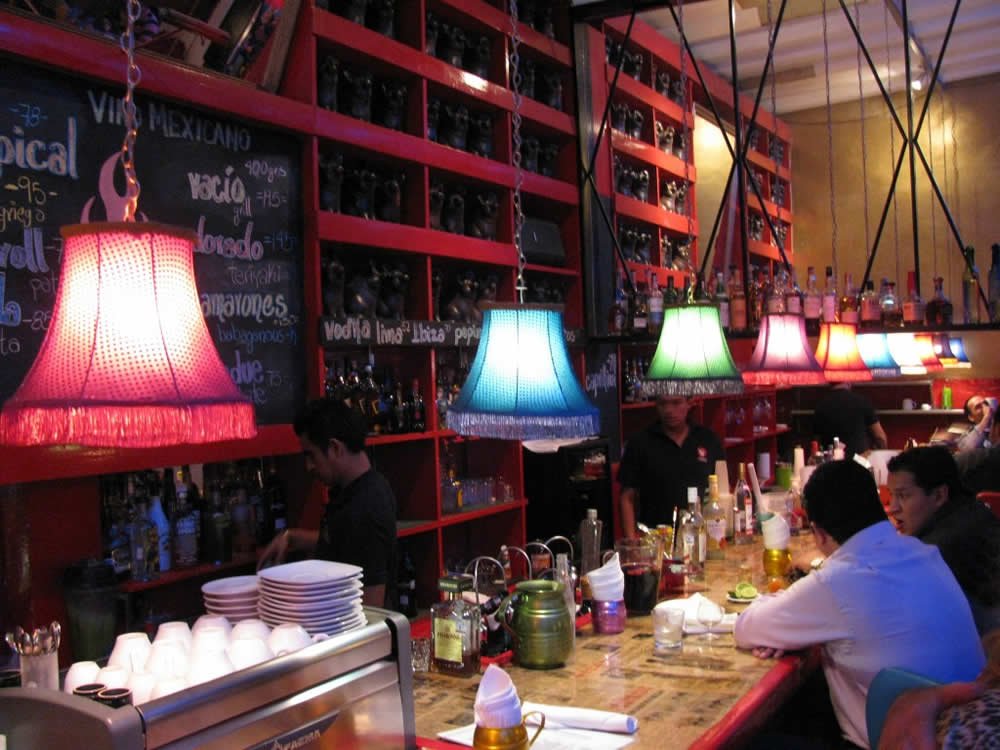
Latin American Cuisine in the Guadalajara Context
Guadalajara has spent the better part of a decade building a serious restaurant scene, one that sits in productive tension between deep Jalisco tradition and outward-looking ambition. The city's dining room conversations now regularly span corn varietals, mezcal provenance, and the question of what it means to cook "Mexican" when the country's culinary map is as fractured and specific as any in the world. Into that conversation, I Latina arrives not as a Mexican restaurant in the conventional sense, but as a space that frames Latin American cuisine more broadly, asking what the continent's shared ingredients, techniques, and histories look like when filtered through a Guadalajara address.
That framing matters. Mexico sits at the northern edge of Latin America, and Guadalajara, as the country's second city, occupies a particular position: culturally confident enough to have its own culinary gravity, yet porous enough to absorb influences from further south. Restaurants in this city that engage seriously with pan-Latin cooking are rarer than the concept might suggest. Most Tapatío dining either commits to local tradition, as you see at addresses like Birrieria Chololo Las Juntas or Birriería las 9 Esquinas, or reaches toward contemporary Mexican fine dining in the mold of places like Alcalde. I Latina occupies a less crowded position.
The Vallarta Poniente Setting
The restaurant sits on Avenida Inglaterra in Vallarta Poniente, a western Guadalajara neighborhood that has developed a quieter, residential dining character compared to the louder commercial corridors of Zapopan or the historic centro. The address, 3128 on that avenue, places it in a stretch where the urban fabric is lower-rise and the clientele tends toward a local professional crowd rather than the tourist-adjacent audiences that cluster around the city's landmark squares. Arriving in the evening, the neighborhood reads as a place where people eat because they live nearby and have opinions about where they do so, not because a hotel concierge made a suggestion.
That kind of neighborhood-rooted positioning has its own logic. In cities like Buenos Aires or São Paulo, the most serious Latin American cooking often happens in exactly this kind of residential zone, away from the premium-view locations that drive up rents and dilute kitchen focus. Guadalajara has enough of this residential dining culture to sustain it, and Vallarta Poniente has emerged as one of the zones where it plays out. For context on what else the city offers across different neighborhoods and price tiers, the full Guadalajara restaurants guide maps the scene more completely.
What Pan-Latin Cooking Means in Practice
The phrase "Latin American cuisine" is broad enough to be almost meaningless without specificity, and the better restaurants that work within it know this. The continent's culinary traditions share certain raw material affinities, from the chile families and corn culture of Mexico and Central America, to the beef and wine cultures of the southern cone, to the Afro-Brazilian and Andean fermentation traditions that have gained serious international attention over the past decade. What distinguishes the more considered pan-Latin restaurants is their selectivity: they don't attempt a survey course, but instead find the points of genuine convergence or productive contrast.
Mexico's own position in this conversation is worth noting. Restaurants like Pujol in Mexico City have demonstrated how rigorously Mexican culinary tradition can be examined on its own terms, while places like Le Chique in Puerto Morelos or KOLI Cocina de Origen in Monterrey show how regional Mexican identity reads differently when framed through technique-forward contemporary formats. I Latina's angle, engaging with the continent rather than the country alone, is a distinct editorial choice for a Guadalajara kitchen.
That choice also has precedent further down the Mexican Pacific coast and in wine country. Animalón in Valle de Guadalupe and Olivea Farm to Table in Ensenada have both shown that Mexican restaurants can engage with broader Latin American ingredient culture without losing local specificity. The question for any restaurant working in this register is whether the continental framing illuminates something that a tighter geographic focus would miss, or whether it diffuses the kitchen's point of view.
Guadalajara's Wider Latin American Dining Moment
The city already has strong reference points for Argentine cooking in particular. Asador La Vaca Argentina Pérgolas represents the southern cone beef tradition transplanted to Jalisco, which is itself a state with serious cattle culture. The coexistence of that kind of focused national-tradition restaurant with a broader pan-Latin concept like I Latina reflects how Guadalajara's dining scene has matured: there is now enough demand for specificity that restaurants can occupy narrower, more defined positions without cannibalizing each other's audiences.
The contemporary Mexican restaurants that have driven the most international attention in recent years, whether Arca in Tulum, HA' in Playa del Carmen, or Levadura de Olla Restaurante in Oaxaca, have each found their authority through geographic and cultural specificity. The Latin American frame is broader, which creates a different kind of editorial challenge for the kitchen but also a different kind of freedom. Guadalajara diners who have eaten their way through the city's more rooted local options, places like Bruna, tend to approach restaurants like I Latina with a comparatively open frame of reference.
Planning Your Visit
I Latina is located at Av Inglaterra 3128 in Vallarta Poniente, reachable by car or rideshare from central Guadalajara in under twenty minutes depending on traffic. The neighborhood is quieter than the city's main commercial zones, which makes arrivals and departures direct. The restaurant sits in a tier of Guadalajara dining that positions itself above casual neighborhood spots but below the city's most formal fine dining addresses, a mid-to-upper bracket that has expanded considerably as the city's professional class has grown. For broader orientation on how Guadalajara's dining scene is structured across neighborhoods and price points, the EP Club Guadalajara guide provides the fuller picture.
Frequently asked questions
Where exactly is I Latina?
I Latina is located at Av Inglaterra 3128, Vallarta Poniente, 44110 Guadalajara, Jal. Mexico, Guadalajara.
How does I Latina fit into Guadalajara's broader Latin American restaurant scene?
Guadalajara already has established reference points for specific Latin American sub-cuisines, with Argentine beef traditions represented by venues like Asador La Vaca Argentina Pérgolas on the southern cone side. I Latina's pan-Latin framing at Av Inglaterra 3128 in Vallarta Poniente positions it as a broader survey of the continent's cooking rather than a single-country specialist. That distinction matters in a city where diners increasingly have strong comparators for individual Latin American traditions.
What's the signature dish at I Latina?
The broader concept at Av Inglaterra 3128 centers on Latin American cuisine as a category, so the kitchen's range is part of the identity rather than a single anchor plate. Visiting with an open approach to the full menu is the practical strategy here.
Do they take walk-ins at I Latina?
No reservations policy is publicly documented for I Latina at Av Inglaterra 3128 in Guadalajara. In Vallarta Poniente, where the dining character skews residential and local, walk-in availability tends to be more feasible on weekday evenings than on weekends. Arriving early in the service or calling ahead through a rideshare app's in-built search remains the safest approach until direct contact details are confirmed.
What's I Latina best at?
The restaurant's positioning in Guadalajara's Vallarta Poniente places it within a neighborhood that has developed away from the louder, tourist-facing centro dining circuit. Pan-Latin cooking as a format rewards kitchens that can draw credibly from multiple regional traditions rather than defaulting to a single country's canon, and that cross-regional breadth appears to be the central premise at I Latina. Guadalajara diners already have strong Argentine reference points nearby, so the wider Latin American scope is the differentiating factor.
Can I Latina accommodate dietary restrictions?
Pan-Latin menus typically include both meat-forward preparations and produce-driven dishes drawn from Andean, coastal, and Caribbean traditions, which can offer natural options for varied dietary needs. Confirming requirements directly with the restaurant before visiting is the reliable approach, particularly for allergen-specific requests.
Pricing, Compared
Comparable venues nearby, for context on price, style, and recognition.
| Venue | Cuisine | Price | Notes |
|---|---|---|---|
| I LatinaThis venue — the venue you are viewing | Mexican-Asian Fusion | $30–50 | Not listed |
| Bruna | Modern Mexican Fine Dining | $50–100 | 1403900011575, Modern Mexican Fine Dining |
| De La O Cantina | Modern Mexican Cantina | $10–20 | 1403900011325, Guadalajatiki - Mexican Cantina with Tiki Cocktails |
| Campomar | Nayarit-Style Mexican Seafood | $20–30 | 1403900010308, Nayarit-Style Mexican Seafood |
| La Chata de Guadalajara | Traditional Jalisco Mexican | $10–20 | 1403900011626, Traditional Jalisco Mexican |
| Tortas Toño Providencia | Guadalajara Torta Ahogada | $1–10 | 1403900014457, Guadalajara Torta Ahogada |
Continue exploring
More in Guadalajara
Restaurants in Guadalajara
Browse all →
Bars in Guadalajara
Browse all →

Hotels in Guadalajara
Browse all →



Details
- Trendy
- Lively
- Date Night
- Group Dining
- Celebration
- Live Music
- Terrace
- Open Kitchen
- Craft Cocktails
- Street Scene
- A La Carte
- Small Plates
- Craft Cocktails
- Vegetarian Friendly
- Vegan Options
- Gluten Free Options
Current opening hours
- Monday
- Closed
- Tuesday
- 7 PM–1 AM
- Wednesday
- 7 PM–1 AM
- Thursday
- 7 PM–1 AM
- Friday
- 7 PM–1 AM
- Saturday
- 7 PM–1 AM
- Sunday
- 1:30–6:30 PM
Hours can change for holidays and private events. Last verified .
Trendy and eclectic with funky décor, fun atmosphere, live music, and inventive cocktails; terrace offers city views.