On Avenue Louise, one of Brussels' most architecturally assertive addresses, La Canne en Ville occupies a position that places it in the company of the Belgian capital's established dining corridor rather than its newer, more casual fringe. The restaurant draws from a neighbourhood defined by early-twentieth-century townhouses and a clientele accustomed to formal European table service, positioning it closer to the city's classic French-Belgian tradition than to its contemporary bistro wave.
- Address
- Av. Louise 77, 1000 Bruxelles, Belgium
- Phone
- +3223472926
- Website
- lacanneenville.be
- Directions
- Get directions
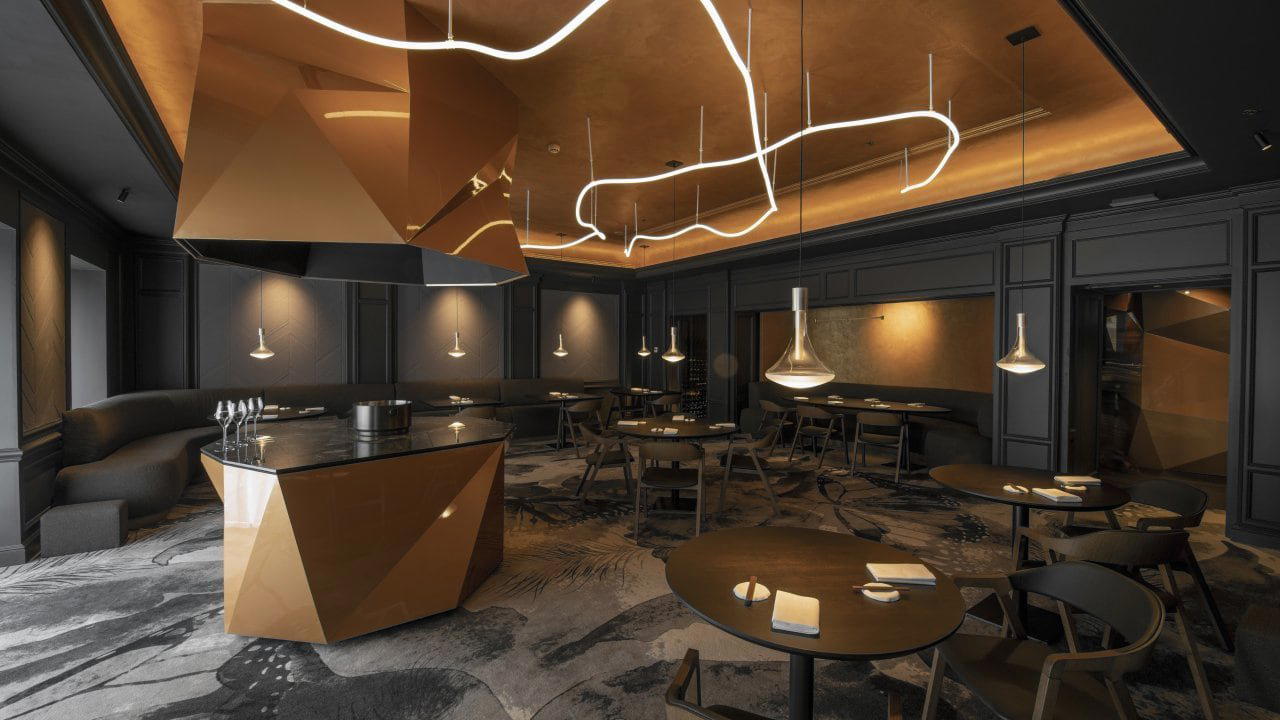
Avenue Louise and What It Asks of a Restaurant
Avenue Louise is not a street that forgives ambiguity. The wide, tree-lined boulevard that stretches south from the inner ring road toward the Bois de la Cambre has long functioned as Brussels' axis of institutional elegance: flagship boutiques, law firm offices in restored hôtels particuliers, and a dining culture shaped by proximity to both the European quarter's professional class and the old-money residential streets feeding off it. A restaurant at this address carries certain expectations before a guest crosses the threshold, and La Canne en Ville at number 77 operates inside that gravitational field.
In a city where the dining conversation has increasingly shifted toward the natural-wine bistros of Saint-Gilles and the produce-forward neighbourhood tables of Ixelles, Avenue Louise represents the older register: white-cloth tradition, deliberate service rhythms, and a kitchen approach calibrated for guests who regard lunch as a three-course event rather than an interruption. That context matters when placing La Canne en Ville. The venue is not making a counterargument to the current moment in Brussels dining; it is participating in a longer-running tradition that the city's French-Belgian fine dining corridor has sustained for decades.
The Brussels Fine Dining Corridor: Where La Canne en Ville Sits
Brussels' upper tier of French-influenced restaurants occupies a smaller, more internally coherent set than it did in the 1990s, when the city's Michelin count was higher and its dining establishment broader. The cohort that remains is anchored by a handful of houses: Comme chez Soi, which holds its position as the reference point for Franco-Belgian classicism, and La Villa Lorraine by Yves Mattagne, which operates at the top of the modern cuisine bracket. La Canne en Ville draws from the same tradition and the same client expectations, though the specific format, pricing, and awards position it differently from those two established names.
What defines this tier across the city is less about individual menus and more about a shared hospitality grammar: the expectation of a proper wine list organised by region and vintage, a kitchen that treats classical French technique as the foundation rather than the reference point, and a room designed to slow the guest's pace rather than accelerate it. The neighbourhood reinforces all three. Guests arriving from the Place Stéphanie end of Avenue Louise come past the kind of architecture — heavy stone facades, ornate ironwork, broad pavement widths — that primes a certain dining posture before they sit down.
For context on how Brussels' broader fine dining scene compares to its peers elsewhere in Belgium, the picture is instructive. Flanders has developed a notably dense cluster of high-citation restaurants: Hof van Cleve in Kruishoutem, Boury in Roeselare, Zilte in Antwerp, and further afield Willem Hiele in Oudenburg and Bartholomeus in Heist collectively represent a Flemish gastronomic ambition that tends toward produce intensity and technical precision. Brussels' French-Belgian tradition is distinct from that: more franco-centric in reference, more formal in service architecture, more attentive to the cultural weight of the table as a social institution.
The Room, the Pace, and the Guest Relationship
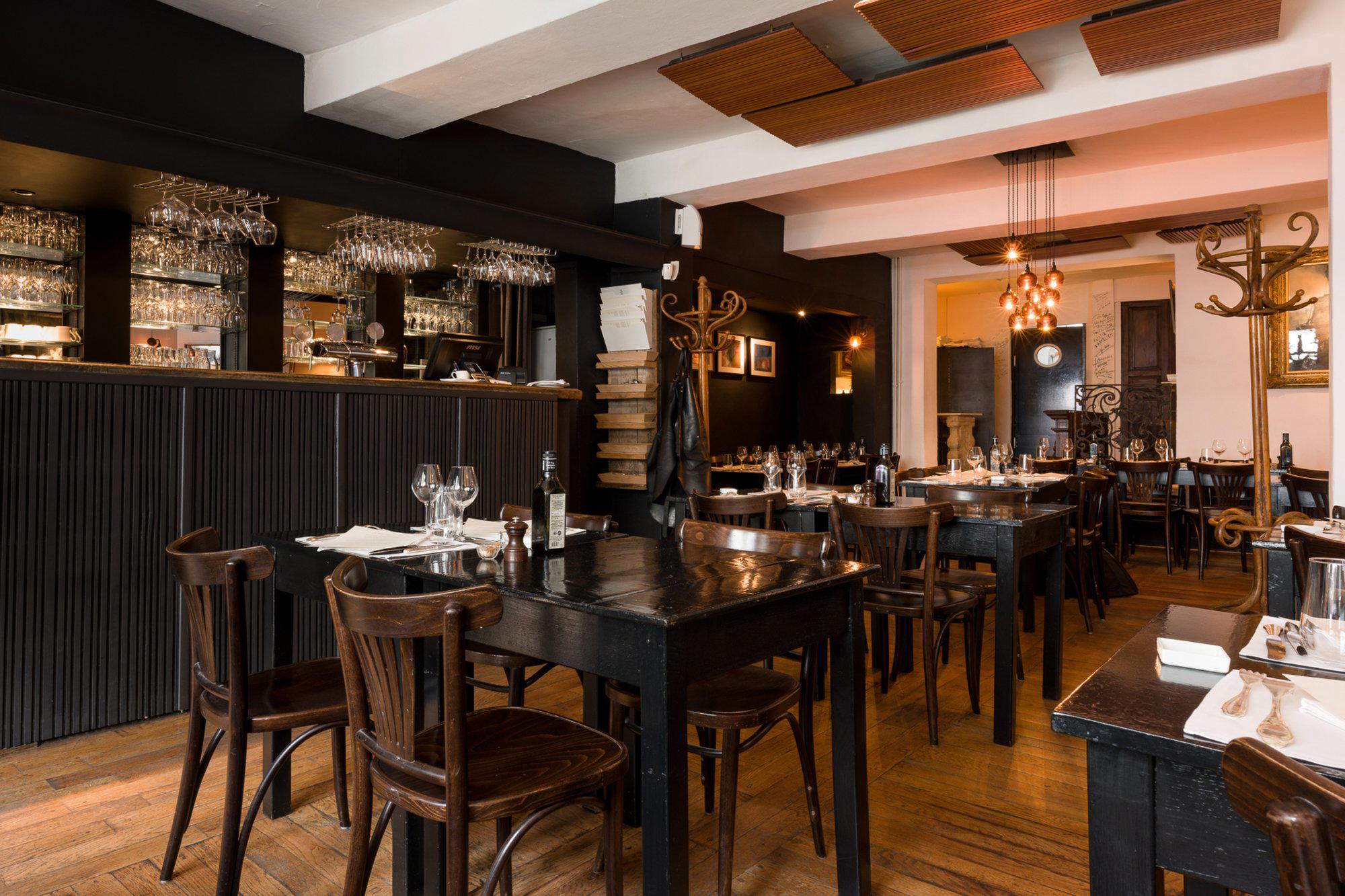
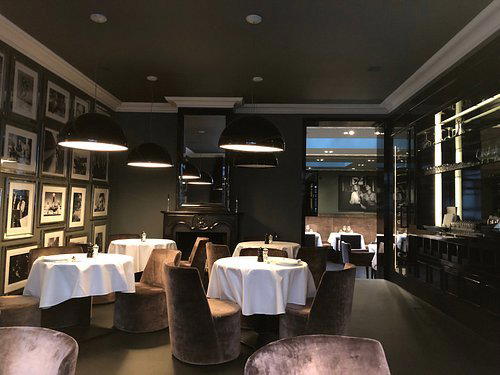
Avenue Louise restaurants at the 77 address occupy the ground floors of buildings that were never designed as restaurants, which gives interiors a particular residential quality: lower ceilings than purpose-built dining rooms, windows set to street level, proportions that seat small covers in rooms that feel full with twenty guests. That physical context shapes the dining experience more than any individual design decision. A meal here unfolds at a pace determined by the room's scale rather than by a kitchen's production capacity.
This is a different proposition from the newer generation of Brussels dining, exemplified by addresses like Barge or Eliane, where the editorial emphasis falls on product sourcing, informality, and a kitchen-forward aesthetic. It is also a contrast to the institutional grandeur of Bozar Restaurant, which operates inside the art deco mass of the Palais des Beaux-Arts and carries the cultural weight of that setting. La Canne en Ville's proposition is narrower and more residential in character: a neighbourhood restaurant that happens to occupy one of Brussels' most expensive neighbourhoods, and that calibrates its offer accordingly.
The broader Avenue Louise dining corridor shares this character with a handful of Walloon counterparts. L'Air du Temps in Liernu and d'Eugénie à Emilie in Baudour both operate inside a French-inflected tradition, though in rural formats very different from the urban register of Avenue Louise. The Flemish comparison points include Castor in Beveren, De Jonkman in Sint-Kruis, and La Durée in Izegem. For readers calibrating Brussels against the wider international fine dining conversation, the reference points shift to European-trained kitchens operating at comparable price tiers: Le Bernardin in New York City represents the apex of French classical technique in an urban American context, while Atomix in the same city shows what happens when tasting-menu discipline is applied to an entirely different culinary tradition.
Planning a Visit to La Canne en Ville
Avenue Louise is direct to reach from central Brussels: the no. 93 and 94 trams run the full length of the boulevard from the inner ring, making the journey from the Grand-Place or the European quarter around fifteen minutes without a taxi. The address at 77 sits in the lower section of the avenue, closer to the Porte de Namur end than to the Bois de la Cambre, which means it is also accessible on foot from the Ixelles shopping streets. As with most Avenue Louise restaurants in this register, booking ahead is the practical baseline; the room sizes that give these spaces their residential character also mean that walk-in availability is limited, particularly at lunch when the professional client base fills covers quickly. For current booking arrangements, hours, and pricing, contacting the restaurant directly or checking current listings is the reliable method, as specific details are subject to change.
For a full picture of where La Canne en Ville sits within Brussels' broader restaurant offer across all price tiers and neighbourhoods, EP Club's full Brussels restaurants guide maps the city's dining character from the Grand Sablon to Schaerbeek.
Compact Comparison
A quick peer check to anchor this venue’s price and recognition.
| Venue | Cuisine | Price |
|---|---|---|
| La Canne en VilleThis venue — the venue you are viewing | Not listed | Not listed |
| Comme chez Soi | French - Belgian, Classic Cuisine | €€€€ |
| La Villa Lorraine by Yves Mattagne | Modern Cuisine | €€€€ |
| senzanome | Modern Italian, Italian | €€€€ |
| Aux Armes de Bruxelles | Brasserie, Belgian | €€ |
| Hispania | Catalan, Spanish | €€€ |
Continue exploring
More in Brussels
Restaurants in Brussels
Browse all →
Bars in Brussels
Browse all →
Hotels in Brussels
Browse all →
Wineries in Brussels
Browse all →
At a Glance
- Elegant
- Cozy
- Classic
- Intimate
- Sophisticated
- Date Night
- Special Occasion
- Business Dinner
- Private Dining
- Extensive Wine List
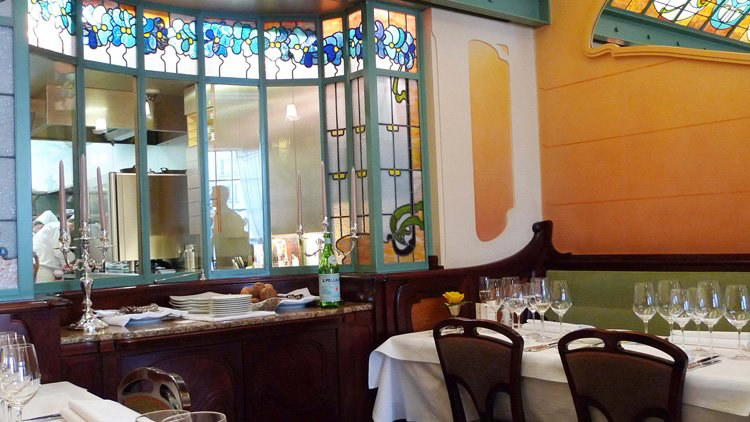
Warm and inviting with charming original butcher shop tiles, creating a down-to-earth yet refined atmosphere.
Know Before You Go
- Getting there
- Av. Louise 77, 1000 Bruxelles, Belgium