Skip to Main Content

UpcomingDrink over $25,000 of Burgundy at La Paulée New York

← Collection
CuisineInnovative
Executive ChefYoshiyuki Ono
LocationTokyo, Japan
Opinionated About Dining

In Motoazabu, one of Tokyo's most quietly serious residential dining corridors, l' Equator operates on the second floor of a low-profile building with an approach to innovative cuisine that earned it a place on the Opinionated About Dining Japan ranking in 2025 (#103). Chef Yoshiyuki Ono leads the kitchen, working within a category that places technical ambition alongside neighbourhood-scale intimacy. Google reviews average 4.2 across 150 ratings.

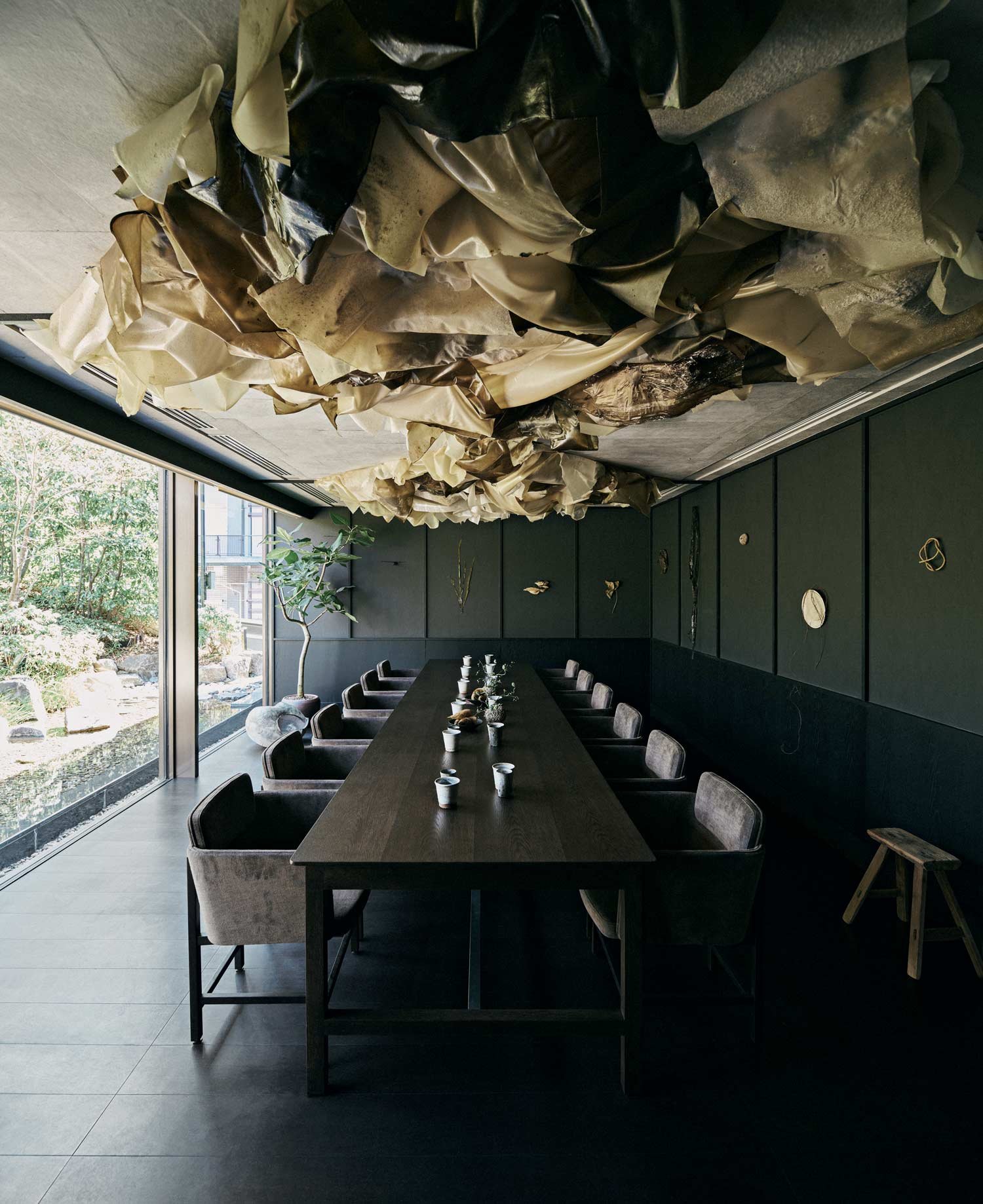
l' Equator restaurant in Tokyo, Japan
About

Motoazabu and the Quiet Geography of Tokyo's Innovative Dining

Tokyo's restaurant geography rewards close reading. The high-visibility dining clusters — Ginza, Roppongi, Shinjuku — pull international attention, but the city's most considered addresses often sit in residential wards where rents are lower and the clientele is more local. Motoazabu, in Minato City, belongs to that second category. The neighbourhood sits uphill from Azabu-Juban, shielded from tourist foot traffic, and has accumulated a quiet density of serious restaurants over the past two decades. An address here signals a deliberate choice: the kitchen is not relying on location-led footfall.

l' Equator occupies the second floor of Calm Motoazabu, a building at 3-6-34 in that neighbourhood. The positioning is consistent with a broader pattern among Tokyo's innovative-format restaurants, where physical discretion and culinary ambition tend to move in the same direction. You arrive because you know to arrive, not because a passing glance drew you in.

Where l' Equator Sits in the Innovative Format

The innovative category in Tokyo spans a considerable range. At one end sit two- and three-Michelin-star operations like AO and Chiune, where tasting menus run into the highest price brackets and the experience is structured around a formalized progression. At another register, places like Kabi pursue fermentation-led menus with a distinctly contemporary, less hierarchical tone. MAZ operates a different angle again, rooting its creativity in Peruvian biodiversity within a Tokyo context.

l' Equator's 2025 Opinionated About Dining Japan ranking at #103 places it within the OAD's peer set , a list populated heavily by counter-format omakase and kaiseki addresses, alongside a smaller cohort of cross-technique innovative kitchens. The OAD methodology aggregates opinions from frequent diners and industry professionals rather than anonymous inspection, which means a ranking here reflects repeated engagement rather than a single evaluative snapshot. Ranking at #103 nationally in that system puts l' Equator inside a credible tier without claiming a position at the very leading of the Michelin-star hierarchy.

For comparison: Den, the two-Michelin-star innovative Japanese address, sits at the upper end of the ¥¥¥ tier and operates as one of the most internationally discussed restaurants in its category. Crony, holding two stars in the innovative-French bracket, pushes into ¥¥¥¥ territory. l' Equator's price range is not confirmed in our data, but the Motoazabu location and OAD recognition suggest a mid-to-upper positioning within the innovative segment rather than an entry-level offering.

Chef Yoshiyuki Ono and What the Kitchen Represents

In Tokyo's innovative dining tier, the kitchen identity often travels with the chef's name more than the restaurant's brand, particularly at smaller formats. Chef Yoshiyuki Ono leads the kitchen at l' Equator. Beyond that credit, we do not have verified biographical detail in our records, and the editorial discipline here is not to speculate. What the OAD ranking confirms is that the kitchen produces work that a network of regular, experienced diners found worth ranking nationally in 2025. That is a narrower claim than a Michelin star, but in some respects a more operationally meaningful one: the OAD list does not respond to a single inspection night.

The cuisine classification is simply listed as Innovative, which in Tokyo's restaurant grammar covers anything that does not fit comfortably within a traditional Japanese format (kaiseki, sushi, tempura, soba) or a named Western cuisine. It is the broadest and most contested of the city's categories, and the restaurants that earn recognition within it tend to do so through a defined point of view rather than format alone.

The Motoazabu Effect on the Dining Experience

Neighbourhood matters to the texture of an evening in ways that are rarely captured in a simple address line. Motoazabu's residential calm means the walk from Azabu-Juban station (the nearest subway stop on the Namboku and Oedo lines) passes apartment buildings, small family-run grocers, and embassies rather than retail blocks. The area has a higher concentration of foreign residents than most Tokyo neighbourhoods, and its restaurant scene reflects that without losing its Japanese operational core.

Dining in Motoazabu rather than Ginza or Roppongi changes the social contract of the evening slightly. Tables here tend to draw regulars and food-engaged locals who sought the address out specifically. The absence of casual drop-in trade shapes how kitchens in the area calibrate the room: the expectation is that everyone present chose to be there, which is a different starting condition from a high-visibility location. Hasegawa Minoru, another Minato City address in our records, operates within a similar logic.

Tokyo Innovative in a Wider Japan Context

Tokyo remains the dominant node for Japan's innovative restaurant category by volume and by density of recognition. But the format has spread. HAJIME in Osaka carries three Michelin stars and operates at a scale of ambition that competes directly with Tokyo's top tier. Gion Sasaki in Kyoto occupies a different position , more rooted in the kaiseki tradition but with cross-format elements. akordu in Nara and Goh in Fukuoka represent the regional spread of technically serious cooking outside the main urban centres. 1000 in Yokohama and 6 in Okinawa extend that picture further.

For readers comparing across Asian cities, the innovative category has strong representatives in Seoul , alla prima being one , and in Singapore, where Meta operates with comparable format ambitions. Tokyo's density of competition in this category is, by almost any measure, higher than any other city in Asia.

Planning Your Visit

The table below positions l' Equator against two peers for practical planning purposes. Note that l' Equator's price and booking data are not confirmed in our current records; the comparisons reflect verified peer information.

VenueCategoryPrice TierRecognitionLocation
l' EquatorInnovativeNot confirmedOAD Japan #103 (2025)Motoazabu, Minato
DenInnovative, Japanese¥¥¥Michelin 2 StarsJingumae, Shibuya
CronyInnovative, French¥¥¥¥Michelin 2 StarsHigashi, Shibuya

The closest subway access to l' Equator is Azabu-Juban station (Namboku Line, Oedo Line), from which the building is a short uphill walk. The second-floor position in the Calm Motoazabu building is worth noting when navigating on arrival. Reservations are strongly advised given the OAD recognition and the neighbourhood format, though our data does not confirm the specific booking channel. We recommend checking current availability directly through reliable reservation platforms operating in Tokyo.

For a broader picture of where l' Equator sits among Tokyo's dining options, see our full Tokyo restaurants guide. For accommodation options near Motoazabu and Minato, our Tokyo hotels guide covers the relevant neighbourhoods. We also maintain guides to Tokyo bars, Tokyo wineries, and Tokyo experiences.

Frequently Asked Questions

What dish is l' Equator famous for?
No specific signature dishes are confirmed in our records. The cuisine classification is Innovative, which in Tokyo's restaurant taxonomy typically means a tasting-menu format built around the kitchen's current direction rather than fixed signature plates. Chef Yoshiyuki Ono leads the kitchen, and the 2025 OAD Japan ranking at #103 indicates the cooking has received sustained recognition from repeat visitors. For current menu specifics, direct enquiry with the restaurant is the most reliable approach.
Can I walk in to l' Equator?
l' Equator's booking policy is not confirmed in our data. However, its OAD Japan ranking and its Motoazabu residential-format positioning , where tables skew heavily toward regulars and advance planners , make walk-in availability unlikely on most nights. In Tokyo's OAD-ranked innovative tier generally, same-day or walk-in seating is rare except at counters that hold a small number of unreserved seats. Advance booking is the practical approach.
What is l' Equator leading at?
The OAD Japan 2025 ranking at #103 is the clearest external signal available: the kitchen has earned consistent recognition from an audience of experienced, frequent diners. The Innovative classification and the Motoazabu location both point toward a considered, format-focused operation rather than a high-volume or scenically driven one. Among Tokyo's innovative addresses, l' Equator occupies a position where cooking quality drives the reputation , which, in a neighbourhood that generates no casual foot traffic, is the only sustainable basis for continued recognition.
Collector Access

Need a table?

Our members enjoy priority alerts and concierge-led booking support for the world's most difficult tables.

Access the Concierge