Kushikatsu Tanaka Miyakonojo
Our verdict
Kushikatsu Tanaka Miyakonojo serves Osaka-style kushikatsu with beer program support, a casual dress code, and dinner or late-night dining.

Pearl is the En Primeur Club membership app — saves, bookings, and concierge access live there. Same editors, same standards.
- Address
- 1-16 Nakamachi, Miyakonojo, Miyazaki 885-0071, Japan
- Phone
- +81986517430
- Hours
- Mon–Fri 4 PM–12 AMSat–Sun 12 PM–12 AM
- Website
- kushi-tanaka.com
- Directions
- Get directions
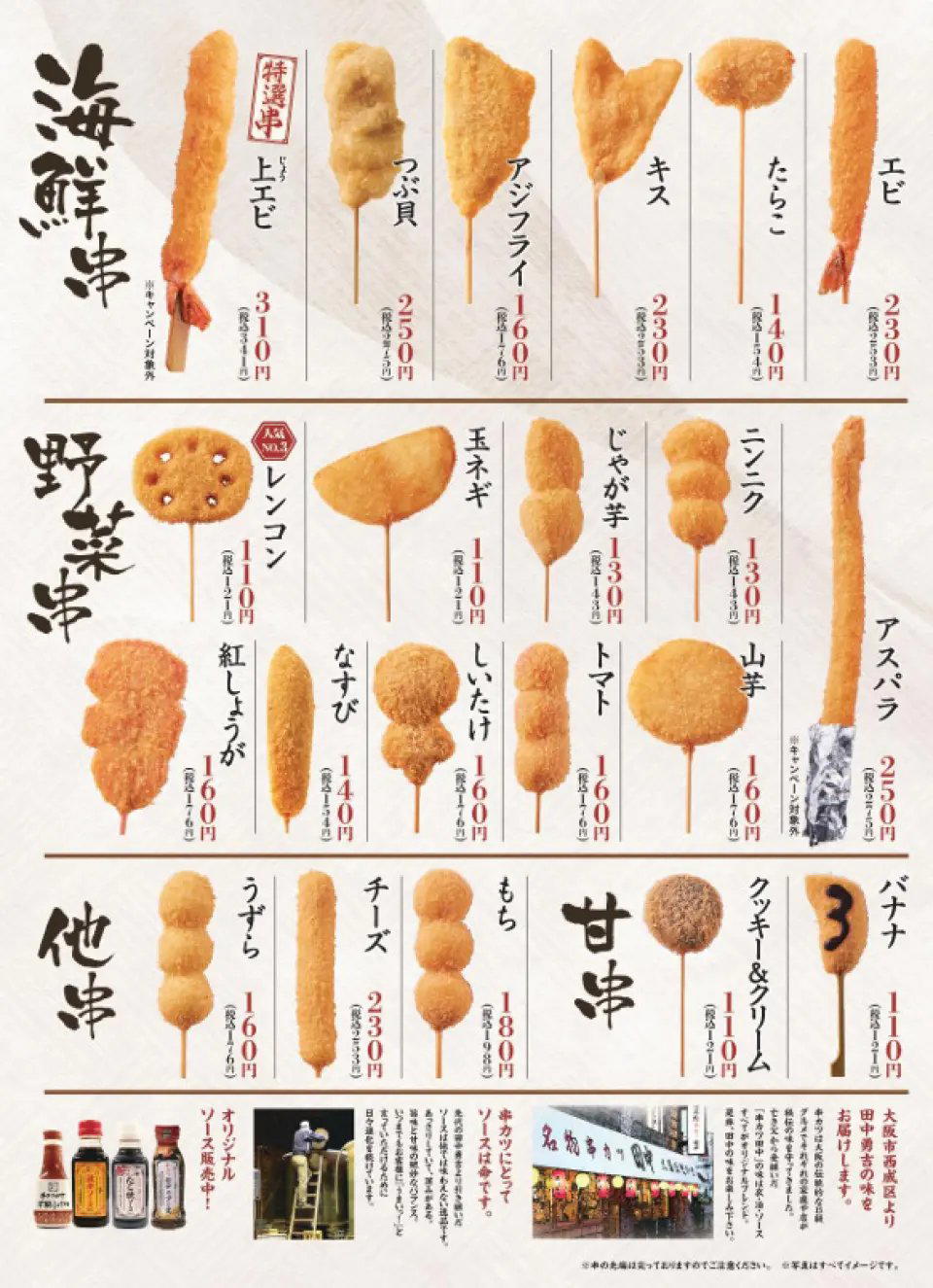
The menu
What to order
- Kushikatsu
- Saiboshi
- Kushikatsu Bucket
- Takoyaki
Kushikatsu in the Provinces: What Miyakonojo Tells You About Casual Japanese Dining
The address is 1-16 Nakamachi, a central block in Miyakonojo that sits in the commercial core of Miyazaki Prefecture's second-largest city. Kushikatsu Tanaka is a chain operation with outlets across Japan, and its presence here is worth reading as a signal about how urban casual dining spreads into mid-sized provincial cities. Miyakonojo has a population large enough to sustain a genuine restaurant culture, and the Nakamachi location puts this kushikatsu counter within reach of the city's working and shopping population. The format is familiar to anyone who has eaten at the chain elsewhere: skewered, crumbed, and deep-fried proteins and vegetables, served in a setting that leans toward the affordable and sociable rather than the formal.
For a deeper look at how Miyakonojo's dining scene maps across cuisines and price tiers, our full Miyakonojo restaurants guide covers the wider range of options in the city.
The Kushikatsu Tradition and Where Ingredients Enter the Story
Kushikatsu originated in Osaka's working-class Shinsekai district, where affordable proteins, economical frying oil, and high-volume turnover defined the format. The discipline of the style has always been in the sourcing logic: what goes on the skewer reflects what is locally abundant and cheaply obtained. Pork, chicken, quail egg, lotus root, leek, shrimp, and cheese appear on most Kushikatsu Tanaka menus because they hold their texture through the breadcrumb fry and deliver consistent results at volume.
Miyazaki Prefecture has its own agricultural identity that sits, at least in principle, adjacent to this tradition. The prefecture is one of Japan's more recognized sources of Wagyu cattle, with Miyazaki Beef holding a geographical indication and a track record at national competitions. Chicken production is also significant: Miyazaki's jidori (free-range) chicken sector, particularly under the Hyuga Jidori designation, supplies restaurants across the country.
This sourcing flexibility is part of what distinguishes casual fry-counter formats from the more tightly constrained omakase or kaiseki traditions. At the counter level occupied by venues like Harutaka in Tokyo or Gion Sasaki in Kyoto, ingredient decisions are locked by tradition or seasonality into narrow parameters. Kushikatsu has no such constraint, which is why it can absorb regional products and still feel coherent as a format.
The Atmosphere: What a Kushikatsu Tanaka Counter Looks Like
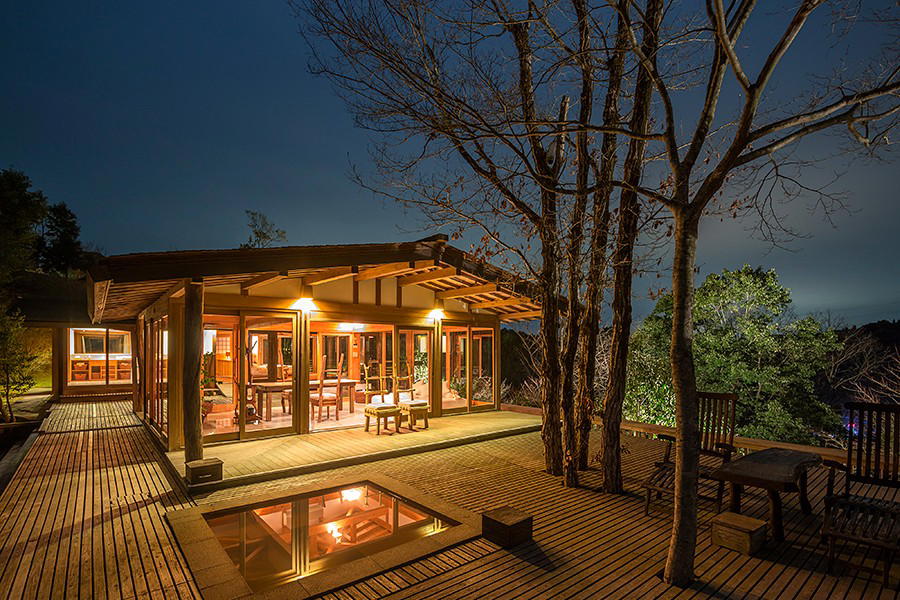
Kushikatsu Tanaka outlets share a recognizable visual grammar: warm wood tones, counter seating facing the fryer station, paper menu cards or laminated boards listing skewer options by category. The light is usually amber rather than clinical, which softens the industrial rhythm of the frying process. Noise levels lean convivial. This is not a place where conversation has to compete with studied silence, and the counter format means diners share sightlines with the cook in a way that mid-table seating in a larger restaurant does not provide.
The double-dipping rule is one of the format's firm social protocols: the shared sauce pot is served once per skewer, and dipping a second time is considered poor form. This small but real piece of etiquette separates kushikatsu from other casual fry formats and gives the counter a mild social structure that keeps the communal element coherent across a busy service. It is also one of those details that makes a first visit to any Kushikatsu Tanaka location feel initiatory rather than purely transactional.
How Miyakonojo Fits Into Japan's Provincial Dining Map
Japan's fine-dining conversation tends to concentrate on the arc between Tokyo, Kyoto, Osaka, and Fukuoka. Operations like HAJIME in Osaka, Goh in Fukuoka, and akordu in Nara represent the kind of destination dining that draws travelers specifically for the restaurant. Miyakonojo is not in that conversation. It is a Miyazaki city of roughly 165,000 people, and its dining culture reflects local need rather than destination ambition.
That is not a criticism. Provincial Japanese food culture at the casual end is often more honest about what people actually eat on a Tuesday evening than the venues reviewed in specialist publications. Kushikatsu Tanaka Miyakonojo represents the format that most Japanese city-dwellers encounter most often: accessible, consistent, social, and priced to allow frequent visits. For comparison, the rarefied end of the Japan dining spectrum, from omakase counters in Ginza to the tasting-menu rooms reviewed by critics who cover venues like Le Bernardin, operates on entirely different access and cost logic.
Venues in smaller Japanese cities with credentialed kitchens, such as a restaurant in Nanao or one in Takashima, often attract travelers specifically because they offer serious cooking outside the major urban circuits. Miyakonojo does not yet have that kind of draw for food travelers, but the city's Wagyu and jidori chicken resources mean the ingredients for it exist in the prefecture.
Planning a Visit: Practical Context
Miyakonojo is accessible by train on the Kirishima line and by road from Kagoshima and Miyazaki City. The Nakamachi address puts the restaurant in the walkable commercial center. Check the location directly for current hours before visiting. Pricing across the Kushikatsu Tanaka chain positions it firmly in the affordable-casual tier; a full meal per person with drinks sits well below the price benchmarks of the prefecture's better-known Wagyu steakhouses. For visitors combining Miyakonojo with wider Miyazaki or Kagoshima travel, it functions as a low-friction meal option without advance booking requirements. Other casual dining operations across smaller Japanese cities, like Bistro Ange in Toyohashi or Denko Sekka in Hiroshima, show how well these mid-city restaurant formats serve local populations and passing travelers alike.
Frequently asked questions
Can I bring kids to Kushikatsu Tanaka Miyakonojo?
Kushikatsu Tanaka outlets are built around the format of casual counter and table dining with a menu that skews toward straightforward fried skewers and beer, which makes them more accessible for families than a formal kaiseki room. The Nakamachi address in Miyakonojo sits in a commercial district, so foot-traffic families are part of the normal clientele. That said, the fryer-forward environment and the no-double-dipping sauce rules require a quick briefing for younger guests. Confirm any specific family seating arrangements directly with the location before visiting.
What's the vibe at Kushikatsu Tanaka Miyakonojo?
The format follows the Kushikatsu Tanaka chain's consistent visual identity: warm timber finishes, counter seating that faces the fryer station, and laminate or paper menus. The atmosphere sits closer to an Osaka izakaya than a restaurant dining room, with the fryer noise and quick ordering pace setting the tempo. Miyakonojo is Miyazaki Prefecture's second-largest city, and the Nakamachi location is in the commercial core, so the crowd tends to be local workers and neighbourhood regulars rather than tourists.
How does Kushikatsu Tanaka Miyakonojo fit into the wider Kyushu dining scene?
Miyakonojo is a provincial city in Miyazaki Prefecture on Kyushu's eastern coast, removed from the fine-dining concentration around Fukuoka and Kagoshima. Kushikatsu Tanaka brings an Osaka-originated skewer format to that gap, operating in the everyday casual register that most of Miyakonojo's dining economy occupies. For travellers moving through Kyushu who want a consistent benchmark for kushikatsu outside of Osaka's Shinsekai district, the Nakamachi location provides that reference point in an otherwise lightly covered city.
What's the must-try dish at Kushikatsu Tanaka Miyakonojo?
The kushikatsu skewer itself is the point: individually breaded proteins and vegetables, fried to order and dipped once in the shared sauce pot at the counter. The Osaka tradition that Kushikatsu Tanaka draws from makes the no-double-dipping rule non-negotiable and central to the experience. Order according to the current menu at the location.
Where do I go for Kushikatsu Tanaka Miyakonojo?
Kushikatsu Tanaka Miyakonojo is located at 1-16 Nakamachi, Miyakonojo, Miyazaki 885-0071, Japan.
Do I need a reservation for Kushikatsu Tanaka Miyakonojo?
Kushikatsu Tanaka operates as a high-turnover casual dining format, and most locations in the chain do not require advance reservations. The Nakamachi address in Miyakonojo's commercial centre means peak evening hours on weekdays may see waits at the counter. Check directly with the location in advance if you are arriving with a group.
How Kushikatsu Tanaka Miyakonojo compares with similar nearby venues.
| Venue | Cuisine | Awards |
|---|---|---|
| Kushikatsu Tanaka MiyakonojoThis venue — the venue you are viewing | Osaka-style Kushikatsu Izakaya | Not listed |
| Fureai no Sato Umekita honten | Japanese Chicken Specialty / Yakitori | Tabelog 100 #31 |
Continue exploring
More in Miyakonojo
Restaurants in Miyakonojo
Browse all →
Hotels in Miyakonojo
Browse all →
Details
- Lively
- Casual
- Energetic
- Group Dining
- Casual Hangout
- After Work
- Celebration
- Open Kitchen
- Beer Program
- A La Carte
- Small Plates
- All You Can Drink
Current opening hours
- Monday
- 4 PM–12 AM
- Tuesday
- 4 PM–12 AM
- Wednesday
- 4 PM–12 AM
- Thursday
- 4 PM–12 AM
- Friday
- 4 PM–12 AM
- Saturday
- 12 PM–12 AM
- Sunday
- 12 PM–12 AM
Hours can change for holidays and private events. Last verified .
Casual izakaya atmosphere with lively energy, designed for group dining and social gatherings.