

Tabelog Silver #64
Our verdict
Kurumasushi puts Matsuyama sushi in a serious regional conversation rather than treating it as a side note to Tokyo or Osaka. The eight-seat counter, Tabelog Award 2026 Silver recognition, and Sushi WEST “Tabelog 100” selection point to a compact, ingredient-led format where Ehime’s access to Seto Inland Sea seafood carries the argument.

Pearl is the En Primeur Club membership app — saves, bookings, and concierge access live there. Same editors, same standards.
- Address
- 1 Chome-6-9 Ichibancho, Matsuyama, Ehime 790-0001, Japan
- Phone
- +81 89-932-3689
- Hours
- Mon–Tue 5–10 PMWed ClosedThu–Sun 5–10 PM
- Website
- kurumasushi.com
- Directions
- Get directions
- Booking
- Book on Omakase
The menu
What to order
- Steamed abalone
- White tilefish nigiri
- Tuna akami
- Hamo sashimi
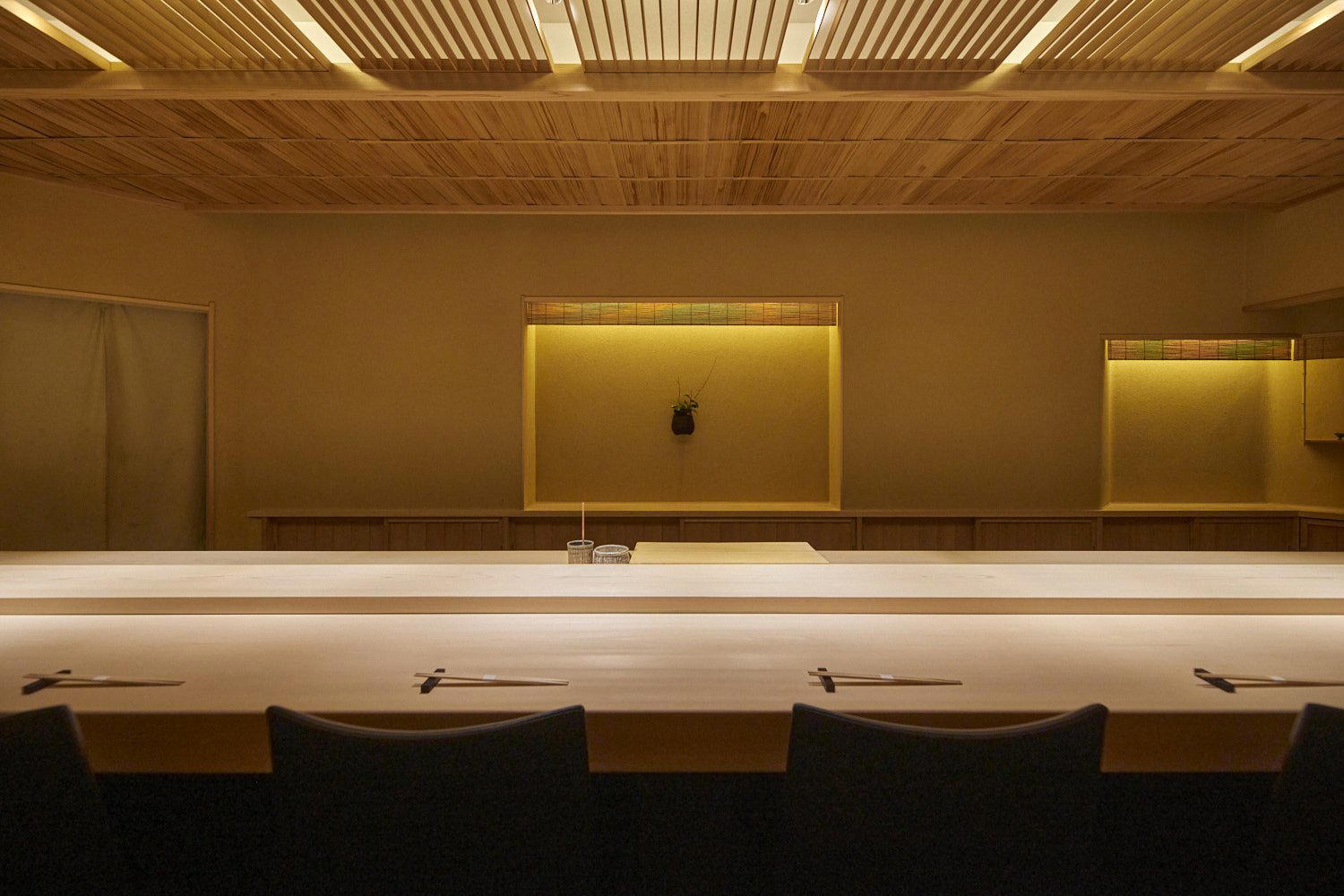
In Matsuyama, sushi does not need the theatrical density of Ginza to make its case. The city sits close to the Seto Inland Sea, where small ports, tidal variety, and regional fish culture give counters a different vocabulary from the metropolitan Edomae template. Kurumasushi belongs to that smaller, more concentrated tier: an eight-seat counter where the room’s scale makes sourcing, pacing, and rice work impossible to hide.
The useful way to read this counter is through geography. Ehime is not merely a backdrop; it is part of the meal’s logic. Inland Sea sushi often rewards a diner who cares less about imported luxury markers and more about how local fish, shellfish, and seasonal catch can be handled with discipline. That does not make the experience rustic. It places the restaurant in a category where technique is judged by restraint, not display.
Ehime fish, counter discipline, and the case for regional sushi
Japan’s high-end sushi conversation is often over-weighted toward Tokyo, but regional counters now claim attention through proximity to specific waters. Matsuyama has an advantage here: the Seto Inland Sea is associated with varied white fish, controlled currents, and a seafood culture that supports precise, seasonal buying. Kurumasushi’s public recognition, including Tabelog Award 2026 Silver and selection for Sushi WEST “Tabelog 100” in 2025, signals that the counter is being judged beyond local loyalty.
That matters because the format is unforgiving. At eight counter seats, there is little room for a broad à la carte safety net or hotel-dining anonymity. The sushi counter becomes a live edit of the day’s supply, the chef’s hand, and the diner’s attention. In that setting, ingredient sourcing is not a romantic claim; it is the operating system. Fish quality, cut, seasoning, temperature control, and rice balance are the grammar of the meal.
Compared with Matsuyama peers, the price tier also tells a story. Sushi Kawanaka occupies a lower dinner bracket, while Sumishin sits in a separate high-spend category outside the same sushi-specific frame. Teuchi Soba Maro, at a much lower spend level, reflects another side of the city’s dining culture: accessible craft rather than counter luxury. Kurumasushi is therefore not just “expensive sushi in Matsuyama.” It is Matsuyama sushi priced and recognized as a regional destination counter.
For readers mapping a broader local itinerary, the contrast is useful. Ino, Dogo Kaishu (Japanese Cuisine), Hinode, Bettei Oborozukiyo, and Chuka Soba Fukamidori show how the city moves between ryokan-adjacent refinement, everyday noodle culture, and small-format specialist dining. The broader map is in Our full Matsuyama restaurants guide, with trip context in Our full Matsuyama hotels guide, Our full Matsuyama bars guide, Our full Matsuyama wineries guide, and Our full Matsuyama experiences guide.
A small-room sushi format with national recognition
The counter’s recognition gives the meal a clearer frame. Tabelog Award Silver status in 2026, following Silver recognition in 2024 and 2025 and Bronze in 2023, places Kurumasushi in a sustained evaluation cycle rather than a single-year spike. Its Tabelog score has sat in the mid-4 range, with a 4.46 figure attached to the 2026 award listing. For Japan dining, where user scoring is conservative and sushi is a heavily scrutinized category, that is a meaningful signal.
The Sushi WEST “Tabelog 100” selection is just as important because it shifts the comparison away from Tokyo dominance. WEST scope puts the restaurant into a western Japan sushi conversation, where Kyoto, Osaka, Kobe, and regional cities all compete for attention. Matsuyama’s inclusion in that frame is the editorial point: the city can support a serious sushi counter without needing to mimic a capital-city script.
That said, this is not the counter for diners seeking a casual sampler of local food culture. The format rewards people who are comfortable handing over the sequence and reading small differences in fish handling. It is better understood as a destination meal inside a Matsuyama trip, especially for diners already planning around Dogo Onsen, castle-town streets, and the city’s slower evening rhythm. The appeal lies in compression: few seats, a narrow focus, and a cuisine where small decisions carry weight.
Readers comparing Japanese dining beyond Shikoku can use the contrast to sharpen expectations. A Tokyo izakaya-grill format such as. 鮪と炭火焼き うお炭 秋葉原店 in Tokyo, a casual Kansai café such as.cafe in Osaka, or a specialist curry shop such as [Curry Senmon Ten] Maruyama Kyoju. in Sapporo answers a different travel question. So do.know in Kumamoto, (Shoku) Vietnam in Kawasaki, and -Grilled beef Sukiyaki- KAMAKURA TANUKIAN 鎌倉 たぬき庵 in Kamakura. In Los Angeles and Pasadena, Jōdo Saké Bar in Los Angeles and Onigiri Time in Pasadena show how Japanese formats travel and change abroad. Kurumasushi is more specific: a Matsuyama counter where regional seafood is the central argument.
Who should choose this counter
The right diner is someone who values a tight sushi format over breadth. The counter does not need a long list of amenities to justify itself; the awards trail, the small seating count, and the western Japan sushi recognition already define the level. Its no-smoking policy, counter-only structure, and perfume caution also point toward a room where concentration matters. That is not preciousness. In sushi, scent, timing, and proximity affect the meal more than in many restaurant formats.
The decision is therefore less about whether Matsuyama can compete with larger cities and more about what kind of sushi experience the trip needs. If the goal is variety, the city has easier and broader options. If the goal is to see how Ehime’s seafood identity can be translated through a serious counter, Kurumasushi is the sharp choice.
Frequently asked questions
Is Kurumasushi a family-friendly restaurant?
Kurumasushi is an 8-seat counter in Matsuyama with two evening sittings, so it suits diners who are comfortable with a fixed, quiet sushi format. The reservation-only setup on OMAKASE points to a more formal room than a casual family restaurant.
How would you describe the vibe at Kurumasushi?
The room is compact and focused: 8 counter seats, non-smoking throughout, and a perfume-free request at the door. Tabelog Silver awards in 2024, 2025, and 2026 give the place clear status, but the setting remains about concentration rather than theatrics.
When is Kurumasushi open?
Hours at Kurumasushi: ■Business hoursFrom 17:00 onwardsFrom 19:30 onwardsWe operate in two seating sessions.■Closed onWednesdays and not fixed.
What's Kurumasushi's location?
Kurumasushi is located in Matsuyama.
At-a-Glance Comparison
Comparable venues by cuisine and price in the same metro.
| Venue | Cuisine | Price | Awards | Notes |
|---|---|---|---|---|
| KurumasushiThis venue — the venue you are viewing | Modern Edomae Omakase | $150–200 | Tabelog Silver #64 | Not listed |
| No Name | Italian (French influences) | $100–150 | Tabelog Bronze #321 | Matsuyama |
| Teuchi Soba Maro | Handmade soba (buckwheat noodles) | $10–20 | Tabelog 100 #64 | Okaido |
| Yoshokuya Shii | Japanese-style Western Cuisine (Yoshoku) | $10–20 | Tabelog 100 #58 | Sambancho |
| Oborozukiyo (別邸 朧月夜) | Traditional Japanese Kaiseki Ryokan Dining | Not listed | Not listed | Dogo |
| Bettei Oborozukiyo | Traditional Japanese Kaiseki Ryokan Dining | Not listed | Not listed | Dogo Onsen |
Recognition history
Dated appearances from independent guides and award organizations, with the underlying list record or original source where available.
Tabelog Silver #64
Tabelog
The Japan Times Destination Restaurants Destination Restaurants Selection #8
The Japan Times Destination Restaurants
Full recognition history (4 entries)
Tabelog 100 #35 · No. 35
Tabelog · Tabelog 100 - Sushi - WEST - 2025
Tabelog Silver
Tabelog
Continue exploring
More in Matsuyama
Restaurants in Matsuyama
Browse all →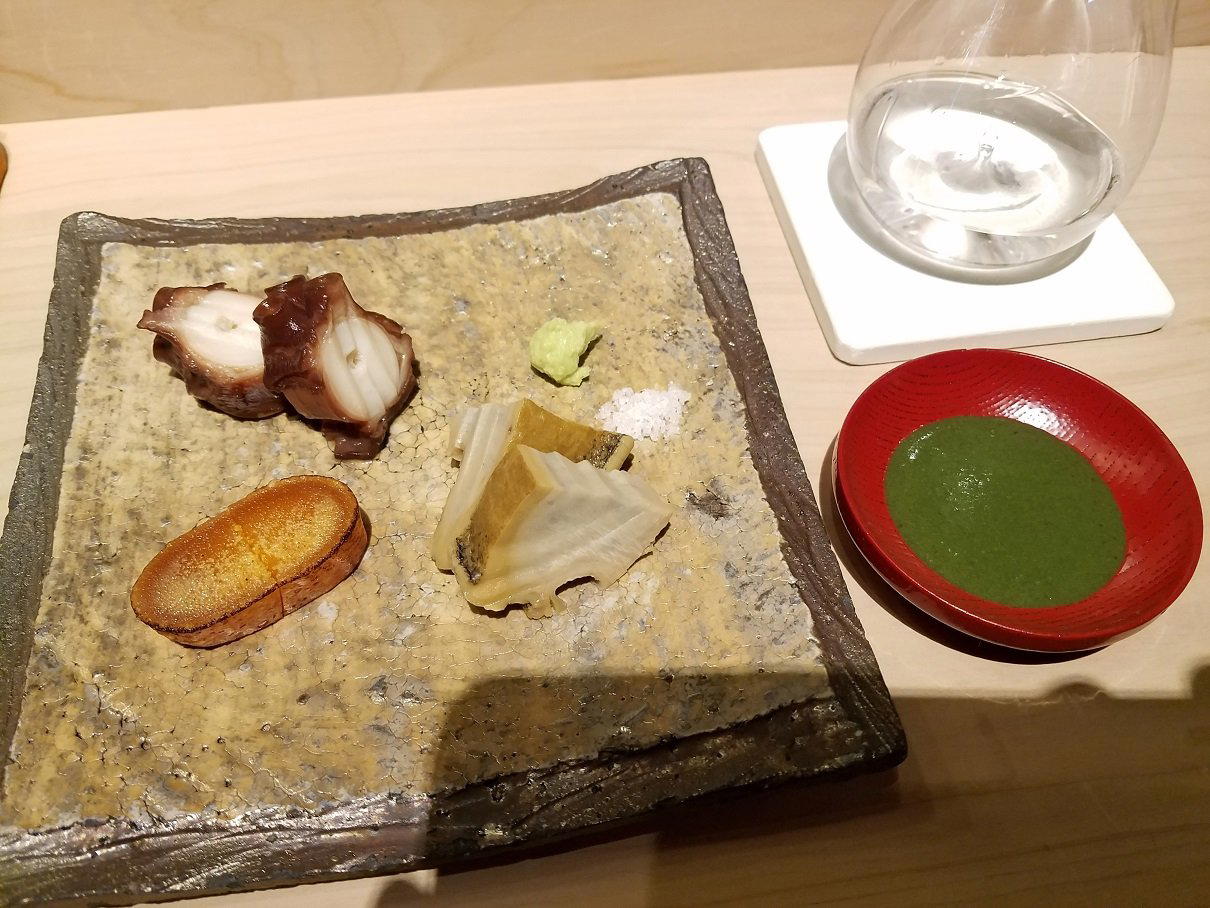
Details
- Elegant
- Cozy
- Sophisticated
- Intimate
- Modern
- Classic
- Date Night
- Special Occasion
- Solo
- Chefs Counter
- Sake Program
- Local Sourcing
- Sustainable Seafood
- Omakase
- Counter Dining
- Sake
- Wine
Current opening hours
- Monday
- 5–10 PM
- Tuesday
- 5–10 PM
- Wednesday
- Closed
- Thursday
- 5–10 PM
- Friday
- 5–10 PM
- Saturday
- 5–10 PM
- Sunday
- 5–10 PM
Hours can change for holidays and private events. Last verified .
Warm and inviting teahouse-inspired interior with Yoshino cypress counter, bamboo screens, wickerwork ceiling, and intricate local craftsmanship creating unhurried tranquility.