KUHnstWERK serves Modern American Burgers at Röselerstraße 7 in Hanover, with local sourcing, an open kitchen and terrace for lunch or dinner.
Pearl is the En Primeur Club membership app — saves, bookings, and concierge access live there. Same editors, same standards.
- Address
- Röselerstraße 7, 30159 Hannover, Germany
- Phone
- +4951135344522
- Website
- kuhnstwerk.com
- Directions
- Get directions
 Saves & bookings on Pearl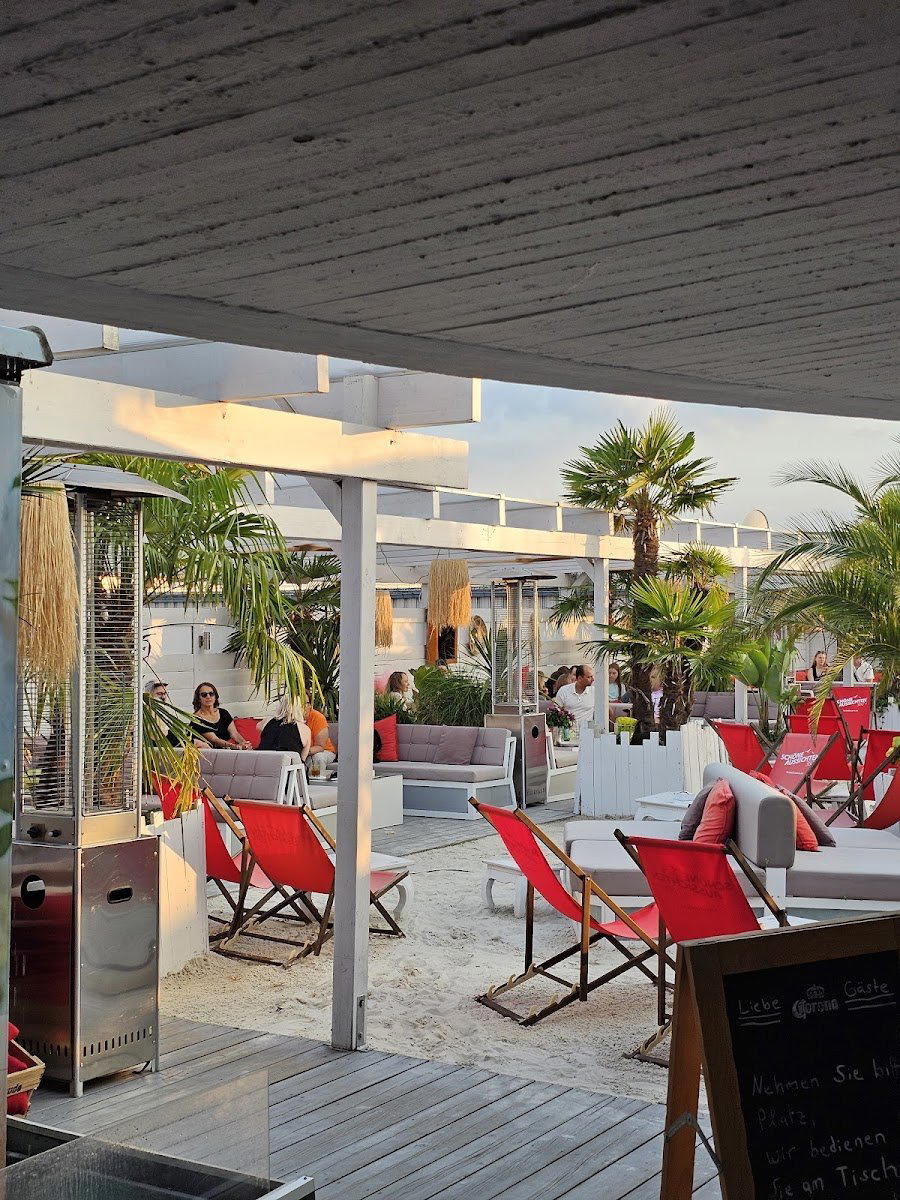
Where Röselerstraße Meets the Kitchen
The address alone signals intent. Röselerstraße 7 sits inside Hanover's central district, a few minutes from the Kröpcke axis where the city's commercial and cultural pulse runs most visibly. The name KUHnstWERK plays on the German word for artwork, Kunstwerk, while embedding a bovine nod (Kuh, cow). That kind of wordplay tends to signal a kitchen with opinions, one that has thought carefully about what it wants to say before it starts cooking.
Hanover's fine dining conversation has sharpened considerably in recent years. Across the city, a cluster of ambitious restaurants has emerged that positions the Lower Saxony capital as a more serious dining destination than its reputation outside Germany typically suggests. Jante and Votum operate at the creative end of that range, while Handwerk and Marie hold the middle ground between technical ambition and accessible format. KUHnstWERK enters that conversation with its own register, one worth reading carefully.
The Intersection of Technique and Territory
Germany's most decorated kitchens have long drawn on the same tension: classical European technique applied to produce that is emphatically, sometimes defiantly, local. It is the same logic that runs through Schwarzwaldstube in Baiersbronn and, in a different register, through Waldhotel Sonnora in Dreis. The method is French or Nordic in its architecture, but the ingredients are drawn from the surrounding region with the kind of specificity that makes a dish legible as belonging to a place rather than just to a style. KUHnstWERK operates within that tradition, applying the precision language of contemporary European fine dining to Lower Saxony's agricultural breadth.
Lower Saxony is, by area, one of Germany's largest agricultural states. It produces beef, pork, game, root vegetables, and dairy in quantities that give a kitchen genuine seasonal flexibility. The name's bovine subtext is not incidental: German beef, particularly from regional breeds and smaller-scale producers, has become a more visible feature of Hanover's better restaurants as sourcing conversations have moved from wine lists onto meat programmes. A kitchen that names itself partly after a cow is implicitly making a claim about where its proteins come from and how seriously it takes them.
That approach connects to a wider movement across Germany's mid-tier fine dining scene, where imported technique, fermentation protocols developed in Copenhagen, sauce architecture inherited from Paris, aging methods borrowed from both traditions, has been applied to produce that couldn't be less imported. The result is food that reads as contemporary European but tastes of a specific geography. ES:SENZ in Grassau and JAN in Munich both work variations on this formula in the south; KUHnstWERK represents a northern expression of the same instinct.
Hanover's Dining Position in the German Hierarchy
To understand where KUHnstWERK sits, it helps to map Hanover against Germany's broader fine dining structure. The country's highest-concentration Michelin markets remain Munich, Hamburg, and the Rhine-Ruhr corridor, where kitchens like Vendôme in Bergisch Gladbach and Victor's Fine Dining by Christian Bau in Perl operate at the three-star level. Hamburg's Restaurant Haerlin anchors the northern end of that hierarchy. Hanover sits outside the first tier but has been building a credible second tier, with Albertz. adding further texture to the local offer.
That positioning matters for the reader making a routing decision. Hanover is a genuine dining destination in its own right rather than a stop that requires qualification. ICE connections from Hamburg (roughly one hour) and Frankfurt (under two hours) make it accessible for a dedicated meal without requiring an overnight stay, though the city's hotel offer is substantial enough for those who want to extend the visit. Our full Hanover restaurants guide maps the scene in more detail for those planning across multiple meals.
Technique as the Through-Line
The comparison set that matters most for KUHnstWERK is not the restaurants immediately around it on Röselerstraße but the broader cohort of German kitchens applying global technique to regional material. Aqua in Wolfsburg, less than an hour east by road, operates at three Michelin stars with a programme that shares this DNA at a more rarified level. Schanz in Piesport applies similar logic in the Moselle context. Further afield, CODA Dessert Dining in Berlin demonstrates how far technique-led thinking can travel when it finds a coherent editorial framework. These are not direct peers in price or format, but they define the tradition KUHnstWERK is working within.
The international reference points extend beyond Germany. Kitchens like Le Bernardin in New York City built their identity on the application of French classical structure to a single category of ingredient with uncommon depth. Atomix in New York City does something structurally similar from a Korean foundations. The thread connecting these kitchens to one another and to KUHnstWERK is the belief that technique is not decoration but argument: it makes a claim about what the ingredient is and what it could be.
Planning a Visit
KUHnstWERK is located at Röselerstraße 7 in Hannover's central district, walkable from the main train station and easily reached from the city's tram network. As with most of Hanover's more serious kitchens, autumn and winter menus tend to reflect the region's agricultural rhythms most directly, with game and root-heavy preparations giving way to lighter spring produce from around March onward. Timing a visit to coincide with that seasonal transition, when kitchens are often at their most inventive, tends to reward the patient planner.
Comparable Options
Comparable venues nearby, for context on price, style, and recognition.
| Venue | Cuisine | Price | Notes |
|---|---|---|---|
| KUHnstWERKThis venue — the venue you are viewing | Modern American Burgers | $$ | Not listed |
| Damaskus | Traditional Syrian | $$ | Hanover |
| zurück zum glück | Organic Café with Breakfast and Bowls | $$ | Zoo-Viertel |
| El Chileno | Chilean Tapas Bar | $$ | Bothfeld |
| Broyhan Haus | Traditional German Regional Cuisine | $$ | Hanover-Mitte (Altstadt) |
| The Harp | American Gastropub Burgers | $$ | Linden |
Continue exploring
More in Hanover
Restaurants in Hanover
Browse all →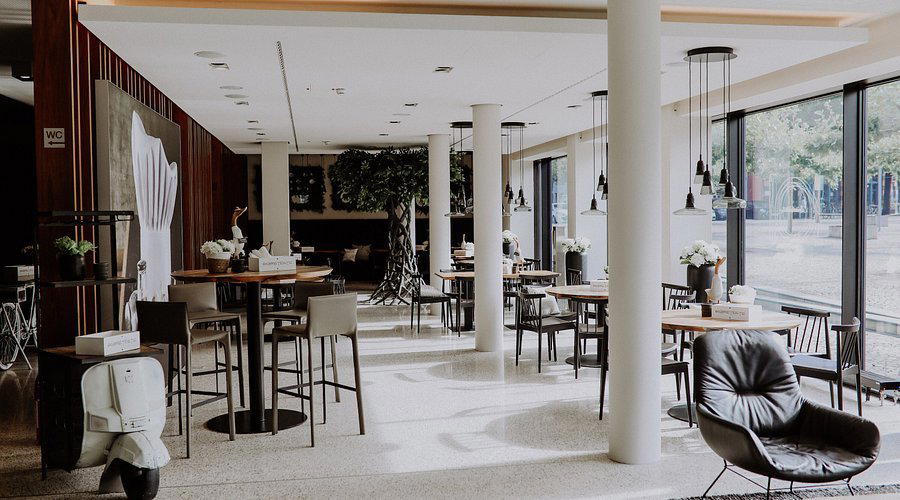
Bars in Hanover
Browse all →

Hotels in Hanover
Browse all →

At a Glance
- Industrial
- Trendy
- Lively
- Casual Hangout
- Group Dining
- Open Kitchen
- Terrace
- Local Sourcing
Current opening hours
- Monday
- 5–10 PM
- Tuesday
- 5–10 PM
- Wednesday
- 5–10 PM
- Thursday
- 5–10 PM
- Friday
- 5–10 PM
- Saturday
- 12–10 PM
- Sunday
- 2–9:30 PM
Hours can change for holidays and private events. Last verified .
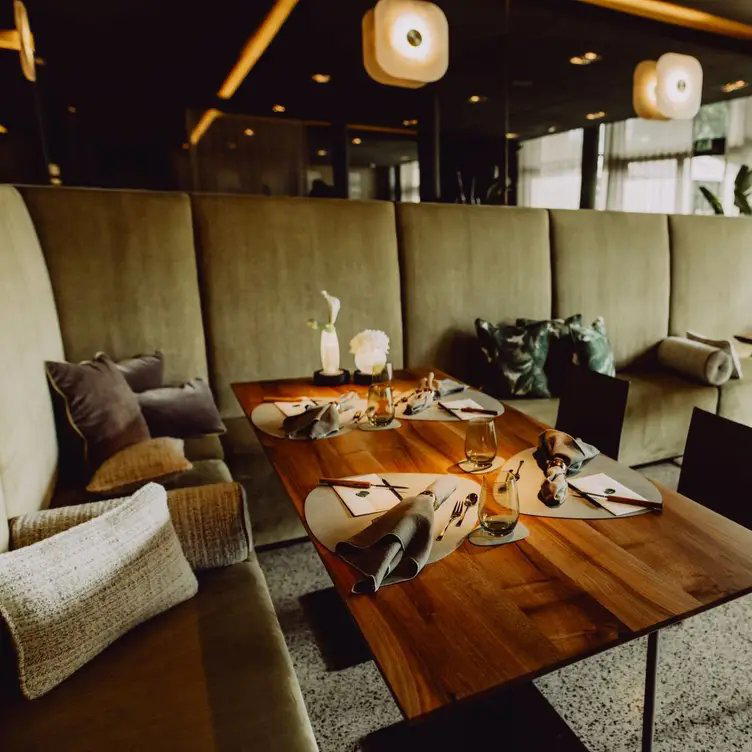
Stylish industrial chic with rustic wooden tables, cozy terrace seating, and a lively, hip atmosphere.