A neighbourhood address on Loebensteinstraße in Hanover's Südstadt district, zurück zum glück sits in a segment of the city's dining scene defined by personal scale and deliberate informality. The name translates loosely as 'back to happiness,' a frame that positions it against the more formal end of the Hanover restaurant spectrum. Practical details remain limited in public records, making direct booking one reliable starting point.
Pearl is the En Primeur Club membership app — saves, bookings, and concierge access live there. Same editors, same standards.
- Address
- Loebensteinstraße 7, 30175 Hannover, Germany
- Phone
- +4951189978880
- Website
- zurueckzumglueckhannover.com
- Directions
- Get directions
 Saves & bookings on Pearl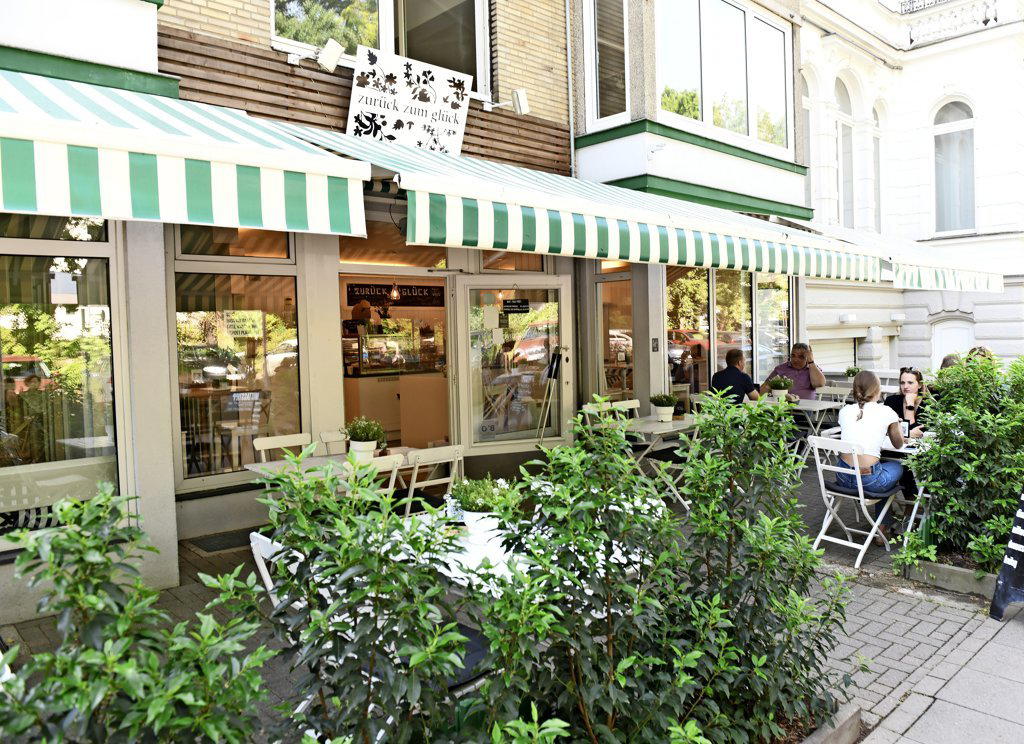
What Hanover's Smaller Dining Addresses Tell You About the City
zurück zum glück is a restaurant at Loebensteinstraße 7, 30175 Hannover, Germany, serving an organic café format with breakfast and bowls at an accessible price point. The city's most-discussed addresses tend to cluster at the formal end: Jante and Votum occupy the creative, multi-course tier, while Handwerk and Marie anchor the modern and French-leaning mid-range. Below and beside these better-documented places, a quieter layer of neighbourhood restaurants operates with less press coverage, fewer booking-platform profiles, and a clientele built largely on local word of mouth. zurück zum glück, at Loebensteinstraße 7 in the Südstadt quarter, belongs to that quieter layer.
The Südstadt itself shapes what you might expect before you arrive. It is a residential district with a mix of Gründerzeit apartment blocks and smaller commercial streets, the kind of neighbourhood where restaurants survive on repeat custom rather than destination traffic. Dining rooms here tend to be compact, the tone conversational, and the ambition calibrated to the room rather than to an imagined critic. That context matters when reading the name: zurück zum glück, translating roughly as 'back to happiness,' signals a deliberate turn away from the category of dining that announces itself through format weight and tasting-menu architecture.
Reading the Menu Frame
German restaurant names that invoke mood or sentiment rather than a chef surname or a cuisine category are making an implicit structural argument. The menu, in this framing, is not meant to be the object of study, it is meant to be the occasion for ease. Across German cities, this approach has produced a recognizable format: shorter menus built on a handful of daily options, an emphasis on seasonal sourcing without the accompanying lecture, and pricing that keeps the room accessible to regulars rather than reserved for occasions. At venues in this tier across cities like Hamburg and Munich, the actual menu architecture typically runs to three or four sections, with a small number of rotating dishes in each. The wine list, if present, tends to stay regional or narrowly European, prioritising value-to-glass ratio over depth of cellar.
The name suggests a direct menu built around breakfast and bowls, with an emphasis on organic ingredients and a casual pace. That is a coherent position in a city where the formal end of the market, addresses like Jante or, further afield in Lower Saxony, the kind of precision cooking represented by Aqua in Wolfsburg, has claimed the multi-course, technique-forward space. For a neighbourhood room, attempting to compete on that axis would be a category error. The editorial logic of the name suggests the kitchen knows this.
Where This Address Sits in the Hanover Competitive Set
Mapping the restaurant against Hanover's dining tiers places it firmly in the accessible, casual end of the market. The comparison venues available tell a useful story about the market it operates beside. Albertz. and Marie represent the French-leaning, moderately formal mid-range at the €€€ tier. Handwerk sits at modern cuisine with similar pricing. At the €€ tier, addresses like Beckers and Schorse im Leineschloss cover French and international formats respectively. The restaurant occupies the neighbourhood-casual end of Hanover's spectrum.
That positioning is not a diminishment. Germany's most interesting dining development in the past decade has not been exclusively at the Michelin-starred level, where addresses like Schwarzwaldstube in Baiersbronn, Vendôme in Bergisch Gladbach, or Victor's Fine Dining by Christian Bau in Perl operate. Some of the more consequential shifts have happened at the neighbourhood level, where a generation of smaller rooms has rejected the formality grammar of white tablecloths and amuse-bouches in favour of directness. CODA Dessert Dining in Berlin represents one extreme of this, a concept built entirely around dessert as the structural logic of a tasting menu. The restaurant appears to represent the quieter, less conceptually aggressive version of the same instinct: strip back the ceremony, keep the quality.
The Neighbourhood as Context
Loebensteinstraße sits within walking distance of the Eilenriede, Hanover's large urban forest, and the Südstadt's grid of residential streets. The area does not function as a restaurant destination in the way that Hamburg's Eppendorf or Munich's Maxvorstadt do, there is no cluster of dining rooms creating a scene. A restaurant on this street is almost certainly building its audience block by block, through neighbourhood regulars who return because the room is theirs in some meaningful sense. Compare that dynamic to the more itinerant dining culture at Restaurant Haerlin in Hamburg or Schanz in Piesport, where destination-diners travel specifically for the kitchen. The mechanics of success are entirely different, and the restaurant's name signals that it understands which game it is playing.
For visitors to Hanover who want to understand the city's dining character rather than simply tick off its most-awarded rooms, addresses like this one offer a different kind of intelligence. The formal tier, Jante, Votum, and Handwerk among them, shows what the city's kitchens can do at full ambition. The neighbourhood tier shows how the city actually eats. Both are worth attention, and the editorial case for spending time in the Südstadt, away from the centre's more predictable restaurant geography, is reasonably strong. Hanover is not a dining city that rewards only the conventional tourist circuit, and the restaurant's location is part of that argument.
JAN in Munich, ES:SENZ in Grassau, and Waldhotel Sonnora in Dreis, each occupying its own distinct tier in a country where the range between those poles is broader than most outsiders assume. Internationally, the structural contrast is even sharper: the menu architecture at Le Bernardin in New York City or Atomix in New York City operates in a register that has almost nothing in common with what the restaurant appears to be attempting, and that is precisely the point.
A Pricing-First Comparison
Comparable venues nearby, for context on price, style, and recognition.
| Venue | Cuisine | Price | Notes |
|---|---|---|---|
| zurück zum glückThis venue — the venue you are viewing | Not listed | $$ | Not listed |
| VEATS | Not listed | $$ | Hannover-Mitte, Vegetarian & Vegan Bowls, Wraps & Smoothies |
| Mama's Kitchen | Nordstadt, Authentic Hong Kong Cantonese | $$ | Not listed |
| ristorante gianni | Kirchrode, Authentic Italian Trattoria | $$ | Not listed |
| Reimanns Eck | Not listed | $$ | Oststadt, Traditional German Regional Cuisine |
| Chai'n more | central, Indian-German Fusion | $$ | Not listed |
Continue exploring
More in Hanover
Restaurants in Hanover
Browse all →
Bars in Hanover
Browse all →

Hotels in Hanover
Browse all →

At a Glance
- Cozy
- Modern
- Brunch
- Casual Hangout
- Family
- Terrace
- Organic
- Local Sourcing
Current opening hours
- Monday
- 10 AM–6:30 PM
- Tuesday
- 10 AM–6:30 PM
- Wednesday
- 10 AM–6:30 PM
- Thursday
- 10 AM–6:30 PM
- Friday
- 10 AM–6:30 PM
- Saturday
- 10 AM–6:30 PM
- Sunday
- 10 AM–6:30 PM
Hours can change for holidays and private events. Last verified .
Cozy and peaceful café atmosphere with terrace seating, ideal for relaxed hangouts.