Damaskus brings Syrian and broader Middle Eastern cooking to Goethepl. 5 in Hanover's Südstadt, occupying a tier of the city's dining scene where cultural specificity and hospitality tradition carry as much weight as technique. For Hanover diners accustomed to French-leaning fine dining or modern European menus, it represents a genuinely different register of flavour, ritual, and table pace.
Pearl is the En Primeur Club membership app — saves, bookings, and concierge access live there. Same editors, same standards.
- Address
- Goethepl. 5, 30169 Hannover, Germany
- Phone
- +4951151999910
- Directions
- Get directions
 Saves & bookings on Pearl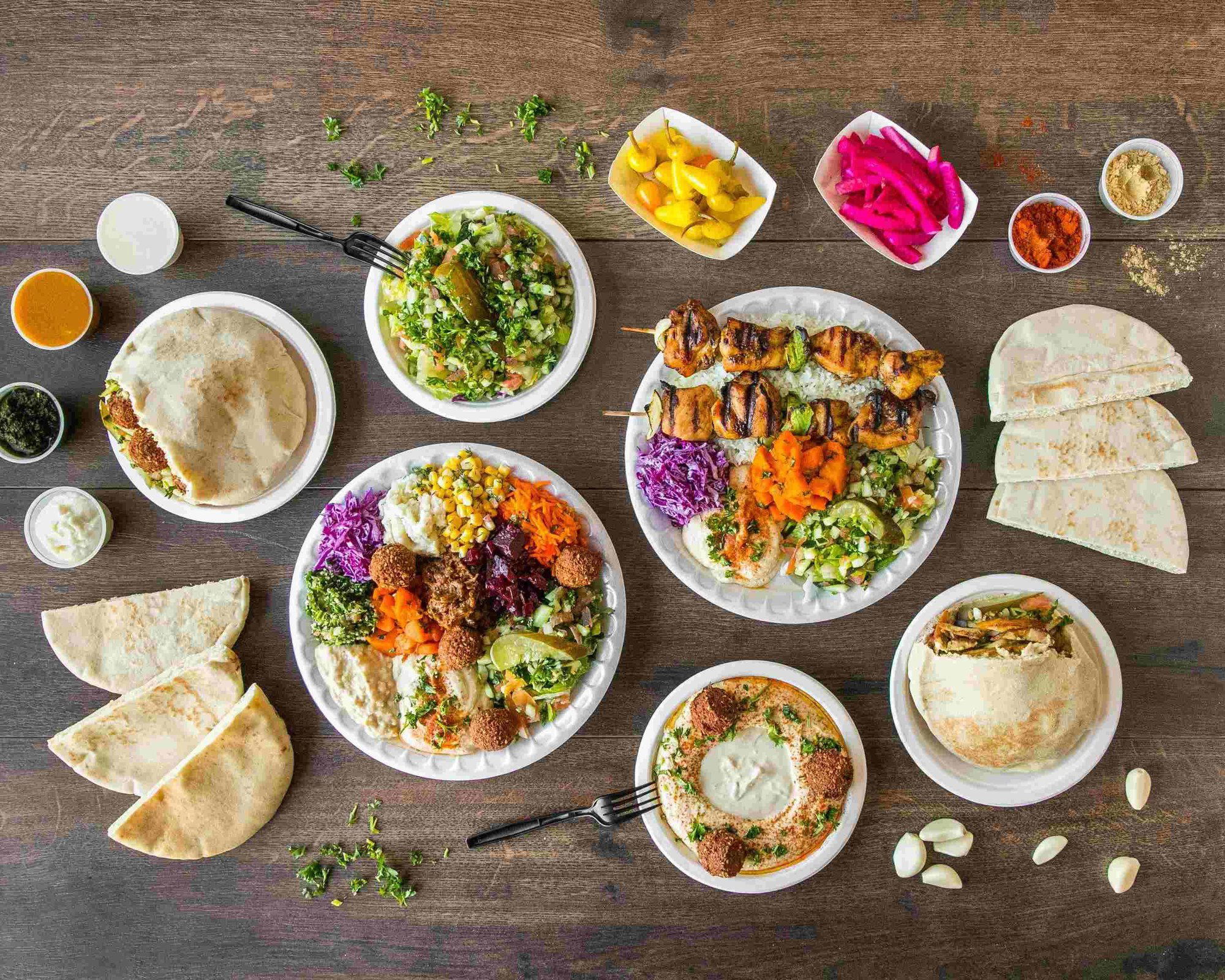
Where the Meal Is the Occasion
Goethestraße and its surrounding blocks form one of Hanover's more architecturally coherent stretches, and the address at Goethepl. 5 places Damaskus within walking distance of the city's cultural and civic centre. The neighbourhood's character is mixed in a way that suits a restaurant drawing on Syrian culinary tradition: residential enough to attract regulars, central enough to pull diners from across the city. Approaching the space, you enter a part of Hanover that operates at a slightly slower tempo than the commercial core.
Syrian and Levantine restaurants occupy a specific position in Germany's broader Middle Eastern dining scene. Unlike Turkish cuisine, which has a decades-long institutional presence across German cities, Syrian cooking arrived in meaningful numbers more recently, and the restaurants that do it well are still establishing their authority with a wider public. Damaskus, at its Goethepl. address, is part of that emerging layer of restaurants giving Hanover diners access to a cuisine whose range extends far beyond what casual familiarity might suggest. For a city where Jante and Votum define the creative fine-dining ceiling, and where Handwerk and Marie anchor modern European and French traditions, Damaskus operates in a register that none of those kitchens attempt.
The Ritual Architecture of a Levantine Table
What distinguishes Syrian and Levantine dining from most Western European restaurant formats is not individual dishes but the structure of the meal itself. The table is built incrementally. Cold mezze arrive first: small plates of labneh, hummus, muhammara, and pickled vegetables that function less as appetisers and more as the baseline around which the rest of the meal is calibrated. Warm mezze follow, often including fatayer, kibbeh, or falafel, dishes that signal the kitchen's ambition and technique more clearly than the cold preparations. The main course, when it arrives, is understood as a continuation rather than a destination.
This format demands a different posture from the diner. Pacing is not driven by the kitchen's efficiency or the server's turnover logic but by the table's own rhythm. Bread is not a preliminary but a tool, used throughout. Tea, whether mint or sage, often closes the meal rather than opening it. In restaurants where this structure is handled well, the experience has a hospitality logic that feels genuinely distinct from the tasting-menu discipline of places like Schwarzwaldstube in Baiersbronn or the precision sequencing of Aqua in Wolfsburg. The comparison is not hierarchical; it is categorical. The Levantine model is built around abundance and generosity rather than scarcity and restraint.
Hanover's Middle Eastern Dining Context
Hanover's dining scene is not large by the standards of Frankfurt, Hamburg, or Munich, which means that restaurants offering specific regional cuisines carry more individual weight than they might in a larger city. Albertz. and the broader restaurant corridor around the Südstadt reflect the city's growing appetite for specificity over generalism. In that context, a Syrian kitchen is not a novelty act but a genuine addition to a scene that benefits from culinary range.
German cities with significant Syrian communities have seen the quality of Syrian restaurants improve markedly over the past decade, driven partly by the arrival of trained cooks and partly by a dining public that has grown more familiar with the cuisine's possibilities. The progression from shawarma counters and falafel shops to full-service restaurants with complete mezze programmes represents a maturation that mirrors what happened with Vietnamese and Thai cooking in German cities a generation earlier. Hanover is at a mid-point in that curve, which means that a restaurant doing Syrian food seriously occupies meaningful territory.
What the Cuisine Asks of the Table
Syrian cooking at its most considered is a cuisine of layered flavour rather than single-note intensity. Pomegranate molasses cuts through richness; dried lemon adds a concentrated citric note that fresh citrus cannot replicate; spice blends like baharat and seven-spice appear as background architecture rather than foreground heat. The cooking rewards attention from diners willing to read individual preparations carefully rather than moving through a meal at pace.
This is not a cuisine designed for distracted eating. The mezze format in particular requires the table to make choices, to share, and to build the meal collaboratively. At Syrian tables, this is normal; for diners accustomed to individually plated European service, it requires a small recalibration. Restaurants like CODA Dessert Dining in Berlin and JAN in Munich have built followings around formats that similarly ask the diner to surrender some control over sequencing. The Levantine approach is older than any of those formats and more socially coherent: it was designed for groups, for conversation, and for extended time at the table.
Planning Your Visit
Damaskus is located at Goethepl. 5, 30169 Hannover, placing it in the southern residential belt of the city centre, accessible from the main transport corridors without being directly on them. For diners planning an evening around the restaurant, the neighbourhood rewards arriving early enough to walk the surrounding streets before sitting down. Damaskus is walk-in friendly and open Mon: 7 AM-9 PM; Tue: 7 AM-9 PM; Wed: 7:30 AM-9 PM; Thu: 7 AM-9 PM; Fri: 7 AM-9 PM; Sat: 7 AM-9 PM; Sun: Closed.
Internationally, the mezze-led format has found serious champions at addresses ranging from Le Bernardin in New York City to the communal-table ethos of Lazy Bear in San Francisco, though the cultural logic is entirely different. What those venues share with a well-run Levantine table is a conviction that the meal's structure is not incidental but constitutive: the format is the argument. At Damaskus, that argument is made through Syrian hospitality tradition.
Price and Positioning
Comparable venues nearby, for context on price, style, and recognition.
| Venue | Cuisine | Price |
|---|---|---|
| DamaskusThis venue — the venue you are viewing | Traditional Syrian | $$ |
| Layalina | Old Town, Lebanese | $$ |
| Enchilada Hannover | Mitte, Fresh Mexican Kitchen & Bar | $$ |
| Albertz. | Mitte, Modern German Eatery | $$ |
| Grauwinkel Café & Deli | Oststadt, Artisanal Café & Bakery | $$ |
| Manufaktur Authentic Kitchen | Limmers, Authentic Turkish Street Food | $$ |
Continue exploring
More in Hanover
Restaurants in Hanover
Browse all →
Bars in Hanover
Browse all →
Hotels in Hanover
Browse all →

At a Glance
- Cozy
- Casual Hangout
Current opening hours
- Monday
- 7 AM–9 PM
- Tuesday
- 7 AM–9 PM
- Wednesday
- 7:30 AM–9 PM
- Thursday
- 7 AM–9 PM
- Friday
- 7 AM–9 PM
- Saturday
- 7 AM–9 PM
- Sunday
- Closed
Hours can change for holidays and private events. Last verified .
Cozy and inviting atmosphere.