


Michelin Plate · Star Wine List · Esquire Best New Restaurants #37
Our verdict
Reviving rare Thai recipes with modern finesse, KRU in New York City—led by husband-and-wife chefs Ohm Suansilphong and Kiki Supap—pairs scholarly tradition with sleek, contemporary dining and a smart, pairing-friendly wine program.

Pearl is the En Primeur Club membership app, where members save venues, book tables and use the concierge.
The menu
What to order
- Beef Tongue Curry
- Ma Hor
- Pineapple Lobster Curry
- Bone Marrow Golee
- Peach Melba Ice Cream
Where Southern Thai Coastal Cooking Meets the Brooklyn Industrial Interior
The red curry-rubbed branzino arrives on a banana leaf, set over steamed egg and Napa cabbage, with a bowl of white rice alongside. It is a dish that reads like a snapshot of the Thai southern coast filtered through a contemporary New York kitchen: the banana leaf presentation, the coconut-rich curry paste crust, the restrained aromatics that let the fish carry the plate. That single preparation tells you most of what you need to know about what KRU is attempting, and largely achieving, at its address on North 14th Street in Williamsburg.
The Seafood Argument at the Center of the Menu
Southern Thai coastal cooking has historically been defined by its relationship to the sea. Crab curries built on fresh-ground paste, grilled whole fish with lime and fish sauce, tamarind-soured prawn soups: the canon exists because the Gulf of Thailand and the Andaman Sea produced the protein, and the surrounding terrain produced the aromatics. Translating that tradition to a Brooklyn kitchen requires sourcing discipline and a willingness to let the fish be the point, rather than burying it in heavy modernist technique.
KRU's branzino preparation demonstrates the sensibility clearly. Branzino is not a Thai fish, but red curry paste as a dry rub, applied before heat and allowed to form a crust, is a technique with roots in southern Thai grilling traditions where whole fish are packed with lemongrass and galangal before cooking over charcoal. The adaptation is honest rather than decorative. It is the kind of translation that places KRU in a different category from Thai restaurants that use "modern" as cover for diluting the heat and the funk that define the tradition.
For context, the broader Thai dining scene in New York City has historically split between low-price, high-volume neighborhood restaurants and a thinner tier of contemporary operations that take the cuisine seriously at a higher price point. KRU operates in that second, smaller tier, at a $$$ price point that positions it below the four-star French rooms, Le Bernardin and Per Se, and the Michelin-starred tasting-menu operators like Atomix and Eleven Madison Park, while still signaling ambition through its awards record and its sourcing choices.
Recognitions and What They Signal
KRU earned a Michelin Plate in 2024, the guide's designation for restaurants producing cooking worth seeking out that have not yet crossed into starred territory. Esquire named it among the 37 best new restaurants in the United States in 2022, which for a Thai restaurant outside Manhattan is a meaningful piece of editorial attention. Star Wine List ranked it number one in 2023 and again in 2024, a signal that the beverage program is doing serious work, not simply defaulting to the Thai-restaurant default of high-sugar cocktails and generic wine lists.
The comparison is instructive when set against the tier occupied by places like Masa, where the $$$$ price point is built around omakase ceremony, or The French Laundry and Alinea, where the price reflects multi-course format and kitchen scale. KRU is operating at a different register: not tasting-menu ceremony, but not casual either. The $$$ bracket here means a dinner with intentionality, where the food asks for attention.
The Room and the Braised Beef That Opens the Meal
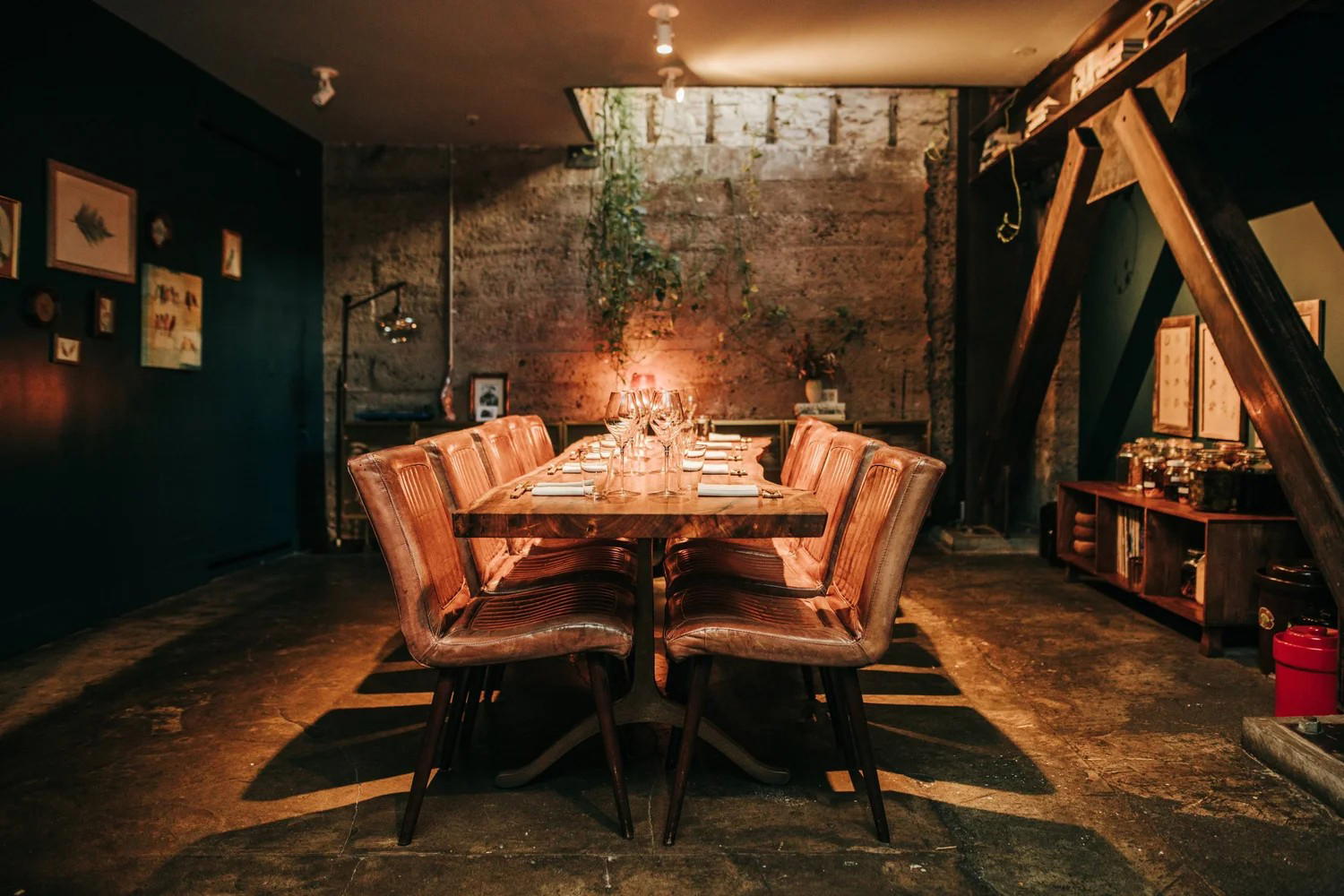
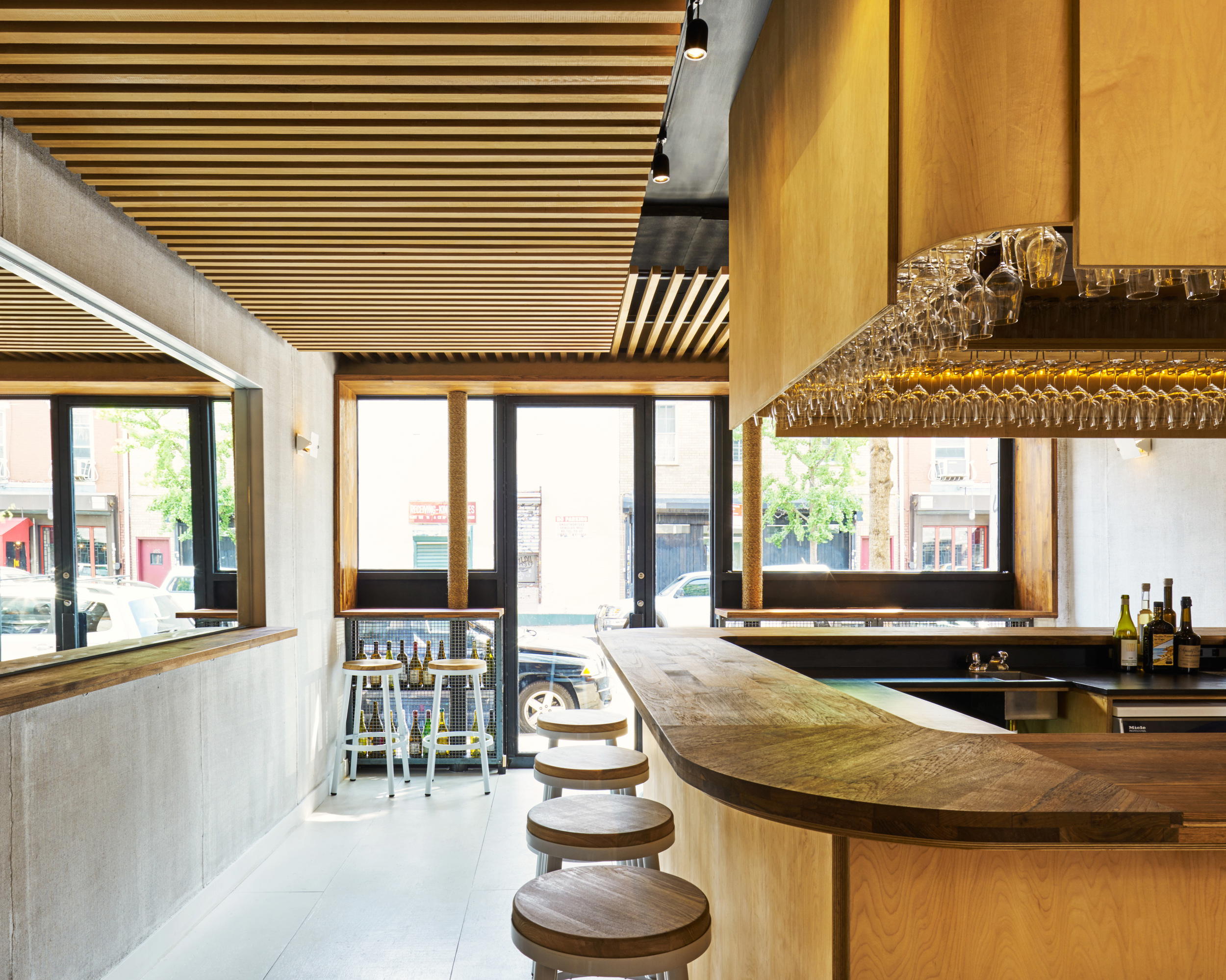
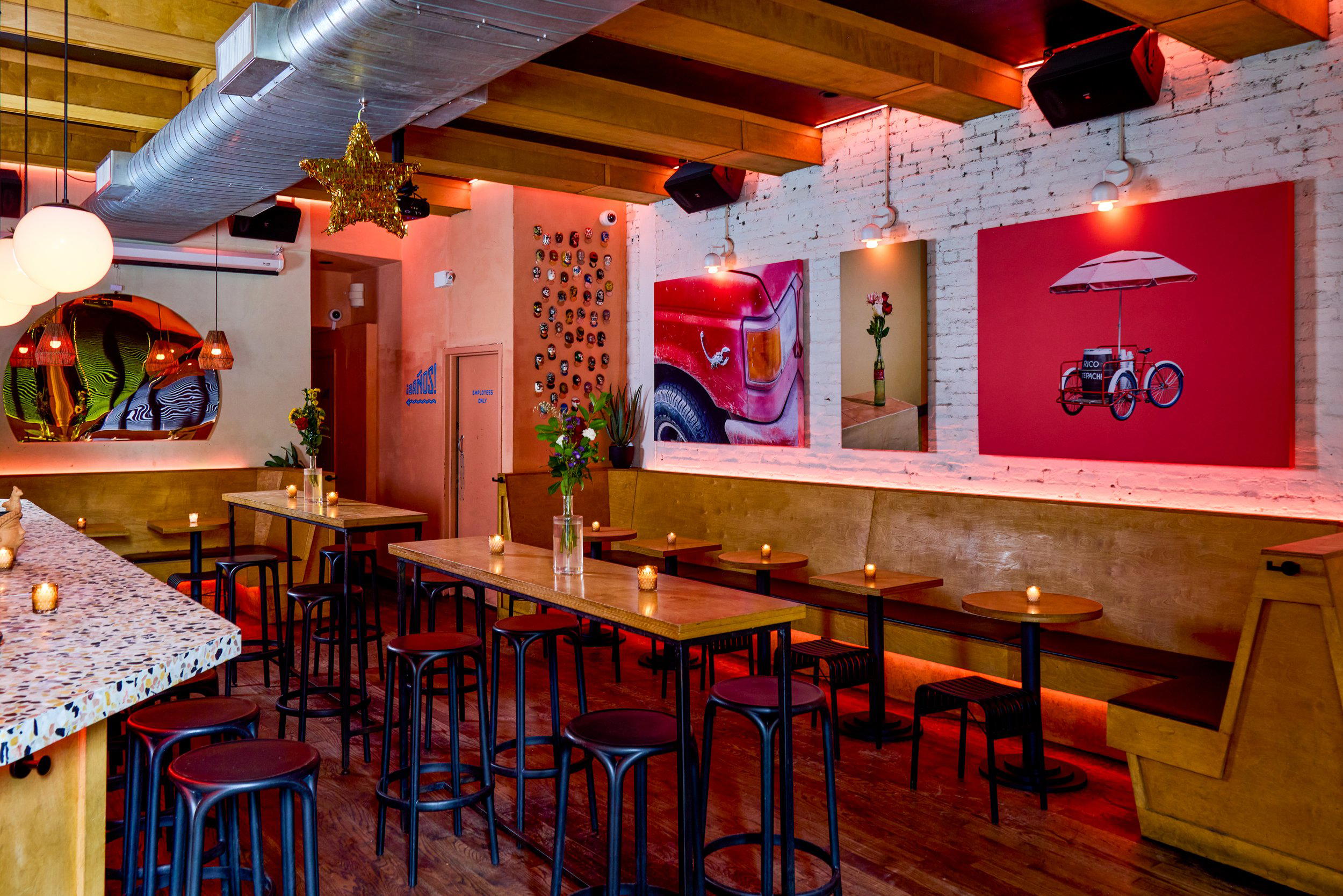
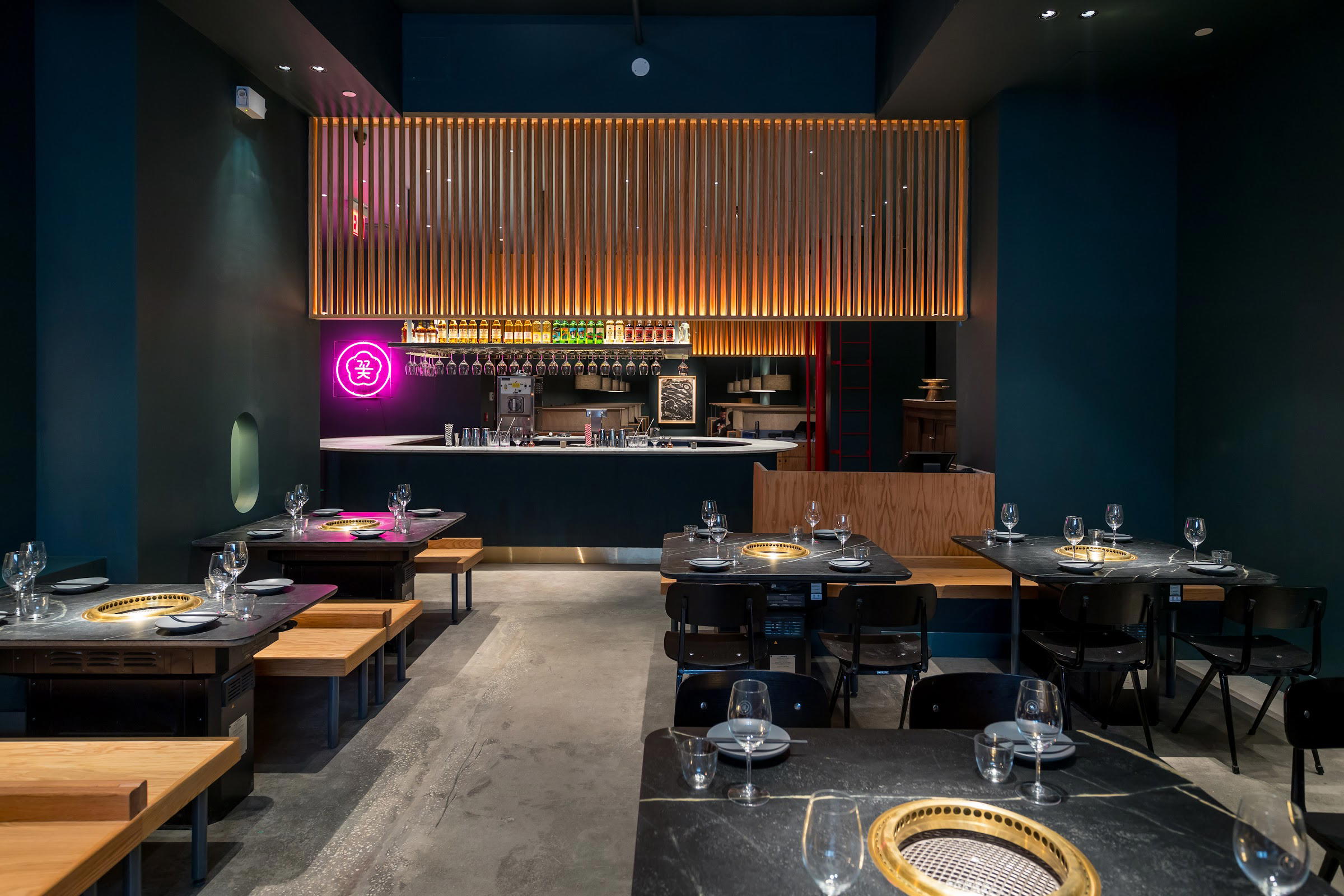
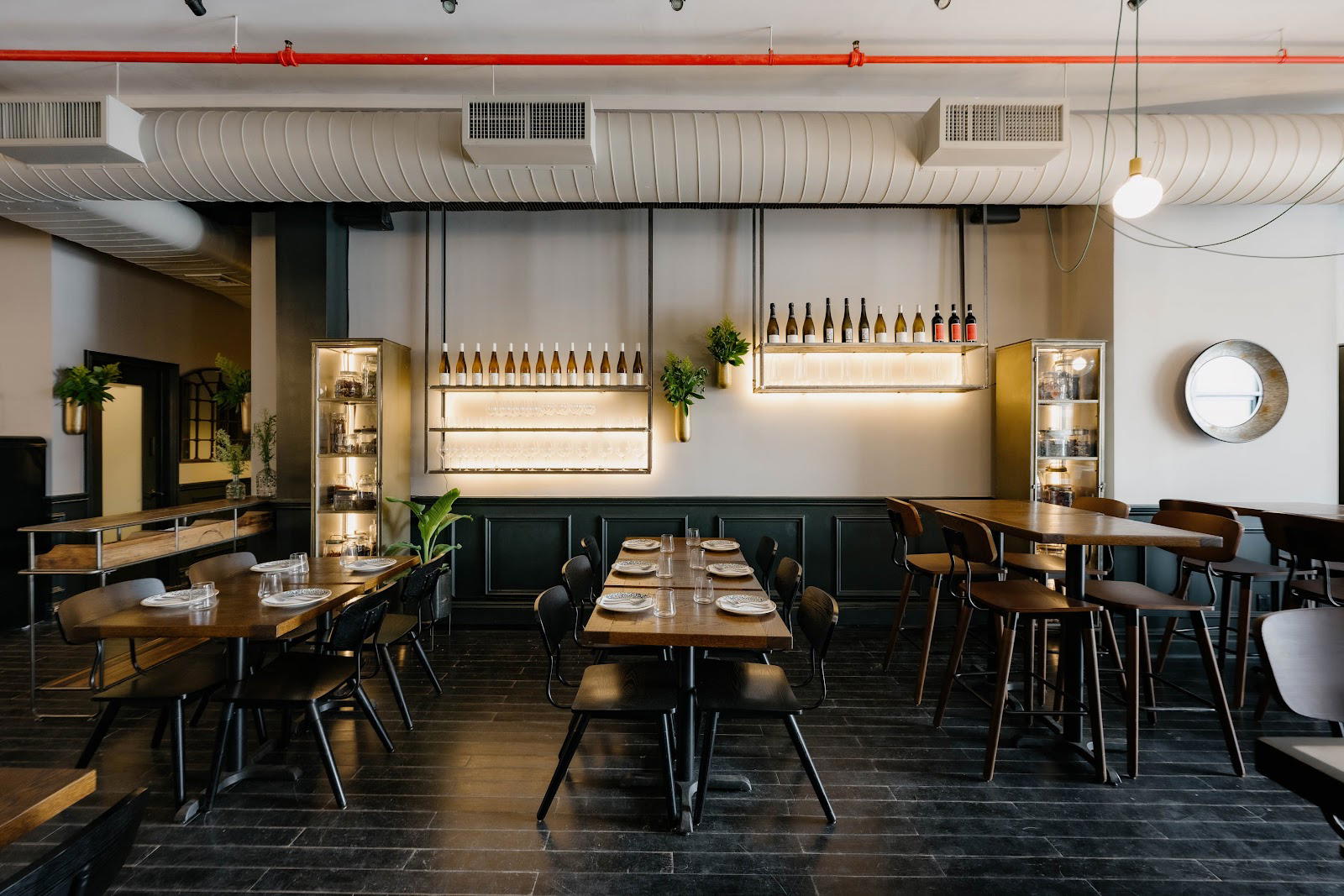
The interior at KRU is described in consistent terms across coverage: exposed brick walls, visible ductwork, cement tile floors. These are the standard architectural signals of the Williamsburg industrial-conversion register that has defined the neighborhood's hospitality aesthetic for years. The room is sleek rather than warm, airy rather than intimate. That formal coolness is not incidental: it sets the expectation that this is a place where the cooking carries the weight, not the atmosphere.
Braised beef shank and tripe in broth arrives early, built around a balance of sour and spice, with pork cracklings, bean sprouts, and Chinese broccoli. The dish sits in a recognizable Thai tradition of slow-cooked offal soups that are rarely the centerpiece of Thai menus in Western cities because operators assume the market won't accept tripe. KRU includes it, which says something about the ambition to represent the cuisine rather than to translate it for a demographic assumed to be squeamish. The pork cracklings in the broth are a textural decision that rewards attention.
Williamsburg's Position and the Planning Practicalities
KRU is located at 190 North 14th Street in Brooklyn, in the section of Williamsburg that has accumulated a concentration of serious restaurants over the past decade. From Manhattan, the Bedford Avenue L train stop is the standard approach, placing the restaurant a short walk from the subway. The address is practical for visitors staying in lower Manhattan or the Brooklyn waterfront hotel corridor, both covered in our full New York City hotels guide.
Given the Michelin Plate recognition and the Esquire placement, advance booking is advisable, particularly for weekend service.
For readers building a broader New York dining itinerary around seafood and contemporary technique, Le Bernardin represents the established benchmark for French-inflected seafood at the four-star level, while Providence in Los Angeles offers a useful West Coast comparison point for how serious seafood cooking operates outside New York's dominant French tradition. International reference points for how contemporary Asian cooking handles coastal ingredients at the highest level include 8 1/2 Otto e Mezzo Bombana in Hong Kong and Alain Ducasse at Louis XV in Monte Carlo.
For a complete picture of eating and drinking in New York, see our full New York City restaurants guide, our full New York City bars guide, our full New York City wineries guide, and our full New York City experiences guide. Readers interested in how modern American cooking handles similar ambitions at comparable price points might compare Lazy Bear in San Francisco, Single Thread Farm in Healdsburg, or Emeril's in New Orleans.
What Regulars Order
What do regulars order at KRU?
The two dishes with the most documented coverage are the braised beef shank and tripe in broth, which opens the meal with a sour-spicy broth built over pork cracklings, bean sprouts, and Chinese broccoli, and the red curry-rubbed branzino over steamed egg and Napa cabbage, served on a banana leaf with white rice. Both dishes are referenced consistently in the restaurant's Michelin Plate and Esquire recognition, suggesting they represent the kitchen's clearest statement of intent: Thai technique applied with contemporary discipline rather than Western accommodation. The wine program, ranked number one by Star Wine List in both 2023 and 2024, is worth treating as part of the meal rather than an afterthought.
Frequently asked questions
What's the pricing like at KRU?
Pricing at KRU is listed as $$$.
How do I find KRU?
KRU is located at 190 N 14th St, Brooklyn, NY 11249, New York City.
What distinctions does KRU have?
KRU has received recognition including: Kru is a restaurant in New York City, USA. It was published on Star Wine List on February 17, 2023 and is a White Star.; Husband-and-wife Chefs Ohm Suansilphong and Kiki Supap are behind KRU, which is Thai for "guru." Indeed, you will get a….
What do regulars order at KRU?
The two dishes with the most documented coverage are the braised beef shank and tripe, served in a sour-spicy broth with pork cracklings, bean sprouts, and Chinese broccoli, and the red curry-rubbed branzino, which arrives on a banana leaf over steamed egg and Napa cabbage with white rice. Both appear consistently across reviews and reflect the kitchen's approach to traditional Thai formats recast through a contemporary lens. KRU earned a Michelin Plate in 2024, which aligns with the level of precision evident in those two dishes.
Budget and Context
A quick snapshot of similar venues for side-by-side context.
| Venue | Cuisine | Price | Awards | Notes |
|---|---|---|---|---|
| KRUThis venue (the venue you are viewing) | Modern Thai | $50–100 | Michelin Plate · Star Wine List | Not listed |
| Le Bernardin | French Seafood Fine Dining | $300–500 | 3 Michelin Stars · World's 50 Best #13 | French, Seafood |
| Atomix | Modern Korean Tasting Menu | $300–500 | 2 Michelin Stars · World's 50 Best #7 | Modern Korean, Korean |
| Masa | Seasonal Hokkaido Tempura Omakase | $150–200 | Tabelog 100 #34 | Sushi, Japanese |
| Per Se | French Fine Dining Tasting Menu | $300–500 | 3 Michelin Stars · World's 50 Best #40 | French, Contemporary |
| Eleven Madison Park | Contemporary Plant-Based Fine Dining | $300–500 | 3 Michelin Stars · World's 50 Best #4 | French, Vegan |
Recognition history
Dated appearances from independent guides and award organizations, with the underlying list record or original source where available.
Michelin Plate
Michelin
Star Wine List
Star Wine List
World's Best Wine Lists Awards WBWL Category Winner
World's Best Wine Lists Awards
Esquire Best New Restaurants #37
Esquire
Full recognition history (9 entries)
World's Best Wine Lists Awards WBWL 3-Star
World's Best Wine Lists Awards
Michelin Plate
Michelin
Star Wine List
Star Wine List
World's Best Wine Lists Awards WBWL 2-Star
World's Best Wine Lists Awards
Star Wine List
Star Wine List