Köylü serves Turkish döner kebab and lahmacun from counter service on Paradiesgasse in Frankfurt, with a casual, lively setup suited to lunch, dinner, or late night.
Pearl is the En Primeur Club membership app — saves, bookings, and concierge access live there. Same editors, same standards.
- Address
- Paradiesgasse 65, 60594 Frankfurt am Main, Germany
- Phone
- +494969628913
- Directions
- Get directions
 Saves & bookings on Pearl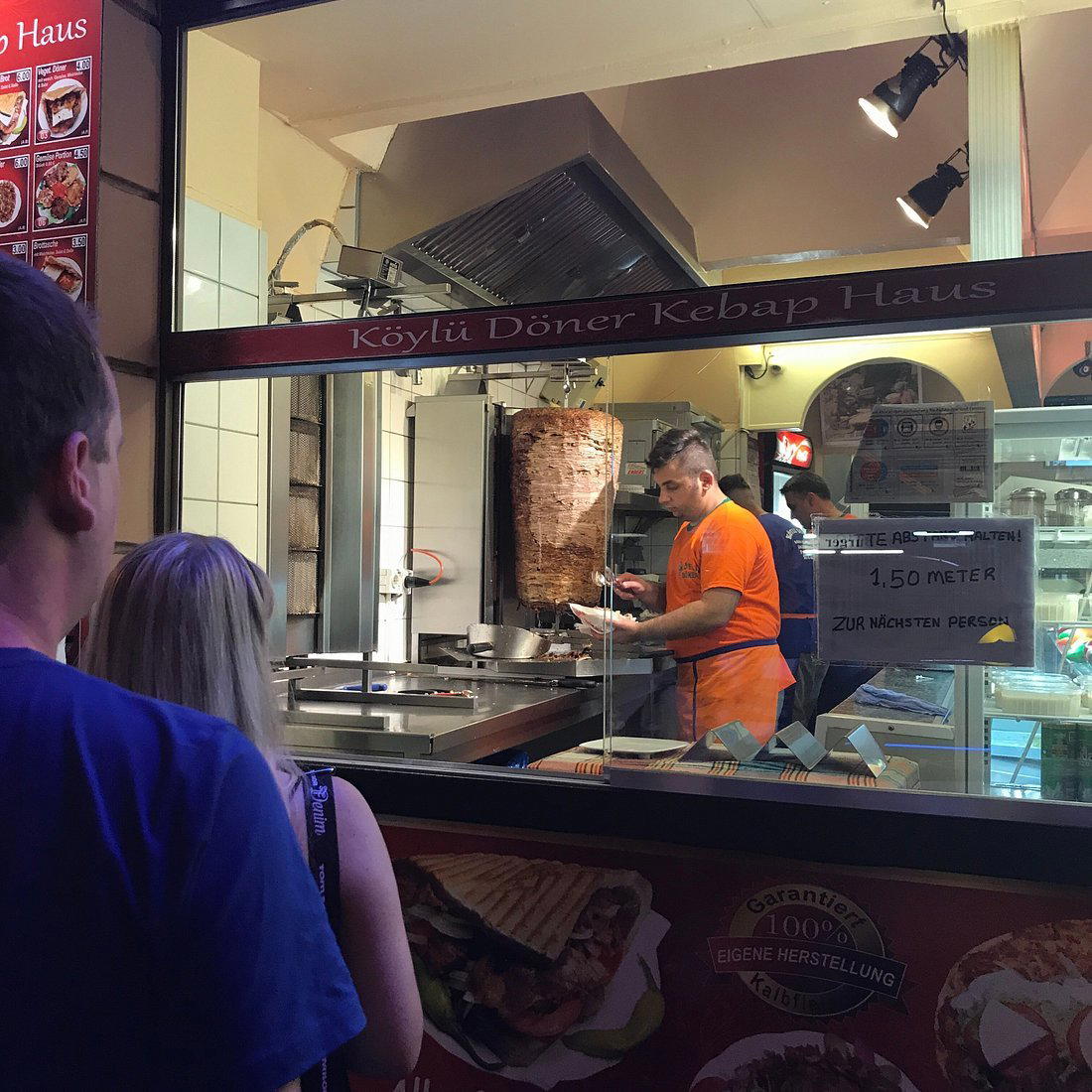
Sachsenhausen's Quieter Address
Paradiesgasse runs through the southern bank of Frankfurt's Sachsenhausen quarter, a street that sits at a comfortable remove from the apple-wine taverns and tourist-facing cider halls that define the neighbourhood's public-facing identity. The buildings here are narrower, the foot traffic thinner. Köylü is a Turkish Döner Kebab restaurant at Paradiesgasse 65, 60594 Frankfurt am Main, Germany, with a casual dress code and a walk-in-friendly policy. In a city where dining rooms frequently announce themselves through large-format signage and street-level spectacle, the quieter position on Paradiesgasse functions as its own kind of editorial statement.
Frankfurt's Turkish Dining Scene in Context
Frankfurt has one of Germany's largest Turkish-heritage communities, a demographic reality that has shaped the city's food culture for decades. But the relationship between community presence and culinary complexity is not always direct. In many German cities, Turkish-origin restaurants have historically clustered around the accessible, high-throughput formats: döner, lahmacun, kebab plates served at speed. The more considered end of the spectrum, where Turkish culinary tradition meets precision technique and ingredient sourcing that draws on both Anatolian and European producers, represents a narrower and more recently established tier. Köylü, whose name translates from Turkish as "villager" or "peasant" in the sense of someone rooted in the land and its produce, positions itself within that more considered register.
The name is worth pausing on. Across contemporary European restaurant culture, rural reference has become a reliable signal of intent: it suggests proximity to primary producers, preference for ingredient integrity over technical display, and a certain politics of sourcing. Whether in Copenhagen's new Nordic vocabulary, or the agriturismo-influenced wave of Italian regional cooking, or the Anatolian village-table tradition that Köylü's name invokes, the gesture toward the rural tends to mean similar things. The subject here is the land, the season, and what grows or grazes there, treated with as little interference as necessary. For a restaurant drawing on Turkish culinary foundations in a German financial capital, that framing carries specific weight.
Local Ingredients, Global Technique
The intersection of imported methods and indigenous products has become one of the more generative tensions in European cooking over the past decade. Chefs trained in French brigade kitchens or Nordic fermentation labs return to their home cuisines with a different set of tools, and the results are rarely simple fusions. What tends to emerge is something more like a translation, where the logic of a culinary tradition is preserved but expressed through technical means that the tradition did not originally possess.
Turkish cuisine offers a particularly rich foundation for this kind of work. Meze culture already encodes a sophisticated vocabulary of acid, fat, herb, and char. Fermented dairy preparations, slow-braised proteins, wood-fired vegetables, and the sharp clarity of good olive oil are all structural elements, not garnishes. When contemporary technique engages with that foundation, the lever is usually precision: tighter control of temperature, more disciplined sourcing, and a willingness to let individual ingredients carry weight rather than subsuming them in sauce or spice. The result, at its leading, reads as Turkish food made more fully itself rather than Turkish food made to look European.
This is the editorial frame within which Köylü makes most sense. Frankfurt's dining scene in the premium-casual bracket, represented by venues like ALEJANDRO'S, Allgaiers Restaurant, and Ariston, has shown sustained appetite for restaurants that apply European technical discipline to non-European culinary traditions without flattening what makes those traditions distinctive. Ambassel does comparable work in the Ethiopian tradition. Köylü's positioning in Sachsenhausen places it within that broader movement in the city's dining culture.
Sachsenhausen's Neighbourhood Logic
Understanding why Sachsenhausen makes sense for this kind of restaurant requires a brief detour into Frankfurt's neighbourhood dynamics. The quarter sits south of the Main, connected to the city centre by several bridges and historically associated with the apple wine culture that Frankfurt treats as a civic identity. In recent years, the area has diversified considerably. Alongside the traditional Apfelwein taverns, a second layer of independent restaurants has emerged, drawing a local clientele that prioritises neighbourhood warmth over destination-dining formality. Venues like atm by Deli&Grape reflect this shift toward considered-but-unpretentious formats.
Paradiesgasse itself runs parallel to the main commercial spine of Sachsenhausen, which means it captures the neighbourhood's residential character more than its pedestrian-traffic economy. That positioning suits a restaurant whose name invokes rootedness and whose likely appeal is to a regular, returning clientele rather than passing trade. For visitors approaching from the banking district or the museum embankment, the walk across the Eiserner Steg or Alte Brücke is short; the sense of having arrived somewhere specific, rather than somewhere central, is part of what Sachsenhausen offers.
Planning Your Visit
Paradiesgasse 65 is accessible from the Schweizer Platz U-Bahn station in a short walk south, making it direct to reach from both the city centre and the museum quarter along the south bank. Given the growing interest in this tier of Turkish-origin cooking in Frankfurt, and the relatively small scale implied by the address and format, securing a table in advance is advisable rather than optional, particularly on weekend evenings when Sachsenhausen's dining room fills with local regulars. Those planning a broader Frankfurt food itinerary can cross-reference Köylü alongside our full Frankfurt restaurants guide, which maps the city's dining options by neighbourhood and format.
Aqua in Wolfsburg, JAN in Munich, Schwarzwaldstube in Baiersbronn, and Vendôme in Bergisch Gladbach represent the country's Michelin-decorated upper tier, with Victor's Fine Dining by Christian Bau, Waldhotel Sonnora in Dreis, Restaurant Haerlin in Hamburg, Schanz in Piesport, ES:SENZ in Grassau, and CODA Dessert Dining in Berlin rounding out a diverse national picture. Le Bernardin in New York City and Atomix in New York City, two rooms that have made that negotiation a central part of their identity.
Comparable Options
Comparable venues nearby, for context on price, style, and recognition.
| Venue | Cuisine | Price | Notes |
|---|---|---|---|
| KöylüThis venue — the venue you are viewing | Turkish Döner Kebab | $ | Not listed |
| Bam Bam Keb'up | Berlin-Style Turkish Döner & Pizza | $ | Roemerberg |
| Duble Meze Grill | Authentic Turkish Meze Grill | $$ | Palmengarten |
| KRAPAO Thai Bistro | Thai Bistro | $ | Palmengarten |
| Pizzeria Olbia | Traditional Italian Pizza | $ | Palmengarten |
| Heidi und Paul | Healthy Salads & Wraps | $$ | Roemerberg |
Continue exploring
More in Frankfurt
Restaurants in Frankfurt
Browse all →
Bars in Frankfurt
Browse all →
Hotels in Frankfurt
Browse all →
At a Glance
- Lively
- Casual Hangout
- Late Night
Current opening hours
- Monday
- 9 AM–3 AM
- Tuesday
- 9 AM–3 AM
- Wednesday
- 9 AM–3 AM
- Thursday
- 9 AM–3 AM
- Friday
- 9 AM–5 AM
- Saturday
- 9 AM–5 AM
- Sunday
- 9 AM–3 AM
Hours can change for holidays and private events. Last verified .