
Konohana belongs to Tokyo’s quieter bread culture: small-format, take-out focused, and serious enough to have appeared in Tabelog’s Bread TOKYO 100 selections in 2020 and 2022. In Asakusa, where old shopping streets, temple traffic, and everyday provisions still overlap, it reads less as a destination bakery than as a disciplined local counter with critical recognition.
Pearl is the En Primeur Club membership app — saves, bookings, and concierge access live there. Same editors, same standards.
- Address
- 3 Chome-25-6 Asakusa, Taito City, Tokyo 111-0032, Japan
- Phone
- +81 3-3874-7302
- Website
- instagram.com
 Saves & bookings on Pearl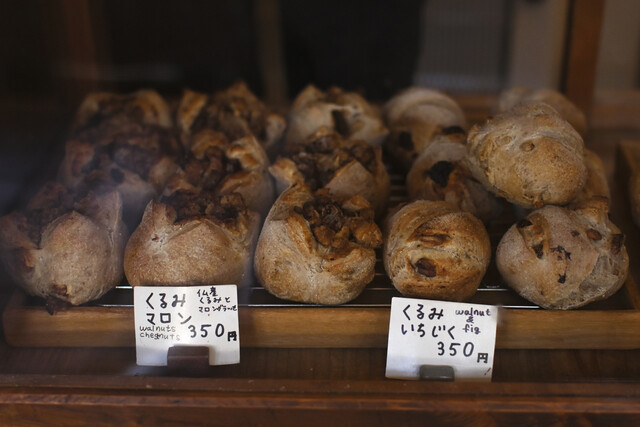
A few blocks from the temple approach, Asakusa changes texture: souvenir shops thin out, shutters and apartment fronts take over, and the food culture turns practical, snacks for walking, sweets for gifting, bread for taking home. Konohana sits in that everyday register. Its category is bread and bagel, service is take-out, and the price band stays under JPY 999, placing it far from Tokyo’s tasting-menu economy and close to the city’s habit of treating small purchases seriously.
That matters in Tokyo, where bakeries are not one genre. Department-store boulangeries, train-station counters, natural-yeast specialists, kissaten-adjacent toast culture, and neighbourhood bread shops serve different daily rhythms. The Asakusa end rewards restraint: short opening windows, limited production, and customers who understand that a modest shop can still draw critical notice. Konohana’s selection for Tabelog Bread TOKYO 100 in both 2020 and 2022 is a clear signal, especially because Tokyo bread lists must separate technical baking from nostalgia and foot-traffic convenience.
Asakusa bread culture without the luxury dining script
Tokyo’s high-end dining story often starts with counters, chef lineage, and reservation pressure. Bread culture is more democratic, but not looser in standards. A bakery can occupy a small storefront, sell only during a narrow daytime window, and still be judged against an exacting citywide field. Konohana fits that model: take-out service, no private rooms, no smoking, and a family-friendly listing that points to local use rather than staged hospitality.
The useful comparison is not an omakase sushi room such as Sushi Kanesho or a high-spend counter like nacol, which belong to another Tokyo dining economy. It is closer to the city’s affordable specialist addresses, where the transaction is brief and decisions precise. Suzuki En Asakusa honten, also in the sub-JPY 999 bracket, shows how Asakusa supports focused, low-ticket food stops with strong neighbourhood gravity. Yoshoku names such as grill GRAND and Grill Sakura show another local pattern: Western-influenced Japanese comfort food with long roots in the area. Bread fits that Asakusa grammar: imported in origin, absorbed into daily life, and judged by repeat use rather than spectacle.
For readers mapping Tokyo by category rather than hype, that is the point. The city’s food seriousness is not confined to dinner. A morning or early-afternoon bread stop can carry the same editorial weight as a lunch counter if it reveals how a neighbourhood eats when nobody is performing for visitors. The wider map helps: Our full Tokyo restaurants guide covers the broader spread, while nearby contrasts such as . 鮪と炭火焼き うお炭 秋葉原店, 12/10 Shinjuku ten, 124. KAGURAZAKA (Yakitori), 2D Cafe, and 3 Chome no Curry Ya San show how quickly Tokyo shifts by district and format.
What the recognition actually signals
Tabelog’s Bread TOKYO 100 selections are useful because they recognise a category rarely served by the international awards machinery around fine dining. For a bakery, inclusion in 2020 and 2022 is not the same signal as a Michelin star; it is a category-specific marker in a dense local market. The listed Tabelog score of 3.74 adds a practical cue, though the stronger editorial point is consistency across bread-focused recognition rather than one number.
The format shapes expectation. Take-out bread shops do not offer restaurant pacing, chef-counter explanation, or bar-cellar logic. They ask for sharper reading: what sells early, how the display is edited, and how the neighbourhood folds the shop into errands. Because reservations are not accepted for new customers, the experience belongs to Asakusa’s walk-in rhythm rather than the concierge calendar. The opening pattern is daytime and limited to midweek-through-Saturday service, making timing part of the judgement. Arrive late and the selection may have narrowed; arrive with a restaurant mindset and the format will feel too brief.
That brevity is not a weakness. Tokyo has always had food addresses where the encounter lasts minutes but standards are clear. A bakery in this register is not competing with full-service dining. It competes with every other small decision in a city that turns coffee, curry, wagashi, soba, and bread into specialisms. For travellers, the value is cultural as much as culinary: Konohana explains how Asakusa remains a lived-in food district beyond temple crowds and souvenir lanes.
How to fit it into a Tokyo day
Treat Konohana as a daytime Asakusa stop, not the anchor of an evening itinerary. It works before or after exploring the older east-side neighbourhoods, especially for travellers who want one Tokyo food day not built entirely around reservations. The address is in Taito City, Asakusa Station is listed as the nearest station, and the take-out format suits a light stop more than a lingering meal.
It also pairs with broader city planning. Visitors staying across town may fold it into a hotel and transit day using Our full Tokyo hotels guide. Evening drinking needs a separate plan, where Our full Tokyo bars guide is more relevant. For category completists, Our full Tokyo wineries guide and Our full Tokyo experiences guide fill out the non-restaurant side of the city.
Japan’s casual-specialist map extends beyond Tokyo. The same editorial lens applies to -Grilled beef Sukiyaki- KAMAKURA TANUKIAN 鎌倉 たぬき庵 in Kamakura.cafe in Osaka.know in Kumamoto, (Shoku) Vietnam in Kawasaki, [Curry Senmon Ten] Maruyama Kyoju. in Sapporo, and [ki:] in Kyoto: small formats can carry serious local meaning. Even outside Japan, everyday Japanese food culture travels in focused ways, as seen at Jōdo Saké Bar in Los Angeles and Onigiri Time in Pasadena. Konohana belongs to that larger argument: modest format, narrow category, and enough recognition to justify attention without forcing it into the language of luxury dining.
Category Peers
Comparable venues by cuisine and price in the same metro.
| Venue | Cuisine | Price | Notes |
|---|---|---|---|
| KonohanaThis venue — the venue you are viewing | Japanese Bakery & Bagel Shop | $ | Not listed |
| Buta Daigaku (豚大学) | Grilled Pork Bowl (Butadon) | $ | Shimbashi |
| Tokutaro | Traditional Japanese sweets (wagashi) shop | $ | Taitō |
| Sanfuku Tei | Yoshoku cafeteria & tonkatsu | $ | Chūō |
| Wagashi Dokoro Oosumi Tamaya Ginza ten | Japanese Wagashi Shop | $ | Chiyoda |
| MENSHO | Modern Japanese ramen | $ | Bunkyō |
Recognition history
Dated appearances from independent guides and award organizations, with the underlying list record or original source where available.
Tabelog 100 #92 · No. 92
Tabelog · Tabelog 100 - Bread - TOKYO - 2022








At a Glance
- Cozy
- Classic
- Solo
- Casual Hangout
- Standalone
Current opening hours
- Monday
- Closed
- Tuesday
- Closed
- Wednesday
- 11 AM–4 PM
- Thursday
- 11 AM–4 PM
- Friday
- 11 AM–4 PM
- Saturday
- 11 AM–4 PM
- Sunday
- Closed
Hours can change for holidays and private events. Last verified .
A modest, homey bakery-café with a quiet, neighborhood feel; guests describe an intimate space focused on takeaway bread rather than lingering table service.