
Tokutaro places Asakusa’s wagashi culture in its everyday register: take-out Japanese sweets, modest pricing, and a shop lineage dating to 1903. Its Tabelog 100 selection for Tokyo Japanese traditional sweets and sweets cafés in 2023 gives it a clear quality signal without pushing the experience into fine-dining theatre.
Pearl is the En Primeur Club membership app — saves, bookings, and concierge access live there. Same editors, same standards.
- Address
- 3 Chome-36-2 Asakusa, Taito City, Tokyo 111-0032, Japan
- Phone
- +81 3-3874-4073
- Website
- tokutarou.sakura.ne.jp
 Saves & bookings on Pearl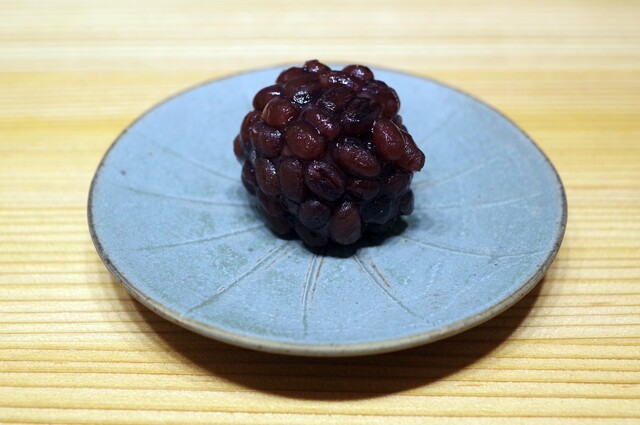
Asakusa’s older sweet shops tend to announce themselves quietly: a small frontage, a short purchase rhythm, and customers who know that wagashi is often bought for home, office, train rides, or a seasonal call on relatives rather than eaten as a plated dessert. That setting matters. Tokyo’s dessert culture is not only the glossy parfait counter or the department-store gift floor; it is also the compact neighbourhood shop where red bean, rice, flour, and sugar are treated as daily materials rather than luxury props.
Tokutaro belongs to that second world. The category is Japanese traditional sweets, the format is take-out, and the public recognition is specific: selection for Tabelog 100 Japanese traditional sweets / Japanese sweets cafe Tokyo in 2023, with a Tabelog score of 3.73. In a city where dessert can quickly become design-led and queue-driven, those details point to a more durable kind of demand. This is not a dining room built around ceremony. It is a purchase counter inside Asakusa’s long habit of edible gifts, temple-area snacks, and sweets made to travel.
Asakusa wagashi, measured by craft rather than spectacle
Wagashi works on a different clock from Western pastry. Butter, cream, and refrigeration do not define the tradition; beans, rice, starches, and seasonal motifs carry much of the cultural weight. That gives the category an environmental logic before it becomes a talking point. Many classic forms are portioned small, packaged for transport, and built around plant-based staples. Waste reduction is not a slogan here so much as a structural habit: controlled batches, compact service, and sweets designed to be carried away intact.
The shop’s own public notes put kintsuba at the centre, with dorayaki and sekihan also sold through selected department-store counters on specified days. That distribution pattern says something about Tokyo’s wagashi economy. Serious sweet shops often operate across neighbourhood storefronts and rotating retail placements, meeting regulars where they already shop rather than expanding into large dining formats. It is a low-drama model, but it suits sweets with a short purchase window and a strong gift culture.
Against Asakusa peers, the pricing tier is notably modest. Taiyaki Sharaku and Chiba Ya sit in the same under-¥999 bracket, while Lodge Akaishi occupies a higher everyday range at ¥1,000 to ¥1,999. Onigiri Asakusa Yadoroku belongs to a different staple-food lane, but it shares the neighbourhood’s preference for compact formats and repeat local use. The useful comparison is not which shop photographs better; it is which tradition each one preserves and how much friction it adds to the day.
For travellers building a broader Tokyo food map, Tokutaro pairs naturally with old-town eating rather than luxury restaurant planning. A sweets stop in Asakusa has a different function from a counter meal at 124. KAGURAZAKA (Yakitori), a curry detour to 3 Chome no Curry Ya San, or a graphic café visit at 2D Cafe. It fills the quieter gap between meals, which is often where Tokyo becomes clearer.
Old-shop distribution and the ethics of small formats
Founded in 1903, the business carries a century-plus time marker, but the more interesting point is operational restraint. Take-out service limits the energy and staffing demands of a full dining room. Department-store sales place specific sweets in established retail channels rather than requiring visitors to cross the city for every purchase. Payments cover cards, transit IC, electronic money, and QR code options, which makes the experience contemporary without changing the essential format.
That mix of old product and modern transaction is common in Tokyo’s better traditional food culture. The city rarely preserves craft by freezing it in museum mode. Instead, it lets long-running formats absorb practical upgrades: cashless payment, satellite counters, clearer non-smoking policies, and family-friendly use. The sustainability story is strongest when seen through that lens. The responsible choice is not always a restaurant with a manifesto; sometimes it is a small shop selling compact, plant-forward sweets through existing urban routes.
Tokutaro’s Tabelog 100 placement gives the stop more weight than a casual snack suggestion, but the experience remains intentionally plain. There are no reservations, no private rooms, no parking, and no need to dress for the occasion. That lack of apparatus is part of the appeal. The transaction is quick, the spend is low, and the value sits in how the shop connects Asakusa’s tourist flow to local buying habits rather than separating the two.
Readers comparing Tokyo categories can use the city guides as a sorting tool: Our full Tokyo restaurants guide for meals, Our full Tokyo bars guide for late evenings, Our full Tokyo hotels guide for base selection, Our full Tokyo experiences guide for cultural planning, and Our full Tokyo wineries guide for the smaller wine thread around the capital.
Know Before You Go
- Format: Take-out Japanese traditional sweets.
- Recognition: Selected for Tabelog 100 Japanese traditional sweets / Japanese sweets cafe Tokyo 2023.
- Price signal: Under ¥999 based on the listed spending range.
- Access: Asakusa area, with Asakusa Station listed as the nearest station.
- Reservations: Not available.
- Family use: Children are welcome.
- Payments: Major cards, transit IC and other electronic money, plus PayPay are listed.
- Parking: Not available.
For a day that moves beyond Asakusa, the contrast can be useful. Akihabara’s casual izakaya energy at. 鮪と炭火焼き うお炭 秋葉原店, Shinjuku’s denser restaurant grid around 12/10 Shinjuku ten, and sushi-focused dining such as Isshin sit in a different register entirely. Outside Tokyo, the same question of small format versus destination meal runs through -Grilled beef Sukiyaki- KAMAKURA TANUKIAN 鎌倉 たぬき庵 in Kamakura.cafe in Osaka.know in Kumamoto, (Shoku) Vietnam in Kawasaki, [Curry Senmon Ten] Maruyama Kyoju. in Sapporo, and [ki:] in Kyoto. The Japanese sweets stop also travels well as a reference point for readers abroad who follow compact Japanese food formats, from Jōdo Saké Bar in Los Angeles to Onigiri Time in Pasadena.
Cuisine Context
Comparable venues by category and price.
| Venue | Cuisine | Price | Notes |
|---|---|---|---|
| TokutaroThis venue — the venue you are viewing | Traditional Japanese sweets (wagashi) shop | $ | Not listed |
| Karinto Kozakura | Traditional Japanese karinto & wagashi shop | $ | Taitō |
| Azumabashi Yabusoba | Traditional Soba Noodle Shop | $ | Sumida |
| Chomeiji Sakura Mochi | Traditional Japanese wagashi (Chomeiji-style sakuramochi) | $ | Sumida |
| Habutae Dango Honten | Traditional Japanese dango & wagashi teahouse | $ | Arakawa |
| Zehn Coffee | Japanese Kissaten / Coffee Shop | $ | Taitō |
Recognition history
Dated appearances from independent guides and award organizations, with the underlying list record or original source where available.
Tabelog 100 #94 · No. 94
Tabelog · Tabelog 100 - Japanese traditional sweets / Japanese sweets cafe - TOKYO - 2023









At a Glance
- Classic
- Cozy
- Quiet
- Solo
- Family
- Casual Hangout
- After Work
- Standalone
- Historic Building
- Street Scene
Current opening hours
- Monday
- Closed
- Tuesday
- 10 AM–5 PM
- Wednesday
- 10 AM–5 PM
- Thursday
- 10 AM–5 PM
- Friday
- 10 AM–5 PM
- Saturday
- 10 AM–5 PM
- Sunday
- Closed
Hours can change for holidays and private events. Last verified .
A small, old-school downtown Asakusa confectionery with a modest storefront and a calm, nostalgic atmosphere focused on takeaway Japanese sweets rather than sit-down dining.