Koike Kashiho

Koike Kashiho puts Yanaizu’s wagashi culture into the low-cost, take-out end of serious Japanese sweets. Its Tabelog 100 selection for Japanese traditional sweets and sweets cafes in East Japan in 2023 gives the shop a credentialed place in a category where regional ingredients, temple-town habits, and everyday gifting matter more than dining-room ceremony.
Pearl is the En Primeur Club membership app — saves, bookings, and concierge access live there. Same editors, same standards.
- Address
- Japan, 〒969-7201 Fukushima, Kawanuma District, Yanaizu, 岩坂町甲206
- Phone
- +81 241-42-2554
- Website
- koike-manjyu.com
 Saves & bookings on Pearl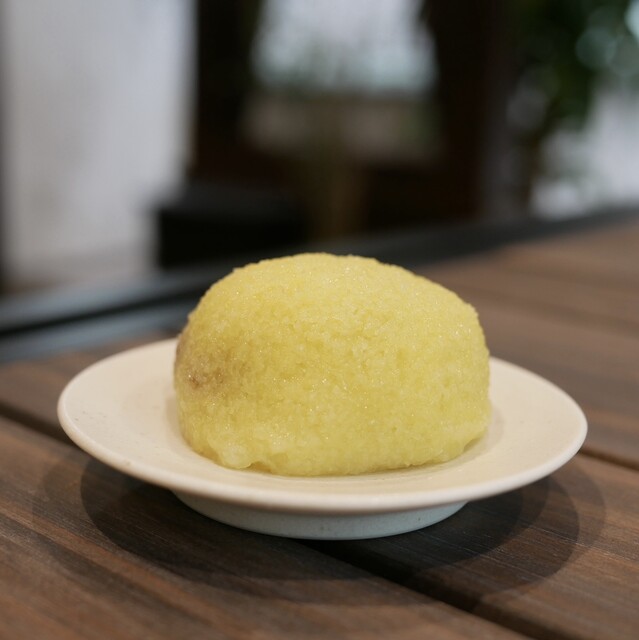
Yanaizu is not a city of grand dining rooms; its food culture is quieter, built around train schedules, temple visits, local errands, and sweets bought to carry away. In that setting, wagashi is less a plated dessert course than a regional habit: bean paste, rice flour, steamed cakes, seasonal confections, and small parcels that travel well. Koike Kashiho belongs to that tradition, where the counter matters more than the table and the purchase often continues the meal somewhere else.
That distinction matters in Fukushima. Japanese sweets shops outside major metropolitan centers rarely compete through spectacle. They compete through consistency, shelf discipline, familiar local demand, and the kind of restrained pricing that keeps wagashi attached to daily life rather than special-occasion dining. Koike Kashiho’s selection for the Tabelog 100 Japanese traditional sweets and sweets cafe list for East Japan in 2023 places it in a credentialed group, but the more useful reading is category-specific: this is recognition inside a craft where regional credibility carries more weight than luxury signals.
Yanaizu wagashi sits closer to daily ritual than restaurant dining
Japanese confectionery has always had two tracks. One is formal, shaped by tea ceremony, seasonal motifs, and Kyoto-style refinement. The other is local and practical: sweets for shrine towns, station streets, family visits, and gifts brought home in paper bags. Rural Fukushima sits more naturally in the second register. Ingredient choices tend to emphasize durability and familiarity: beans, rice, wheat, sugar, and techniques that hold texture long enough for take-out.
Koike Kashiho is classified as Japanese traditional sweets and operates with a take-out format, which tells experienced travelers almost as much as a menu would. The point is not a long stay, pairing, or chef-led tasting sequence. The point is a quick, specific purchase in a town where sweets function as edible memory and local currency. Compared with out-of-metro names such as Kura Zushi or Bannai Shokudo, which sit in inexpensive everyday-meal territory, this address occupies the confectionery lane at a similarly approachable spend. Haran Sho, by contrast, works in a higher dining bracket, which makes the comparison useful: Kawanuma-gun and nearby Fukushima food culture is not one price tier, but a set of small, sharply different formats.
The ingredient-sourcing angle in wagashi is usually less theatrical than in contemporary restaurants. Serious sweets shops do not need to announce every supplier to make sourcing legible. The work shows through the category itself: bean quality, rice-derived textures, sugar balance, and the ability to keep a product stable for take-out without flattening its character. In regional Japan, that sourcing logic is tied to place. A shop in Yanaizu is judged not only against city confectioners but against local expectations for what a sweet should cost, how it should travel, and when it should be eaten.
The recognition is category-specific, which is exactly the point
The Tabelog 100 selection for East Japan in 2023 is the clearest trust signal here. It is not the same kind of marker as a Michelin star, and it should not be read that way. Tabelog’s Hyakumeiten lists are category-led, which makes them particularly useful for foods that sit outside the tasting-menu economy. For wagashi, that means a sweets shop can be evaluated within its own grammar rather than forced into a restaurant hierarchy built for courses, wine service, and reservations.
That is why Koike Kashiho is more interesting as a marker of regional confectionery than as a conventional restaurant stop. The format is casual, the spending band is low, and the service model is built around purchase rather than lingering. Those facts put it closer to Japan’s everyday food infrastructure than to destination dining. For travelers building a Kawanuma-gun itinerary, the smarter frame is not “where to eat dinner,” but “where does the town’s sweet-making tradition surface in ordinary life?”
There is also a useful corrective here for visitors whose Japan food maps are dominated by Tokyo, Kyoto, Osaka, and Fukuoka. Rural sweets shops preserve a different kind of precision. They do not need counter choreography or rare ingredients to be serious. The discipline lies in repeatability, price restraint, and recognizable local taste. A Tabelog score of 3.58, paired with the 2023 East Japan sweets selection, signals a shop that has moved beyond purely local notice without losing the small-format logic of the category.
How to place it within a Kawanuma-gun food day
Koike Kashiho works as a short, focused stop rather than the anchor of a long meal. That makes it useful in a Kawanuma-gun day shaped around temples, rail travel, and simple regional eating. The practical rhythm is to treat wagashi as part of the route: buy early enough for choice, carry it onward, and let it sit alongside the area’s more filling casual meals rather than compete with them.
For broader planning, start with Our full Kawanuma-gun restaurants guide, then layer in sleep, drinking, and regional context through Our full Kawanuma-gun hotels guide, Our full Kawanuma-gun bars guide, Our full Kawanuma-gun wineries guide, and Our full Kawanuma-gun experiences guide. Readers comparing Japanese formats across the country can also scan sharply different entries such as -Grilled beef Sukiyaki- KAMAKURA TANUKIAN 鎌倉 たぬき庵 in Kamakura, . 鮪と炭火焼き うお炭 秋葉原店 in Tokyo, .cafe in Osaka, .know in Kumamoto, (Shoku) Vietnam in Kawasaki, [Curry Senmon Ten] Maruyama Kyoju. in Sapporo, [ki:] in Kyoto, #肉といえば松田 奈良本店 in Kashihara, 1/3 HAMBURGER FACTORY in Kanazawa, 1000 in Yokohama, 1000mヒュッテ 1000m Hut in Kutchan, Jōdo Saké Bar in Los Angeles, and Onigiri Time in Pasadena.
The editorial read is simple: this is a low-ceremony sweets stop with a serious category credential. It suits travelers who care about how regional Japanese food systems actually work, not only where formal meals happen. In Yanaizu, wagashi is not decorative afterthought; it is one of the ways the town makes place edible.
Snapshot
Comparable venues by cuisine and price in the same metro.
| Venue | Cuisine | Price | Awards | Notes |
|---|---|---|---|---|
| Koike KashihoThis venue — the venue you are viewing | Traditional Japanese wagashi & awa-manju shop | $ | , | |
| Gyoza Hohei (ぎょうざ 歩兵) | Japanese Gyoza Specialist | $ | , | Gion |
| Chuka Soba Dokoro Konpiraso | Yamagata Chuka Soba | $ | , | Sanze |
| Koja Sobaya (古謝そば屋) | Traditional Miyako Soba | $ | , | Hirara, Miyakojima City |
| Umemura | Japanese Soul Food | $ | , | Koto |
| 三たてそば 長畑庵 | 三たて蕎麦 | $ | , | 長畑 |
Continue exploring
More in Kawanuma-gun
Restaurants in Kawanuma-gun
Browse all →
Hotels in Kawanuma-gun
Browse all →
At a Glance
- Classic
- Iconic
- Solo
- Family
- Casual Hangout
- Historic Building
- Standalone
- Local Sourcing
Traditional local wagashi shop atmosphere focused on takeaway sweets rather than sit-down dining, with a simple, classic feel centered on its famous awa-manju and frequent lines of customers.