


A seven-seat Ginza sushi counter operating at the rarefied end of Tokyo’s omakase economy, Kiyota Hanare is reservation-only and recognised by Tabelog Award Bronze in 2025 and 2026, plus Tabelog Sushi TOKYO 100 in 2025. The appeal is not breadth or spectacle, but concentration: a small room, a serious tariff, and a format built for diners who already understand Ginza sushi’s upper tier.
Pearl is the En Primeur Club membership app — saves, bookings, and concierge access live there. Same editors, same standards.
- Address
- Japan, 〒104-0061 Tokyo, Chuo City, Ginza, 5 Chome−5−18 藤小西ビル 9F
- Website
- tabelog.com
 Saves & bookings on Pearl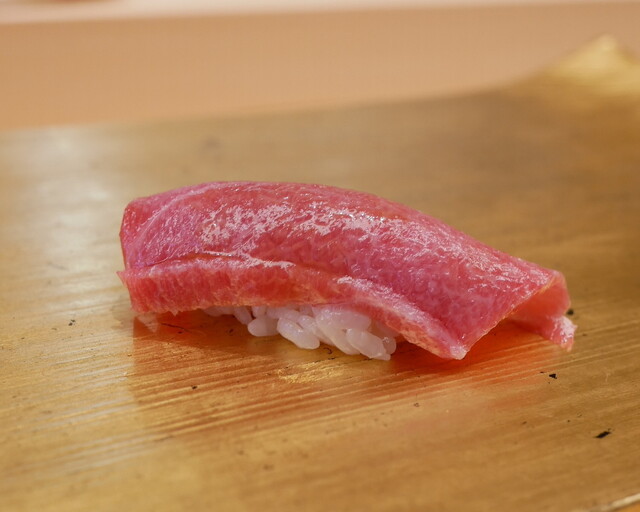
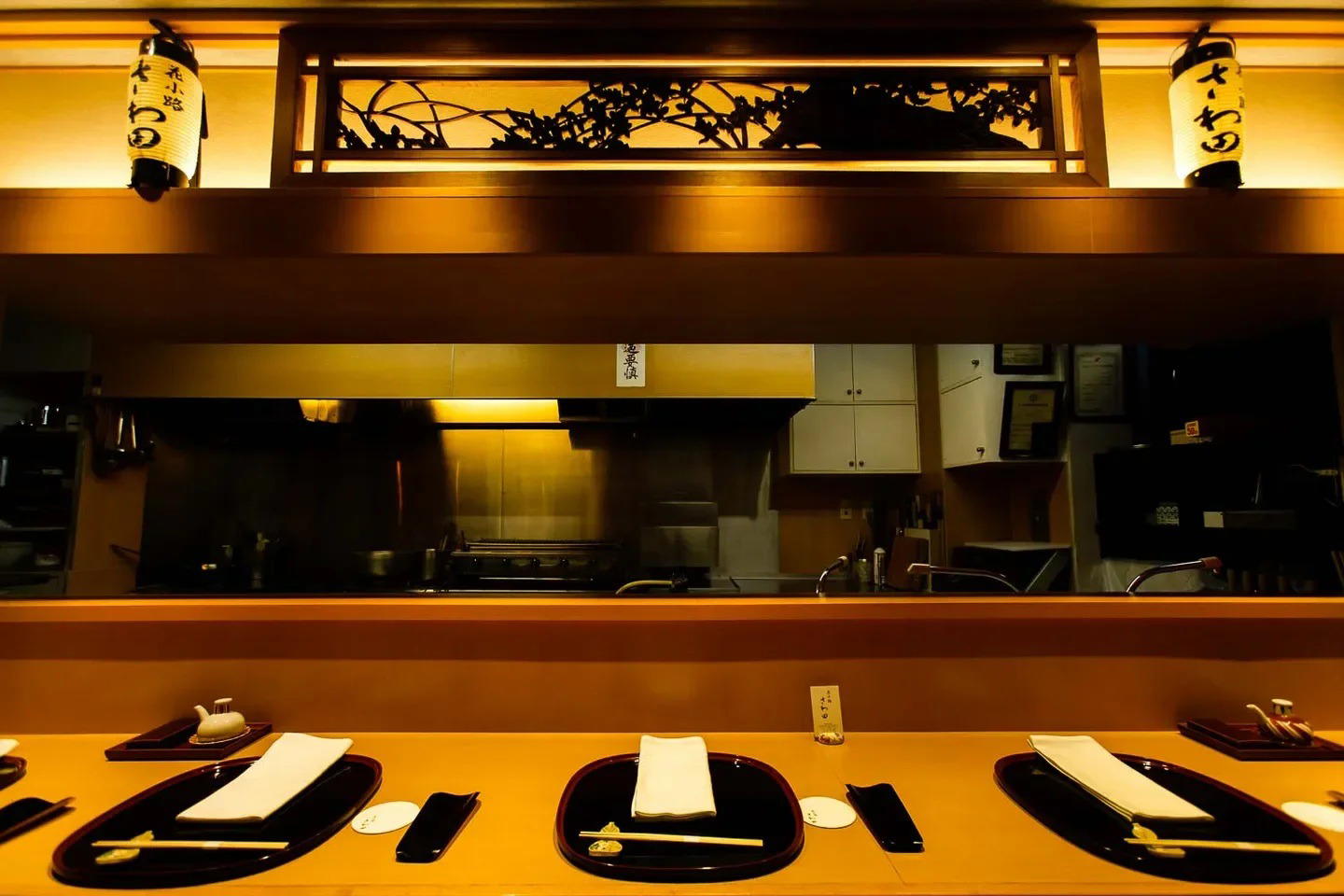
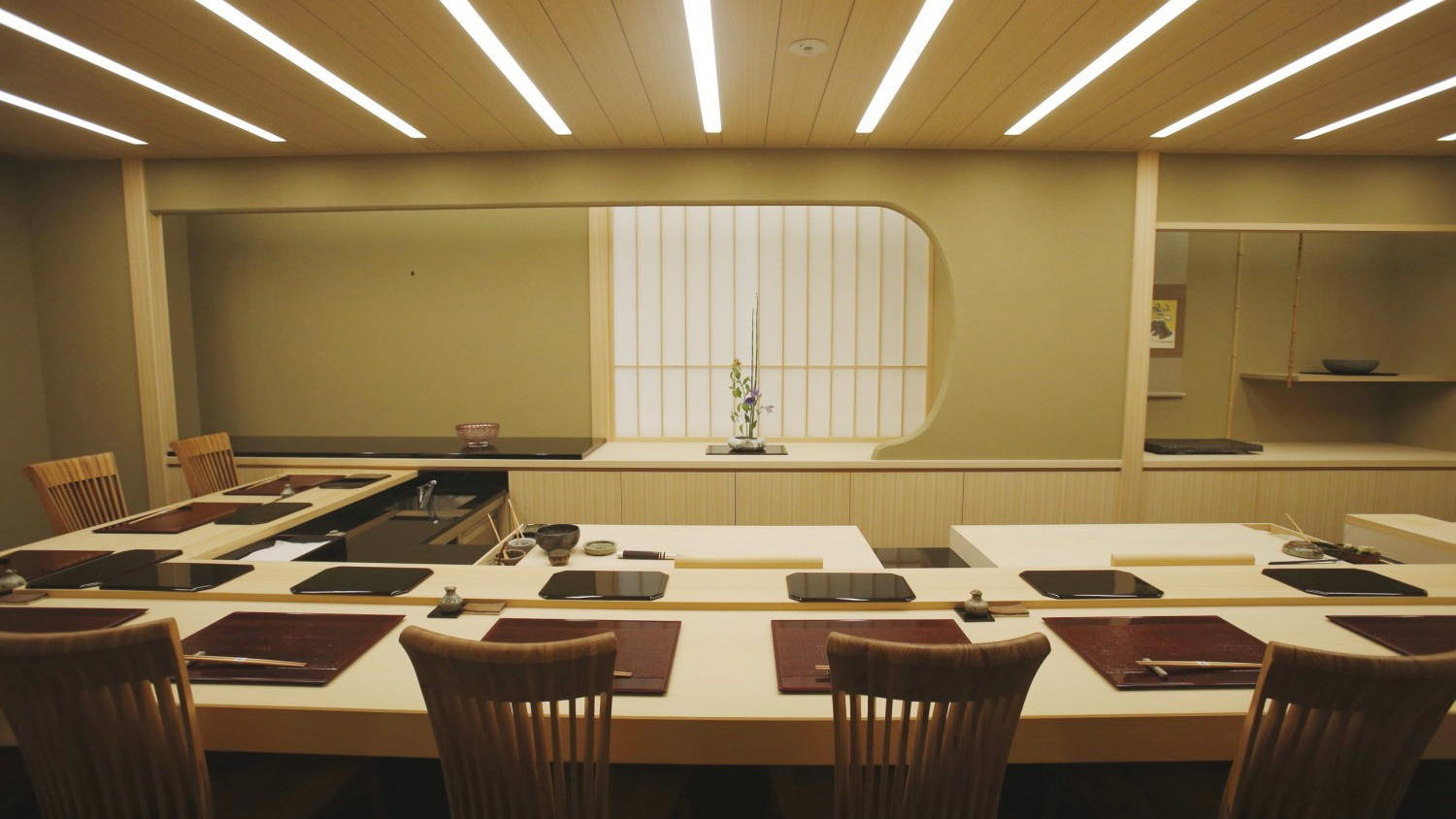
Ginza’s small sushi counters are often reached through office-building corridors and elevator landings, not grand entrances. That discretion matters: here, the room is rarely the performance. The performance is the counter, pacing, rice temperature, cut, and whether a diner accepts that a handful of seats can cost more than a full evening in many dining capitals.
Kiyota Hanare sits in the narrow Ginza category where value is not abundance but concentration. Seven seats compress the economics: fewer covers, fewer chances to correct a night, and a format that asks diners to measure worth in precision rather than variety. Its recognition profile places it in Tokyo’s serious sushi conversation: Tabelog Award Bronze in 2025 and 2026, selection for Tabelog Sushi TOKYO 100 in 2025, and a 2026 Recommended listing in Opinionated About Dining’s Japan Top Restaurants. Those signals do not guarantee personal preference, but they show this is not an entry-level counter trading on Ginza address alone.
Ginza sushi at seven seats means paying for compression, not theatre
Tokyo offers many ways to spend heavily on sushi, and Ginza is where the upper band is easiest to understand. Its prestige counters compete less on novelty than control: a short distance between chef and guest, few diners, and a menu structure with little room for improvisational tourism. Kiyota Hanare is a small-format answer to a familiar Tokyo question: how much does intimacy matter when the bill is already high?
The answer depends on what the diner values. A seven-seat counter creates pressure unlike a larger restaurant. Conversation is quieter, timing more exposed, and success depends on steady rhythm rather than embellishment. For diners comparing Tokyo’s expensive sushi options, that is the distinction. This is not the place to seek breadth across multiple Japanese traditions, as a kaiseki room such as 124. KAGURAZAKA (Yakitori) or a Japanese dining address such as . 鮪と炭火焼き うお炭 秋葉原店 might within a broader casual-to-specialist map. The sharper comparison is within the sushi counter economy, where seat count and recognition weigh as much as menu description.
The tariff also changes the decision. At this level, value is not created by generosity alone. It comes from whether the format delivers enough attention, sequencing, and technical confidence to justify choosing a compact Ginza counter over other high-spend Tokyo options, including French rooms such as ESqUISSE or Italian dining at ARMANI / RISTORANTE. They are not cuisine substitutes, but they are trip-planning substitutes: one serious dinner slot, one large allocation of time and budget, and a decision on whether Tokyo’s sushi tradition is the priority.
Award signals matter here because the format leaves little else to hide behind
For small-counter sushi, outside recognition has practical weight. A diner cannot assess the room through an extensive published menu, cellar list, or design programme. Public evidence is narrower: awards, category listings, seat count, reservation status, and position inside Ginza’s sushi hierarchy. Kiyota Hanare’s consecutive Tabelog Bronze awards and inclusion in Tabelog’s Sushi TOKYO 100 give it a firmer anchor than reputation alone. OAD’s 2026 Recommended placement adds an editorial signal from another evaluation culture.
That combination is useful because Tokyo sushi is crowded with opaque prestige. Some counters rely on legacy, some on chef lineage, some on hotel access, and some on international attention. Here, the persuasive argument is structural: a reservation-only, seven-seat Ginza sushi room with repeated Japanese recognition and a six-figure-yen dinner band, priced and formatted for diners who already want a specialised counter. It is less convincing for travellers trying to sample a wide range of Tokyo dining in one trip.
Chef Masashi Kimura is listed in OAD’s 2026 entry, but the chef biography is not the story to overwork. In Tokyo sushi, counter discipline matters more than personal mythology. The useful reading is that the restaurant sits in a lineage-conscious category where repetition, sourcing judgment, and rice-to-fish balance define the meal more than visible creativity. Diners seeking overt conceptual dining may align better with French or Italian tasting rooms; those who want the compressed language of Edomae-style sushi will understand the price.
How to place it in a Tokyo itinerary without wasting the spend
The strongest case is a focused Tokyo trip, not a catch-all first tour. If the itinerary already includes ramen, izakaya cooking, kissaten culture, tempura, yakitori, and a modern cocktail night, a Ginza sushi counter can be the high-concentration anchor rather than another checklist meal. For wider planning, Our full Tokyo restaurants guide maps the city’s dining range, while Our full Tokyo bars guide, Our full Tokyo hotels guide, Our full Tokyo wineries guide, and Our full Tokyo experiences guide keep the evening from becoming an isolated splurge.
Tokyo’s dining spread also argues for contrast. A serious Ginza sushi night gains clarity beside more casual or genre-specific meals elsewhere: 12/10 Shinjuku ten, 2D Cafe, and 3 Chome no Curry Ya San represent different Tokyo decisions. Beyond the capital, the same Japan trip might swing toward -Grilled beef Sukiyaki- KAMAKURA TANUKIAN 鎌倉 たぬき庵 in Kamakura.cafe in Osaka.know in Kumamoto, (Shoku) Vietnam in Kawasaki, [Curry Senmon Ten] Maruyama Kyoju. in Sapporo, or [ki:] in Kyoto. For readers tracking Japanese flavours abroad, Jōdo Saké Bar in Los Angeles and Onigiri Time in Pasadena sit in a different context entirely.
The editorial verdict is narrow by design. The restaurant suits diners who want a compact, recognised Ginza sushi counter and are comfortable paying for scarcity, technique, and proximity rather than décor or menu breadth. It is weaker for families, large groups, or travellers who need flexibility. In Tokyo, that is not a flaw; it is the point of the category.
Awards and Standing
Comparable venues at the same tier.
| Venue | Cuisine | Price | Notes |
|---|---|---|---|
| Kiyota HanareThis venue — the venue you are viewing | High-end Edomae Sushi Omakase | $$$$ | Not listed |
| 焼肉 いぶさな | Heritage Wagyu Yakiniku | $$$$ | Shibuya (Yoyogi/Sendagaya) |
| Ginza Donkoji Yamagishi | Kyoto-Style Izakaya | $$$$ | Chūō |
| Hyoki Shabu-shabu Yaesu | Kyoto-style Dashi Shabu-shabu | $$$$ | Chūō |
| Hanabusa | Edomae Sushi Omakase | $$$$ | Minato |
| Takahara Kiyosumi | Kyoto-style Kaiseki | $$$$ | Kōtō |
Recognition history
Dated appearances from independent guides and award organizations, with the underlying list record or original source where available.
Opinionated About Dining Top Restaurants in Japan Recommended
Opinionated About Dining
Black Pearl 1 Diamond
Black Pearl
Tabelog 100 #11 · No. 11
Tabelog · Tabelog 100 - Sushi - TOKYO - 2025





At a Glance
- Intimate
- Elegant
- Classic
- Sophisticated
- Date Night
- Business Dinner
- Special Occasion
- Celebration
- Private Event
- Solo
- Chefs Counter
- Standalone
- Design Destination
- Sake Program
- Sustainable Seafood
Current opening hours
- Monday
- 6–10 PM
- Tuesday
- 6–10 PM
- Wednesday
- 6–10 PM
- Thursday
- 6–10 PM
- Friday
- 6–10 PM
- Saturday
- Closed
- Sunday
- Closed
Hours can change for holidays and private events. Last verified .
A small, non-smoking sushi counter on the 9th floor in Ginza with only seven seats, creating a hushed, exclusive atmosphere focused on the chef and Edomae sushi craft rather than decor or views; reviews describe it as a relaxing, quietly luxurious space suited to serious sushi dining.