
Tabelog 100
Our verdict
Kyoto’s kissaten culture rewards pacing over spectacle: coffee, yoshoku, sandwiches, and the quiet discipline of a room built for lingering. Kissa Madrague sits in that tradition with Tabelog Kissaten 100 selections in 2021 and 2022, a 3.70 Tabelog score, and a compact format that makes it read less like a café stop than a small-course daytime meal.

Pearl is the En Primeur Club membership app — saves, bookings, and concierge access live there. Same editors, same standards.
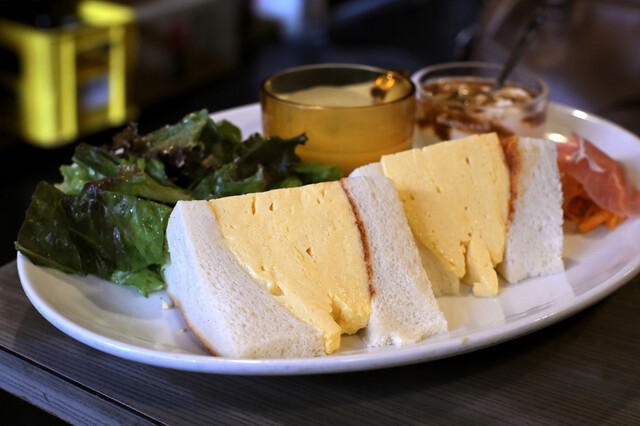
The menu
What to order
- Corona egg sandwich
- Teppan napolitan
- Spaghetti with homemade meat sauce
The approach to a Kyoto kissaten is rarely theatrical: a low-key frontage, a room scaled for conversation, coffee and yoshoku rather than a chef-led tasting counter. In that register, Kissa Madrague belongs to a Kyoto tradition that treats the café as a complete dining format, not a pause between temples. The meal has its sequence: coffee or a first drink, a sandwich or yoshoku plate, then a slower finish that explains why the city’s old coffee shops carry such cultural weight.
Kyoto dining is often framed through formal meals, counter dining, and sweets, but the kissaten tells a different story: more democratic, time-conscious, and less dependent on ceremony. Kissa Madrague’s Tabelog Kissaten 100 selection in 2022 places it inside a national conversation about Japanese coffee shops, while its listed categories, kissa, sandwich, and yoshoku, show the format’s breadth. This is not the same proposition as Le Petitmec Oike ten, Grill French, or Nijojo Furuta. The grammar is smaller: coffee-shop pacing, Western-influenced comfort food, and a room where the middle of the day can carry the weight of dinner.
A kissaten meal with a beginning, middle, and pause
Read this kind of Kyoto lunch as a progression, not a single order. Kissaten dining works through accumulation: the drink sets the tempo, the sandwich or yoshoku plate gives structure, and the final minutes matter because the room is part of the format. That is why the category still matters in Japan. It preserves a style of eating that is neither fast casual nor restaurant formal, with value in the controlled in-between.
Kissa Madrague is clear on that point because its food categories are not incidental. Sandwich and yoshoku place it in the lineage of Japanese adaptations of Western café food, where pleasure comes from proportion, texture, and timing rather than menu length. The Tabelog score of 3.70 is a useful market signal in a category where small differences matter; kissaten praise tends to cluster around consistency, room feel, and the ability to turn simple orders into a reason to cross town. The modest setting also matters. Kyoto is skilled at absorbing everyday urban spaces and making them socially specific, and that fit suits the city’s habit of letting unshowy rooms carry serious rituals.
That does not make the room precious. The stronger reading is functional: the format supports different uses, from solo coffee to a longer pause with friends. A kissa succeeds when those rhythms coexist without forcing restaurant posture or takeaway speed. In Kyoto, where visitors often plan meals around reservations and set courses, this daytime sequencing can reveal more than another formal dinner.
Where it fits in Kyoto's casual dining map
Kyoto is one of Japan’s more useful dining cities because it refuses a single identity. Office workers, shoppers, hotel guests, and local regulars overlap, keeping food culture varied. A day can move from sweets to a modern table, or from casual comfort cooking to wine-friendly plates. Kissa Madrague occupies another lane: daytime, coffee-shop, compact, and grounded in the city’s appetite for Western-influenced Japanese comfort.
The comparison matters because Kyoto casual dining is not one price tier or mood. Other everyday urban addresses point toward quick, practical eating, while the kissaten asks for more patience. It is also distinct from destination-led regional dining outside Kyoto, whether built around specialist dishes, grill formats, or café markers in other Japanese cities. Kyoto’s kissaten culture is less about novelty and more about continuity: a familiar format executed precisely enough to justify repeat use.
For broader planning, place this stop within the city rather than treating it as isolated. Kyoto’s wider restaurant scene gives the dining context; the city’s hotels anchor the broader planning choice; its bars, cultural stops, and day plans map the rest of the day. Travellers comparing Japanese casual formats beyond Kyoto can also read across to other coffee shops, casual counters, curry rooms, sake bars, and onigiri specialists, not as peers, but as reminders that Japanese everyday food formats travel, mutate, and keep their own rules.
Why the room matters as much as the order
The stronger case for Kissa Madrague is not a long menu or rare ingredient list. It is that Kyoto’s kissaten culture turns modest components into a complete arc. The category rewards rooms that can hold a solo diner, friends, and a slow afternoon without changing tone. Its listed lunch budget of JPY 1,000 - JPY 1,999 places it in an accessible band, closer to everyday Japanese café practice than to the more elaborate hospitality common around formal dining plans.
Critically, its recognition sits in the right category. A Tabelog Kissaten 100 listing is not a substitute for a Michelin star, and should not be read that way. It is a more specific signal: within Japan’s coffee-shop tradition, the venue has earned attention for the kind of daytime meal that resists grand language. For Kyoto visitors with a formal dinner scheduled, that is exactly the appeal. The city’s quieter food intelligence often appears between set-piece meals, where coffee, yoshoku, and room rhythm do the work.
Frequently asked questions
What are the operating hours at Kissa Madrague?
Operating hours for Kissa Madrague are not specified here; check directly before visiting.
What's the price range at Kissa Madrague?
Pricing at Kissa Madrague is listed as JPY 1,000 - JPY 1,999.
What part of town is Kissa Madrague in?
Kyoto.
What do critics highlight about Kissa Madrague?
Kissa Madrague’s listed recognition includes a Tabelog 100 Kissaten selection in 2022, placing it among Japan’s noted kissaten. Its listed categories of kissa, sandwich, and yoshoku give it a clear daytime identity in Kyoto.
Can Kissa Madrague handle vegetarian requests?
The listed categories are kissa, sandwiches, and yoshoku, so vegetarian diners should check directly before visiting; the listed phone number is +81-75-744-0067.
Comparison Snapshot
Comparable venues to anchor price and recognition.
| Venue | Cuisine | Price | Awards | Notes |
|---|---|---|---|---|
| Kissa MadragueThis venue (the venue you are viewing) | Japanese Kissaten / Café | $10–20 | Tabelog 100 | Not listed |
| Yamazaki Menjiro | Classic Kyoto Ramen & Tsukemen Counter | $10–20 | Tabelog 100 #73 | Nakagyō |
| Yamamoto Menzou | Traditional Kyoto udon noodle shop | $10–20 | Tabelog 100 #87 | Sakyō |
| Menya Takakura Nijou | Kyoto ramen and tsukemen shop | $10–20 | Tabelog 100 #66 | Nakagyō |
| Kissa Tirol | Classic Kyoto kissaten & yoshoku cafe | $1–10 | Tabelog 100 | Nakagyō |
| Nijo Wakasaya Teramachi ten | Traditional Kyoto wagashi & kakigori cafe | $10–20 | Tabelog 100 #79 | Nakagyō |
Recognition history
Dated appearances from independent guides and award organizations, with the underlying list record or original source where available.
Tabelog 100
Tabelog · Tabelog 100 - Kissaten - 2026
Full recognition history (2 entries)
Tabelog 100 #68 · No. 68
Tabelog · Tabelog 100 - Kissaten - 2022
Continue exploring
More in Kyoto
Restaurants in Kyoto
All restaurants in Kyoto →
Bars in Kyoto
All bars in Kyoto →

Hotels in Kyoto
All hotels in Kyoto →
Wineries in Kyoto
Browse all →
Details
- Cozy
- Classic
- Casual Hangout
- Solo
- Family
- Standalone
- A La Carte
- Coffee
Current opening hours
- Monday
- 8 AM–6 PM
- Tuesday
- 8 AM–6 PM
- Wednesday
- 8 AM–6 PM
- Thursday
- 8 AM–6 PM
- Friday
- 8 AM–6 PM
- Saturday
- 8 AM–6 PM
- Sunday
- 8 AM–6 PM
Hours can change for holidays and private events. Last verified .
Retro, nostalgic kissaten atmosphere with a classic Kyoto coffee-shop feel.