Google: 4.8 · 522 reviews


A six-seat omakase counter in Logroño operating at the top of Spain's small but serious Japanese dining tier. Chef Félix Jiménez trained under maestro Yoshikawa Takamasa in Japan, bringing Edomae technique and Shokunin philosophy to a 300-year-old doorway in La Rioja. Ranked #308 in Europe by Opinionated About Dining in 2025 and holding one Michelin star, Kiro Sushi is one of the most precise Japanese counters operating outside a major Spanish city.
 Discover on Pearl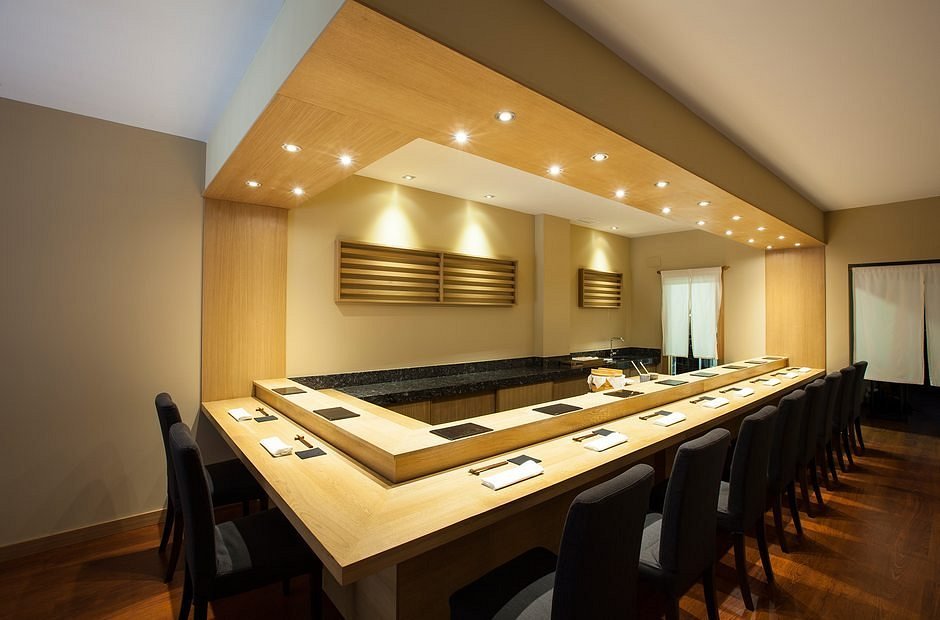
A Counter at the Edge of the Rioja
Most serious Japanese cooking in Spain concentrates in Madrid and Barcelona, where ingredient supply chains, affluent dining populations, and international tourism sustain the economics of Edomae-style omakase. Logroño is not that kind of city. The capital of La Rioja is built around wine, pilgrim traffic on the Camino de Santiago, and a pintxos culture that prizes accessibility over ceremony. Against that backdrop, a six-seat sushi counter operating at €€€€ price points and holding a Michelin star is not just an anomaly — it represents a deliberate argument about where serious Japanese technique can take root.
That argument is made through raw materials before anything else. Edomae sushi, the Tokyo-born tradition that Kiro Sushi draws from, is fundamentally about the relationship between a seasoned rice and a precisely handled ingredient at the moment of service. Koshihikari rice, the short-grain variety cultivated in Niigata and the standard reference point for high-level Edomae work, sits at the centre of that relationship. Getting the grain right, cooked with the correct acidity and served at the temperature of the human hand, is the foundational discipline. Everything placed on leading of it is an extension of the same attention.
Edomae Discipline in a Rioja Context
The Edomae tradition developed in Edo-period Tokyo as a way of preserving and enhancing fish through curing, marinating, and applying vinegar. It is a technique built around ingredient transformation rather than raw presentation alone. At the level Kiro Sushi operates, the menu extends beyond nigiri into grilled and smoked fish preparations — small courses that test the kitchen's reading of texture and heat as much as its knife work. This kind of range within a tight menu is characteristic of counters that treat Edomae as a complete vocabulary rather than a single gesture.
The training lineage matters here as context for quality signals, not biography. Chef Félix Jiménez trained under Yoshikawa Takamasa in Japan, where the Shokunin philosophy , a commitment to craft executed without shortcut or variation , governs the entire approach to preparation. That lineage places Kiro Sushi in a specific competitive tier: Spanish-based Japanese counters where the chef's Japanese apprenticeship is verifiable and the technique holds to classical rather than fusion principles. For comparison, the global sushi counters that occupy this kind of position , Masa in New York City and Sushi Masaki Saito in Toronto , operate at far higher price points and capacity, but the Shokunin discipline that shapes their menus is the same tradition at work in Logroño.
The Physical Conditions of the Experience
Address on Calle Emilia Pardo Bazán gives little away about what happens inside. The front door is reported to be over 300 years old , a threshold that establishes an immediate register of seriousness before any food is served. The counter seats six. That capacity is not a marketing choice; it is the operational limit of a single chef working to the precision that classical Edomae demands. At this scale, every seat faces the preparation directly, which means the rice temperature, the handling of the fish, and the sequencing of the menu are observable in real time. It is a format that either holds up under scrutiny or does not.
Service runs Tuesday through Saturday in the evening, with a Saturday lunch sitting from 2 PM to 3:30 PM. Monday and Sunday are closed. The limited weekly schedule and six-seat capacity together produce the booking pressure that defines this tier of counter. Punctuality at Kiro Sushi is not a courtesy requirement , it is a structural one. With a single seating per service and no room to absorb late arrivals without disrupting the sequence for other guests, the counter operates more like a performance than a restaurant in the conventional sense.
How Kiro Sushi Sits in Spain's Dining Tier
Spain's Michelin-starred restaurant pool is large and geographically spread, but the concentration of serious Japanese cooking remains thin outside the two major cities. Kiro Sushi's 2024 Michelin star, combined with its ranking of #308 in the Opinionated About Dining Leading Restaurants in Europe for 2025 (up from #546 in 2024) and an OAD Highly Recommended designation for new restaurants in 2023, places it inside a small cohort of Spanish venues where Japanese technique has earned independent critical recognition rather than novelty credit.
Within Logroño specifically, the dining scene clusters around two registers: traditional Riojan cooking, represented by venues like La Cocina de Ramón at the more accessible end, and a tier of creative and contemporary Spanish restaurants including Ajonegro, Ikaro, and Juan Carlos Ferrando, each carrying their own Michelin recognition. The Marques de Riscal Restaurant offers modern Spanish at a comparable price tier. Kiro Sushi sits apart from all of them in format and culinary tradition, which means it draws a different kind of traveller , one specifically seeking classical Japanese technique rather than Spanish regional cooking or creative fusion.
The broader Spanish fine dining scene, represented at its peak by venues like El Celler de Can Roca in Girona, Arzak in San Sebastián, Azurmendi in Larrabetzu, DiverXO in Madrid, Cocina Hermanos Torres in Barcelona, and Aponiente in El Puerto de Santa María, is built predominantly on Spanish culinary identity. Kiro Sushi does not participate in that conversation. Its peer set is a smaller, more specific one: counters in Europe where Japanese-trained chefs are applying classical Edomae methodology with the same rigour expected in Tokyo.
Planning a Visit
Kiro Sushi is not a walk-in restaurant in any practical sense. The six-seat format and the restaurant's OAD ranking mean demand consistently outpaces availability. Advance booking is the baseline requirement, and the Saturday lunch sitting , the only daytime service of the week , is likely to book faster than weekday evenings given its accessibility for visitors combining La Rioja wine travel with a dining stop in the city. Logroño is a short drive from Haro, the wine town at the centre of Rioja Alta production, which makes a multi-day La Rioja itinerary a reasonable frame for planning the visit. For accommodation and additional context on the city, EP Club's Logroño hotels guide, bars guide, wineries guide, and experiences guide provide further orientation. The full scope of the city's dining options is covered in the Logroño restaurants guide.
The price range sits at €€€€, consistent with what a serious omakase counter in this tier costs in any European city. There is no indication of a la carte options; the format is counter-only with a set sequence, which is the standard structure for Edomae-style service at this level. Dress code information is not confirmed, but the nature of the experience , six guests, one seating, a 300-year-old door , suggests that guests arriving in the spirit of the format will be dressed accordingly.
At a Glance
A quick look at comparable venues, using the data we have on file.
| Venue | Notes | Price |
|---|---|---|
| Kiro Sushi | This venue | €€€€ |
| Marques de Riscal Restaurant | Modern Spanish, €€€€ | €€€€ |
| Ajonegro | Fusion, €€€ | €€€ |
| Ikaro | Creative, €€€ | €€€ |
| La Cocina de Ramón | Traditional Cuisine, €€ | €€ |
| Juan Carlos Ferrando | Contemporary, €€ | €€ |
Continue exploring
More in Logroño
Restaurants in Logroño
Browse all →
Bars in Logroño
Browse all →
Hotels in Logroño
Browse all →
At a Glance
- Intimate
- Elegant
- Sophisticated
- Quiet
- Special Occasion
- Celebration
- Date Night
- Chefs Counter
- Open Kitchen
- Standalone
- Sake Program
Minimalist and meditative atmosphere in a historic 300-year-old building, designed as a culinary pilgrimage where diners sit at a counter in a state of heightened sensory awareness.