

1 Michelin Star · Guía Repsol 2 Soles
Our verdict
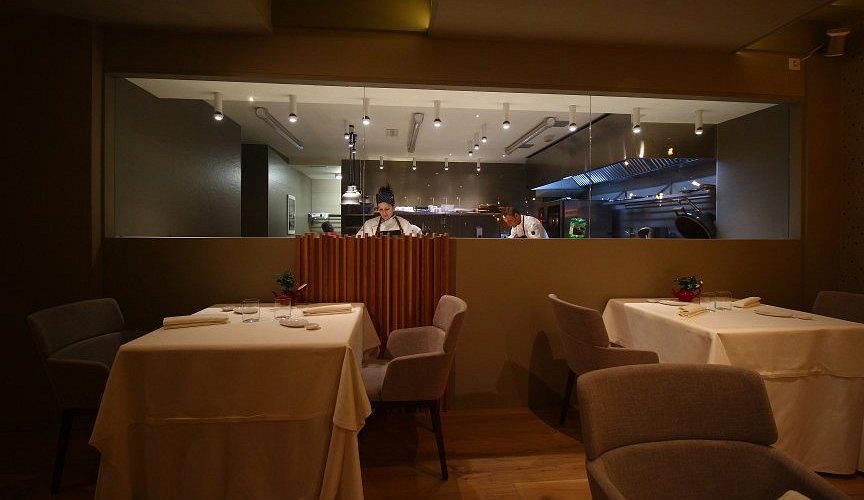
Ikaro in Logroño presents Michelin-starred contemporary Spanish cuisine with clear Ecuadorian and Basque influences. Must-try offerings include the Seasonal Tasting Menu, Ecuadorian-inspired ceviche, and a La Rioja lamb preparation that highlights local produce. The kitchen of Carolina Sánchez and Iñaki Murua blends precise technique with bright tropical accents, while an attentive sommelier pairs each course with wines from La Rioja. Expect refined textures, sharp citrus notes, and sauces reduced to clean intensity. Reservations via Resy are recommended for lunch or dinner; the intimate dining room and open kitchen ensure a personal, memorable meal.

Pearl is the En Primeur Club membership app, where members save venues, book tables and use the concierge.
Where La Rioja Meets Ecuador
Avenida Portugal runs through a part of Logroño that sits just outside the old town's pintxos circuit, a stretch more residential than touristic. That address matters. Ikaro operates at a deliberate remove from the wine-country restaurant tourism that defines much of La Rioja's dining conversation, and that distance is something of a statement about what the kitchen is trying to do. The room is composed rather than showy, the service measured, and the whole experience organized around a creative premise that has no real equivalent in this corner of northern Spain.
The premise is this: La Rioja's produce, read through the lens of Ecuadorian culinary tradition. In practical terms, that means ingredients with deep regional roots in the Ebro valley appearing alongside tropical fruits, Andean condiments, and preparations that belong to South American technique rather than the Spanish canon. The result is a cuisine that sits outside the Basque-influenced fine dining that dominates this region's top-end restaurants, and outside the Latin fusion category that can easily feel arbitrary. When two culinary traditions are brought together by people who grew up inside each of them, the connections feel structural rather than decorative.
The Cultural Argument on the Plate
Spain's most decorated restaurants have long drawn on external influence, but the movement has typically been outward: a Spanish chef absorbing Japanese technique, or encoding French classical training into Iberian ingredients. Ikaro runs that exchange in a different direction. The Ecuadorian dimension here is not technique borrowed from abroad but a second culinary world with its own logic of acidity, spice, and tropical ingredient use, one that reshapes how La Rioja's produce is framed and prepared.
This is worth contextualising within the broader arc of Spanish creative cooking. Restaurants like Arzak in San Sebastián and Azurmendi in Larrabetzu built their creative identities from within Basque culture, evolving a regional cuisine forward rather than grafting something external onto it. DiverXO in Madrid and El Celler de Can Roca in Girona draw on global reference points but remain unmistakably Spanish in their structural foundations. Ikaro's proposition is more genuinely bicultural, in that both culinary traditions arrive with equal weight and the menu asks them to negotiate rather than one to serve the other.
The Basque Culinary Center in San Sebastián, where both chefs trained, is not incidental context. That institution has produced a generation of technically rigorous Spanish cooks, but it has also become a meeting point for international talent, which is precisely the circumstance that made the Ikaro concept possible. The BCC's influence runs through creative kitchens from Aponiente in El Puerto de Santa María to Cocina Hermanos Torres in Barcelona, and Ikaro belongs to the same generation of technically trained Spanish-based cooks who have moved past imitation into genuinely original work.
Michelin Recognition and What It Signals
Ikaro received its first Michelin star in 2024. That timing places it among a cohort of Spanish restaurants earning initial recognition in a period when the guide has been notably active in cities outside Madrid, Barcelona, and San Sebastián. Logroño, a city whose dining identity is almost entirely built around wine tourism, wine-adjacent cuisine, and the pintxos culture of Calle Laurel, does not have a deep Michelin-starred dining tradition. The recognition here functions partly as a geographic statement: there is serious technical cooking happening in La Rioja's capital, not just in the Marqués de Riscal estate or the Basque country to the north.
Carolina Sánchez's specific credential within that recognition is documented and notable: she is the first Ecuadorian woman to hold a Michelin star. That fact carries weight in a broader conversation about Latin American chefs working within European fine dining structures, where South American cuisine has historically been referenced rather than represented. Her visibility as a judge on Ecuador's MasterChef series means the award resonates beyond the restaurant's immediate dining room, connecting Logroño's creative scene to a Latin American audience for whom the recognition has a specific significance.
Within Logroño's current restaurant tier, Ikaro sits at €€€, positioning it alongside Ajonegro, the city's other Michelin-starred restaurant, which works in the fusion category at the same price point. Kiro Sushi occupies the €€€€ tier with its Japanese focus, while Marques de Riscal Restaurant operates at the same higher price point within its estate context. More accessible options like La Cocina de Ramón and Juan Carlos Ferrando occupy the €€ bracket. At €€€, Ikaro is priced for the creative fine dining it delivers, without reaching the upper extreme of the city's range.
The Logroño Context
La Rioja as a wine region generates enormous international attention, but Logroño itself is often treated as a transit point: somewhere you stop for pintxos on Calle Laurel before heading to a bodega the following morning. The city's fine dining scene is thin relative to its gastronomic reputation, and creative cooking here has had to build an audience that does not automatically associate the region with tasting-menu dining.
That context makes Ikaro's positioning more interesting. It is operating in a city where the default fine dining reference point is Riojan wine culture and traditional ingredient-led cooking, not cross-cultural creative experimentation. The comparison point for Logroño diners is less [Paris-based creative restaurants like Alléno Paris au Pavillon Ledoyen or Arpège] and more the question of whether the city can sustain a serious creative kitchen at all. The 2024 Michelin star is the clearest available answer to that question.
For visitors arriving in Logroño specifically for the wine culture, Ikaro offers a frame for La Rioja's produce that the bodegas themselves cannot provide: an outside perspective, filtered through Ecuadorian culinary logic, that makes familiar regional ingredients appear in configurations a purely local kitchen would be unlikely to generate. That is a meaningful thing for a wine-focused traveller to experience alongside cellar visits and Calle Laurel evenings.
Planning Your Visit
Ikaro operates a tightly managed schedule. Lunch service runs Tuesday through Sunday, with sittings from 1:45 PM to 3:15 PM. Dinner is available on Fridays and Saturdays only, with sittings from 8:45 PM to 10:15 PM. Monday is closed entirely. The restricted hours, combined with what is likely a small dining room given the address and price point, mean advance planning is essential, particularly for Friday and Saturday dinner when the full week's access concentrates into two services. Visitors combining Ikaro with the city's wine culture should note that the lunch schedule aligns well with afternoon bodega visits or winery trips into the surrounding Rioja Alta or Rioja Alavesa appellations.
Logroño is served by train connections from Madrid (Chamartín) and Bilbao, with the city's compact centre making Avenida Portugal reachable on foot from most central accommodation. For a fuller picture of where to stay, drink, and explore the region, see our full Logroño restaurants guide, our full Logroño hotels guide, our full Logroño bars guide, our full Logroño wineries guide, and our full Logroño experiences guide.
Frequently asked questions
at Ikaro?
Ikaro does not publish a fixed à la carte menu in the conventional sense; the kitchen's creative format means the menu evolves with the season and the availability of La Rioja's produce. The clearest way to experience the restaurant's Ecuador-meets-La Rioja premise fully is to follow whatever tasting sequence the kitchen is presenting at the time of your visit, rather than selecting individual dishes. The format rewards that kind of commitment. The dishes that have drawn the most attention in reviews and in the context of the Michelin recognition are those where Ecuadorian acidity and tropical ingredients reframe familiar Riojan vegetables and proteins, so the cooking's point of difference is most legible when you follow the full sequence rather than sampling selectively. For the most current menu information, contact the restaurant directly before your visit.
Cost and Credentials
| Venue | Cuisine | Price | Awards | Notes |
|---|---|---|---|---|
| IkaroThis venue (the venue you are viewing) | Ecuadorian-Rioja Fusion | $50–100 | 1 Michelin Star · Guía Repsol 2 Soles | Not listed |
| Kiro Sushi | Traditional Japanese Omakase | $150–200 | 1 Michelin Star · Guía Repsol 2 Soles | Sushi, Japanese |
| Marques de Riscal Restaurant | Modern Basque Fine Dining | $100–150 | Michelin Plate | Not listed |
| Ajonegro | Mexican-Riojan Fusion | Not listed | 1 Michelin Star · Macarfi 8.5 Food Rating | Fusion |
| La Cocina de Ramón | Traditional Riojan Cuisine | $50–100 | Michelin Bib Gourmand · Guía Repsol 1 Sol | Not listed |
| Juan Carlos Ferrando | Contemporary Spanish Rioja Cuisine | $50–100 | Michelin Plate · Macarfi 7.6 Food Rating | Not listed |
Recognition history
Dated appearances from independent guides and award organizations, with the underlying list record or original source where available.
Michelin 1 Star
Michelin
Guía Repsol 2 Soles
Guía Repsol
Full recognition history (4 entries)
Michelin 1 Star
Michelin
Michelin 1 Star
Michelin
Continue exploring
More in Logroño
Restaurants in Logroño
All restaurants in Logroño →
Bars in Logroño
All bars in Logroño →
Details
- Elegant
- Intimate
- Sophisticated
- Date Night
- Special Occasion
- Open Kitchen
- Chefs Counter
- Extensive Wine List
- Local Sourcing
- Tasting Menu
- Rioja Wines
- Vegetarian Friendly
- Vegan Options
- Gluten Free Options
Current opening hours
- Monday
- Closed
- Tuesday
- Closed
- Wednesday
- 1:45–3:15 PM
- Thursday
- 1:45–3:15 PM
- Friday
- 1:45–3:15 PM, 8:45–10:15 PM
- Saturday
- 1:45–3:15 PM, 8:45–10:15 PM
- Sunday
- 1:45–3:15 PM
Hours can change for holidays and private events. Hours as of .
Intimate and refined atmosphere with an elegant simplicity, kitchen window seating for culinary artistry, and a sophisticated, welcoming vibe.