Kilig
Kilig occupies a corner of Seattle's Chinatown-International District at 710 8th Ave S, where Filipino cooking gets a serious, structured treatment. The menu architecture reflects a kitchen thinking in courses rather than comfort-food shorthand, placing it inside a small but growing cohort of Filipino restaurants that pitch to a dining-out crowd rather than a takeaway one. For Seattle diners tracking the city's evolving Asian-American fine-dining conversation, Kilig is a reference point worth knowing.
Pearl is the En Primeur Club membership app — saves, bookings, and concierge access live there. Same editors, same standards.
- Address
- 710 8th Ave S, Seattle, WA 98104
- Phone
- +12067784513
- Website
- kiligseattle.com
- Directions
- Get directions
 Saves & bookings on Pearl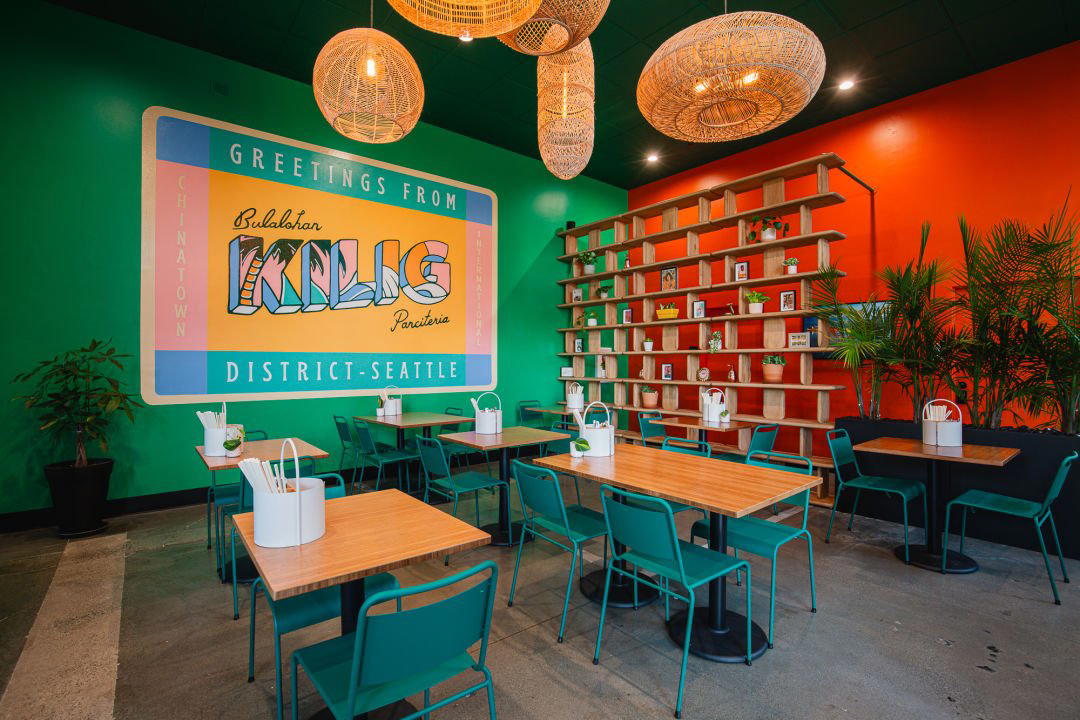
Filipino Fine Dining and the Architecture of the Menu
Seattle's Chinatown-International District has long operated as the city's most layered neighborhood for Asian-American eating, where Vietnamese pho counters, Japanese izakayas, and pan-Asian grocers sit within a few blocks of one another. Within that context, a Filipino restaurant that structures its menu around tasting progressions rather than family-style sharing plates represents a genuine departure from how Filipino food has historically been presented to non-Filipino diners in American cities. Kilig, at 710 8th Ave S, sits inside that shift.
The broader trend matters here. Filipino cuisine spent decades in the United States defined by large-format cooking, carinderias, and the logic of abundance: dishes designed to feed many, priced to reach many. The move toward smaller, more composed presentations, where a single dish is meant to carry a specific argument about ingredient or technique, signals something different. It's the same structural transition that Korean cooking underwent in New York, where restaurants like Atomix in New York City reframed banchan-and-rice culture into a multi-course format that put Korean ingredients in conversation with global fine-dining expectations. Kilig operates in an analogous register for Filipino food on the West Coast.
Menu Architecture as Editorial Statement
One revealing thing about any restaurant's ambitions is not its price point or its press coverage but the logic of its menu: what comes first, what comes last, and what the kitchen believes deserves to stand alone. In Filipino cooking, that editorial problem is genuinely difficult. The tradition is communal and simultaneous, a table covered with rice, sinigang, adobo, and lechon all at once, with hierarchy established by appetite rather than sequence. A restaurant that imposes course logic on that tradition is making a deliberate argument about how Filipino food should be read.
That argument has precedents elsewhere. Japanese omakase counters resolve a similar tension between tradition and individual presentation by letting the chef set the sequence entirely. Tasting-menu-driven restaurants across the United States, from Alinea in Chicago to Lazy Bear in San Francisco, have built their identities around menu architecture as a form of authorship. The question Kilig poses is whether Filipino flavour profiles, built around sour-salt balances, pork fat, vinegar, and fermented shrimp paste, translate into that sequential grammar without losing their essential character.
Seattle has a small but growing set of restaurants working in that territory. Joule, which applies a similar structured seriousness to Korean-inflected New Asian cooking, represents one peer point. Canlis, the city's most established fine-dining institution, occupies a different tier entirely but shares the instinct that menu sequence is itself a form of hospitality. Kilig sits between those registers, closer to Joule's cultural specificity than to Canlis's mid-century American formality.
The International District Setting
Location shapes expectation before a single dish arrives. The International District address at 710 8th Ave S places Kilig inside a neighbourhood where the dining baseline is authenticity over atmosphere, where the measure of quality is often how closely a dish matches a regional original rather than how it has been reinterpreted. A restaurant that reinterprets rather than reproduces is making a bet that its immediate neighbours make in different ways.
That geographic positioning is not unlike the situation facing ambitious restaurants in other dense, culturally specific urban enclaves. The challenge is not just cooking well but calibrating expectations in a neighbourhood where diners may have strong and specific relationships with the original culinary tradition. It's a harder brief than opening in a neutral commercial district, and it raises the stakes for every editorial decision the menu makes.
For reference points outside Seattle, the dynamic is visible at restaurants like Providence in Los Angeles, which operates at fine-dining scale within a city that has deep roots in casual seafood culture, or Blue Hill at Stone Barns in Tarrytown, where an agricultural region associated with farm supply becomes the setting for one of the country's most deliberate tasting menus. Context and counter-programming are part of the offer.
Where Kilig Sits in Seattle's Filipino Dining Picture
Seattle has one of the largest Filipino-American communities on the West Coast, which means the city has a baseline of Filipino restaurants against which Kilig's approach is measured. The Filipino dining scene in Seattle ranges from casual turo-turo spots and bakeries to mid-tier family restaurants. The gap between those casual formats and a structured fine-dining interpretation is where Kilig operates, and it is a gap that relatively few American cities have seen filled with consistency.
For diners who track how immigrant-origin cuisines move through American fine-dining, Kilig is part of a small national cohort that also includes Filipino restaurants in Los Angeles and New York testing similar transitions. The comparison is not with Le Bernardin in New York City or The French Laundry in Napa, which occupy a different category entirely, but with restaurants like Single Thread Farm in Healdsburg or Addison in San Diego that have managed to build a distinct identity around a specific culinary vocabulary within a regional fine-dining market.
For Seattle's dining public, that makes Kilig worth attention not as a novelty but as a data point in a longer argument about which cuisines American fine dining is willing to take seriously on their own terms.
Planning Your Visit
Kilig is located at 710 8th Ave S in Seattle's Chinatown-International District. Reservations are recommended, and Kilig falls in price tier 2. The International District is well-connected by light rail, with the International District/Chinatown station a short walk from the address.
| Venue | Cuisine | Format | Neighbourhood |
|---|---|---|---|
| Kilig | Filipino | Fine dining / structured | Chinatown-International District |
| Joule | New Asian | New American / Korean-inflected | Wallingford |
| Canlis | New American | Fine dining / tasting | Queen Anne |
| 1415 1st Ave | American | Contemporary | Downtown |
| 2963 4th Ave S | Local | Neighbourhood | SoDo |
For context on how other ambitious restaurants have structured their offers in similarly competitive regional markets, Emeril's in New Orleans and The Inn at Little Washington in Washington offer different models worth understanding. You may also find 1744 NW Market St and 8 1/2 Otto e Mezzo Bombana in Hong Kong useful comparative reads for how cultural specificity and fine-dining ambition interact across different markets.
Reputation Context
Comparable venues nearby, for context on price, style, and recognition.
| Venue | Cuisine | Price | Notes |
|---|---|---|---|
| KiligThis venue — the venue you are viewing | Modern Filipino | $$ | Not listed |
| Kedai Makan Capitol Hill | Malaysian Street Food | $$ | Pike/Pine |
| Taurus Ox | Lao | $$ | Stevens |
| Hugo House | Event Catering | Not listed | Broadway |
| Pallino Pastaria | Italian Pasta & Pizza | $$ | Central Business District |
| Jimmy's on Broadway | Modern American with Northwest Flavors | $$ | First Hill |
Continue exploring
More in Seattle
Restaurants in Seattle
Browse all →
Bars in Seattle
Browse all →
Hotels in Seattle
Browse all →

At a Glance
- Cozy
- Modern
- Casual Hangout
- Craft Cocktails
Current opening hours
- Monday
- Closed
- Tuesday
- Closed
- Wednesday
- 12–8:30 PM
- Thursday
- 12–8:30 PM
- Friday
- 12–9 PM
- Saturday
- 12–9 PM
- Sunday
- 12–8:30 PM
Hours can change for holidays and private events. Last verified .
Cozy and welcoming dining room typically full of groups, with moderate noise levels and a modern sophisticated flair.