
Kikumi Senbei Sohonten belongs to Tokyo’s older, quieter sweets culture: a Sendagi rice-cracker shop where the format is take-out rather than café theatre. Its Tabelog 100 selection for Tokyo Japanese traditional sweets and sweets cafés in 2023 gives it a clear credential inside a category often overshadowed by patisserie, kakigori, and department-store wagashi counters.
Pearl is the En Primeur Club membership app — saves, bookings, and concierge access live there. Same editors, same standards.
- Address
- 3 Chome-37-16 Sendagi, Bunkyo City, Tokyo 113-0022, Japan
- Phone
- +81 3-3821-1215
- Website
- kikumisenbei.tokyo
 Saves & bookings on Pearl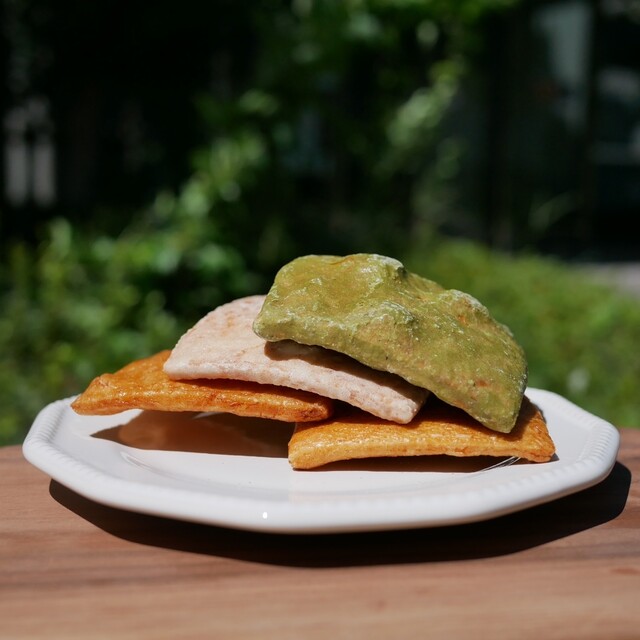
Sendagi slows the pace before the first purchase. Its low-rise shopfronts, temple-side lanes, and residential rhythm make a rice-cracker specialist feel like part of the street’s daily grammar. Kikumi Senbei Sohonten fits: compact, practical, take-out focused, and centred on the craft object rather than seating, plating, or service choreography.
Tokyo’s sweet culture is often read through louder lenses: department-store wagashi counters with immaculate gift packaging, and cafés where seasonal parfaits or shaved ice drive queues. Senbei sits elsewhere. Portable, durable, and tied to everyday gifting, household snacking, and train-station errands, it is easy to underestimate, especially for visitors chasing tasting menus and cocktail bars. Yet rice crackers reward an architectural eye: shape, thickness, surface, packaging, and shop efficiency all matter.
Sendagi's small-shop sweets culture gives senbei its proper frame
Yanesen, shorthand for Yanaka, Nezu, and Sendagi, usefully corrects Tokyo’s glass-tower cliché. Food here rewards walking rather than appointment-making, with soba rooms, coffee shops, sweets counters, and small take-out specialists close together. In that context, a senbei shop is part of a neighbourhood circuit, not a destination built for one long sitting.
The shop’s Tabelog 100 selection for Japanese traditional sweets and sweets cafés in Tokyo in 2023 is the relevant signal. It places the address in a curated field of wagashi and sweets specialists, not the restaurant-awards economy that dominates international Tokyo coverage. That matters. This competes less with omakase counters than with focused sweet shops, including nearby Waguri Ya Yanaka ten and Himitsu Do, where spend and format move toward sit-down dessert culture. Kikumi Senbei Sohonten sits leaner: take-out, rice crackers, and a narrower purchase ritual.
That narrow format is its editorial point. Tokyo has countless shops selling something sweet; fewer make a convincing case for one traditional category without café design, elaborate pairings, or seasonal spectacle. The value is in the container’s clarity. Counter, packaging, and small-shop scale show how senbei functions in the city: craft snack, gift, and durable expression of taste that needs no reservation.
The room is a retail instrument, not a dining room
Design here should be judged by use. There are no private rooms, private-use format, or dining-room hierarchy. The retail-led, take-out experience must organize choice, move customers through selection, and protect a fragile product category whose appeal depends on condition and presentation. For travelers used to Tokyo’s high-touch restaurant rituals, that stripped-back structure clarifies.
Senbei shops show how Japanese food retail uses restraint practically. Without a seated meal, attention shifts from menu progression to packets, shapes, and categories; from pacing to what travels well, suits a gift, or fits a walking day through Bunkyo and Taito. This differs from HAGI CAFE or Espresso Factory, which pull customers into a café rhythm. Senbei asks for a shorter, sharper exchange.
For a broader Tokyo dining day, the contrast helps. A route can begin with small sweets in Sendagi, then move toward soba, curry, yakitori, or izakaya cooking elsewhere without making every stop a full meal. Readers using Our full Tokyo restaurants guide can map this stop against formats from 124. KAGURAZAKA (Yakitori) to 3 Chome no Curry Ya San, 12/10 Shinjuku ten, or . 鮪と炭火焼き うお炭 秋葉原店. The point is not ranking; it is seeing how Tokyo’s food day works through changes of scale.
That scale change also separates this address from trend-led cafés such as 2D Cafe, where the visual conceit shapes the visit. Here, the design language is functional: product, counter, transaction, carry-away. In a city of elaborate hospitality codes, that plainness has its own intelligence.
How to place it in a Tokyo itinerary
Kikumi Senbei Sohonten works well within a north-central Tokyo walk, not as an evening anchor. Sendagi Station is the useful transport reference, and the neighbourhood invites a slow route through older shopping streets, cemetery edges, temple approaches, and small food stops. The shop is family-friendly, non-smoking, and take-out built, so it folds easily into a day with children or travelers seeking edible gifts without seated dessert service.
Spend sits in the sub-¥1,000 bracket, unusually modest in a city where premium sweets climb quickly once packaging, café seating, or seasonal ingredients enter. Payment is more constrained than at large commercial counters: credit card acceptance is listed for Visa, with no electronic money or QR code payments. That operational detail belongs to the genre; independent traditional-food shops often feel closer to neighbourhood retail than mall hospitality.
There is nearby paid parking, but the area is better read on foot and by rail. A tight itinerary pairs it with Yanesen browsing, a soba stop such as Teuchi Soba Nezu Takajo, or dessert comparison at Waguri Ya Yanaka ten or Himitsu Do. A broader itinerary uses it as a low-commitment sweets stop before crossing the city for another register of Tokyo. For travelers also planning hotels, drinking, cellar-focused side trips, or cultural bookings, the related city guides are more useful than making this shop carry a full day: Our full Tokyo hotels guide, Our full Tokyo bars guide, Our full Tokyo wineries guide, and Our full Tokyo experiences guide.
Nationally, the appeal is category literacy. Japan’s food culture is full of compact specialists whose value can be missed when itineraries chase only long meals. The pattern appears across addresses from -Grilled beef Sukiyaki- KAMAKURA TANUKIAN 鎌倉 たぬき庵 in Kamakura to.cafe in Osaka.know in Kumamoto, (Shoku) Vietnam in Kawasaki, [Curry Senmon Ten] Maruyama Kyoju. in Sapporo, and [ki:] in Kyoto. Even outside Japan, compact formats such as Jōdo Saké Bar in Los Angeles and Onigiri Time in Pasadena show how a narrow food idea can carry cultural weight when execution is disciplined.
The editorial case is specific: a Tokyo sweets stop for travelers who care about small-shop form, traditional snack categories, and neighbourhood texture. It will not satisfy someone seeking long dessert service or a design-forward café set piece. It will reward readers who understand that some of Tokyo’s clearest food experiences happen in rooms designed for selection, purchase, and departure.
Comparable Options
Comparable venues at a glance for context.
| Venue | Cuisine | Price | Notes |
|---|---|---|---|
| Kikumi Senbei SohontenThis venue — the venue you are viewing | Japanese senbei shop | $ | Not listed |
| Hekkelun | Classic Japanese Kissaten | $ | Toranomon/Shinbashi |
| Caligari Akihabara | Japanese curry house specializing in coconut curry | $ | Chiyoda |
| Curry Rice Senmon Ten Ethiopia Honten | Japanese curry house | $ | Chiyoda |
| Fukuo Shoten | Traditional Japanese sweets and agar jelly shop | $ | Chiyoda |
| Echigoya Wakasa | Traditional Japanese Sweets | $ | Sumida |
Recognition history
Dated appearances from independent guides and award organizations, with the underlying list record or original source where available.
Tabelog 100 #91 · No. 91
Tabelog · Tabelog 100 - Japanese traditional sweets / Japanese sweets cafe - TOKYO - 2023








At a Glance
- Classic
- Well Known
- Cozy
- Solo
- Family
- Casual Hangout
- Historic Building
- Standalone
- Street Scene
Current opening hours
- Monday
- Closed
- Tuesday
- 10 AM–7 PM
- Wednesday
- 10 AM–7 PM
- Thursday
- 10 AM–7 PM
- Friday
- 10 AM–7 PM
- Saturday
- 10 AM–7 PM
- Sunday
- 10 AM–7 PM
Hours can change for holidays and private events. Last verified .
Traditional, old-Tokyo confectionery-shop atmosphere with a modest, neighborhood feel rather than a formal dining room.