
Tokyo’s curry culture is often at its sharpest around Jimbocho, where bookshops, universities, offices, and counter restaurants compress lunch into a practiced ritual. Curry Rice Senmon Ten Ethiopia Honten belongs to that Kanda Ogawamachi tier: a 41-seat curry house with counter seating, vegetarian options, take-out, and repeated selection in Tabelog Curry TOKYO “Tabelog 100” lists.
Pearl is the En Primeur Club membership app — saves, bookings, and concierge access live there. Same editors, same standards.
- Address
- 3 Chome-10-6 Kanda Ogawamachi, Chiyoda City, Tokyo 101-0052, Japan
- Phone
- +81 3-3295-4310
- Website
- ethiopia-curry.com
- Directions
- Get directions
 Saves & bookings on Pearl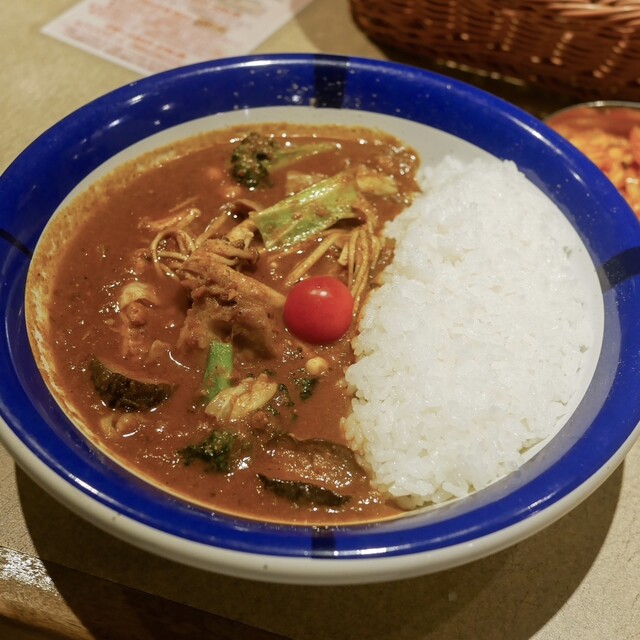
Approaching the Kanda Ogawamachi address, Jimbocho explains the meal before the first order: quick decisions, short waits, and food fitted between book hunting, office hours, and university routines. Tokyo curry thrives in neighbourhoods where a counter seat matters as much as a reservation book and price discipline keeps serious cooking within daily reach.
Curry Rice Senmon Ten Ethiopia Honten sits inside that tradition, not above it. The format is compact and repeatable: 41 seats over two floors, counter seating, take-out, no private rooms, and a JPY 1,000 to JPY 1,999 lunch and dinner band. In a city where high-end dining can turn access into theatre, this is another kind of Tokyo competence: one narrow category executed consistently enough for Tabelog Curry TOKYO “Tabelog 100” selection in 2019, 2020, 2023, and 2024, plus Tabelog Curry “Tabelog 100” in 2022.
Jimbocho curry belongs to the working-day meal, not the tasting-menu economy
Japanese curry in Tokyo occupies several lanes: nostalgic cafeteria, specialist counter, Indian-influenced, and Hokkaido-associated soup curry. Jimbocho and Kanda Ogawamachi reward the specialist lane because students, publishers, office workers, and shoppers expect speed without a disposable meal.
That is why ritual matters. A curry house in this bracket is judged by cadence as much as culinary vocabulary: enter, choose, eat, leave. Reservations are unavailable, placing the meal in Tokyo walk-in culture rather than appointment-only dining. Scale matters too: 41 seats moves people through while keeping the experience closer to a counter habit than a casual chain.
Against nearby curry peers such as Soup Curry Ya Oodori Chiyoda kandasurugadai ten, HINATA-YA, Curry Ya Banbi, and Koseto Coffee Ten, pricing sits in the same JPY 1,000 to JPY 1,999 band. For travellers, that shared bracket is useful: not a Tokyo splurge category, but serious competition, because diners can compare multiple curry addresses across the same few blocks and price range. Mikokoro Mutenka China 935, with dinner pricing in a higher band, belongs to another decision set, showing how sharply Jimbocho separates everyday specialist meals from planned dining.
The category listing also signals a hybrid identity: curry and Indian. Tokyo has absorbed curry through British naval routes, Japanese yōshoku kitchens, and South Asian restaurants, and specialist shops often sit between those references rather than declaring one allegiance. Here, practical signals matter most: vegetable focus, vegetarian options, children welcome, and take-out. They place the meal inside everyday Tokyo dining, where a solo diner, a parent, and two friends can use the same address without changing its purpose.
The etiquette is speed, cash, and a clear order
Tokyo’s casual specialist restaurants reward prepared diners. Payment here is cash-only: credit cards, electronic money, and QR code payments are not accepted. Parking is unavailable, so rail and foot are sensible. The location is close to Jimbocho Station, with Ogawamachi and Ochanomizu also within practical walking range, making it easy to fold into a Kanda or Jimbocho afternoon rather than treat as a cross-city dining appointment.
Hours run long enough for late lunch and early dinner, with Sunday closing earlier than weekday service. That schedule suits the area’s rhythm: weekdays carry the office-and-campus pulse; weekends bring readers, shoppers, and curry pilgrims moving between secondhand bookstores and cafés. Since June 11, 2017, smoking has been completely prohibited, aligning the room with modern Tokyo casual-dining comfort.
For travellers mapping a broader Tokyo eating day, this stop works between heavier plans rather than replacing them. A curry lunch here can precede yakitori at 124. KAGURAZAKA (Yakitori), a seafood-focused evening near Akihabara at . 鮪と炭火焼き うお炭 秋葉原店, or a later Shinjuku plan at 12/10 Shinjuku ten. For a sweeter detour, 2D Cafe belongs to another Tokyo mood, built around visual play rather than curry-house discipline.
Within curry, 3 Chome no Curry Ya San offers another city comparison. Beyond Tokyo, the same specialist logic appears in regional forms, from [Curry Senmon Ten] Maruyama Kyoju. in Sapporo to Japanese casual addresses abroad such as Jōdo Saké Bar in Los Angeles and Onigiri Time in Pasadena. These comparisons matter because curry, rice, sake, and onigiri show how Japanese food travels by format: counter meal, bar snack, lunch staple, or regional specialty.
Where it fits in a Tokyo itinerary
The strongest case for Curry Rice Senmon Ten Ethiopia Honten is not rarity but reliability inside a category Tokyo takes seriously. Tabelog’s repeated “Tabelog 100” selections give a credible public signal, but the better editorial point is how little ceremony the meal requires. No reservation, modest pricing, counter seating, and a central Chiyoda location suit travellers who want a Tokyo food day shaped by neighbourhood logic rather than reservation scarcity.
That logic fits Jimbocho itself: dense, practical, slightly academic, and rich enough in independent eating for a day of grazing. Travellers can use Our full Tokyo restaurants guide for a wider dining map, then balance meals with Our full Tokyo hotels guide, Our full Tokyo bars guide, Our full Tokyo wineries guide, and Our full Tokyo experiences guide. For onward Japan planning, the same editorial thread runs through -Grilled beef Sukiyaki- KAMAKURA TANUKIAN 鎌倉 たぬき庵 in Kamakura.cafe in Osaka.know in Kumamoto, (Shoku) Vietnam in Kawasaki, and [ki:] in Kyoto.
The editorial verdict is simple: this is a Tokyo curry address for diners who value category depth over spectacle. It belongs in a Jimbocho plan when the goal is to understand how the city eats between formal reservations, not when the goal is a long dining performance. Bring cash, expect a walk-in rhythm, and treat the meal as Tokyo intends: focused, efficient, and built around the bowl rather than ceremony.
At a Glance
Comparable venues for context, by category and price tier.
| Venue | Cuisine | Price | Notes |
|---|---|---|---|
| Curry Rice Senmon Ten Ethiopia HontenThis venue — the venue you are viewing | Chiyoda, Japanese curry house | $ | Not listed |
| Curry Ya Banbi | Not listed | $ | Chiyoda, Japanese curry & Indian curry izakaya |
| Kobiki Cho Yuzukamiya | Chūō, Traditional Soba & Tempura | $ | Not listed |
| Hagakure | Minato, Udon and curry udon izakaya | $ | Not listed |
| Ichijoryu Ganko Sohonke Bunke Yotsuya Arakicho | Shinjuku, Classic Japanese ramen counter | $ | Not listed |
| Murghee | Shibuya, Classic Japanese curry house | $ | Not listed |
Recognition history
Dated appearances from independent guides and award organizations, with the underlying list record or original source where available.
Tabelog 100 #46 · No. 46
Tabelog · Tabelog 100 - Curry - TOKYO - 2024










At a Glance
- Classic
- Cozy
- Lively
- Solo
- Casual Hangout
- After Work
- Group Dining
- Family
- Late Night
- Standalone
- Historic Building
Current opening hours
- Monday
- 10:10 AM–10 PM
- Tuesday
- 10:10 AM–10 PM
- Wednesday
- 10:10 AM–10 PM
- Thursday
- 10:10 AM–10 PM
- Friday
- 10:10 AM–10 PM
- Saturday
- 10 AM–10 PM
- Sunday
- 10 AM–9 PM
Hours can change for holidays and private events. Last verified .
A simple, no-frills two‑floor curry house with tightly packed counter and table seating, a casual bustle at peak times, and the feel of a classic Jimbocho neighborhood staple focused on flavor over decor.