

Michelin Plate
Our verdict
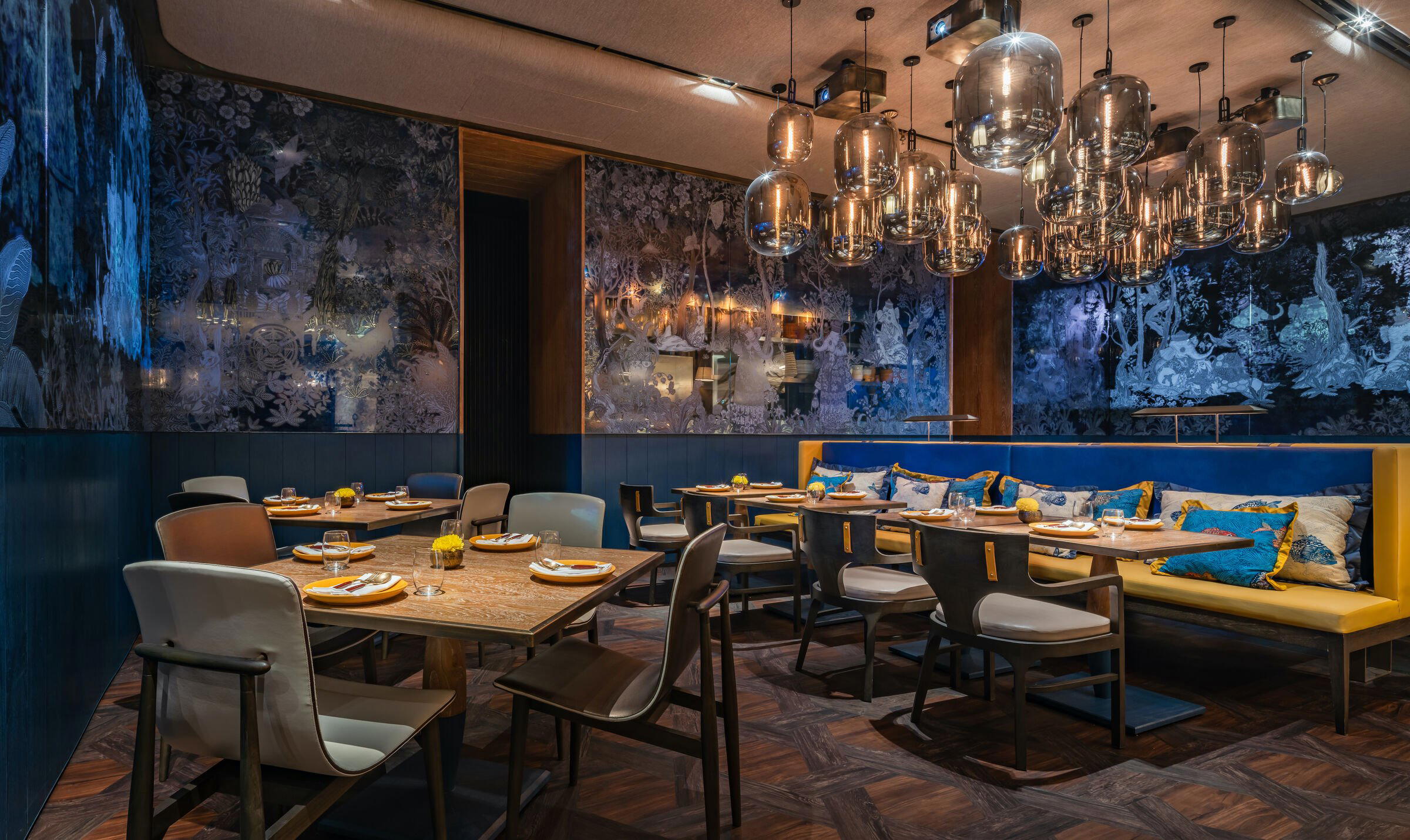
Among Phuket's mid-to-upper tier Thai dining rooms, Blue Elephant occupies an unusually formal position, a Michelin Plate holder since 2024 operating out of a restored colonial mansion in Phuket Town, where palace-tradition Thai cooking sits alongside a long-running culinary school.

Pearl is the En Primeur Club membership app, where members save venues, book tables and use the concierge.
The menu
What to order
- Massaman Lamb
- Peranakan Tumee King Mackerel
- Tom Yum Goong
Where Phuket Town's Colonial Architecture Meets Palace-Tradition Thai Cooking
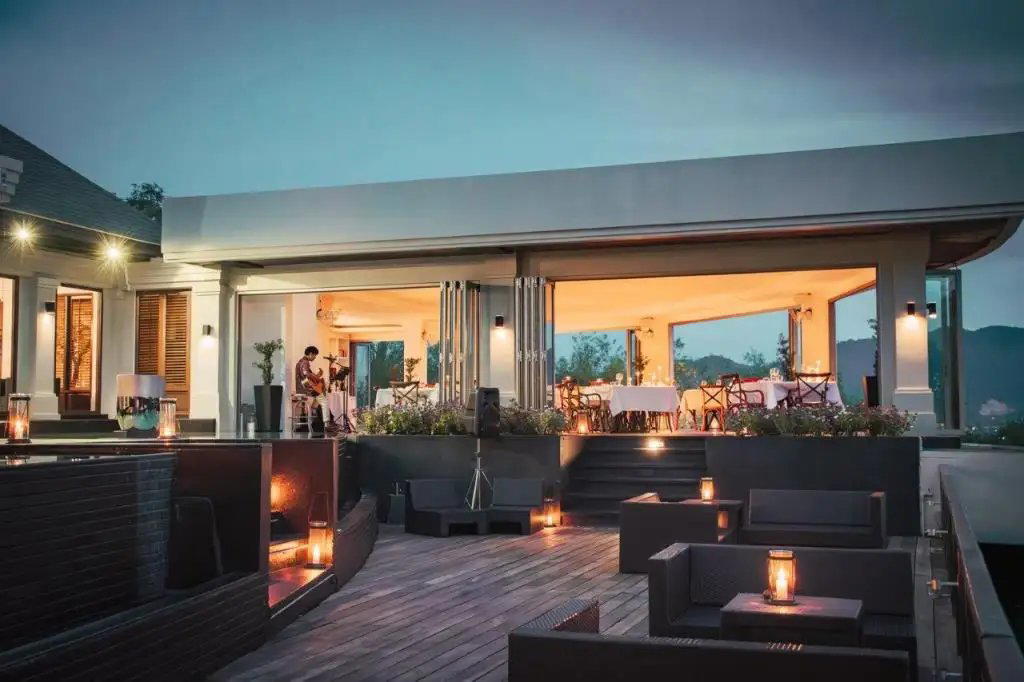
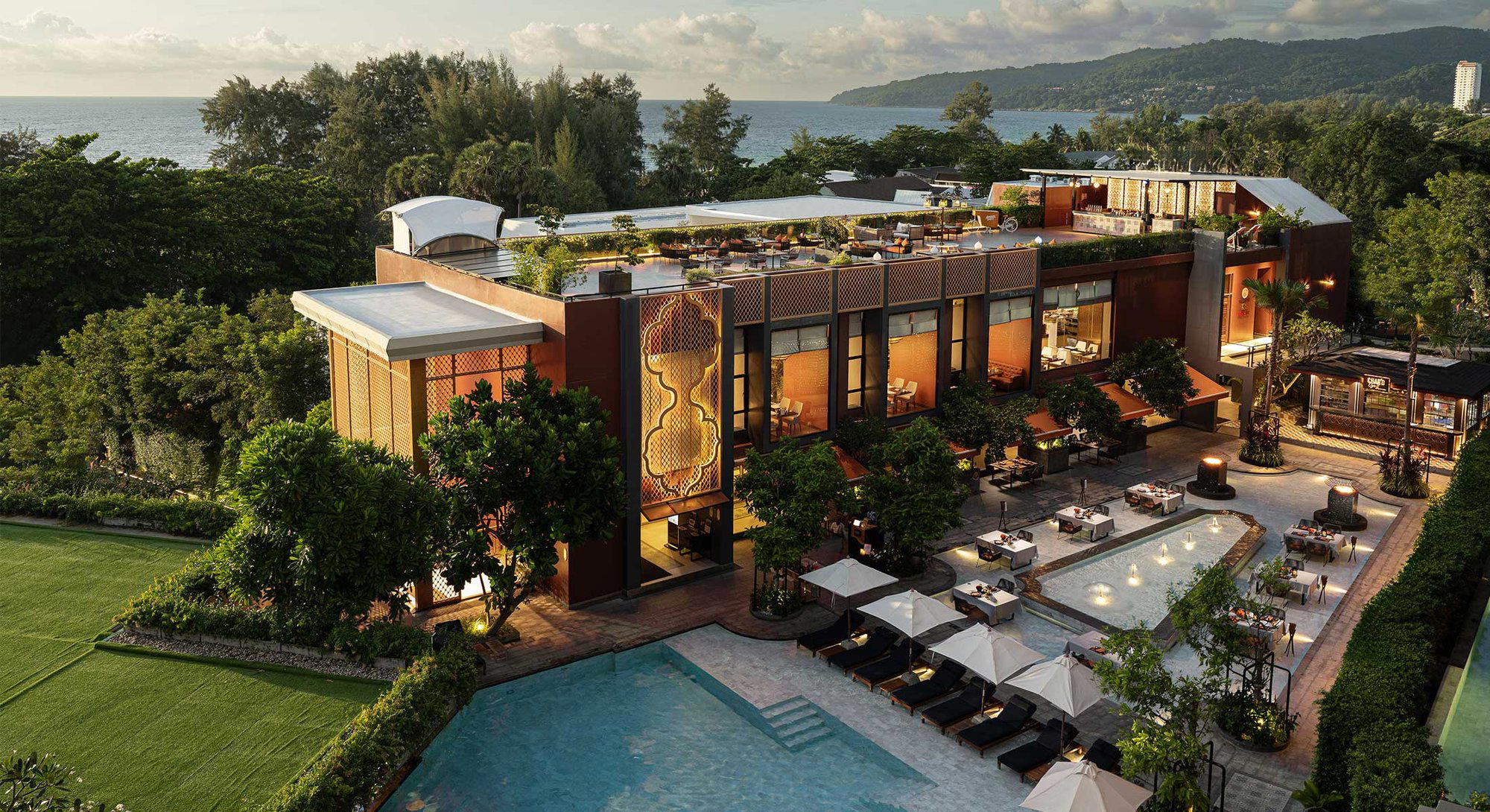
The older dining rooms of Phuket Town occupy a different register from the beach resort strips. On Krabi Road, in the Talat Nuea quarter, a nineteenth-century Sino-Portuguese mansion sets the physical scene for Blue Elephant: wide colonnaded facades, high-ceilinged rooms, and the kind of formal compound that signals something more ceremonial than casual. Thai fine dining has historically aligned itself with architectural gravity, royal and noble households once set the standard for presentation, recipe complexity, and service ritual, and the buildings that house serious Thai restaurants today still carry some of that weight. Blue Elephant's address in one of Phuket Town's preserved heritage structures places it squarely in that tradition.
Royal Thai Cuisine and the Question of Palace Tradition
The category of royal Thai cuisine is worth understanding on its own terms before assessing any individual restaurant. Palace cooking in Thailand developed inside the Siamese court as a distinct culinary discipline: dishes required elaborate preparation time, precise knife work on fruit and vegetable garnishes, and flavour profiles that balanced the five canonical tastes, sour, sweet, salty, bitter, and spicy, with an attention to finish that set them apart from street-level or home cooking. Recipes from this tradition were not widely published or taught; they passed through royal kitchens and the households of noble families, surfacing in the public dining world only gradually through the twentieth century.
Chef Nooror Somany Steppe, who heads the Blue Elephant operation, is associated with the effort to systematise and transmit that knowledge through both restaurant service and formal instruction. The culinary school component at the Phuket location reflects a wider pattern in Thai fine dining: restaurants positioned at the top of the regional market increasingly frame themselves as custodians of technique, not merely as places to eat. For context, Sorn in Bangkok holds two Michelin stars and places Southern Thai palace tradition at the centre of its identity; Samrub Samrub Thai in Bangkok and Nahm in Bangkok each approach historical Thai recipes from a research and documentation angle. Blue Elephant operates in a comparable conceptual space, with the added dimension of a teaching programme that makes the knowledge transfer explicit.
Recognition and Where Blue Elephant Sits in Phuket's Dining Tier
Phuket's restaurant scene divides fairly cleanly by price and format. At the entry level, places like Chuan Chim and Hong Khao Tom Pla offer direct Thai cooking at ฿ and ฿฿ price points. The upper tier, anchored by PRU with its Michelin star and ฿฿฿฿ pricing, applies European fine-dining structure to local ingredients. Blue Elephant occupies the ฿฿฿ bracket, which in Phuket means formal table service, multi-course menus, and a presentation standard that justifies the premium without reaching the experimental register of the starred houses.
The recognition profile is consistent with that positioning. A Michelin Plate in both 2024 and 2025 signals that the guide's inspectors find the cooking competent and worth recommending, without placing it in the starred tier where PRU operates. Opinionated About Dining, which applies a data-driven methodology and draws on a community of experienced reviewers rather than anonymous inspectors, ranked Blue Elephant among its leading restaurants in Asia in both 2023 and 2024, with a numerical rank of 417 in the 2024 edition.
For comparison at the same ฿฿฿ tier in Phuket's Thai dining segment, Baan Rim Pa Patong occupies clifftop dining in Patong with a similarly theatrical physical setting; Buabok represents another contemporarily minded approach to Thai cooking on the island. Each makes a different case for what formal Thai dining looks like in Phuket. Blue Elephant's case rests on heritage architecture, palace-lineage recipes, and the school's presence as an institutional commitment to craft transmission.
Southern Thai Context and the Broader Regional Picture
Southern Thai cuisine carries distinct characteristics that separate it from Central Thai palace cooking and from the northern traditions associated with Chiang Mai. The southern kitchen runs hotter, bird's eye chilli use is heavier, and coconut milk often appears in combination with shrimp paste and turmeric in ways that produce a more aggressive flavour profile than Bangkok's court dishes. For visitors coming from northern Thai experiences like Aeeen in Chiang Mai, the flavour shift is significant. Blue Elephant's location in Phuket, a southern province, puts the restaurant at the intersection of that regional heat and the refinement of palace tradition, which has historically softened and structured those raw southern ingredients into composed dishes.
Thailand's broader geography of serious Thai cooking extends well beyond Bangkok and Phuket. AKKEE in Pak Kret and Angeum in Phra Nakhon Si Ayutthaya represent provincial operations that draw on local culinary inheritance. Even further from the centre, Agave in Ubon Ratchathani signals that the country's restaurant culture has diversified well beyond its traditional capitals. In this wider map, Blue Elephant's Phuket outpost holds a specific node: southern province, heritage building, palace-method cooking, with a school that addresses the transmission problem directly.
Planning a Visit
Blue Elephant operates a consistent split-service schedule every day of the week: lunch runs from 11:30 am to 2:30 pm, and dinner from 5:30 pm to 10:00 pm. The address, 96 Krabi Road, Talat Nuea, in Phuket Town, places it within the old town heritage district, accessible by car or tuk-tuk from the main tourist zones. The ฿฿฿ price range positions it above the island's casual Thai mid-market but below the ฿฿฿฿ fine-dining ceiling; guests eating dinner here should budget accordingly for a multi-course meal. The culinary school operates separately from restaurant service and requires advance booking. Dress code and reservation details are best confirmed directly with the venue before arrival. Those building a broader Phuket itinerary can draw on our full Phuket restaurants guide, our full Phuket hotels guide, our full Phuket bars guide, our full Phuket experiences guide, and our full Phuket wineries guide for broader planning context. For those interested in a more informal Thai option in the same city, Gorjan offers an alternative price point and format. Visitors arriving via Samui might also consider The Spa in Lamai Beach as part of a wider southern Thailand itinerary.
Frequently asked questions
Where exactly is Blue Elephant?
Blue Elephant is located at 96 Krabi, Talat Nuea, Amphoe Mueang Phuket, Phuket 83000, Thailand, Phuket.
What are the operating hours at Blue Elephant?
Hours at Blue Elephant: Hours: Monday 11:30 am–2:30 pm, 5:30–10 pm Tuesday 11:30 am–2:30 pm, 5:30–10 pm Wednesday 11:30 am–2:30 pm, 5:30–10 pm Thursday 11:30 am–2:30 pm, 5:30–10 pm Friday 11:30 am–2:30 pm, 5:30–10 pm Saturday 11:30 am–2:30 pm, 5:30–10 pm Sunday 11:30 am–2:30 pm, 5:30–10 pm.
What kind of recognition has Blue Elephant received?
Blue Elephant has received recognition including: Michelin Plate (2025); Opinionated About Dining Top Restaurants in Asia Ranked #417 (2024); Michelin Plate (2024); Opinionated About Dining Top Restaurants in Asia Recommended (2023).
What's the signature dish at Blue Elephant?
The kitchen, associated with chef Nooror Somany Steppe, draws on palace-tradition techniques that prioritise refined presentation and layered aromatics over the bolder, heat-forward profile of Southern Thai street cooking. The 2025 Michelin Plate and consecutive OAD recognition since 2023 suggest consistent execution across the full menu rather than one standout preparation.
A Lean Comparison
| Venue | Cuisine | Price | Awards | Notes |
|---|---|---|---|---|
| Blue ElephantThis venue (the venue you are viewing) | Refined Southern Thai Fine Dining | $50–100 | Michelin Plate | Not listed |
| PRU | Modern Thai Fine Dining | $200–300 | 1 Michelin Star · Wine Spectator Award of Excellence | Thai, Modern Cuisine, ฿฿฿฿ |
| Acqua | Modern Italian Fine Dining | $50–100 | Michelin Plate · La Liste Top Restaurants | Italian, ฿฿฿฿ |
| Baan Rim Pa Patong | Royal Thai Cuisine | Not listed | Wine Spectator Award of Excellence | Thai |
| Chuan Chim | Thai-Chinese Seafood | $10–20 | Michelin Bib Gourmand | Thai, ฿฿ |
| Go Benz | Traditional Thai Pork Noodle Soup & Rice Porridge | $1–10 | Michelin Bib Gourmand | Asian, ฿ |
Recognition history
Dated appearances from independent guides and award organizations, with the underlying list record or original source where available.
Michelin Plate
Michelin
Opinionated About Dining Top Restaurants in Asia Ranked #417
Opinionated About Dining
Full recognition history (4 entries)
Michelin Plate
Michelin
Opinionated About Dining Top Restaurants in Asia Recommended
Opinionated About Dining
Blue Elephant
Featured Guides

Continue exploring
More in Phuket
Restaurants in Phuket
All restaurants in Phuket →
Bars in Phuket
All bars in Phuket →
Details
- Elegant
- Romantic
- Classic
- Scenic
- Intimate
- Sophisticated
- Date Night
- Special Occasion
- Celebration
- Family
- Group Dining
- Historic Building
- Garden
- Private Dining
- Extensive Wine List
- Local Sourcing
- Garden
- Tasting Menu
- A La Carte
- Vegetarian Friendly
Current opening hours
- Monday
- 11:30 AM–10 PM
- Tuesday
- 11:30 AM–10 PM
- Wednesday
- 11:30 AM–10 PM
- Thursday
- 11:30 AM–10 PM
- Friday
- 11:30 AM–10 PM
- Saturday
- 11:30 AM–10 PM
- Sunday
- 11:30 AM–10 PM
Hours can change for holidays and private events. Hours as of .
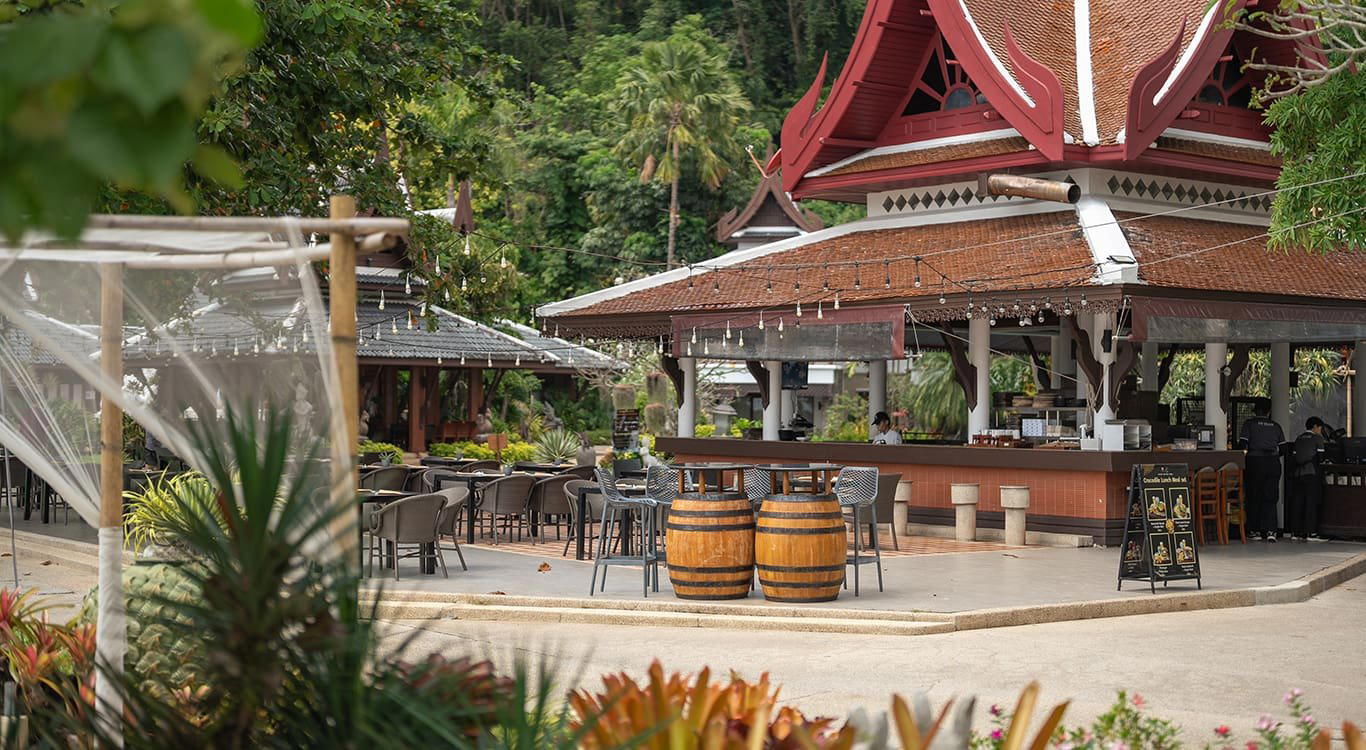
Elegant and inviting with beautiful decor, lanterns on banyan trees, cool veranda, and a calm oasis atmosphere enhanced by warm lighting.