Khan Farouk Tarab Cafe occupies a singular position in Doha's Katara Cultural Village, where Arabic tarab music tradition and cafe culture converge in an atmospheric setting near the amphitheatre. It represents a strand of Doha's hospitality scene that prioritises cultural immersion over fine-dining formality, offering an evening shaped by sound and setting as much as by what arrives at the table.
 Discover on Pearl
Pearl is the En Primeur Club membership app — saves, bookings, and concierge access live there. Same editors, same standards.
- Address
- Near Amphitheatre Katara Cultural Village, Qatar
- Phone
- +974 3998 8840
- Website
- khanfarouktarabcafe.com
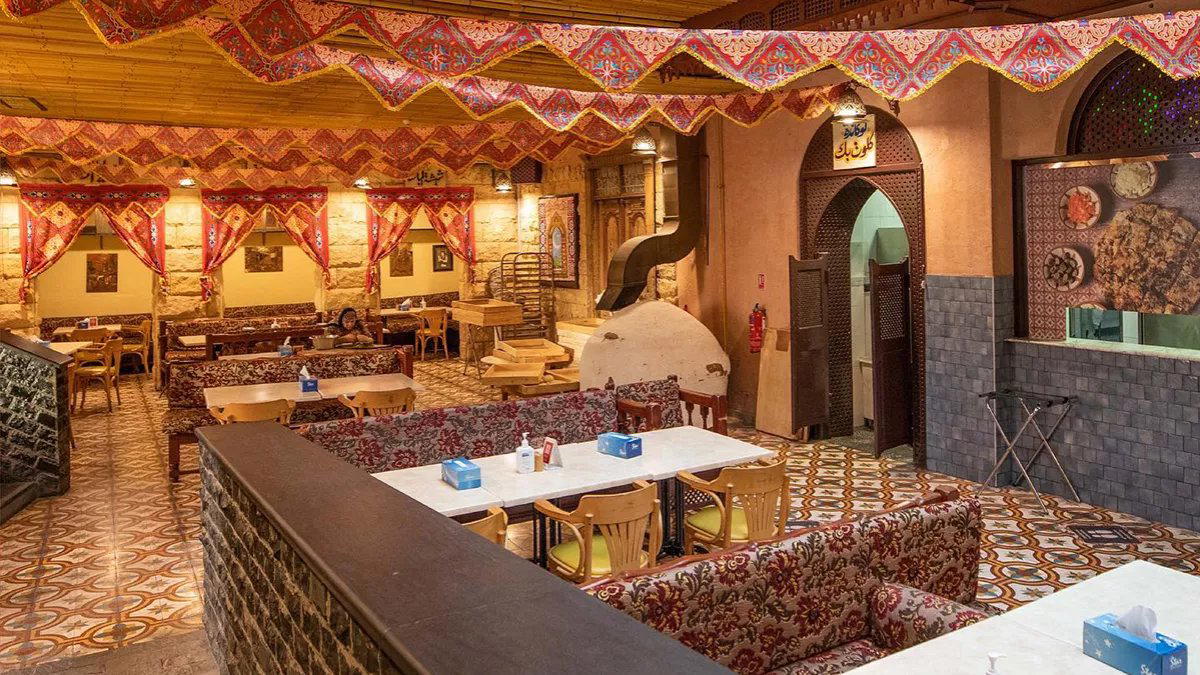
Sound as Atmosphere: Katara's Tarab Tradition
Approaching Katara Cultural Village after dark, the scale of Doha's investment in cultural infrastructure becomes apparent. The amphitheatre, the domed mosque, the ochre-toned facades lining the waterfront promenade, together they form a district that functions less like a leisure mall and more like a deliberate civic statement about Qatari identity. It is in this context that Khan Farouk Tarab Cafe makes sense as a destination.
Tarab, for those unfamiliar with the Arabic musical tradition, describes a state of emotional transport induced by music, specifically the kind of slow-building, modal Arabic song associated with mid-twentieth-century Cairo and Beirut. The term carries weight: it implies that the music and the listener enter a kind of mutual contract, and that the setting must support that exchange. Tarab here is not background music. The format signals that what happens aurally is load-bearing for the overall experience.
Doha's wider dining scene has split into recognisable tiers. At the leading sit internationally recognised addresses like IDAM by Alain Ducasse. In the middle range, concepts like Baron bring regional Middle Eastern cuisine to a more accessible price point. Khan Farouk Tarab Cafe occupies a different axis altogether: it is less about cuisine tier and more about cultural specificity.
The Katara Setting and What It Means for an Evening Here
Katara Cultural Village was developed as Qatar's primary venue for the arts, positioned on the northern edge of Doha between the diplomatic quarter and The Pearl. Its design draws on Islamic and Gulf architectural vernaculars, and its programming calendar runs from classical Arabic concerts to film screenings and international exhibitions. The amphitheatre near which Khan Farouk Tarab Cafe is located can seat several thousand people for large-scale performances.
Visiting on a night when the amphitheatre is active gives the surrounding streets a pedestrian energy that is rare in a city otherwise structured around the car. The sound of a tarab performance drifting from an open-air stage, the movement of people across the cultural village's courtyards, these are not incidental to the cafe experience but part of what the location was designed to deliver. Visitors who time an evening around the Katara calendar will find the setting working harder than on an ordinary midweek night.
Doha's cultural cafe format, of which Khan Farouk represents a strand, differs from what international visitors might associate with a cafe. In Gulf cities, the cafe as a social institution carries more ceremonial weight than its European counterpart. Long evenings, communal tables, tea and coffee rituals, the expectation that a sitting will extend rather than turn over quickly, these are the operating norms. Understanding that pacing before arriving will recalibrate expectations usefully.
How Khan Farouk Sits Within Doha's Arabic Music and Hospitality Scene
Doha has invested steadily in Arabic cultural programming since the mid-2000s, with Katara as one of the more sustained institutional expressions of that effort. A cafe operating under the tarab banner in this district is working with institutional backing rather than against institutional indifference, which gives it a different kind of durability than a standalone concept in a commercial strip. Comparable formats in Cairo or Beirut, cities with longer-established tarab cafe traditions, tend to be smaller and more informal; Doha's version carries the architectural seriousness of the cultural village as its backdrop.
For international visitors arriving via Hamad International Airport, Katara sits roughly fifteen to twenty minutes by car from the terminal, depending on traffic. It is accessible by taxi or ride-share without difficulty. Those exploring Doha's wider dining spread might also consider Al Liwan, Al Mourjan Restaurants, or Al Nahham for regional Gulf cuisine in more formally structured dining settings. Within Lusail, ALBA in Lusail represents a newer category of Doha dining that operates in the city's fast-expanding northern district.
The venue's position within Katara means it benefits from the cultural village's own event infrastructure. Qatar's cultural calendar intensifies in the cooler months between October and March, when outdoor events in the amphitheatre become practical, and that seasonal pattern shapes when a visit to Khan Farouk will deliver the fullest version of what it offers.
Internationally, venues that share a commitment to cultural programming as hospitality include Lazy Bear in San Francisco and Atomix in New York City, though both operate in the fine-dining register rather than the cultural cafe format.
Also worth consulting for context on how globally recognised dining programs intersect with cultural identity: HAJIME in Osaka and Reale in Castel di Sangro both demonstrate how a strong sense of place can anchor a dining concept more durably than cuisine category alone. Dal Pescatore in Runate, Quattro Passi in Marina del Cantone, and Atelier Moessmer Norbert Niederkofler in Brunico similarly show how location-as-identity functions across very different culinary traditions. Emeril's in New Orleans and Le Bernardin in New York City represent the more formally structured end of the hospitality spectrum. Carluccio's in Leabaib and Planet Hollywood operate in the more accessible, casual tier of Doha's food scene.
Practical Considerations
Khan Farouk Tarab Cafe is open daily from 9 AM to 12 AM, and reservations are recommended. Given its Katara location, the cultural village's management office or information kiosks on-site can direct visitors. Walk-in access is typical for Katara's cafe-format venues during regular programming hours, though event nights may draw larger crowds. Dress code expectations at Katara align with Qatar's general public standards, smart casual is appropriate and respectful of the cultural setting.
Similar Picks
Comparable venues nearby, for context on price, style, and recognition.
| Venue | Cuisine | Price | Notes |
|---|---|---|---|
| Khan Farouk Tarab CafeThis venue — the venue you are viewing | Authentic Egyptian | $$ | |
| Asherg | Middle Eastern Cafe | $ | Al Jasra |
| مطعم المجلس العربي - فرع منطقة السد | Lebanese & Middle Eastern | $$ | Al Saad |
| Al Nahham | Modern Lebanese Seafood | $$$$ | Banana Island |
| Liang at Mandarin Oriental, Doha | Authentic Cantonese | $$$$ | Msheireb Downtown |
| yugo | Asian Fusion | $$ | West Bay |
Continue exploring
More in Doha
Bars in Doha
Browse all →
At a Glance
- Classic
- Cozy
- Energetic
- Family
- Group Dining
- Casual Hangout
- Live Music
- Terrace
- Historic Building
Vibrant traditional Egyptian atmosphere with live band playing Arabic music, warm decor inspired by old Cairo, indoor non-smoking area and outdoor terrace.