

Michelin Plate · World's 50 Best #42
Our verdict
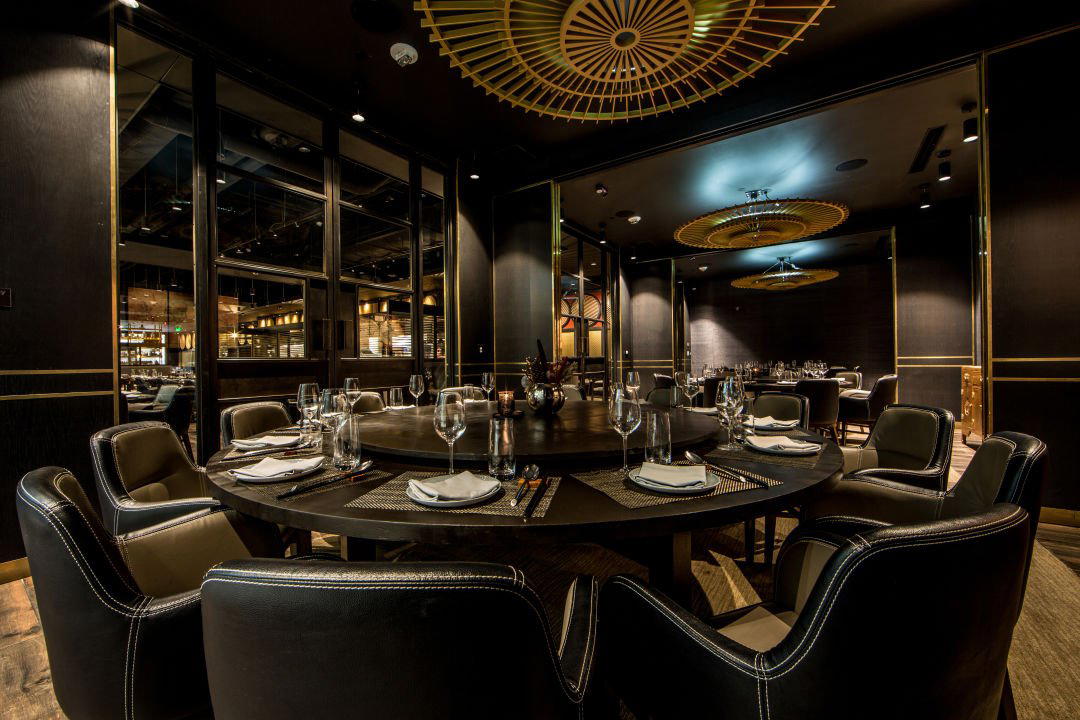
Baron occupies a pastel-pink building in Doha's redeveloped Mina District, bringing the Beirut original's approach to a room of exposed pipework and an open kitchen. The menu moves across the eastern Mediterranean and into North Africa, with generous sharing plates built around familiar aromatics pushed in less predictable directions. A 2025 Michelin Plate and a rank of 42 on the World's 50 Best Restaurants MENA 2024 list confirm its position in Doha's mid-to-upper dining tier.

Pearl is the En Primeur Club membership app, where members save venues, book tables and use the concierge.
The menu
What to order
- Roast cauliflower
- Brisket bao
- Chicken momos
Mina District and the Case for Port-Side Dining
Doha's Old Port precinct has attracted a run of serious restaurants since the Mina District redevelopment reshaped the waterfront, and the logic is direct: the area carries the kind of ambient history that newer commercial zones in the city lack. Baron arrived into this context as an extension of the Beirut restaurant of the same name, occupying a building that reads pink from the street and industrial inside, where exposed pipework runs above a dining room anchored by an open kitchen. That combination, heritage address plus contemporary interior language, has become a recognisable formula for ambitious Middle Eastern openings, but Baron earns its place in the district on the strength of what comes out of that kitchen rather than the property alone.
For comparison within Doha's dining tier, Baron sits at a ﷼﷼ price point, placing it well below the ﷼﷼﷼﷼ bracket occupied by addresses like IDAM by Alain Ducasse or Hakkasan, and roughly level with Jiwan, the city's other prominent Middle Eastern address in the same price range. That positioning matters: Baron is accessible enough to work as a regular dinner, but the 2025 Michelin Plate recognition and a rank of 42 on the World's 50 Best Restaurants MENA 2024 list signal that it is not operating at the casual end of that bracket.
The Aromatic Architecture of the Menu
Middle Eastern cooking at its most considered is a spice-forward tradition, and the aromatics do much of the structural work before a dish ever reaches the table. Za'atar, sumac, baharat, and saffron each function differently: za'atar brings herbal sharpness, sumac introduces a dry citric acidity, baharat layers warmth through a blend that typically includes allspice, cinnamon, and black pepper, and saffron contributes both colour and a faintly mineral sweetness. A kitchen that knows how to deploy these in sequence, rather than in accumulation, produces food that reads clearly even when the plate is complex.
Baron describes its menu as Mediterranean fusion, which in practice means the eastern Mediterranean baseline is extended with North African inflection and, selectively, with Asian technique. The capellini with crab and shrimp toum is the clearest example in the public record: toum is a Lebanese garlic emulsion with the texture of whipped butter and a clean, sharp finish, and pairing it with delicate pasta and seafood pulls the dish toward something that reads neither purely Levantine nor Italian, but is coherent on its own terms. Dishes are sized for sharing, which suits the sociable register that Beirut-lineage restaurants tend to favour. For readers curious how this approach compares across cities, the Middle Eastern sharing-plate format has found strong audiences in Bait Maryam in Dubai, Kismet in Los Angeles, and Ayat in New York City, each adapting the format to local context in ways that illuminate how transportable the tradition is.
The North African dimension in Baron's menu is worth noting as a separate point. Moroccan spicing tends to integrate ras el hanout and preserved citrus into slower-cooked preparations, which sits at an angle to the brighter, acid-forward profile of Levantine cooking. When a kitchen tries to hold both registers simultaneously, the risk is that neither reads clearly. The fact that Baron holds a Michelin Plate recognition suggests the kitchen manages that balance with enough discipline to satisfy assessors who look specifically at consistency and technique.
The Room and What It Signals
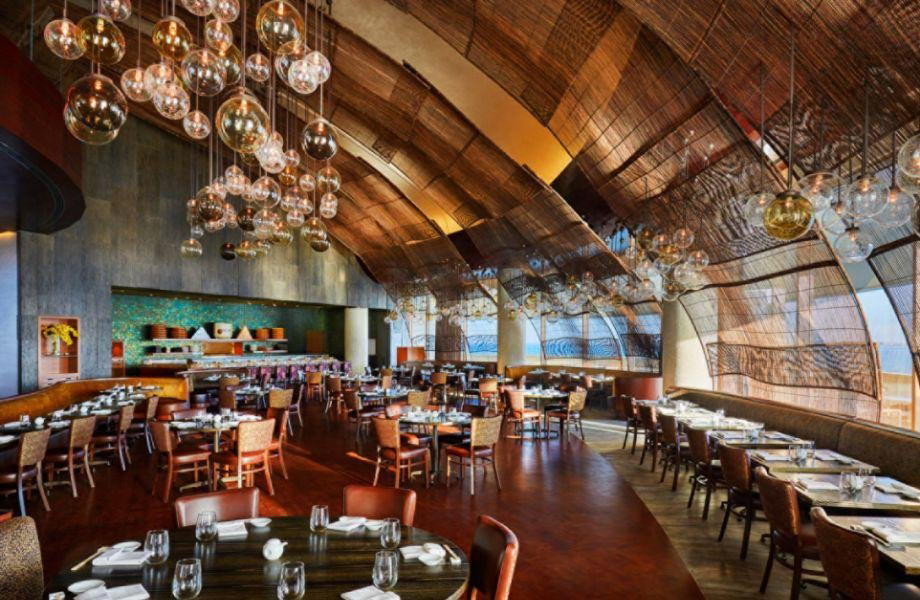
The open kitchen at Baron is not decorative. In restaurants where the kitchen is part of the dining room rather than hidden behind a door, the implicit contract with the diner shifts: cooking speed, noise, and the visible organisation of the brigade all become part of the experience. A large room with an open kitchen also signals that the kitchen is confident operating at volume, which is a different kind of discipline than the control required at a small counter. Baron is a large restaurant by the standards of Doha's mid-tier, and the exposed pipework aesthetic places it in a cohort of contemporary Middle Eastern openings that have moved away from the ornate interior grammar that older Gulf restaurants often favoured.
Mina District location adds logistical specificity for planning purposes. The Old Port area is accessible from central Doha but operates in a distinct neighbourhood rhythm, with the waterfront drawing a mix of residents, tourists, and the kind of business diners who want a setting that reads less corporate than the hotel restaurant alternatives. Baron's pastel-pink exterior is visible enough from the street to serve as its own landmark, which matters in a district where orientation can be imprecise for first-time visitors.
Where Baron Sits in Doha's Middle Eastern Dining Scene
Doha has developed a more varied Middle Eastern restaurant scene than the city's international hotel-restaurant reputation might suggest. Bayt Sharq, Saasna, SAWA by Sanad, and Desert Rose Café each approach the tradition from different angles, and collectively they represent a genuine local scene rather than a set of standalone imports. Baron's Beirut connection gives it a particular lineage: Lebanese restaurant culture has historically placed a strong emphasis on the social table, on abundance, and on the kind of cooking that is simultaneously precise and generous. That ethos translates well to a city like Doha, where the dining occasion tends to be extended and the table is rarely rushed.
For those working through the Middle Eastern dining spectrum across cities, it is worth noting that the format has proven adaptable in markets as different as Al Badawi in New York, Al Farah in Abu Dhabi, Adana in Los Angeles, and Adamá in Oaxaca. The through-line in each case is the aromatic framework: the spices travel, even when the context around them shifts considerably.
Combined with the Michelin Plate and the MENA 50 Best ranking, the picture is of a restaurant that performs reliably at a level above its price point, which in a city where the best of the market is very expensive, represents meaningful value.
Planning Your Visit
Given the MENA 50 Best ranking and the Michelin recognition, Baron draws visitors who are working through Doha's serious dining options as well as residents who return regularly. A reservation is advisable, particularly on weekends, when the Mina District in general sees higher foot traffic. The ﷼﷼ price range makes this a realistic option for multiple visits rather than a once-per-trip occasion. For a fuller picture of where Baron fits within the city's wider offering, our full Doha restaurants guide maps the scene across price tiers and neighbourhoods. Visitors planning a broader trip will also find useful orientation in our Doha hotels guide, our Doha bars guide, our Doha wineries guide, and our Doha experiences guide. Baron also pairs naturally with Astoria Seafood in New York as a reference point for how seafood and Middle Eastern-adjacent traditions intersect in very different urban settings.
Frequently asked questions
Do I need a reservation for Baron?
Given Baron's Michelin Plate recognition in 2025 and its #42 ranking on the MENA 50 Best list, demand is consistent enough that booking ahead is sensible, particularly on weekends. The Mina District draws both Doha residents and visiting diners working through the city's more serious dining options, so walk-in availability is not guaranteed.
What's Baron best at?
Baron's strength is the breadth and coherence of its Mediterranean fusion menu, which pulls from North African and Asian influences without losing its Levantine centre of gravity. The open kitchen and the scale of the room suit group dining and sharing formats, making it one of the more socially-oriented entries in Doha's MENA 50 Best cohort.
Cuisine Context
| Venue | Cuisine | Price | Awards | Notes |
|---|---|---|---|---|
| BaronThis venue (the venue you are viewing) | Mediterranean Fusion | $50–100 | Michelin Plate · World's 50 Best #42 | Not listed |
| IDAM by Alain Ducasse | Contemporary French Mediterranean with Arabian influences | $50–100 | 1 Michelin Star · World's 50 Best #44 | French, French Contemporary, ﷼﷼﷼﷼ |
| Argan | Authentic Moroccan | $20–30 | Michelin Bib Gourmand | Moroccan, ﷼ |
| Hakkasan | Modern Cantonese | $100–150 | Michelin Plate | Chinese, ﷼﷼﷼﷼ |
| Jiwan | Modern Qatari Fine Dining | Not listed | Michelin Bib Gourmand | Middle Eastern, ﷼﷼ |
| Morimoto | Contemporary Japanese Fusion | $100–150 | Michelin Plate · Wine Spectator Award of Excellence | Japanese, Sushi, Japanese Contemporary, ﷼﷼﷼ |
Recognition history
Dated appearances from independent guides and award organizations, with the underlying list record or original source where available.
Michelin Plate
Michelin
World's 50 Best MENA's Best Restaurants #42
World's 50 Best
Full recognition history (3 entries)
Michelin Plate
Michelin
Baron
Featured Guides
Continue exploring
More in Doha
Restaurants in Doha
All restaurants in Doha →
Bars in Doha
All bars in Doha →
Details
- Modern
- Cozy
- Trendy
- Group Dining
- Date Night
- Family
- Casual Hangout
- Open Kitchen
- Terrace
- Waterfront
- Waterfront
- Street Scene
- A La Carte
- Small Plates
- Vegetarian Friendly
Current opening hours
- Monday
- 5 PM–3 AM
- Tuesday
- 5 PM–3 AM
- Wednesday
- 5 PM–3 AM
- Thursday
- 5 PM–3 AM
- Friday
- 5 PM–3:30 AM
- Saturday
- 5 PM–3 AM
- Sunday
- 5 PM–3 AM
Hours can change for holidays and private events. Hours as of .
Bright airy dining room with natural light, exposed pipework, rustic modern industrial elements, and cozy terrace overlooking the harbor.