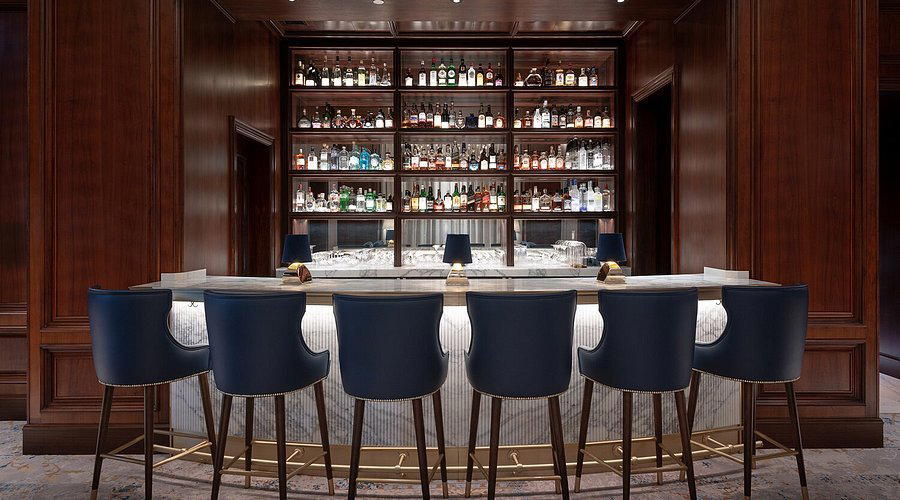
Nobu Doha on Diplomatic Street brings the globally recognised Japanese-Peruvian format to Qatar's capital, where international dining circuits and local appetite for high-end hospitality intersect. The cocktail programme follows the brand's established technical playbook, pairing Japanese spirits and citrus-forward structures with the kitchen's nikkei flavours. For Doha, it occupies a specific tier: international name recognition with a local address.
Pearl is the En Primeur Club membership app — saves, bookings, and concierge access live there. Same editors, same standards.
- Address
- Diplomatic St, Doha, Qatar
- Phone
- +974 4494 8500
- Website
- fourseasons.com
- Directions
- Get directions
 Saves & bookings on Pearl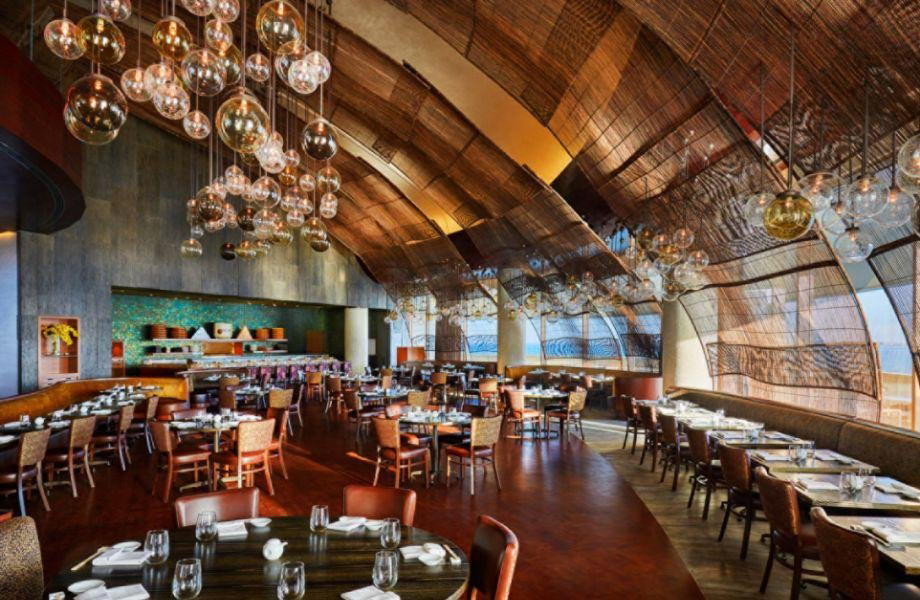
Where the Nikkei Tradition Lands in Doha
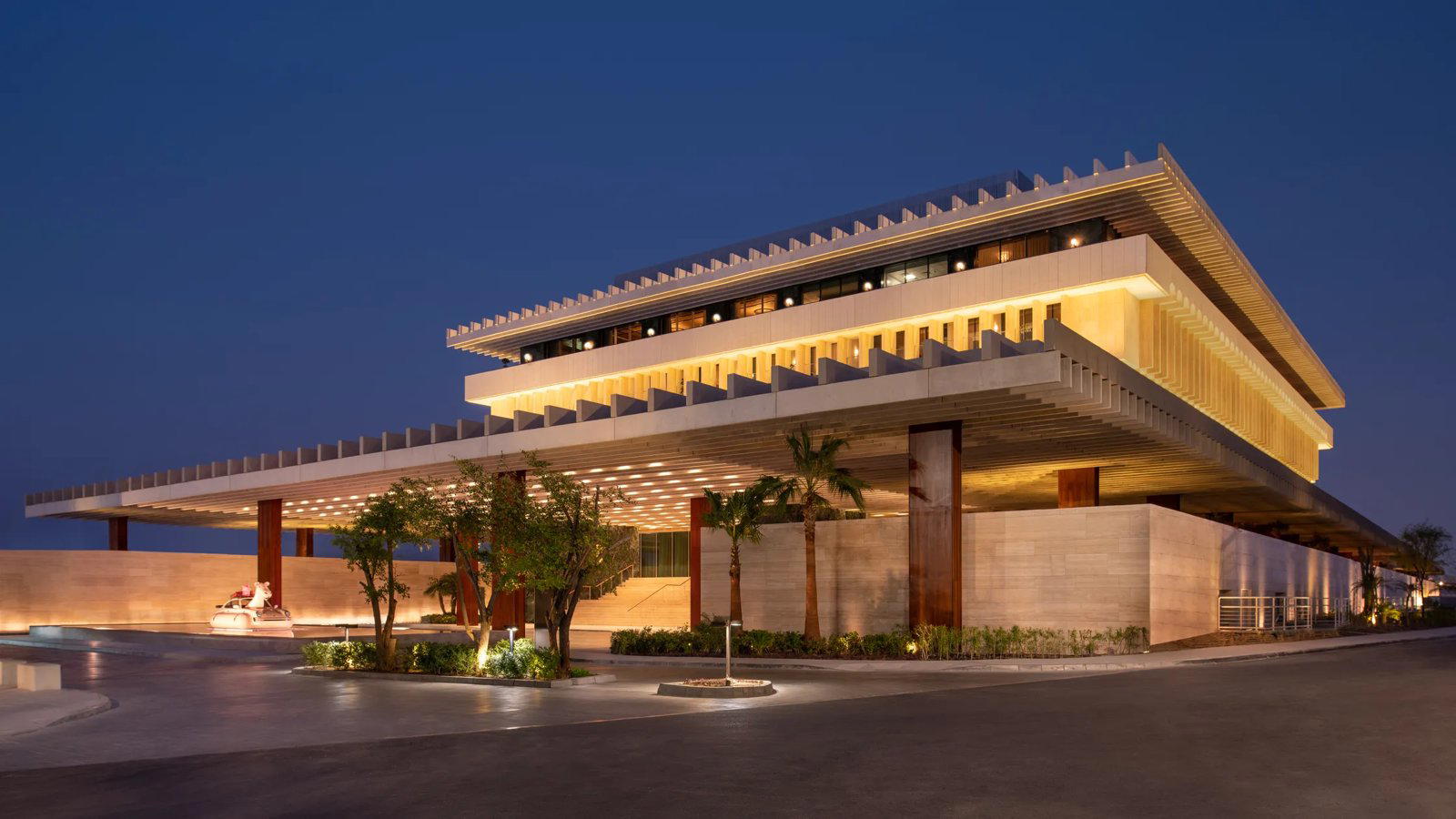
Diplomatic Street in Doha is not a restaurant row in any conventional sense. It is a corridor of embassies, institutional architecture, and a handful of high-end hospitality addresses that have accumulated around Qatar's international infrastructure over the past decade. Arriving at Nobu here, the environment reads less like a casual drop-in and more like a deliberate destination, the kind of address you confirm before leaving the hotel rather than stumbling upon. That positioning is intentional and consistent with how the Nobu brand operates globally: it places itself in proximity to wealth and diplomatic traffic, whether in London's Mayfair, Los Angeles, or now Doha.
The Nobu format, built around the nikkei culinary tradition that fuses Japanese technique with Peruvian ingredients and acidic structures, is by now one of the most replicated upscale dining models on the planet. Nobu Matsuhisa's original collaboration with Robert De Niro in New York in 1994 established a template that has since expanded across more than fifty locations. What matters editorially is not the origin story but what that global consistency means for a market like Doha, where diners range from Qatari nationals and long-term Gulf expatriates to international visitors navigating a city that has compressed decades of hospitality development into roughly fifteen years.
The Cocktail Programme as Entry Point
Across the Nobu network, the bar programme has become an increasingly serious part of the proposition. The brand's cocktail identity leans on Japanese whisky, yuzu, sake-based builds, and a general preference for clean, citrus-forward structures that echo the kitchen's acid-driven cooking. That coherence between bar and kitchen is rarer than it sounds. Many global restaurant brands treat the cocktail list as an afterthought; Nobu has, at most of its locations, maintained a programme that functions as a genuine companion to the food rather than a separate profit centre.
In a market like Doha, where the cocktail culture is still developing relative to cities like Singapore or London, a technically grounded programme from an international brand carries particular weight. Bars such as The Cellar represent Doha's local craft ambitions, but for visitors arriving with Nobu familiarity, the bar here offers a known reference point in unfamiliar territory. The yuzu-inflected sours and sake-based aperitivo-style builds that appear across Nobu menus globally are not accidental; they reflect a deliberate positioning of Japanese flavour logic within accessible Western cocktail formats.
For context on what a technically disciplined cocktail programme looks like at the global level, it is worth mapping Nobu's bar approach against venues that have defined category standards in their respective cities: 28 HongKong Street in Singapore, Kumiko in Chicago, and 69 Colebrooke Row in London each represent what happens when a bar programme is treated as primary rather than supplementary. Nobu's approach sits in a different register, volume-driven and brand-consistent rather than artisanal and singular, but it is not unserious.
Nobu in the Context of Doha's International Dining Circuit
Doha's upscale dining sector divides broadly into two cohorts: hotel-anchored international brands, and a smaller set of independent or regionally developed concepts. Nobu sits firmly in the first category. That is not a criticism; in a city where infrastructure for standalone fine dining is still consolidating, the hotel-and-brand model provides reliability of execution and a clear service standard that independent operators sometimes struggle to match without the institutional support.
The nikkei format itself travels well. Its flavour logic, built on soy, citrus, chilli heat, and clean fish preparation, maps onto Gulf palates with less friction than, say, heavily reduced European sauces or fermented Nordic preparations. That adaptability is part of why Nobu has expanded as aggressively as it has across the Middle East and Asia. In Qatar specifically, the timing aligns with a broader moment: post-2022 World Cup, the city retains expanded international hospitality infrastructure and a visitor base that is gradually becoming less event-driven and more year-round.
For a broader picture of where Nobu sits within Doha's full dining and bar circuit, our full Doha restaurants guide maps the city's categories and price tiers in more detail.
The Bar as Comparative Benchmark
One of the more instructive exercises for understanding Nobu Doha's cocktail programme is to place it against what cocktail ambition looks like in other international cities. Bar Leather Apron in Honolulu and Jewel of the South in New Orleans both operate as destination bars with deep local identity, built around place and provenance. Julep in Houston takes a regional ingredient approach; Superbueno in New York City applies Latin-American flavour logic to a technically precise format. The Parlour in Frankfurt on the Main, 1806 in Melbourne, and 1930 in Milan each represent the kind of bar-as-institution model that takes years of local credibility to build.
Nobu does not compete with these venues on those terms. What it offers instead is consistency: a cocktail language that is legible to an international traveller regardless of whether they are arriving from Tokyo, London, or New York. In Doha, where a significant portion of high-spending diners are transient rather than locally rooted, that legibility has genuine value.
Planning a Visit
Nobu Doha is located on Diplomatic Street, an address that requires a car or taxi rather than a walk from central Doha's commercial districts. The venue sits within the bracket of Doha's premium international dining addresses, meaning a multi-course dinner with cocktails will register at the higher end of the city's restaurant pricing. For visitors with familiarity across the Nobu network, the experience will feel calibrated and consistent; for first-timers to the brand, the nikkei format rewards approaching the menu as a coherent system of flavours rather than a collection of standalone dishes. The bar is a reasonable entry point on its own terms, particularly in the earlier part of the evening before the dining room reaches full capacity. Reservations at this level of the market are advisable regardless of the night, and Doha's international visitor patterns mean weekends and event periods compress availability faster than the address might suggest.
At a Glance
- Elegant
- Sophisticated
- Trendy
- Lively
- Date Night
- Celebration
- Special Occasion
- Rooftop
- Waterfront
- Panoramic View
- Hotel Bar
- Lounge Seating
- Outdoor Terrace
- Craft Cocktails
- Sake
- Waterfront
- Skyline
Current opening hours
- Monday
- 6 PM–12 AM
- Tuesday
- 6 PM–12 AM
- Wednesday
- 6 PM–12 AM
- Thursday
- 6 PM–12 AM
- Friday
- 1–4 PM, 6 PM–12 AM
- Saturday
- 1–3:30 PM, 6 PM–12 AM
- Sunday
- Closed
Hours can change for holidays and private events. Last verified .
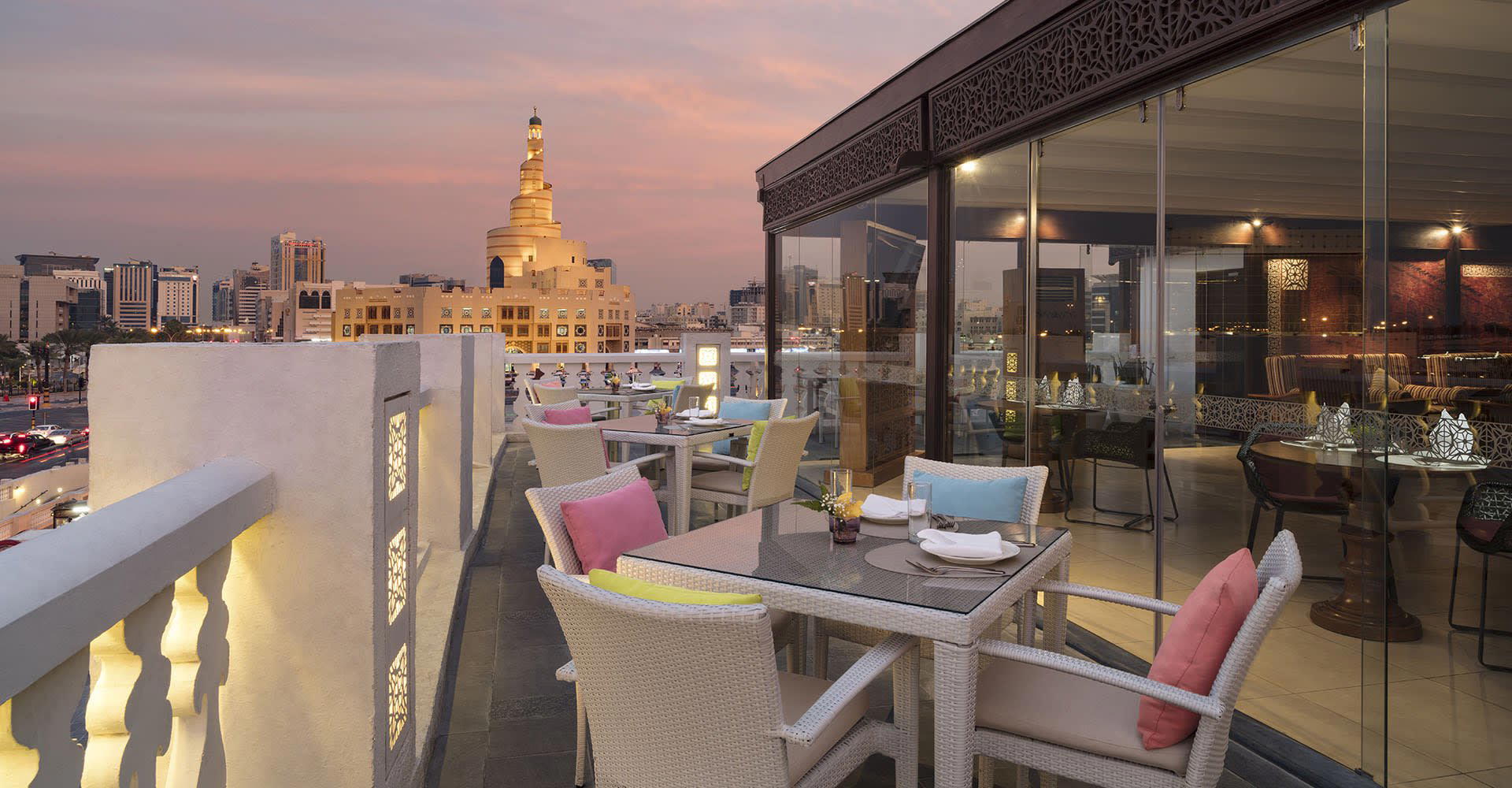
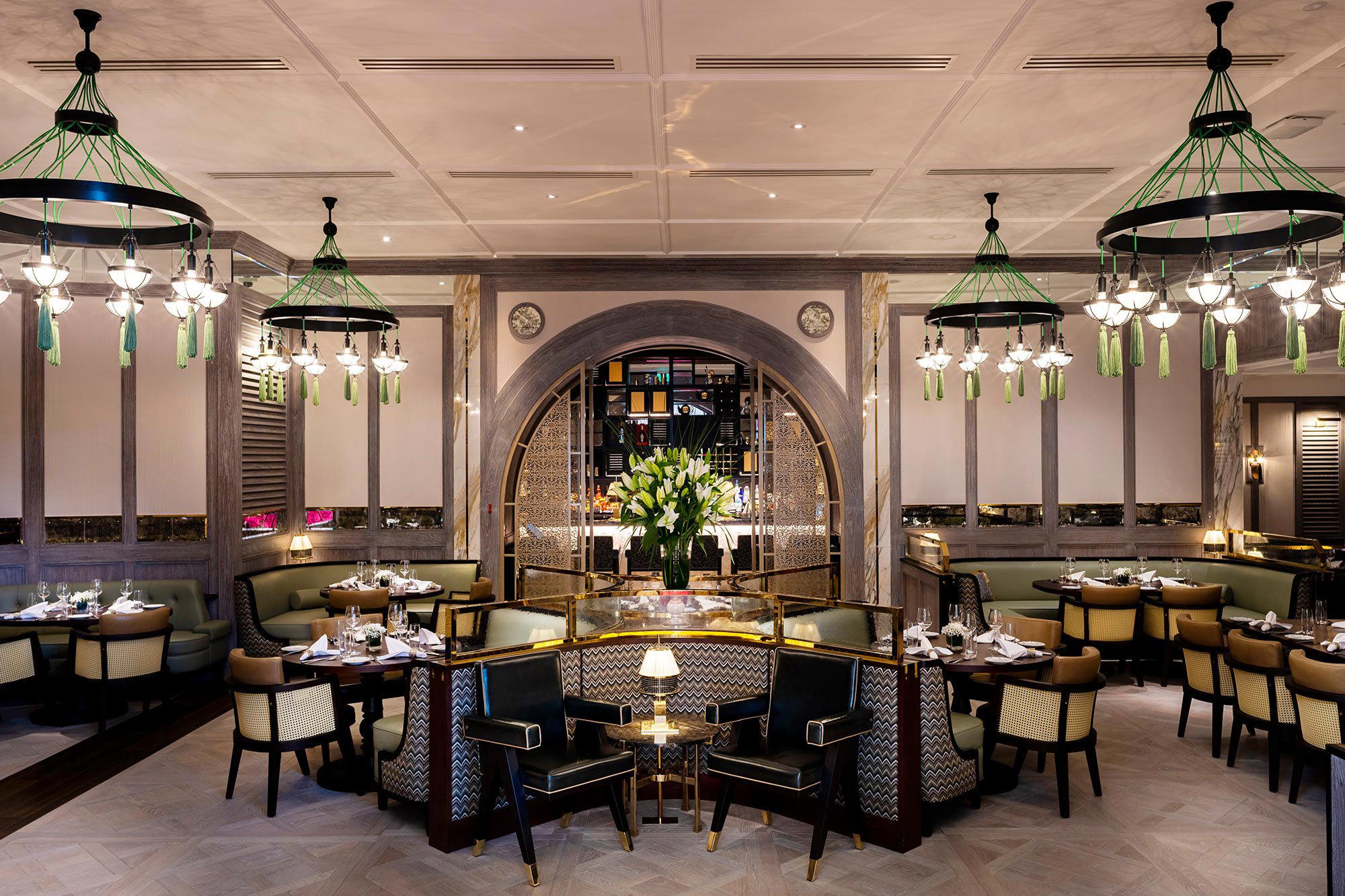
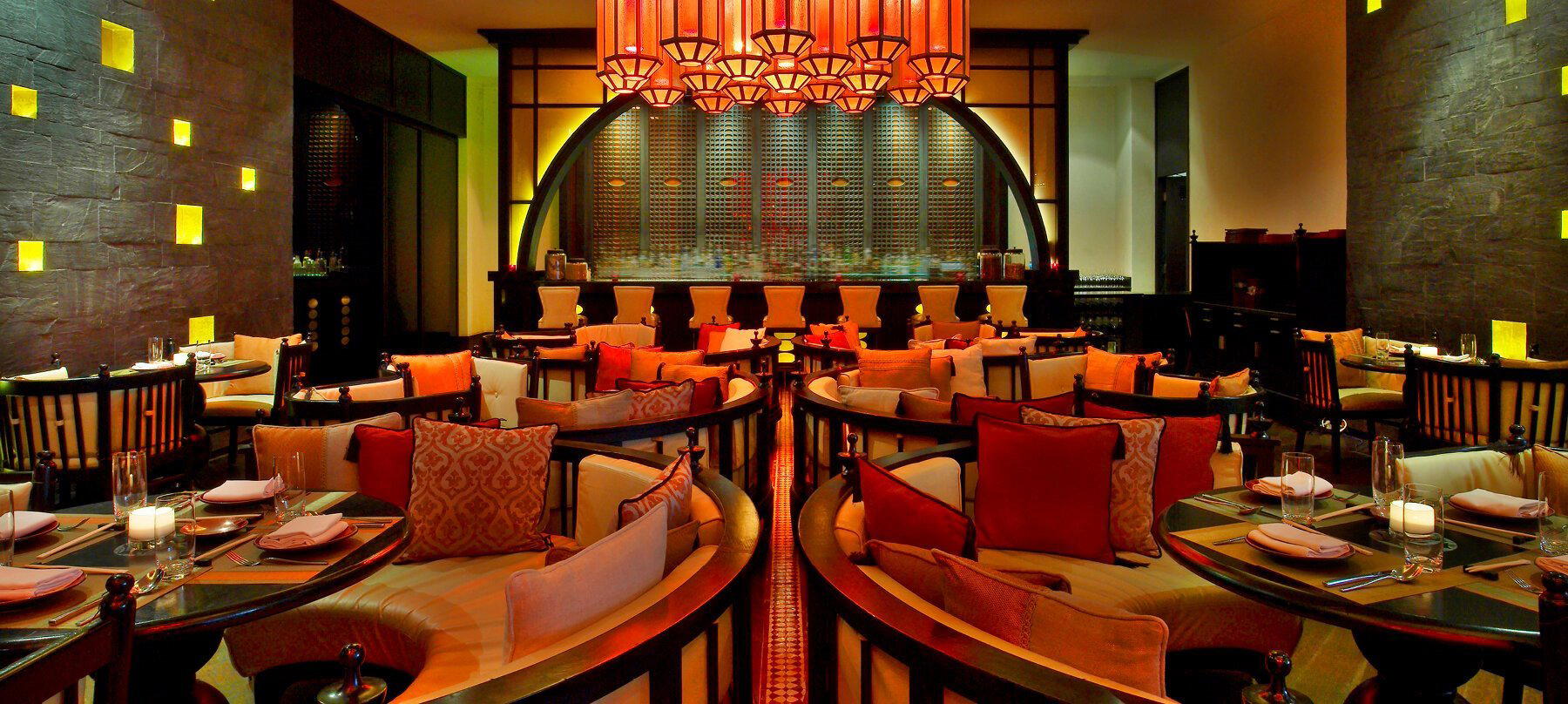
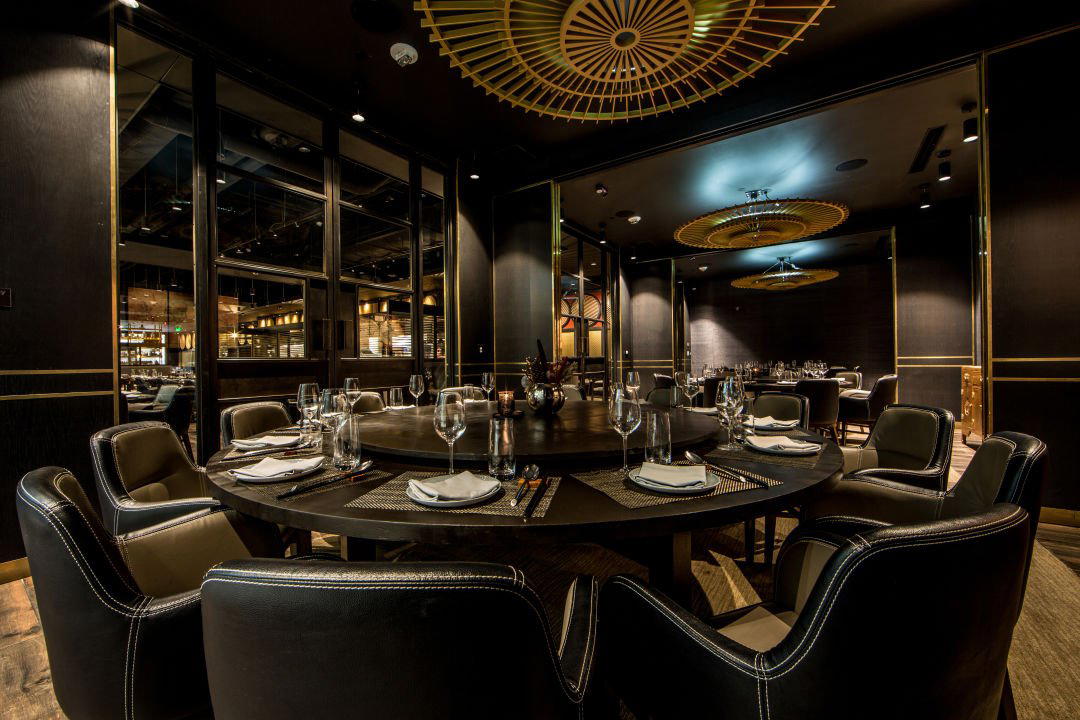
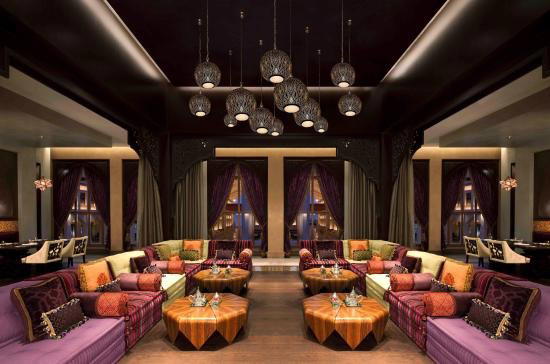
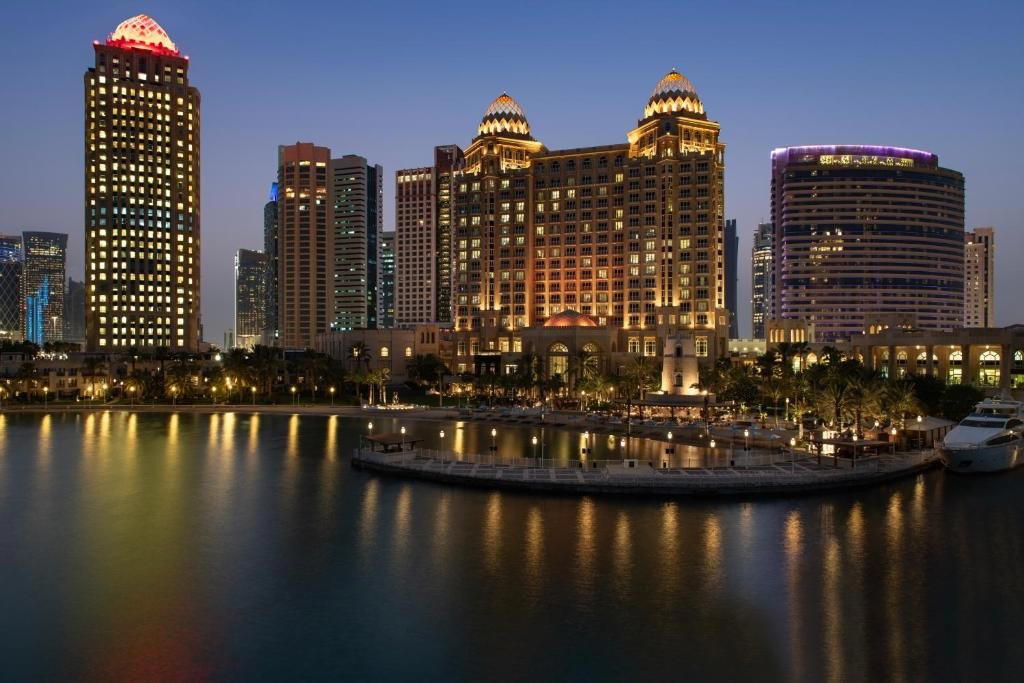
Lively and sophisticated with dark intimate interiors, metallic accents, and dramatic waterfront skyline views from the rooftop.
Know Before You Go
- Getting there
- Diplomatic St, Doha, Qatar