
Michelin Plate
Our verdict
Liang at Mandarin Oriental, Doha occupies a considered position within Msheireb Downtown Doha, bringing Chinese fine dining to one of the Gulf's most architecturally significant new districts. The restaurant sits within a hotel group whose global properties have consistently anchored premium dining programmes across Asia and the Middle East. Advance reservations are advisable given the hotel's profile among international visitors and Doha's corporate dining circuit.

Pearl is the En Primeur Club membership app — saves, bookings, and concierge access live there. Same editors, same standards.
- Address
- Barahat Msheireb Street, Msheireb Downtown Doha, الدوحة
- Phone
- +974 4008 8555
- Website
- mandarinoriental.com
- Directions
- Get directions
- Booking
- Book on SevenRooms
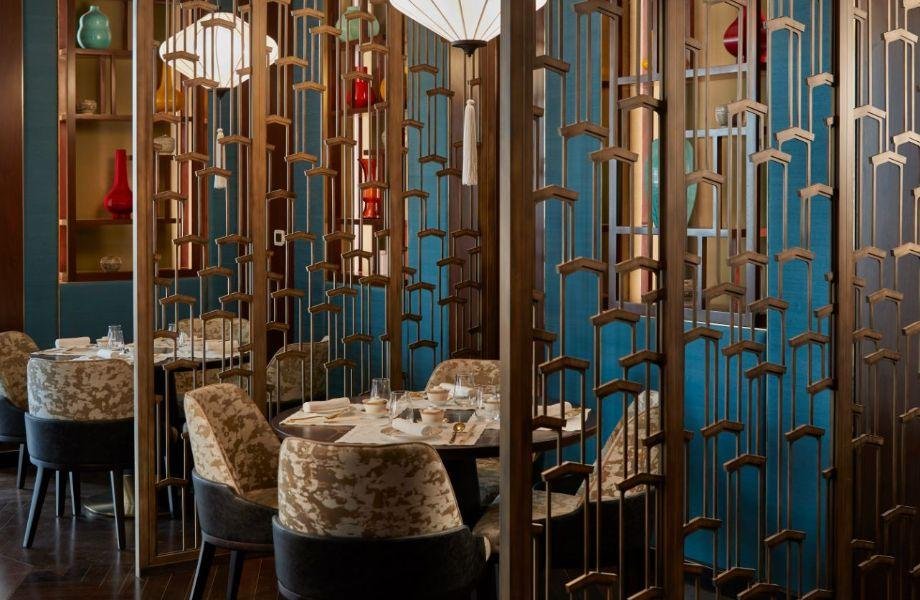
Chinese Fine Dining in the Gulf's Newest District
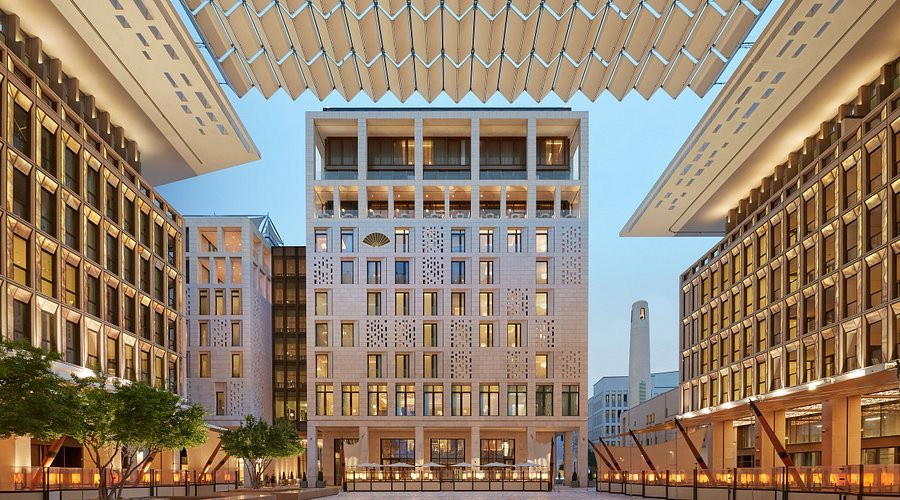
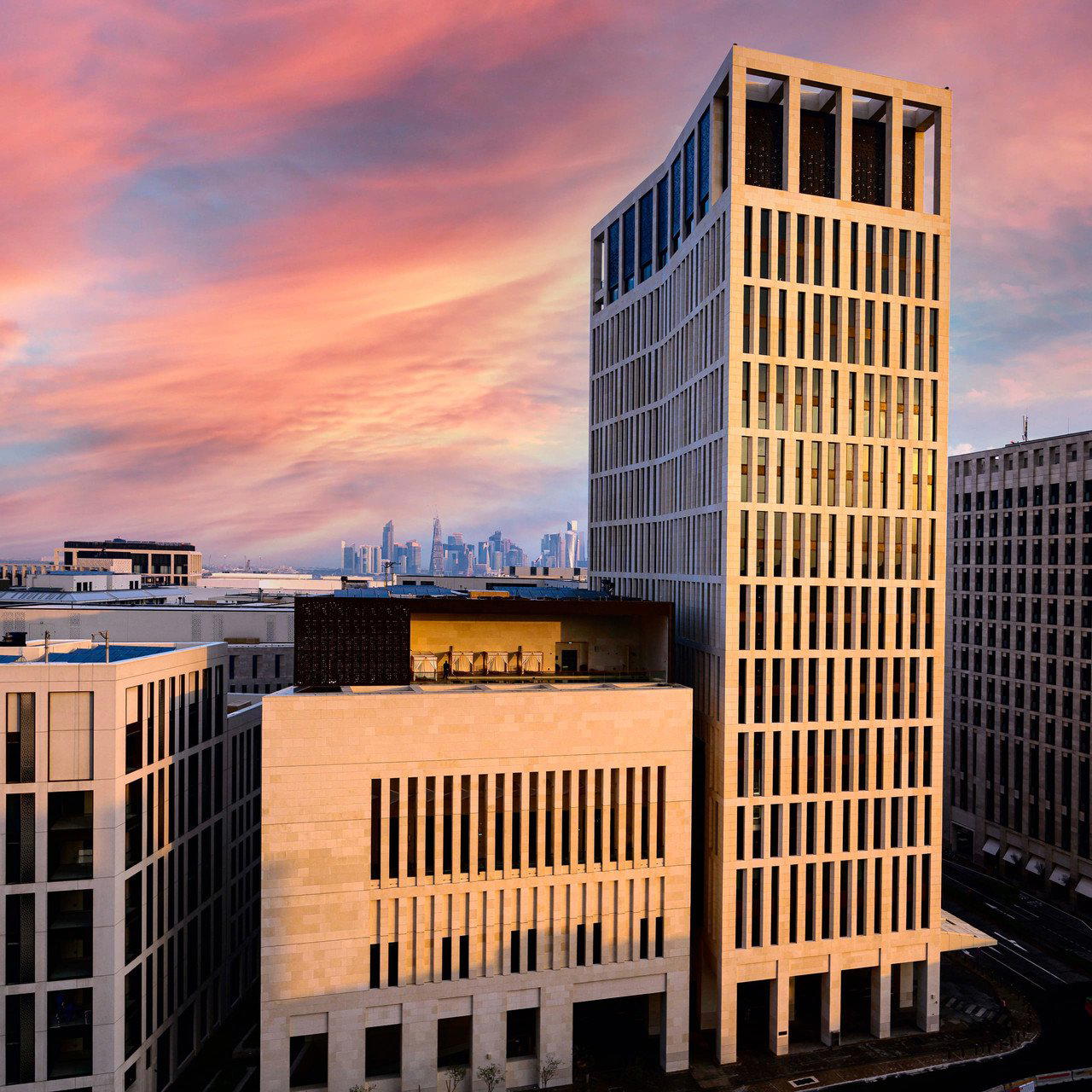
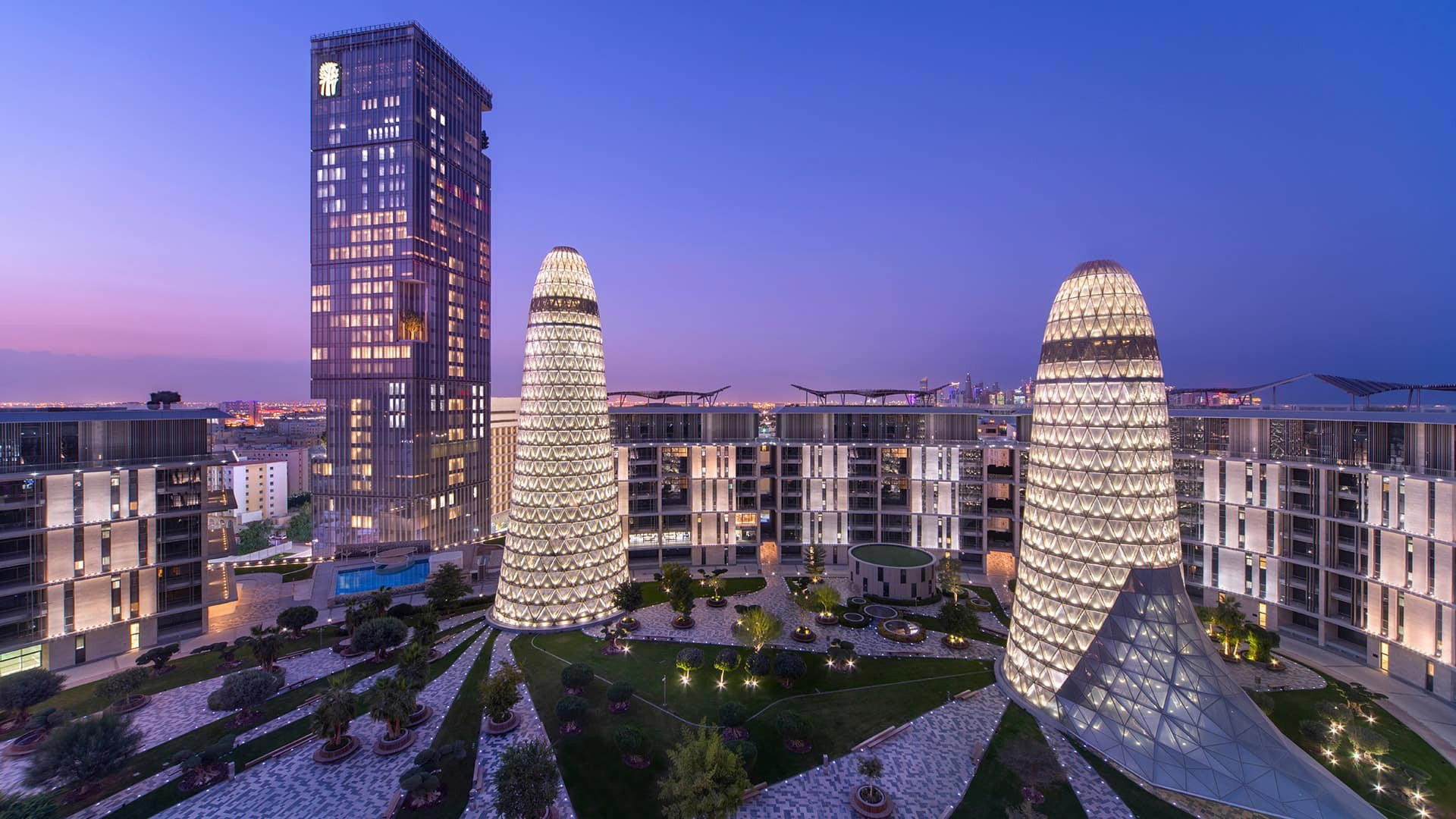
Msheireb Downtown Doha represents something relatively rare in contemporary Gulf urbanism: a large-scale regeneration project that deliberately draws on local architectural vernacular rather than erasing it. The district, which replaced an older neighbourhood near the historic heart of the city, was designed to reconnect Doha's centre with its pre-oil urban fabric. Arriving at Barahat Msheireb Street, you encounter that tension between preservation instinct and ambition in physical form — covered walkways, warm stone facades, and a street scale that feels considered rather than speculative. Liang, occupying its position within the Mandarin Oriental here, inherits that context.
A Cuisine Category with Weight in This Region
Chinese fine dining has established a distinct tier across Gulf cities over the past decade, and the trajectory is worth understanding before assessing any individual entry in that field. In Doha specifically, the premium Chinese category has grown alongside the broader internationalisation of the city's restaurant market, driven by a combination of expatriate demand, corporate hospitality, and a hotel sector that has used signature restaurant concepts to anchor its food and beverage identity. Hakkasan's presence in Doha, priced at the top of the market (﷼﷼﷼﷼), set a reference point for what the category could charge and deliver. Liang, operating under the Mandarin Oriental name, enters that conversation with significant inherited credibility: the hotel group's Chinese restaurant programmes in Hong Kong and across Asia have historically been benchmarks against which regional outposts are measured.
The Mandarin Oriental group's approach to Chinese dining across its properties tends toward Cantonese-leaning menus with emphasis on premium ingredients, refined technique, and a format that can serve both long business lunches and formal evening occasions. That dual function matters in Doha, where the corporate dining circuit runs parallel to leisure hospitality, and where a restaurant's ability to satisfy both without compromising either is a practical competitive advantage. For a frame of reference on what this looks like at the group's highest expression, the standards achieved at properties like 8 1/2 Otto e Mezzo Bombana in Hong Kong and Amber in Hong Kong give a sense of the dining seriousness the Mandarin Oriental brand expects in its key markets.
Where It Sits in Doha's Dining Architecture
Doha's premium restaurant market has stratified considerably since the mid-2010s, sorting itself into a handful of distinct tiers. At the leading, flagship hotel restaurants with internationally recognised chef partnerships or brand names command the highest covers and the most reliable corporate spend. IDAM by Alain Ducasse, positioned at ﷼﷼﷼﷼, represents that summit in the French contemporary register. Below that, a mid-luxury band of hotel and standalone restaurants serves the broader professional class and visiting leisure travellers. Liang, by virtue of its hotel affiliation and the Mandarin Oriental's consistent global positioning, occupies the upper portion of that structure.
For diners constructing a broader itinerary across the city, the contrast with Doha's established Arabic and regional dining is instructive. Al Nahham and Al Liwan represent the local and Levantine tradition at a different register entirely, while Baron sits in the Middle Eastern fine dining space that has grown significantly in ambition in recent years. Al Sufra at Marsa Malaz Kempinski offers a comparison point for hotel dining across a different neighbourhood. Liang's value to a Doha dining itinerary is its specific category contribution: Chinese technique at hotel-luxury execution in a district that has few comparable options nearby.
Msheireb itself lacks the restaurant density of The Pearl or West Bay, which means Liang functions partly as a neighbourhood anchor rather than a competitive choice within a saturated block. That positioning has practical implications: the walk-in prospects here may be slightly better than at comparable restaurants in higher-traffic zones, though dinner service on weekends, particularly during the cooler months between October and April when Doha's dining culture is most active, will still reward a reservation made in advance.
The Cultural Logic of Cantonese Dining at This Address
Cantonese cuisine, which forms the probable backbone of any Mandarin Oriental Chinese restaurant programme, carries a specific set of cultural assumptions worth understanding. It is a cuisine built around restraint in seasoning and deference to ingredient quality, particularly in its premium expressions — live seafood, aged proteins, precise steaming and roasting techniques that show craft through subtlety rather than complexity of composition. In the Gulf context, that approach lands differently than it might in Hong Kong or Singapore, where the reference points are immediate and deeply embedded. In Doha, it functions more as an international luxury register, understood and valued by the large professional expatriate community and by Qatari diners with international travel experience, but read primarily through the hotel luxury frame rather than the cultural specificity frame.
That distinction shapes what the dining experience means in this context. You are not eating Cantonese food as a cultural practice rooted in place; you are eating it as a precision craft delivered by a hotel group with the infrastructure to source ingredients and train kitchen teams to a consistent international standard. Whether that framing diminishes or merely repositions the experience is a question worth sitting with. The answer depends largely on what you are looking for. For a broader perspective on how Chinese fine dining performs across international luxury hotel programmes, the Mandarin Oriental's track record across Asia provides useful orientation.
Planning Your Visit
Liang sits within the Mandarin Oriental at Barahat Msheireb Street in Msheireb Downtown Doha, making it most convenient for guests staying in the hotel and for those already spending time in the district's cultural and retail precincts. The Msheireb area is accessible from central Doha via the metro, with Msheireb Station on the Gold Line serving the district directly, which simplifies arrival considerably compared to many of the Pearl or West Bay restaurant options that require a car or taxi for the final stretch.
Doha's dining season peaks between October and April, when temperatures allow outdoor movement and the city's events calendar drives significant visitor numbers. During that window, and particularly around major sports or cultural events, hotel restaurants at this level see strong demand from both in-house guests and outside diners. For evening visits during peak months, a reservation is the sensible approach. For weekday lunches or visits in the summer months, the rhythm is quieter.
For a wider sweep of where to eat across the city before or after your visit, the full Doha restaurants guide covers the range from hotel flagships to neighbourhood finds. If you are building an itinerary across districts, Koo Madame in Lusail offers a different register in a different part of the city, while Carluccio's in Leabaib covers the casual Italian end of the spectrum for lower-key evenings.
Frequently asked questions
How do I find Liang at Mandarin Oriental, Doha?
Liang at Mandarin Oriental, Doha is located at Barahat Msheireb Street, Msheireb Downtown Doha, الدوحة, Doha.
How does Liang at Mandarin Oriental, Doha fit into the broader Chinese fine dining scene in the Gulf?
Chinese fine dining has carved out a distinct tier across Gulf cities over the past decade, with Cantonese-led programmes at international luxury hotel groups setting the benchmark. Liang sits within that category at the Mandarin Oriental in Msheireb Downtown Doha, a regeneration district designed to position itself as a counterpoint to Doha's newer waterfront developments. The address places it among a small number of hotel-anchored Chinese restaurants in Qatar operating at the upper end of the market, where cooking standards are reinforced by the group's broader reputation across Asia and the Middle East.
What do regulars order at Liang at Mandarin Oriental, Doha?
Liang operates within the Mandarin Oriental group's Chinese dining programme, which typically anchors around Cantonese cooking — meaning dim sum at lunch and roasted or steamed preparations at dinner are the formats that define how regulars use the room. The Msheireb Downtown location draws both hotel guests and a local clientele familiar with Chinese fine dining across the Gulf circuit.
Do they take walk-ins at Liang at Mandarin Oriental, Doha?
Walk-in availability at Liang depends on the day and season, and Doha's hotel dining rooms tend to fill quickly during the October-to-April peak when the city hosts its densest calendar of international events. Securing a reservation in advance is the practical approach, particularly for dinner on weekends. For the most current availability, contact the Mandarin Oriental Doha directly via the hotel's main reservations line, as no independent booking link for Liang is confirmed at this time.
Cost Snapshot
A quick peer list to put this venue’s basics in context.
| Venue | Cuisine | Price | Awards | Notes |
|---|---|---|---|---|
| Liang at Mandarin Oriental, DohaThis venue — the venue you are viewing | Authentic Cantonese | $100–150 | Michelin Plate | Not listed |
| IDAM by Alain Ducasse | Contemporary French Mediterranean with Arabian influences | $50–100 | 1 Michelin Star · World's 50 Best #44 | French, French Contemporary, ﷼﷼﷼﷼ |
| Argan | Authentic Moroccan | $20–30 | Michelin Bib Gourmand | Moroccan, ﷼ |
| Hakkasan | Modern Cantonese | $100–150 | Michelin Plate | Chinese, ﷼﷼﷼﷼ |
| Jiwan | Modern Qatari Fine Dining | Not listed | Michelin Bib Gourmand | Middle Eastern, ﷼﷼ |
| Morimoto | Contemporary Japanese Fusion | $100–150 | Michelin Plate · Wine Spectator Award of Excellence | Japanese, Sushi, Japanese Contemporary, ﷼﷼﷼ |
Recognition history
Dated appearances from independent guides and award organizations, with the underlying list record or original source where available.
Michelin Plate
Michelin
Full recognition history (3 entries)
Michelin Plate
Michelin
Michelin Plate
Michelin
Continue exploring
More in Doha
Bars in Doha
Browse all →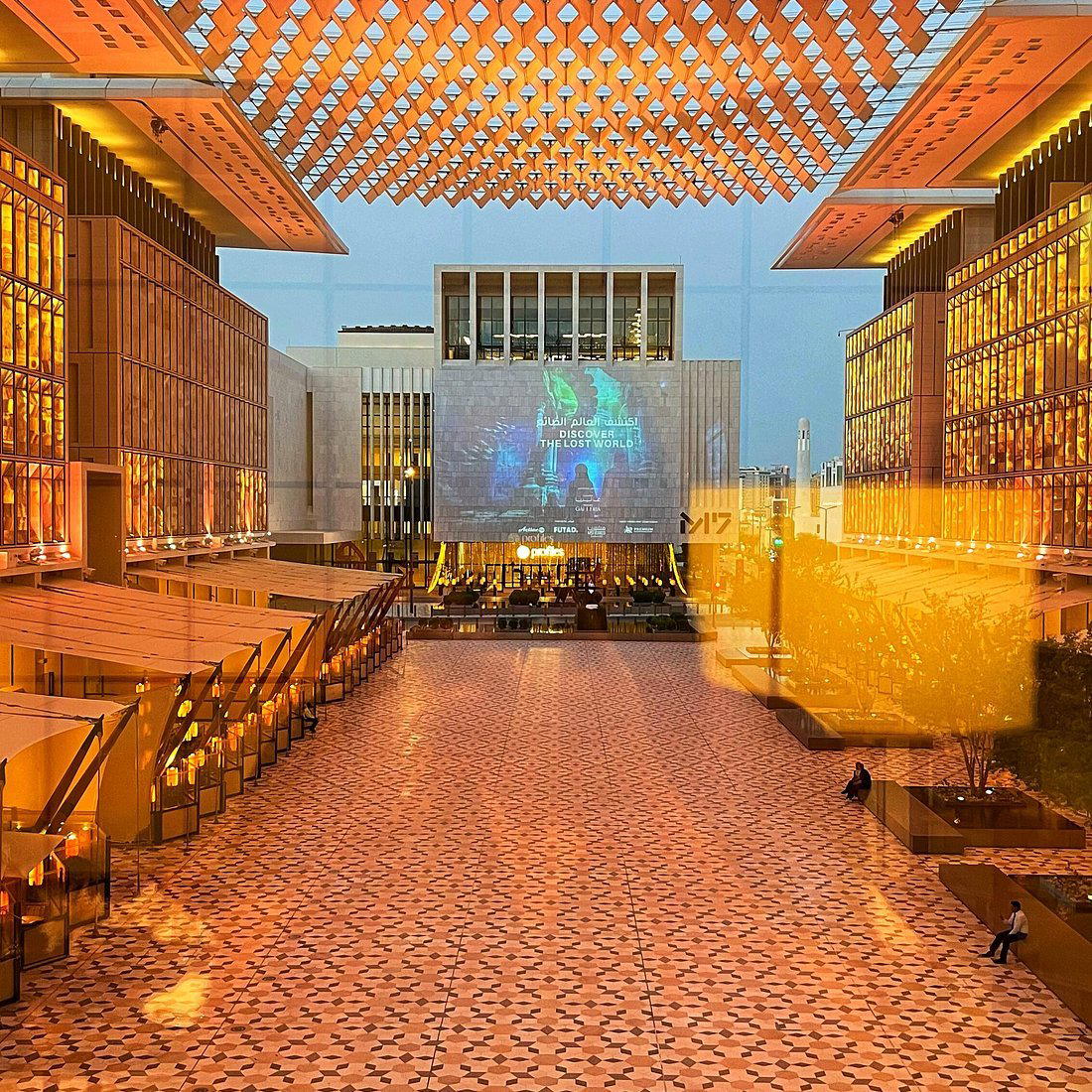
Liang at Mandarin Oriental, Doha
The wine
- Wine program
- Curated wine list
Details
- Elegant
- Sophisticated
- Modern
- Intimate
- Business Dinner
- Special Occasion
- Brunch
- Hotel Restaurant
- A La Carte
- Small Plates
- Vegetarian Friendly
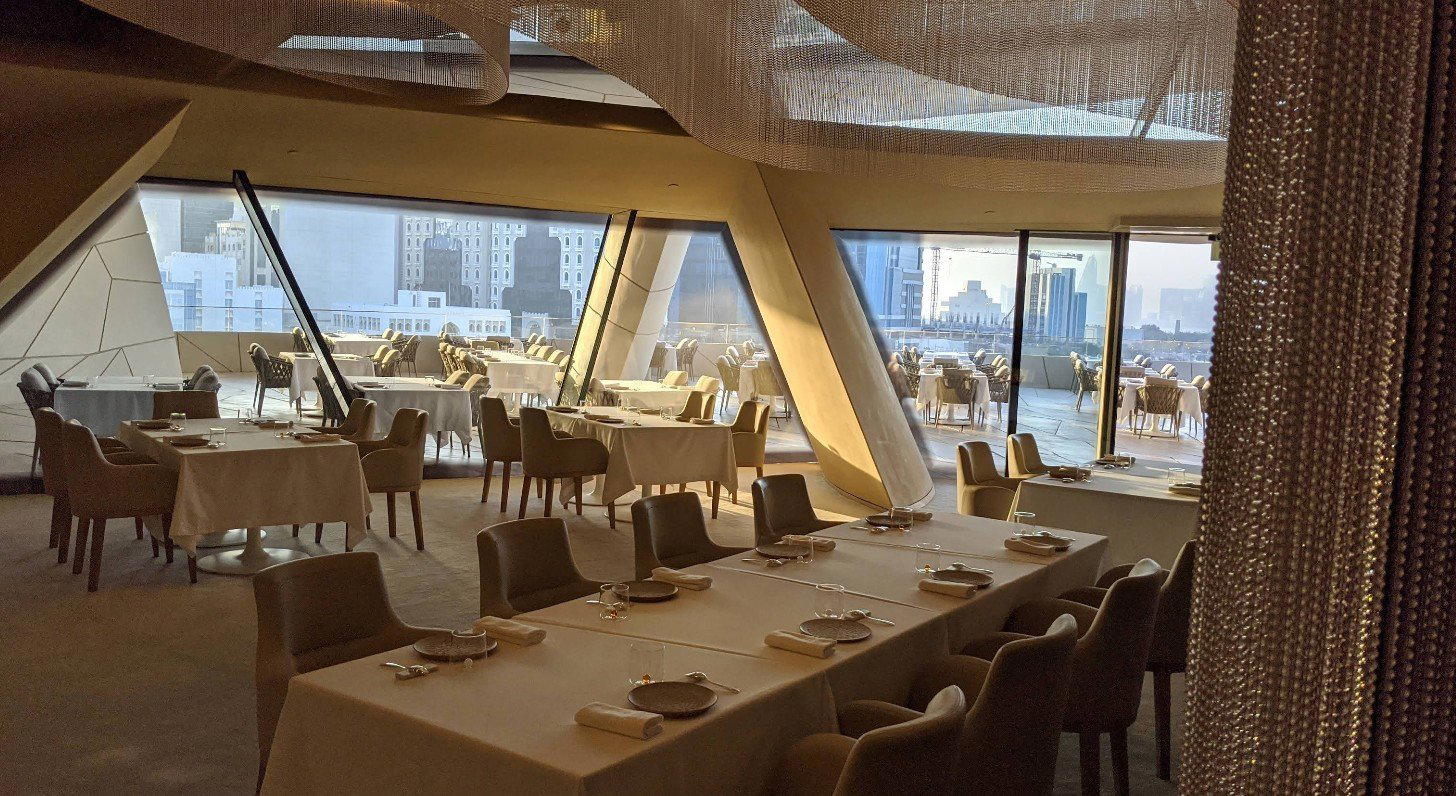
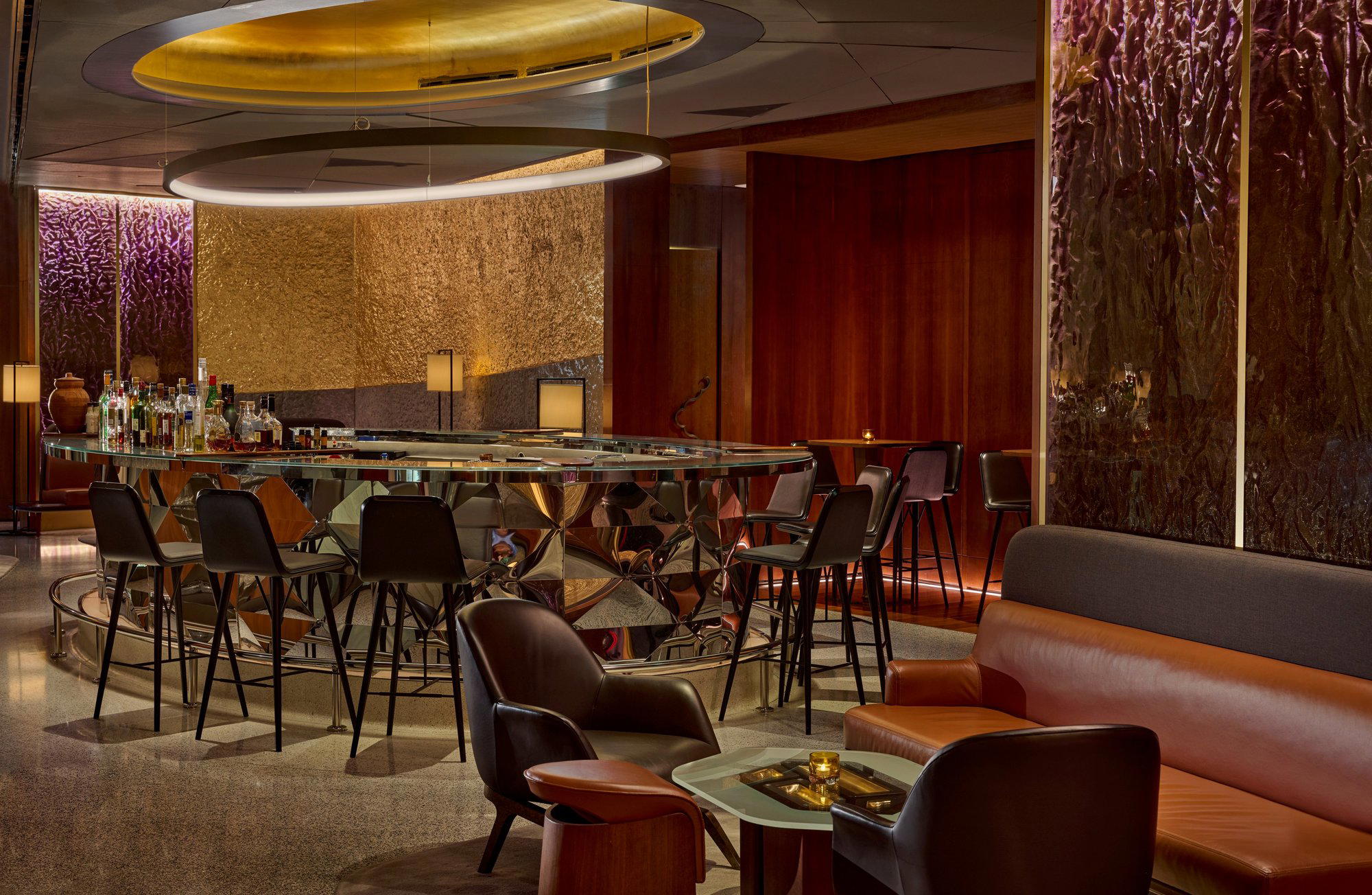
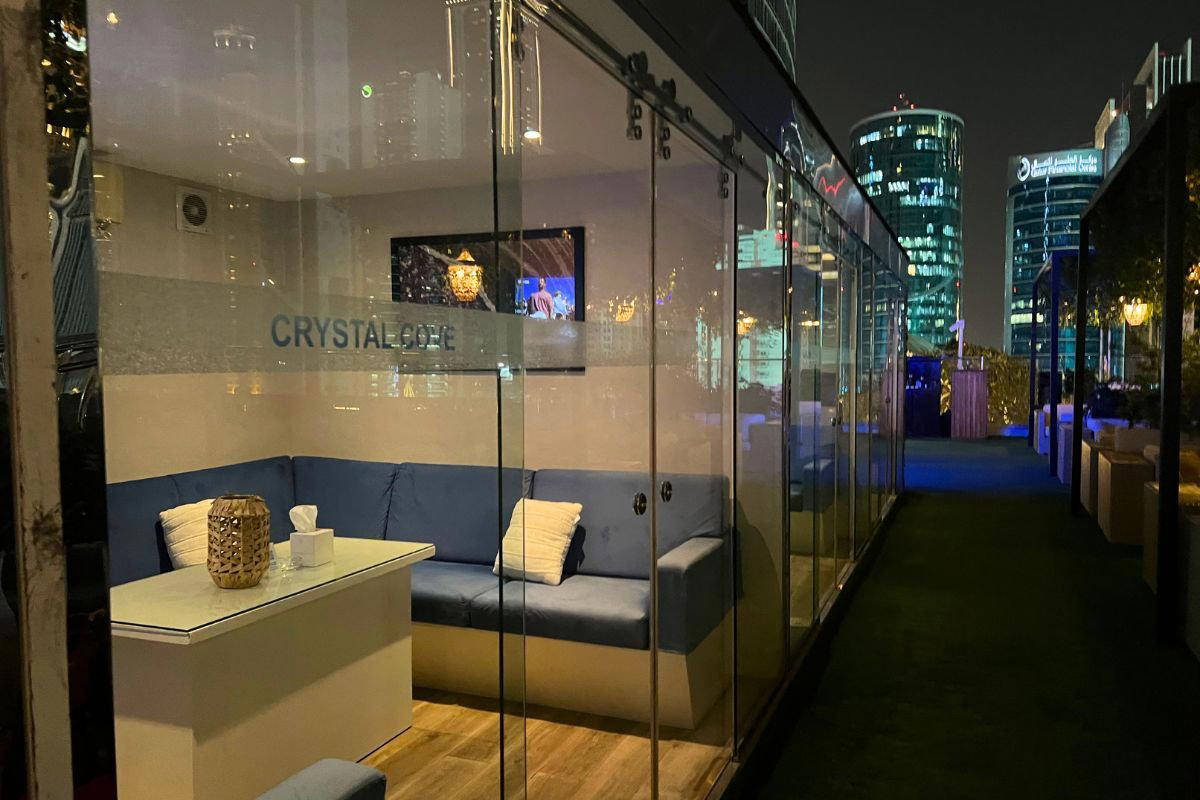
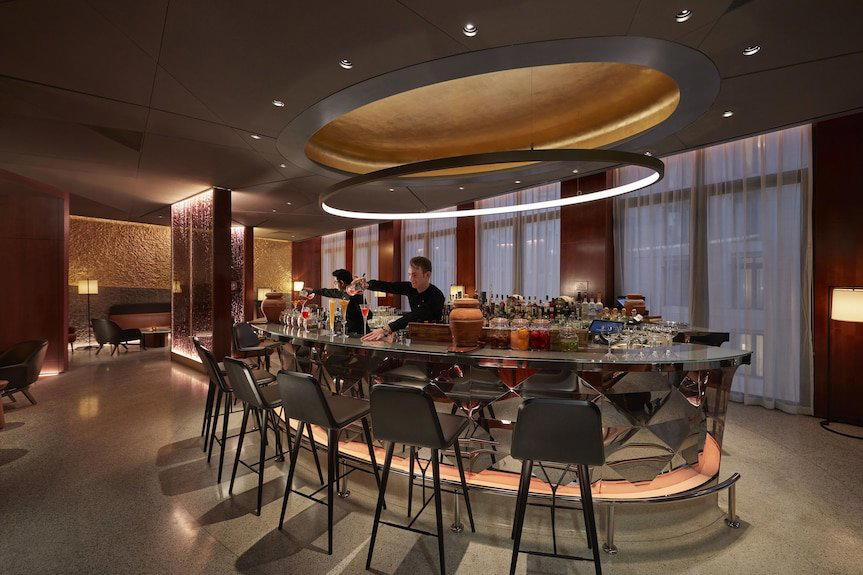
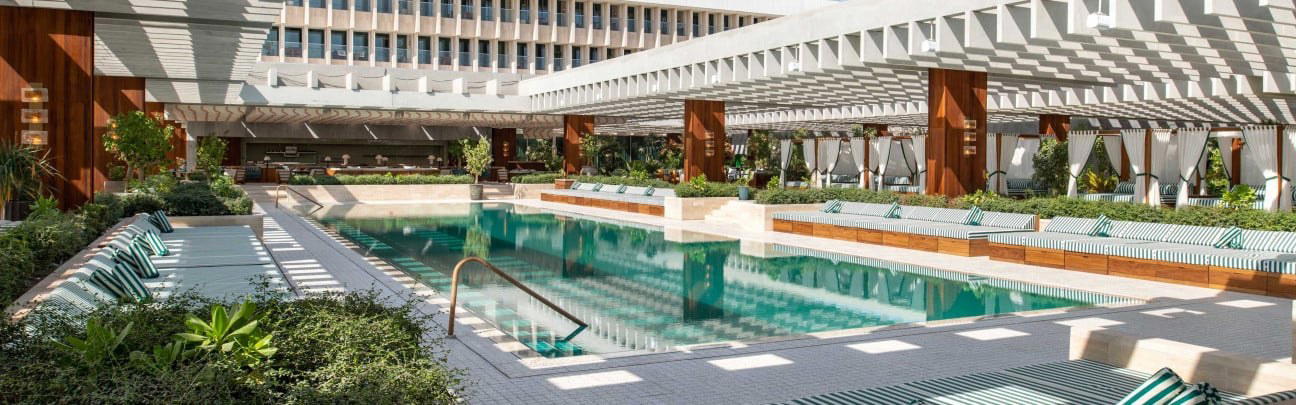
Refined simplicity with modern screens for privacy, contemporary dining room, and thoughtful Asian design evoking a sense of elegance and intimacy.