1 Michelin Star · Tabelog Bronze #173
Our verdict
An eight-seat counter in Kyoto's Okazaki quarter, Kenya earned a Michelin star in 2024 and holds a Tabelog Silver Award (2025, score 4.28), placing it firmly among the city's most recognised modern Japanese tables. Dinner runs JPY 20,000–29,999 per head, with a format built around traditional technique filtered through a contemporary sensibility — and a devotion to rice and sake sourced from Aomori.

Pearl is the En Primeur Club membership app — saves, bookings, and concierge access live there. Same editors, same standards.
- Address
- 55-4 Tanaka Satonomaecho, Sakyo Ward, Kyoto, 606-8226, Japan
- Phone
- +81 75-712-0832
- Hours
- Daily 8 AM–10:30 PM
- Website
- gohancafe-kenya.com
- Directions
- Get directions
- Booking
- Book on TableCheck
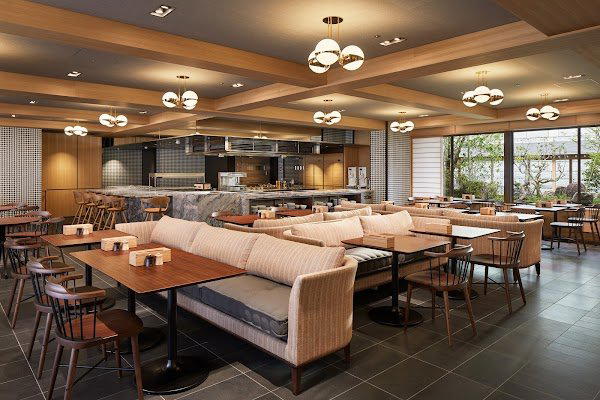
A Counter on a Quiet Okazaki Street
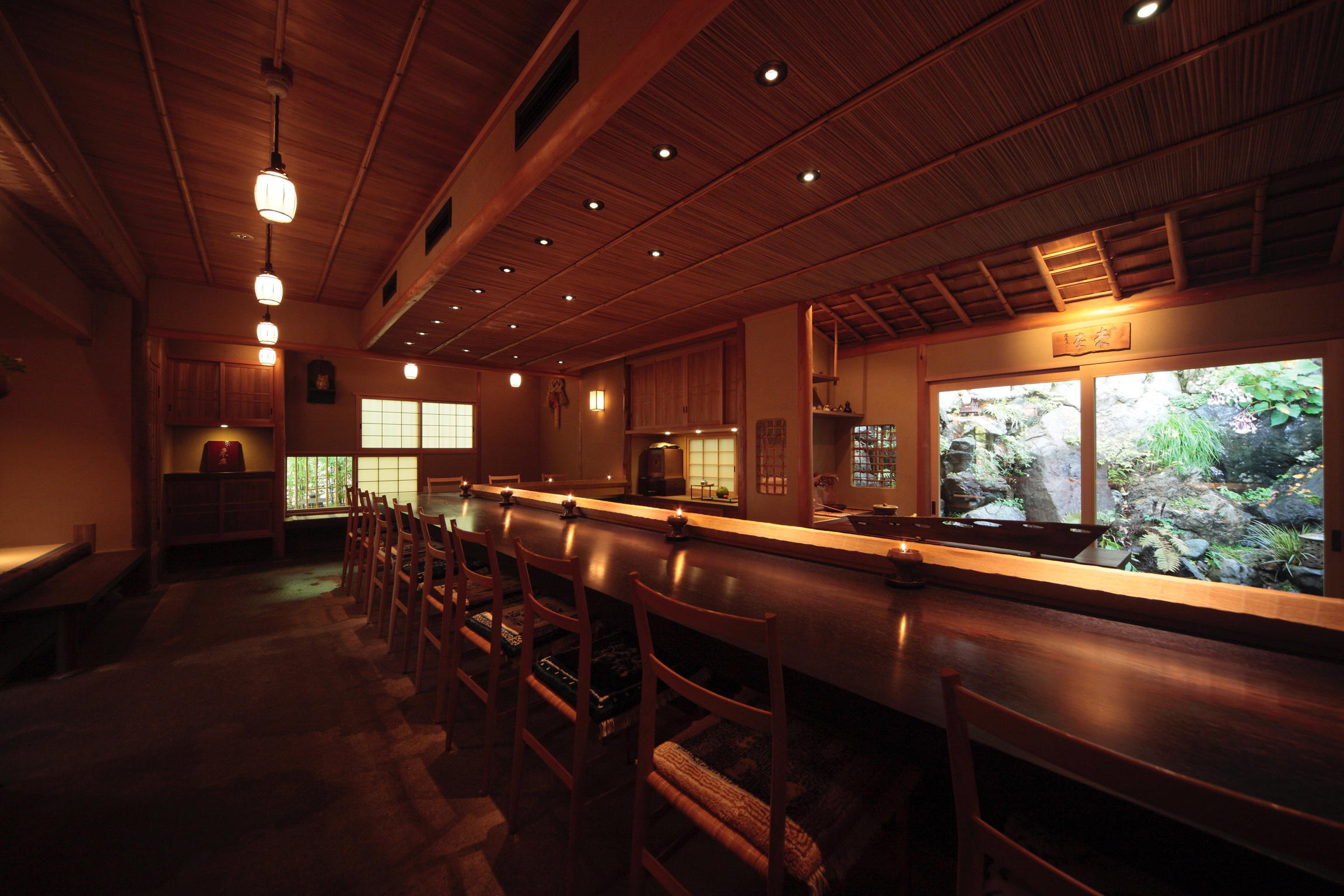
Okazaki sits at the eastern edge of Kyoto's Sakyo Ward, caught between the canal paths that feed into Heian Shrine and the museum district that lines Okazaki Park. It is residential in the way that only old Kyoto can be — narrow lanes running alongside gallery walls, the odd tofu shop still operational at street level, the kind of neighbourhood where a restaurant with no sign and eight seats does not feel out of place. Kenya occupies exactly this register. The address on Okazaki Tokuseicho is not a destination strip; there is no cluster of comparable tables nearby, no pedestrian flow from a covered shopping arcade. The restaurant reads as an extension of the street it sits on: quiet, deliberate, unpromoted.
That posture is consistent with one strand of Kyoto dining that predates the current wave of international attention. Small, counter-only Japanese cuisine restaurants in the city's residential wards have long operated on recommendation and repeat custom rather than foot traffic, and Kenya fits this pattern. Opened in March 2021, it has accumulated recognition quickly for a venue of its format and age, suggesting that the counter's appeal is not simply a function of scarcity but of what arrives across it.
What the Awards Record Says
Kenya's trajectory on the Tabelog scoring system tells a clear story about its position in Kyoto's mid-to-upper Japanese cuisine tier. The restaurant held Tabelog Silver in 2025 with a score of 4.28 and was selected for the Tabelog Japanese Cuisine WEST "Tabelog 100" list in both 2023 and 2025 — a designation that covers the hundred most highly regarded Japanese cuisine restaurants across western Japan, drawn from a population of tens of thousands of rated venues. The 2026 rating moved to Bronze, with a score of 4.33, reflecting Tabelog's periodic recalibration of the award bands rather than any decline in score. Michelin added a single star in 2024, placing Kenya within the recognised tier of Kyoto Japanese cuisine tables alongside venues that have carried that designation for considerably longer. Opinionated About Dining ranked it #390 in Japan in 2025, a cross-format ranking that includes kaiseki institutions and multi-decade establishments. For a restaurant that opened four years ago with eight seats, the combined weight of these recognitions is notable.
Among Kyoto's ¥¥¥¥ kaiseki institutions, Kikunoi Roan, Kenninji Gion Maruyama, and the three-Michelin-starred Gion Sasaki among them, Kenya operates at a ¥¥¥ price point (JPY 20,000–29,999 at dinner), which places it in a different bracket from those rooms while sharing the Michelin recognition. That positioning matters: Kenya is not attempting to compete with the formal kaiseki temples on ceremony or multi-decade reputation. It operates as something adjacent, a single-star Japanese cuisine counter that draws its recognition from cooking quality and a clearly articulated concept, not from institutional weight.
For context on how this counter sits within the broader Japan modern Japanese scene, comparable award-holding counters in other cities include Myojaku in Tokyo and Azabu Kadowaki in Tokyo, both operating in the same general register of traditional technique refracted through a contemporary frame. Outside the Kansai region, Harutaka in Tokyo, Goh in Fukuoka, and HAJIME in Osaka represent the range of what serious modern Japanese kitchens are producing at this level nationally.
The Concept: Modern Japan Through Traditional Technique
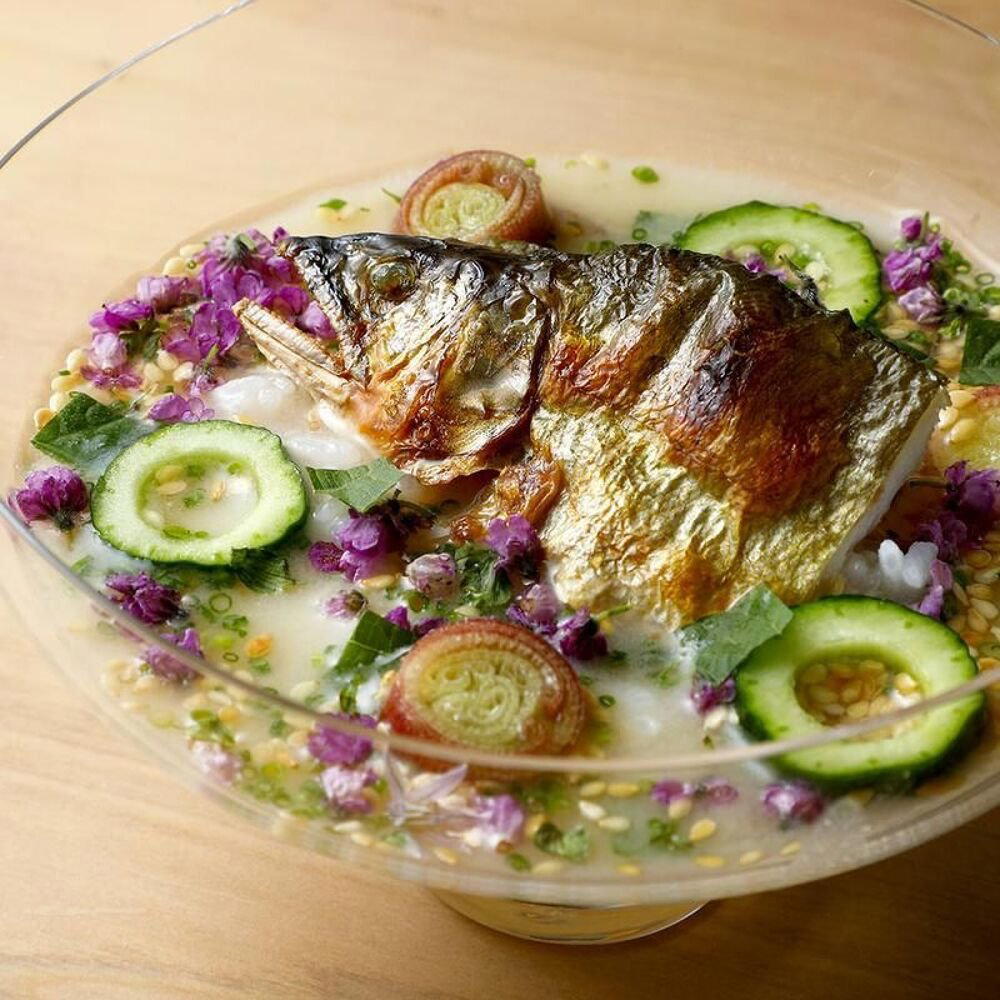
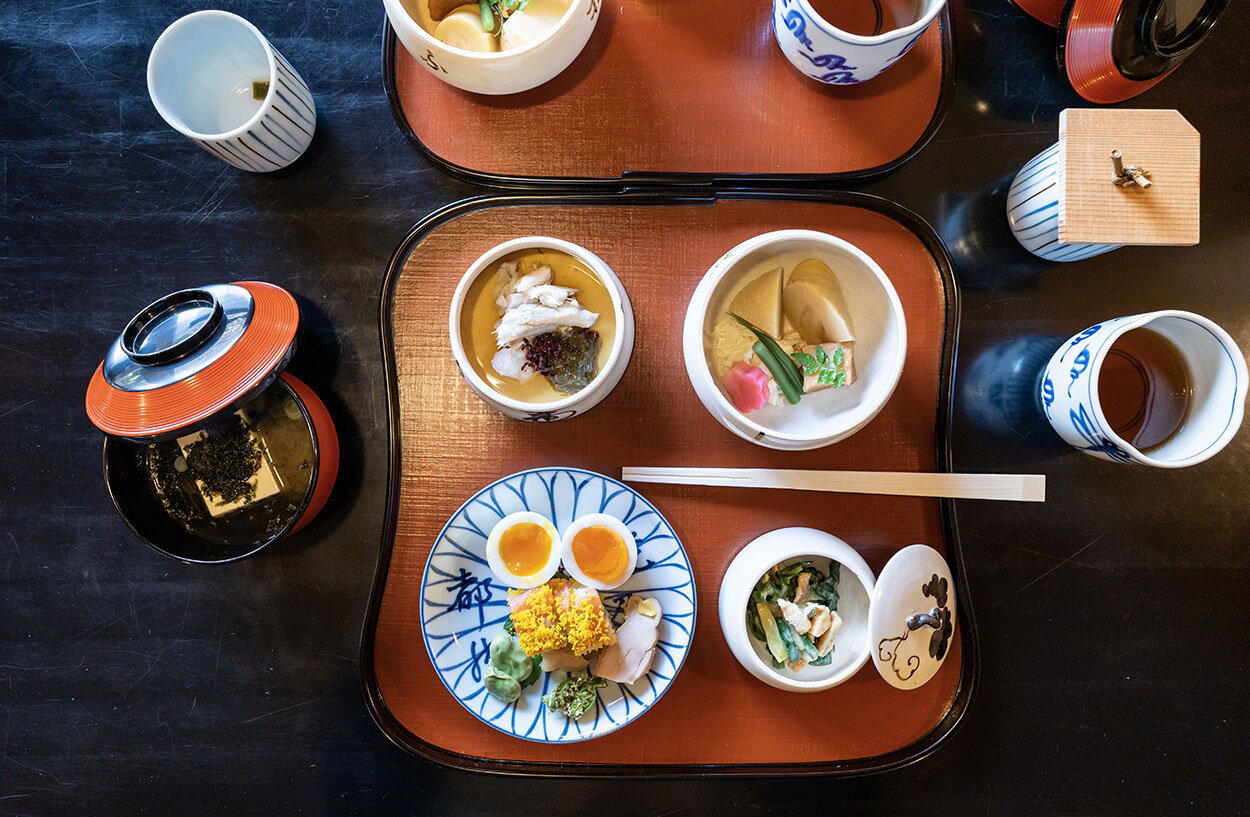
The concept Kenya operates under, described as cuisine that reflects modern Japan, built on traditional Japanese cooking techniques, is a position that a number of younger Japanese cuisine chefs have staked out over the past decade, distinguishing themselves from the rigidity of formal kaiseki without abandoning its technical foundations. Where kaiseki prescribes sequence, proportion, and seasonal reference with considerable formality, this looser category allows for a kitchen voice that is more personal in its sourcing decisions and atmospheric choices, while retaining the fundamental craft of Japanese cooking: broth-making, rice preparation, seasonal ingredient selection, and the kind of heat control that separates competent from compelling.
The Aomori connection, rice and sake sourced from the chef's home prefecture in northern Japan, is a sourcing decision with regional specificity. Aomori rice varieties, particularly those grown in the prefecture's cooler inland basins, carry different starch characteristics from the Niigata or Hokkaido varieties more commonly associated with premium Japanese cuisine. Serving them at the close of a meal, as the counter's format implies, becomes a statement about regional identity as much as a gustatory one. The sake pairing from the same origin extends that logic. This kind of single-prefecture sourcing commitment is a marker of kitchen confidence: it is easier to source from established premium regions than to argue for your own.
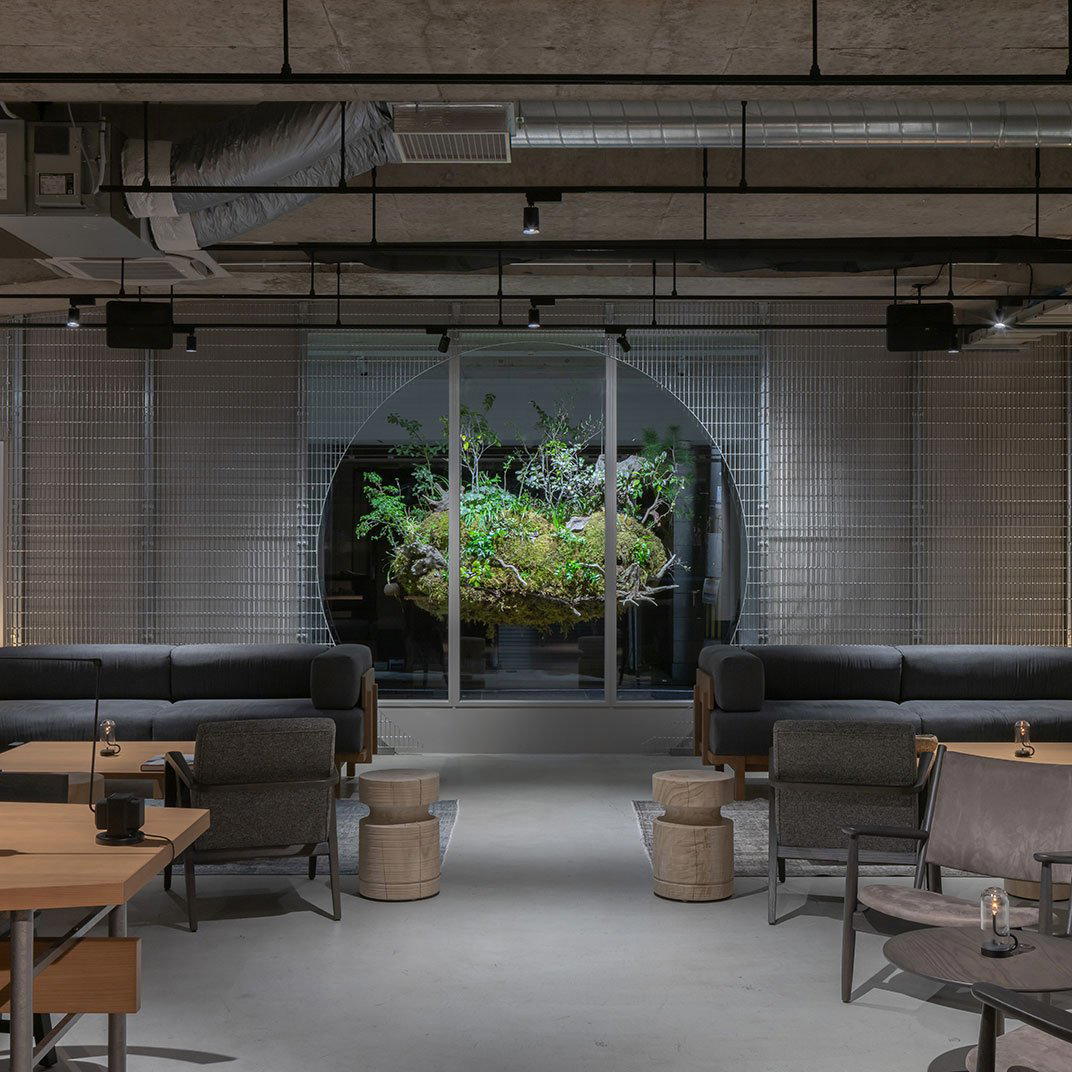
Music policy at Kenya, Western, classical, and Showa-era ballads selected to complement the food, sits in the category of atmosphere decisions that shape how a small counter feels without being legible in any review score. Eight seats at a counter with a curated soundtrack is a different proposition from eight seats at a counter in silence, and the intention behind the selection (to express the joy of cooking, to convey a mood through the meal) is consistent with the broader framing of the space as one that prioritises warmth alongside precision. Alongside Gion Matayoshi and Isshisoden Nakamura, Kenya represents a strain of Kyoto counter dining where the chef's personality is audible without being intrusive.
The Format and What It Demands
Eight counter seats, no private rooms, two sittings on most evenings (17:00 and 20:00), with Tuesday limited to an 18:00 single seating. The restaurant is closed Monday and Sunday. Credit cards are accepted across major networks; electronic money and QR code payments are not. There is no parking and no bicycle parking, the venue explicitly requests that guests arrive on foot or by taxi. The closest transit options are Jingu-Marutamachi Station on the Keihan Main Line (approximately eight minutes on foot) and Higashiyama Station on the Kyoto Subway Tozai Line (approximately eleven minutes). The counter is available for private hire in full, making it viable for a table of up to eight for exclusive use.
Solo dining is specifically flagged as an occasion the counter welcomes, which is meaningful at this price tier. Many Kyoto Japanese cuisine rooms at the ¥¥¥ bracket are structured for pairs or small groups; a counter format that accommodates and actively encourages solo guests is a practical differentiator for the travelling diner arriving without a companion. The dress code is listed as nothing special, which should not be read as an invitation to dress carelessly but rather as a signal that the room does not enforce formality the way some kaiseki establishments do. The atmosphere here is convivial before it is ceremonial. For those exploring other Kyoto counters in this bracket, Kodaiji Jugyuan offers a useful point of comparison in terms of format and price register.
For those building a broader Kansai itinerary that extends beyond Kyoto, akordu in Nara and 1000 in Yokohama represent adjacent award-tier restaurants in neighbouring cities worth considering. Full city guides are available for Kyoto restaurants, Kyoto hotels, Kyoto bars, Kyoto wineries, and Kyoto experiences. For a wider view of the city's Japanese cuisine options, see our full Kyoto restaurants guide. And if Okinawa is on the itinerary, 6 in Okinawa occupies a comparable specialist-counter tier at the far south of the archipelago.
Know Before You Go
- Address: 28-22 Okazaki Tokuseicho, Sakyo Ward, Kyoto
- Phone: +81-50-3647-2912
- Website: kenya-sakai.com
- Hours: Tue 18:00–20:00 only; Wed–Sat 17:00–22:00 (two sittings: 17:00 and 20:00); closed Mon and Sun
- Price: JPY 20,000–29,999 per person at dinner
- Seats: 8 counter seats; private hire of full counter available
- Getting there: Jingu-Marutamachi Station (Keihan), 8 min walk; Higashiyama Station (Subway Tozai Line), 11 min walk
- Payment: Credit cards accepted (VISA, Mastercard, JCB, AMEX, Diners); no electronic money or QR payments
- Reservations: Required; no bicycle or motorcycle parking, arrive on foot or by taxi
- Awards: Michelin 1 Star (2024); Tabelog Silver 2025 (score 4.28); Tabelog Bronze 2026 (score 4.33); Tabelog Japanese Cuisine WEST 100 (2023, 2025); OAD #390 Japan (2025)
Frequently asked questions
Is Kenya formal or casual?
Kenya occupies a middle register that the Michelin star and JPY 20,000–29,999 dinner price might not immediately suggest. The dress code is listed as nothing special, and the eight-seat counter format creates a direct, conversational atmosphere between chef and guest. Solo dining is explicitly recommended by reviewers on Tabelog, which points to a room that functions more like an intimate chef's table than a ceremonial dining hall.
Where do I go for Kenya?
Kenya is located at 55-4 Tanaka Satonomaecho, Sakyo Ward, Kyoto, 606-8226, Japan, Kyoto.
Is Kenya Michelin-listed?
Kenya has received recognition including: {"Year":"2026","Award Source":"Tabelog","Award Type":"The Tabelog Award","Award Group":"bronze","Award Group Rank":"173","Restaurant Name":"Japanese cuisine Kenya","Score":"4.33","Budget":"Dinner: JPY 20,000 - JPY 29,999; Lunch: -","Budget ….
What should I order at Kenya?
The counter operates on a set menu format, so ordering in the conventional sense does not apply — the kitchen structures the meal from start to finish, which is standard at this level of Japanese cuisine. Drinks span sake (nihonshu), shochu, and wine, and Kenya's own connection to Aomori Prefecture shapes the sourcing of both rice and sake within the menu. At JPY 20,000–29,999 per person, the set format represents the entire experience.
What should I expect cuisine-wise at Kenya?
Is Kenya expensive?
Pricing at Kenya is listed as ¥¥¥.
Is there a head chef associated with Kenya?
The chef associated with Kenya is Kenya Sakai.
Just the Basics
| Venue | Cuisine | Price | Awards | Notes |
|---|---|---|---|---|
| KenyaThis venue — the venue you are viewing | Modern Japanese Kaiseki | $200–300 | 1 Michelin Star · Tabelog Bronze #173 | Not listed |
| Gion Sasaki | Modern Kaiseki | $300–500 | 3 Michelin Stars · La Liste Top Restaurants | Kaiseki, Japanese |
| cenci | Innovative Italian-Japanese Fusion | $100–150 | 1 Michelin Star · World's 50 Best #76 | Italian |
| Ifuki | Sumibi Kappo Kaiseki | $200–300 | 2 Michelin Stars · La Liste Top Restaurants | Kaiseki |
| Kyokaiseki Kichisen | Kyoto Kaiseki | $200–300 | 2 Michelin Stars · La Liste Top Restaurants | Japanese |
| Kyo Seika | Seasonal Chinese Fine Dining in Kyoto | Not listed | 1 Michelin Star | Chinese |
Recognition history
Dated appearances from independent guides and award organizations, with the underlying list record or original source where available.
Michelin 1 Star
Michelin
Tabelog Bronze #173
Tabelog
Opinionated About Dining Top Restaurants in Japan Ranked #390
Opinionated About Dining
Full recognition history (6 entries)
Tabelog 100 #99 · No. 99
Tabelog · Tabelog 100 - Japanese cuisine - WEST - 2025
Tabelog Silver
Tabelog
Michelin 1 Star
Michelin