
Kawa Ya Shirogane ten places Fukuoka’s yakitori-and-izakaya culture in a compact room built for close-range eating: counter seats, tables, and tatami-style seating rather than formal tasting-menu choreography. Its repeated Tabelog Yakitori 100 selections, including WEST 2025, put it in a recognized regional tier while keeping the experience firmly in the everyday-drinking idiom of Chuo Ward.
Pearl is the En Primeur Club membership app — saves, bookings, and concierge access live there. Same editors, same standards.
- Address
- 1 Chome-15-7 Shirogane, Chuo Ward, Fukuoka, 810-0012, Japan
- Phone
- +81 92-522-0739
- Website
- hotpepper.jp
 Saves & bookings on Pearl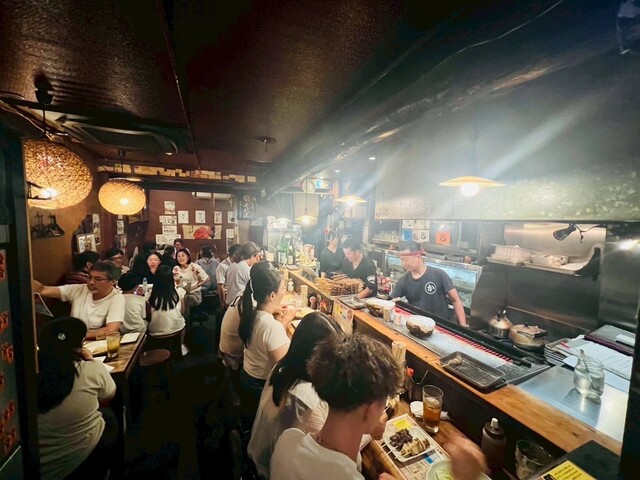
Fukuoka’s yakitori rooms often announce themselves through scale before they announce themselves through polish: a low-lit frontage, a tight threshold, and a room arranged for quick conversation rather than ceremony. Kawa Ya Shirogane ten belongs to that tradition. The physical container matters here: 23 seats divided across counter, table, and tatami-style arrangements, with sunken seating adding a more settled izakaya register. It is not built like a hushed chef’s counter, and that is the point. Fukuoka’s drinking food has long rewarded formats where smoke, pacing, and proximity shape the meal as much as the skewer list.
Yakitori in Japan can split into several lanes. There is the omakase counter, where rare breeds, course order, and chef control define the bill. There is the casual chain format, where skewers act as background to beer. Fukuoka has a third lane that feels more native to the city’s appetite: compact, social, price-conscious, and disciplined enough to win repeat local attention. Kawa Ya Shirogane ten sits in that middle lane, with yakitori and izakaya categories rather than a luxury tasting structure, and with a Tabelog score of 3.64 alongside selection for Tabelog Yakitori 100 WEST 2025. Earlier selections in 2024, 2021, 2019, and 2018 give the recognition some continuity rather than a single-year spike.
A small yakitori room where seating defines the rhythm
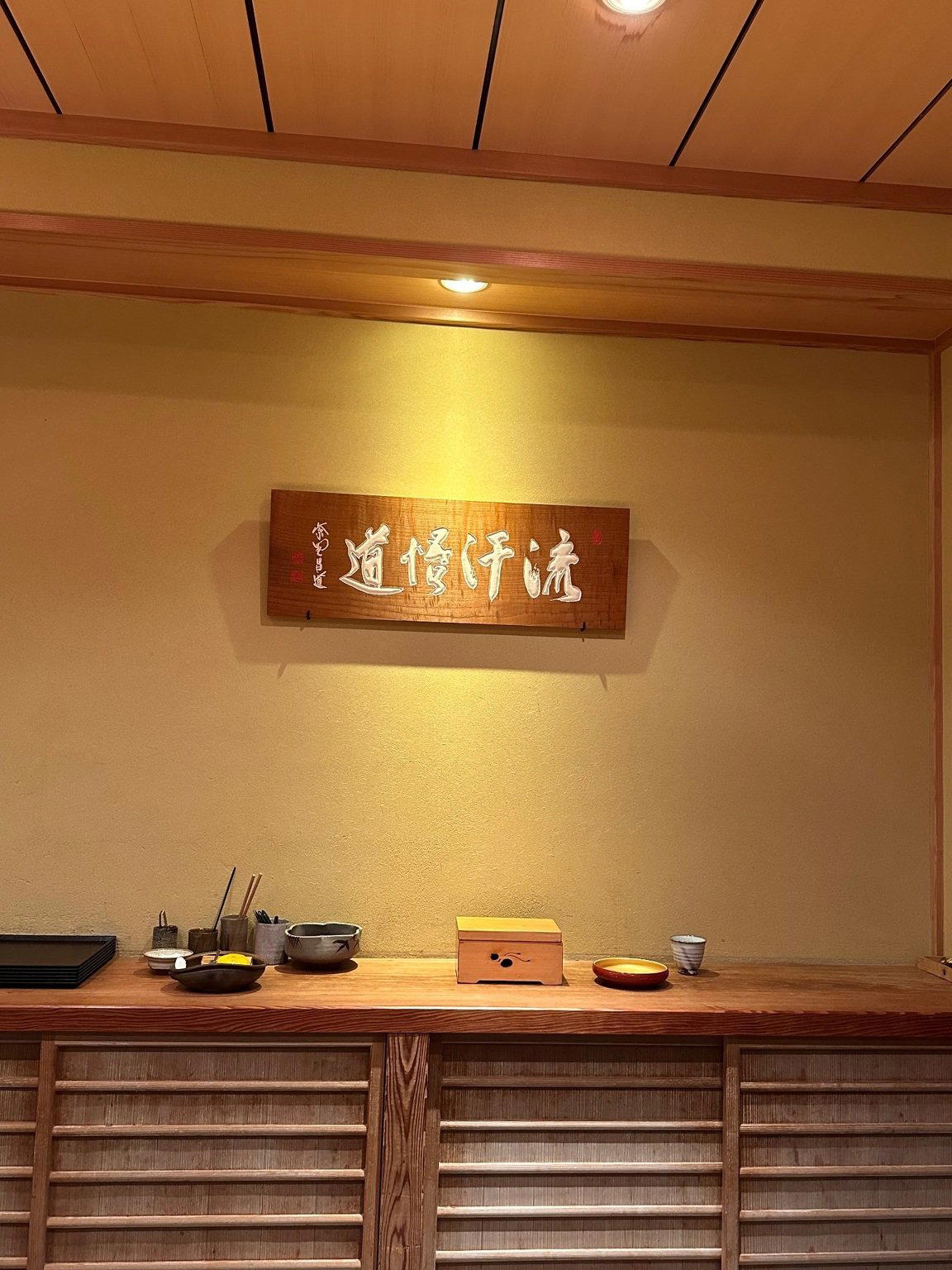
The room’s mix of counter seats, tables, tatami seating, and sunken seating creates several kinds of evening inside one footprint. Counter dining keeps attention on the grill and shortens the distance between order and plate. Tables make the room work for friends and family groups. Tatami-style seating changes the tempo, slowing the meal into something closer to a local izakaya session than a quick skewer stop. This kind of physical variety is common in neighborhood Japanese restaurants, but it is especially useful in Fukuoka, where dinner often moves between grilled food, shochu, sake, and second stops rather than a single destination meal.
The design language is practical rather than theatrical. No private rooms are listed, so the room reads as shared space, not sealed-off dining. A non-smoking policy also changes the texture of the evening, particularly in a category historically associated with smoke-heavy rooms. That detail matters for travelers who want yakitori without the old izakaya trade-off of leaving with the room on their clothes.
Strongest reason to pay attention is not luxury signaling. It is the way recognition lands on a format that remains accessible and compact. Selection for Tabelog Yakitori 100 WEST places the restaurant in a regional conversation about grilled chicken specialists, yet the listed category remains yakitori and izakaya. That combination says more about Fukuoka than any chef biography would: the city can take everyday drinking food seriously without forcing it into a formal mold.
Fukuoka's grilled-food culture favors discipline over ceremony
Fukuoka is often reduced to ramen by first-time visitors, but the city’s dining grammar is broader: yatai habits, seafood counters, motsunabe rooms, curry shops, soba specialists, and grill-led izakaya all compete for the same evening appetite. The useful comparison is not only with higher-spend rooms. Hinai Matomi, listed at a dinner bracket of JPY 10,000 to JPY 14,999, and Tatsu Sho, listed at JPY 20,000 to JPY 29,999, occupy a different decision point. Kawa Ya Shirogane ten belongs to the lower-cost, high-turnover end of serious eating, where the room, drink list, and repeatable format carry the value.
That distinction is important for visitors building a Fukuoka itinerary. A city’s dining character is not measured only by expensive counters. It is also found in places where the seating plan is democratic, the drinks cover sake, shochu, and wine, and the menu can be read without Japanese fluency thanks to multilingual, photo-supported, digital formats. For a traveler moving between Japanese regional categories, this room offers a useful contrast to South Indian cooking at 106 South Indian Fukuoka tenjin ten, spice-led dining at Afterglow, local Japanese dining at Aji Dokoro Taro Gen Sougyou ten, fried-fish specialization at Aji Furai Shokudo Kaba, and classic local comfort at Aji no Katsueda.
The broader lesson is that Fukuoka rewards category fluency. Yakitori here is not merely a prelude to drinks, nor does it need the language of haute cuisine to justify attention. The Tabelog Yakitori 100 selections function as a filter for consistency inside a crowded field. The room’s 23-seat scale then explains why the experience remains intimate in practice, even without the exclusivity cues of a formal counter.
How to place it in a Fukuoka itinerary
The restaurant works well as a dinner built around grilled skewers and izakaya drinking rather than as a long-form tasting-menu evening. Children are welcome, private use is listed for groups of up to 20, and the room’s seating mix gives it more flexibility than a counter-only shop. Payment is another practical distinction: QR code payment through PayPay is listed, while credit cards and electronic money are not. That matters in Japan, where smaller restaurants can remain cash-forward even when digital menus and multilingual support are in place.
For readers mapping the city by category, start with Our full Fukuoka restaurants guide, then use Our full Fukuoka hotels guide, Our full Fukuoka bars guide, Our full Fukuoka wineries guide, and Our full Fukuoka experiences guide to place dinner in a wider trip structure. For cross-city comparisons in Japan and beyond, the editorial map also reaches from -Grilled beef Sukiyaki- KAMAKURA TANUKIAN 鎌倉 たぬき庵 in Kamakura and. 鮪と炭火焼き うお炭 秋葉原店 in Tokyo to.cafe in Osaka.know in Kumamoto, (Shoku) Vietnam in Kawasaki, [Curry Senmon Ten] Maruyama Kyoju. in Sapporo, Jōdo Saké Bar in Los Angeles, and Onigiri Time in Pasadena.
Comparable Options
Comparable venues by cuisine and price in the same metro.
| Venue | Cuisine | Price | Notes |
|---|---|---|---|
| Kawa Ya Shirogane tenThis venue — the venue you are viewing | Hakata yakitori & izakaya | $$ | Not listed |
| Hakata Meidai Yoshizuka Unagiya | Traditional Unagi Specialist | $$ | Hakata |
| Onokoro Hanjou | Seafood-focused Japanese izakaya | $$ | Chūō |
| Shokudo Nizakana Shonen | Japanese Seafood Set Meals | $$ | Hakata |
| 神戸焼肉大山 | Japanese Robatayaki Grill | $$ | Hakata |
| Akasaka Komikan | Traditional Japanese Izakaya | $$ | Chūō |
Recognition history
Dated appearances from independent guides and award organizations, with the underlying list record or original source where available.
Tabelog 100 #46 · No. 46
Tabelog · Tabelog 100 - Yakitori - WEST - 2025
At a Glance
- Lively
- Cozy
- Casual
- Intimate
- Casual Hangout
- After Work
- Group Dining
- Family
- Solo
- Late Night
- Standalone
- Beer Program
- Sake Program
Current opening hours
- Monday
- Closed
- Tuesday
- Closed
- Wednesday
- Closed
- Thursday
- 5 PM–12 AM
- Friday
- 5 PM–12 AM
- Saturday
- 5 PM–12 AM
- Sunday
- 5 PM–12 AM
Hours can change for holidays and private events. Last verified .
Small, bustling yakitori-izakaya with counter and horigotatsu seating, casual lighting, and a lively yet relaxed atmosphere suited to everyday dinners, families, and drinks with friends.