
Karinto Yushima Kagetsu belongs to Tokyo’s disciplined wagashi circuit, where small-format confectionery shops preserve craft with less ceremony than the city’s tasting-menu rooms. Its Tabelog 100 selection for Tokyo Japanese sweets in 2023 and take-out format place it in a practical, tradition-led category: compact, giftable, and rooted in everyday Japanese confectionery culture rather than restaurant theatre.
Pearl is the En Primeur Club membership app — saves, bookings, and concierge access live there. Same editors, same standards.
- Address
- 3 Chome-39-6 Yushima, Bunkyo City, Tokyo 113-0034, Japan
- Phone
- +81 3-3831-9762
- Website
- karintou-kagetsu.com
 Saves & bookings on Pearl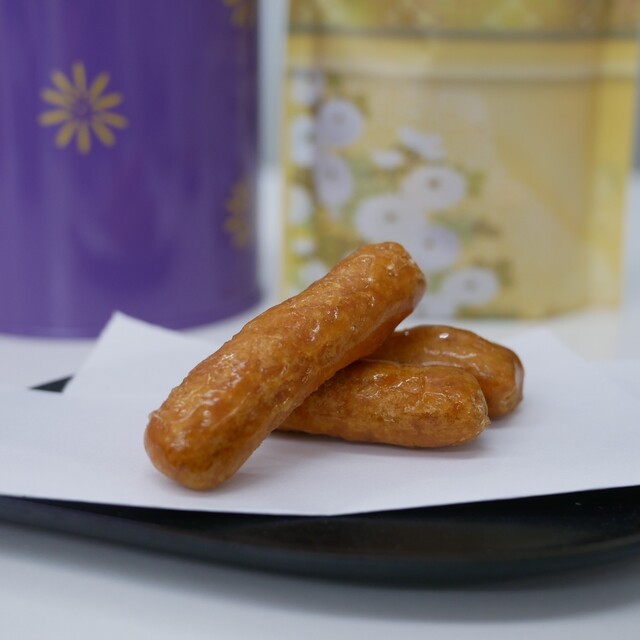
Yushima’s sweet shops operate at a different tempo from Tokyo’s counter restaurants. The exchange is short, the packaging matters, and the purchase often has a second destination: an office, a host’s table, a train ride, a home kitchen after dinner. In that context, Karinto Yushima Kagetsu is less a place to linger than a reminder that Tokyo’s confectionery culture has long understood portability, portion control, and shelf-conscious craft without needing contemporary sustainability language to explain itself.
Karinto, the deep-fried Japanese sweet associated with crisp texture and brown-sugar depth, sits outside the glossy wagashi image many visitors carry into Tokyo. It is not the sculptural seasonal sweet served before matcha, nor the cream-filled hybrid that dominates department-store counters. Its appeal is more practical: grain, oil, sugar, careful frying, and a format built for carrying. That matters in a city where food culture is often judged through omakase pricing and reservation scarcity. Tokyo’s confectionery tradition has another measure of seriousness, one based on repeat purchase, gifting etiquette, and whether a sweet survives the trip across town intact.
Karinto as Tokyo wagashi: small format, serious craft
The useful way to read this shop is through the city’s wagashi hierarchy rather than through restaurant logic. Karinto Yushima Kagetsu was selected for the Tabelog 100 list for Tokyo Japanese traditional sweets and Japanese sweets cafés in 2023, a recognition that places it among a curated group in a category where reputation is often built through narrow specialization. The Tabelog score of 3.76 is another signal, especially for a confectionery shop competing in a market where visitors and locals judge different things: texture, freshness, packaging, value, and reliability as a gift.
The take-out format also changes the environmental conversation. Tokyo has a deep culture of presentation, and confectionery packaging can drift into excess. Karinto’s advantage, as a category, is that it does not require plated service, constant refrigeration, or a long dining room cycle to make sense. That does not make any shop automatically sustainable, but it does show why older food formats often align with lower-friction consumption: compact products, controlled portions, and fewer service layers. The craft is in repeatable precision rather than theatrical abundance.
Compared with nearby dining options in Ueno and Yushima, the contrast is sharp. Torie Ueno hirokoji ten sits in a higher-priced restaurant bracket, while Gensen Yoshoku Sakurai belongs to the polished yoshoku tradition. Kanmidokoro Mitsubachi Honten occupies a closer sweets-and-café lane, and DELHI Ueno ten shows the area’s appetite for quick, inexpensive food with a different culinary grammar. Karinto Yushima Kagetsu belongs to the portable wagashi side of that map, where the decision is less about a full meal and more about what Tokyo does well between meals.
Why the take-out model fits Yushima
Yushima and Ueno-Hirokoji reward compact food stops. The neighbourhood sits between temple visits, university life, old shopping streets, and transport-heavy movement around Ueno and Okachimachi. A no-eat-in confectionery shop fits that rhythm better than a room designed around lingering. It lets the sweet become part of the day rather than the day’s main event, which is often how traditional Japanese sweets function in practice.
That distinction matters for travellers building a Tokyo food itinerary. A high-spend sushi counter or kaiseki room demands scheduling discipline; a wagashi stop asks for cultural attention instead. The lesson is not that one category is more serious than the other. It is that Tokyo’s food intelligence often appears in small purchases: a box chosen for a host, a sweet matched to tea later, a snack that respects the Japanese preference for neatness in public space. Karinto’s durability and giftability make it especially compatible with that code.
For readers mapping a wider Tokyo eating day, this is the kind of stop that pairs well with the city’s more structured restaurant bookings. The broader EP Club Tokyo restaurant file includes addresses with different commitments, from . 鮪と炭火焼き うお炭 秋葉原店 and 12/10 Shinjuku ten to 124. KAGURAZAKA (Yakitori), 2D Cafe, and 3 Chome no Curry Ya San. Use a confectionery stop like this as counterweight to reservation-led dining, not as a substitute for it.
A compact stop in a larger Tokyo itinerary
The practical reading is simple: this is a sweets specialist, not a restaurant with a dining room. Payment flexibility includes card, electronic money, and QR options, which suits the quick-stop nature of the format. The shop is listed as non-smoking and private rooms are not part of the setup, reinforcing its role as a purchase-led address rather than a hospitality venue built around seating.
Its recognition within Tabelog’s Tokyo wagashi selection gives it enough editorial weight to merit a detour when Yushima or Ueno is already in the day’s plan. It is less compelling as a cross-city expedition in isolation, unless Japanese sweets are a specific focus. That is the right kind of restraint. Tokyo rewards travellers who stop treating every food address as a monument and start understanding category, timing, and neighbourhood fit.
For broader planning, keep the sweets stop inside a wider Tokyo map: Our full Tokyo restaurants guide, Our full Tokyo hotels guide, Our full Tokyo bars guide, Our full Tokyo wineries guide, and Our full Tokyo experiences guide cover the larger structure around it. For readers comparing how Japanese casual and specialist formats travel beyond central Tokyo, related files include -Grilled beef Sukiyaki- KAMAKURA TANUKIAN 鎌倉 たぬき庵 in Kamakura.cafe in Osaka.know in Kumamoto, (Shoku) Vietnam in Kawasaki, [Curry Senmon Ten] Maruyama Kyoju. in Sapporo, [ki:] in Kyoto, Jōdo Saké Bar in Los Angeles, and Onigiri Time in Pasadena.
At-a-Glance Comparison
Comparable venues at a glance for context.
| Venue | Cuisine | Price | Notes |
|---|---|---|---|
| Karinto Yushima KagetsuThis venue — the venue you are viewing | Japanese Confectionery | $ | Not listed |
| Teuchi Ren | Handmade ramen shop | $ | Sumida |
| Minna no Pan'ya | Traditional Japanese bakery | $ | Chiyoda |
| Naniwaya Edogawabashi | Traditional Japanese taiyaki & obanyaki shop | $ | Bunkyō |
| Torimeshi Torito Bunten | Traditional Japanese Oyakodon & Chicken Rice Bowls | $ | Chūō |
| 月 | japanese | $ | Minato |
Recognition history
Dated appearances from independent guides and award organizations, with the underlying list record or original source where available.
Tabelog 100 #4 · No. 4
Tabelog · Tabelog 100 - Japanese traditional sweets / Japanese sweets cafe - TOKYO - 2023







At a Glance
- Classic
- Cozy
- Well Known
- Solo
- Family
- Casual Hangout
- Standalone
- Street Scene
Current opening hours
- Monday
- 9:30 AM–8 PM
- Tuesday
- 9:30 AM–8 PM
- Wednesday
- 9:30 AM–8 PM
- Thursday
- 9:30 AM–8 PM
- Friday
- 9:30 AM–8 PM
- Saturday
- 10 AM–5 PM
- Sunday
- 10 AM–5 PM
Hours can change for holidays and private events. Last verified .
Traditional, nostalgic, and shop-like, with an old Tokyo sweets-shop feel rather than a dining-room atmosphere.