Michelin Plate
Our verdict
A Gion kappo counter where à la carte flexibility replaces the locked-in kaiseki sequence. Kappo Umetsu holds a Michelin Plate for 2024 and 2025 and is known for its house-made apricot soy sauce, cordial service, and a menu that lets guests direct their own meal across grilled, simmered, and fried preparations.

Pearl is the En Primeur Club membership app, where members save venues, book tables and use the concierge.
Where Kyoto Eats Without a Script
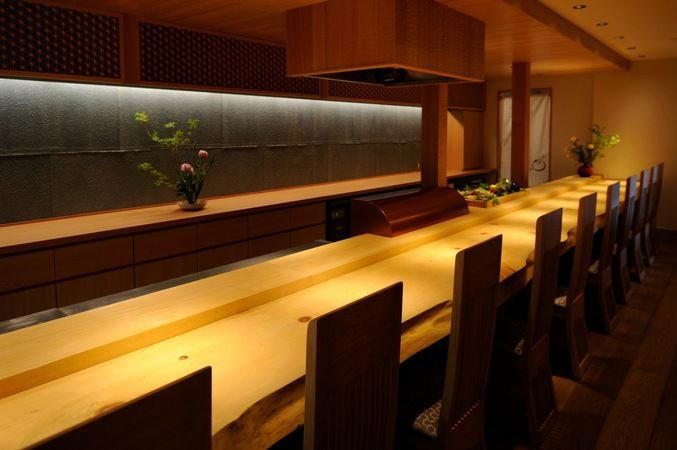
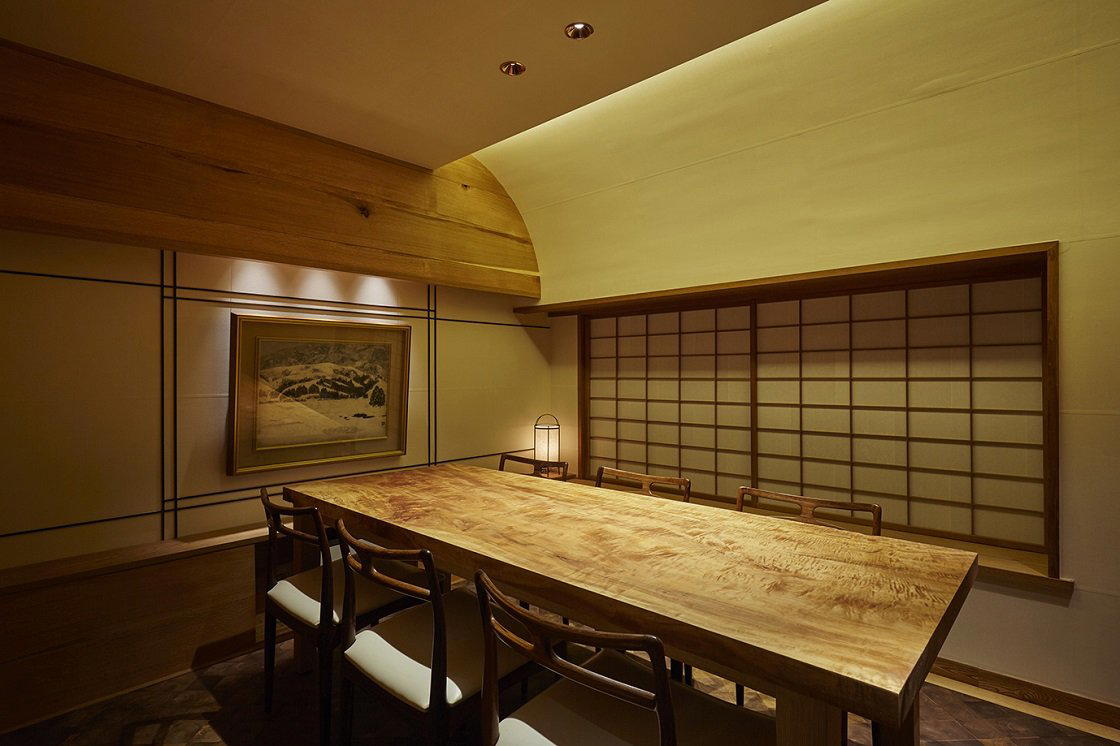
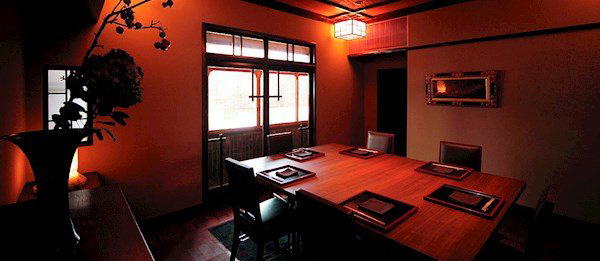
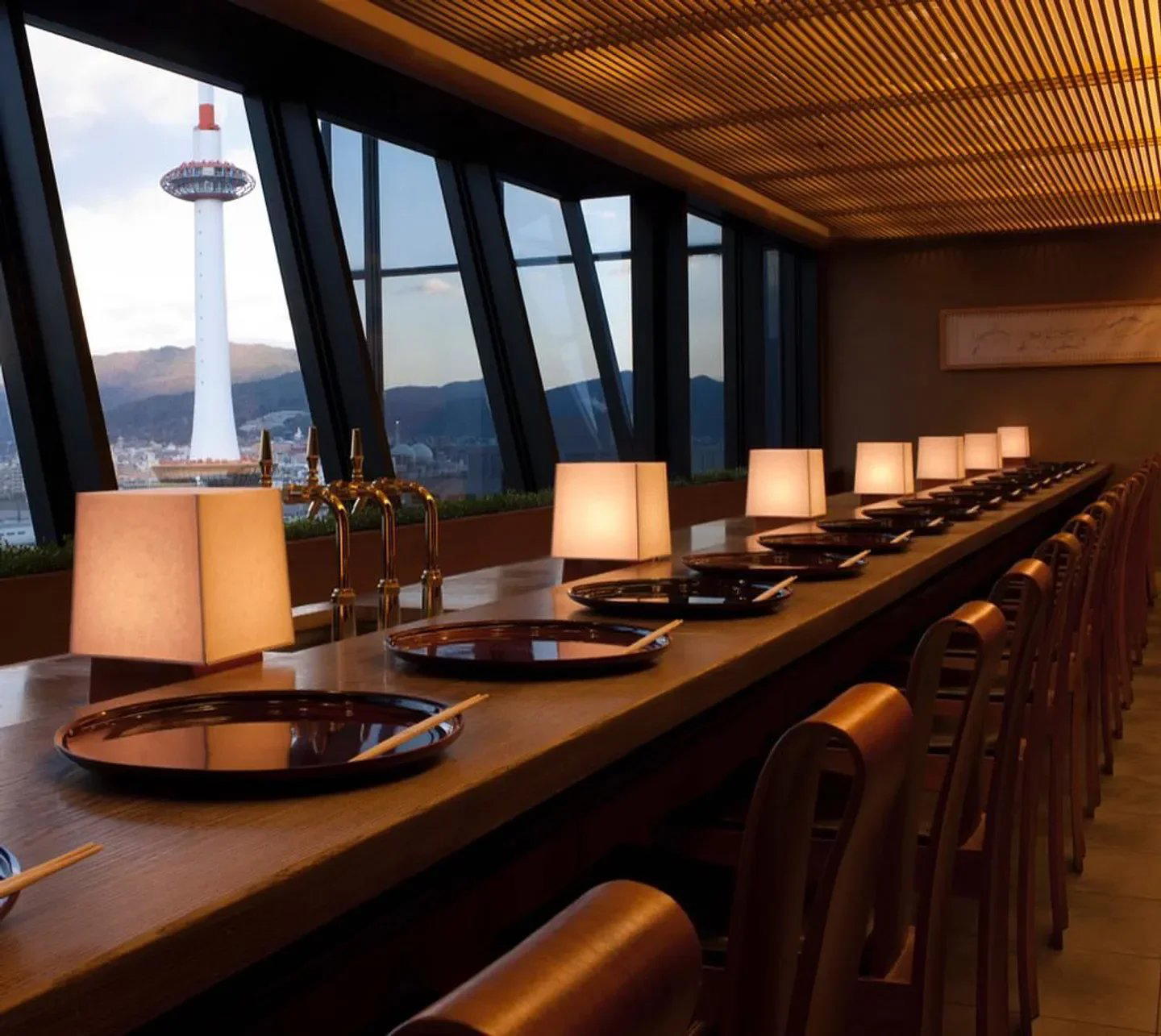
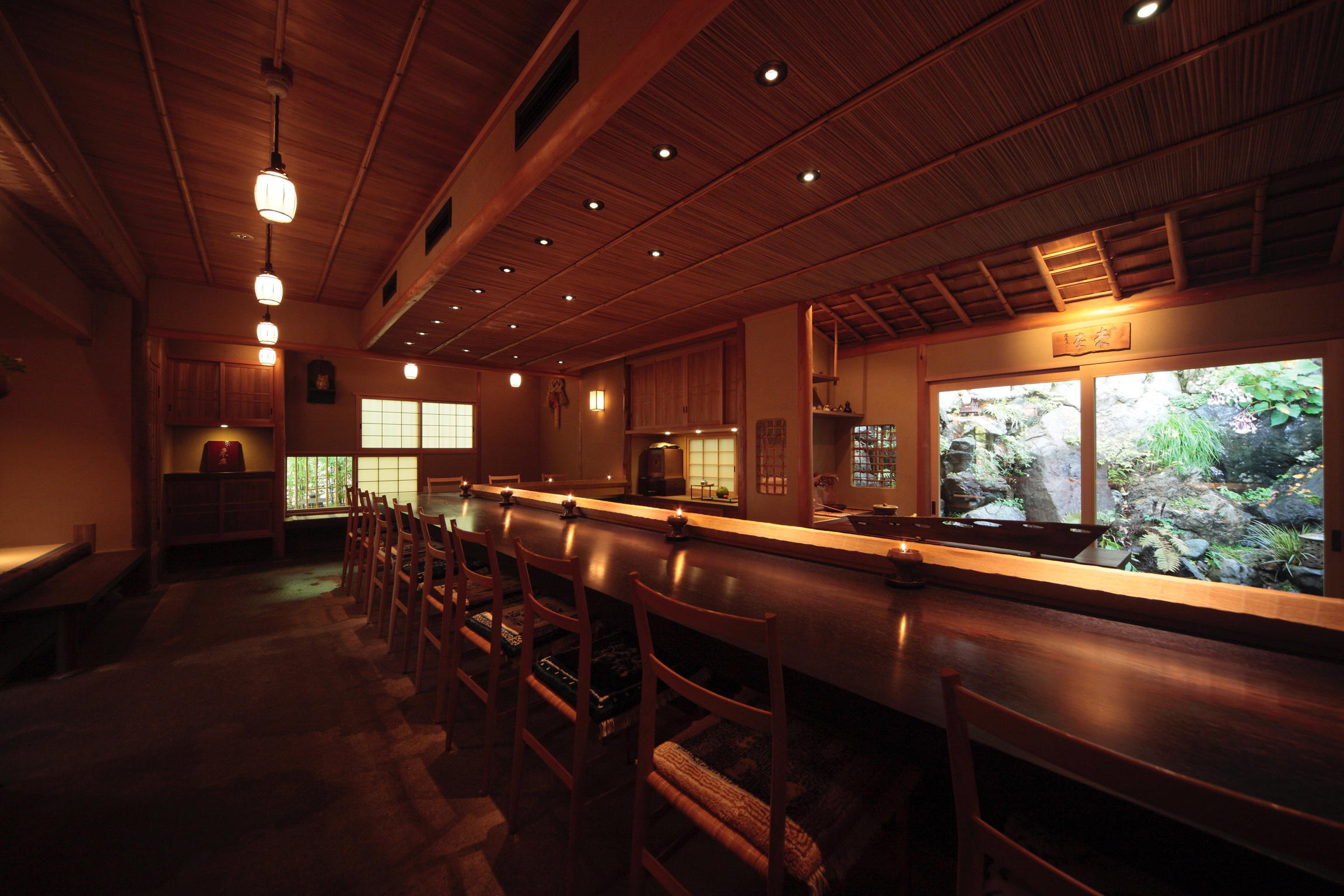
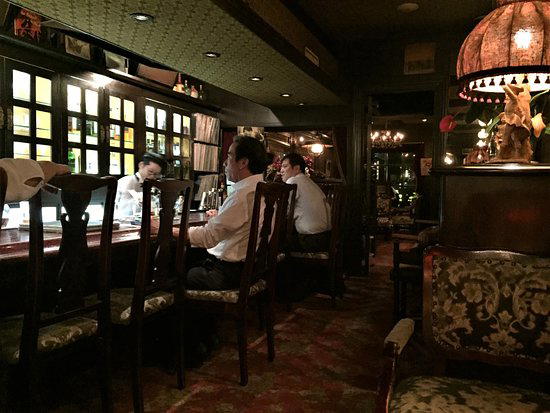
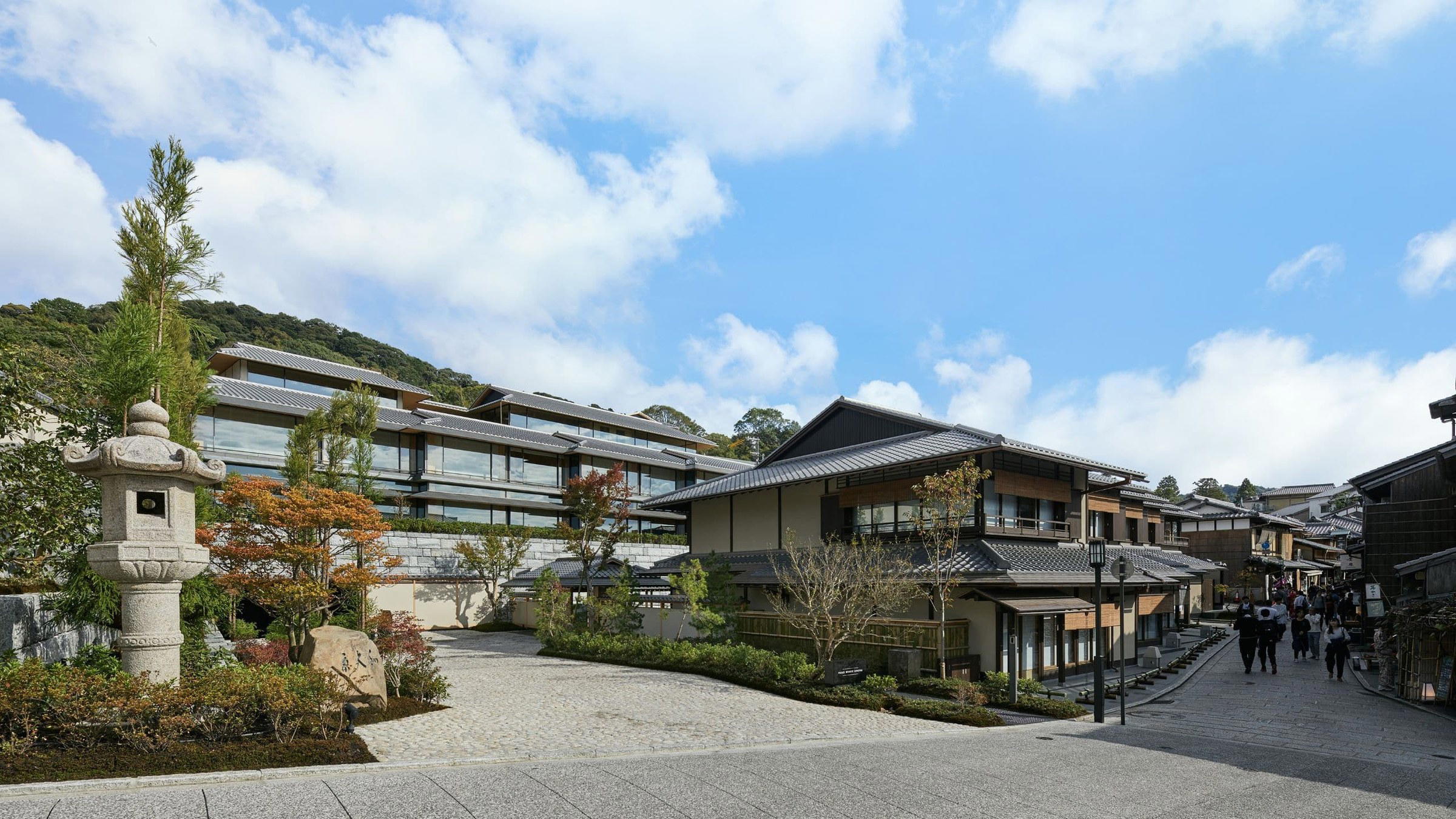
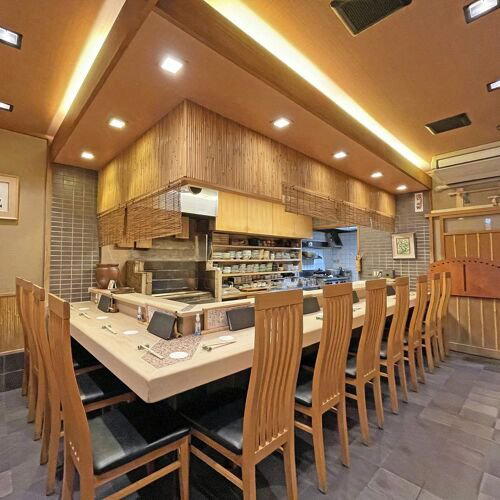
Walk east along the canal-flanked stone lanes of Gionmachi Kitagawa and the neighbourhood announces itself through texture before it does through signage: weathered machiya frontages, the faint cedar smell of older timber, lanterns that read as functional rather than decorative. This is the Higashiyama side of Gion, where the dining culture runs deep and the expectations of guests run higher. Kappo Umetsu occupies a position on that street that feels considered rather than accidental. The proprietress in an apron, the absence of theatre, the finely coordinated service that manages to feel like hospitality rather than performance, these are the signals that place it in a specific Kyoto tradition.
Kappo Against the Kaiseki Grain
The dominant export image of Kyoto dining is kaiseki: a fixed sequence, a predetermined progression, ingredients chosen by the kitchen and presented in the order the chef decides. That format produces some of the most technically accomplished food in Japan, and counters like Isshisoden Nakamura and Gion Matayoshi operate within it at a serious level. But Kyoto also carries a parallel tradition: kappo, the cooking style defined by its directness and its hospitality logic. At a kappo counter, the guest shapes the meal. The kitchen does not hand down a sequence; it responds to appetite, preference, and pace.
Kappo Umetsu works from this model. The menu is à la carte and extensive, and staff accommodate preferred preparation methods across grilled, simmered, fried, and other techniques. Compared to the locked-in kaiseki format at higher price tiers, Ifuki at ¥¥¥¥, Kyokaiseki Kichisen at the same bracket, this is a structurally different contract between kitchen and guest. The price point at ¥¥¥ reflects that: you are not paying for a curated narrative arc, you are paying for skilled execution of what you actually want to eat.
The Tokyo vs. Kyoto Divide, Read Through One Dish
Tokyo's dining evolution over the past two decades has been driven by innovation appetite: new techniques, cross-cultural borrowing, menus rebuilt seasonally to signal movement. The capital rewards the new. Kyoto works from a different pressure system. The city's restaurants are judged as much by what they have maintained as by what they have changed. Tradition is not a constraint here; it is the medium.
That divide is readable in something as specific as Kappo Umetsu's house apricot soy sauce. The kitchen marinates sour pickled apricots, ume, the character embedded in the proprietor's name, to produce an apricot soy that it uses to dress parboiled pike conger and beef cutlets. This is not a technique that would make headlines in Tokyo's innovation-led food press. It is, instead, the kind of detail that accumulates meaning in Kyoto: a house preparation, a named ingredient tradition, a way of doing something that is specific enough to be remembered. The dish is a credential, not a trend signal.
Pike conger itself, known in Japanese as hamo, is closely associated with Kyoto summer cooking. The fish is notoriously difficult to prepare, it requires skilled knife work to render its small bones edible, and its presence on a Gion menu is a regional affiliation rather than a novelty. In that context, applying a house-made apricot soy rather than a conventional preparation reads as exactly the kind of quiet proprietorial statement Kyoto rewards.
Where Kappo Umetsu Sits in Gion's Dining Tier
The Gion and Higashiyama corridors carry a high concentration of recognised addresses. Kenninji Gion Maruyama, Kikunoi Roan, and Kodaiji Jugyuan all operate nearby. The neighbourhood is not short of ambition. In that context, Kappo Umetsu's positioning is deliberate: Michelin Plate recognition in both 2024 and 2025 places it in the acknowledged tier without ascending to the star-counted bracket that implies fixed tasting menus and long advance reservations.
A Michelin Plate signals food worth stopping for, the guide's designation for kitchens producing good cooking that hasn't reached or hasn't been assessed at star level. For a kappo counter with an à la carte format and a local hospitality register, this is a reasonable and honest position. Peer comparison at the ¥¥¥ price range in Kyoto includes addresses like cenci and Kyo Seika, both Michelin-starred, which suggests the tier is competitive. Kappo Umetsu holds its own through format differentiation and a distinctive house preparation rather than through the star count.
The Case for À La Carte in a Fixed-Menu City
Much of what premium Kyoto dining offers is non-negotiable by design: you sit down, you accept the sequence, the pace is the kitchen's. There is a specific pleasure in that surrender, and it produces remarkable results at addresses operating at the kaiseki level. But it is not the only way to eat well in the city, and not every visit to Gion calls for a three-hour structured experience.
The kappo format gives the guest agency without sacrificing technique. A solo traveller can eat lightly and directly; a group can order according to appetite rather than conform to a shared tasting arc. This is the structural advantage of an à la carte counter with trained staff who accommodate preparation preferences. It is also, arguably, the older Kyoto mode, kappo predates kaiseki's codified sequence and carries its own lineage in the city's food history.
For visitors building out a longer stay in Kyoto, the range of options across formats and price tiers is genuinely wide. Our full Kyoto restaurants guide covers the full spectrum, from entry-level soba counters to the leading kaiseki houses. Elsewhere in the Kansai region, HAJIME in Osaka operates at a different register entirely. Further afield, Harutaka in Tokyo, akordu in Nara, Goh in Fukuoka, 1000 in Yokohama, and 6 in Okinawa map Japan's regional dining range. For Tokyo comparisons in the Japanese format category specifically, Myojaku and Azabu Kadowaki represent the capital's approach to similar cooking traditions. Our full Kyoto hotels guide, bars guide, wineries guide, and experiences guide round out a stay in the city.
Know Before You Go
- Address: 347-93 Gionmachi Kitagawa, Higashiyama Ward, Kyoto, 605-0073, Japan
- Cuisine: Japanese (kappo format, à la carte)
- Price range: ¥¥¥
- Recognition: Michelin Plate 2024 and 2025
- Format: À la carte with flexible preparation options (grilled, simmered, fried, and more)
- Neighbourhood: Gionmachi Kitagawa, Higashiyama Ward, walkable from Gion-Shijo station
- Hours, booking, and contact: Not published; confirm directly before visiting
Frequently asked questions
Is Kappo Umetsu formal or casual?
The setting falls between the two extremes. Gionmachi Kitagawa is a serious dining address in Higashiyama Ward, and the service is coordinated and attentive, Michelin's 2024 and 2025 Plate recognitions reflect that standard. The proprietress-led room, however, is described as making guests feel at home rather than observed, which is a meaningful distinction in a neighbourhood where stiff formality is the default.
What cuisine category does Kappo Umetsu fall under?
What distinctions does Kappo Umetsu have?
Kappo Umetsu has received recognition including: Kappo Umetsu offers an extensive list of à la carte dishes, the better to entertain diners. In a show of flexibility, staff cater to guests’ preferred preparation method—grilled, simmered, fried and much more. ‘Umetsu’ is the proprietor’s n….
What should I order at Kappo Umetsu?
The menu is broad and à la carte, with preparation methods ranging from grilled to simmered to fried, unusual latitude for a Gion address. The detail that distinguishes the kitchen is the house-made apricot soy sauce, produced by marinating sour pickled apricots, used to dress parboiled pike conger and beef cutlets. Those two dishes are the most direct expression of what the kitchen is doing that you will not find replicated elsewhere on the street.
What should I budget for a meal at Kappo Umetsu?
Pricing at Kappo Umetsu is listed as ¥¥¥.
Accolades, Compared
| Venue | Cuisine | Price | Awards | Notes |
|---|---|---|---|---|
| Kappo UmetsuThis venue (the venue you are viewing) | Kappo Japanese Cuisine | $100–150 | Michelin Plate | Not listed |
| Gion Sasaki | Modern Kaiseki | $300–500 | 3 Michelin Stars · La Liste Top Restaurants | Kaiseki, Japanese |
| cenci | Innovative Italian-Japanese Fusion | $100–150 | 1 Michelin Star · World's 50 Best #76 | Italian |
| Ifuki | Sumibi Kappo Kaiseki | $200–300 | 2 Michelin Stars · La Liste Top Restaurants | Kaiseki |
| Kyokaiseki Kichisen | Kyoto Kaiseki | $200–300 | 2 Michelin Stars · La Liste Top Restaurants | Japanese |
| Kyo Seika | Modern Chinese Fine Dining | $150–200 | 1 Michelin Star · Tabelog Bronze #216 | Chinese |
Recognition history
Dated appearances from independent guides and award organizations, with the underlying list record or original source where available.
Michelin Plate
Michelin
Full recognition history (3 entries)
Michelin Plate
Michelin
Michelin Plate
Michelin