
Michelin Plate
Our verdict
Oryori Maeshiro operates within the kappo tradition in Kyoto's Nakagyo Ward, breaking with convention by placing the chef's counter work in full view of guests rather than behind closed kitchen doors. The Osaka-apprenticed chef works around the principle of 'monmona-ryori', cooking ingredients as they are, earning consecutive Michelin Plate recognition in 2024 and 2025. Rated 4.7 on Google across 60 reviews, it sits at the ¥¥¥ tier for Kyoto kappo.

Pearl is the En Primeur Club membership app, where members save venues, book tables and use the concierge.
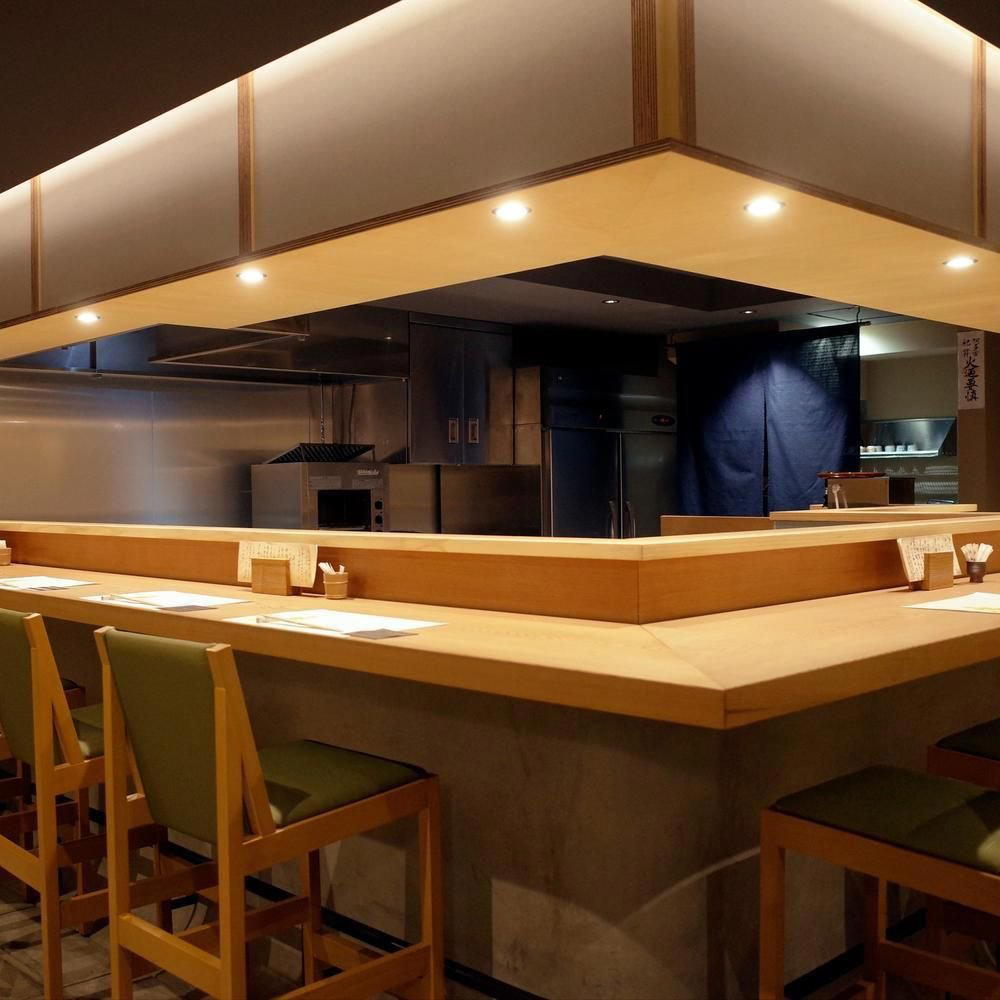
Counter-Forward Kappo in the Heart of Nakagyo
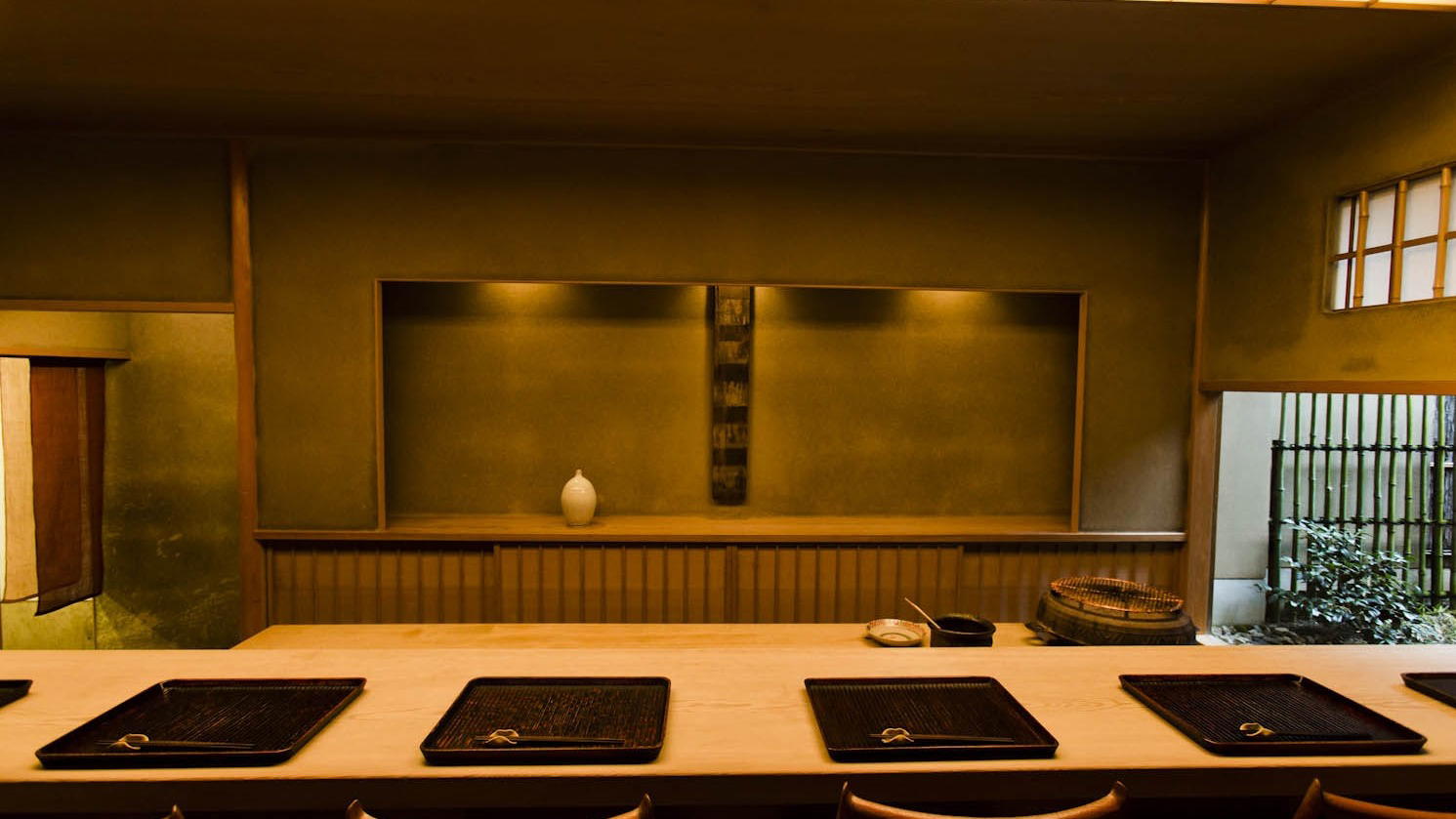
Kappo restaurants in Kyoto have long operated on a particular spatial logic: the kitchen stays hidden, the chef remains unseen, and the food arrives as if conjured. That convention carries weight in a city where culinary form is treated as seriously as culinary content. Oryori Maeshiro, on Owaricho in Nakagyo Ward, works against that default. The chef cooks in full view of guests, a deliberate departure from the Kyoto kappo norm that pushes this address closer to the counter-theatre model more common in Osaka than in the old capital.
The Nakagyo Ward placement is significant. Sitting between the denser tourist circuits of Gion to the south and Kyoto Station to the north, this part of the city carries a quieter residential and merchant character. Restaurants here tend to draw a local and repeat-visit clientele rather than the first-time traveller working through a list. That audience shapes the register of a meal: less performative, more conversational.
Monmona-Ryori: A Dialect for Restraint
The philosophical backbone of the cooking here comes from Kyoto's own culinary dialect. Monmona-ryori is the local expression for cooking that resists over-elaboration, that lets the ingredient speak without intervention. The closest parallel in Osaka is kinari-ryori, which shares the same suspicion of fussy preparation. Both concepts sit within a broader Japanese culinary tradition that prizes the quality of the raw material over the complexity of what is done to it, a tradition that runs from kaiseki at the formal end down through the kappo format where Oryori Maeshiro sits.
Chef trained in Osaka, and his guiding instruction from his mentor, 'light, sweet and deep', functions as a compression of that philosophy into sensory terms. It implies dishes that do not announce themselves loudly, that carry a degree of natural sweetness from quality ingredients, and that leave an impression which outlasts the moment of eating. This is not a reductive approach; restraint executed well requires more precision than complexity does.
Within Kyoto's competitive kappo and kaiseki field, this philosophy places Oryori Maeshiro in a distinct position. Houses like Isshisoden Nakamura and Kikunoi Roan operate at the ¥¥¥¥ tier with kaiseki formats that involve more structured course progressions and formal presentation codes. Oryori Maeshiro's ¥¥¥ pricing and kappo format occupy a different point on that spectrum, more immediate, less ceremonial, with the cooking process itself part of what the guest is there to watch.
The Open Counter as Format Statement
The decision to cook in front of guests rather than behind the kitchen wall is not cosmetic. In Kyoto's kappo tradition, the back-kitchen arrangement has a specific cultural meaning: it signals the chef's confidence that the food alone will carry the experience, without the theatre of preparation as a distraction or a crutch. Oryori Maeshiro inverts that logic. By working openly, the chef makes technique visible, the mise en place, the timing, the adjustments, and invites the guest into the process rather than presenting only the outcome.
This is more consistent with the Osaka kappo style, where the counter is the room and the chef's movements are part of the hospitality. That the chef trained in Osaka before coming to Kyoto gives the format choice a coherent lineage. It is not a gimmick borrowed from another cuisine category but a continuation of a specific regional approach applied in a city where that approach is a minority position. For comparison, Gion Matayoshi and Kenninji Gion Maruyama represent Kyoto's Gion-area dining, where the setting and ceremony tend to operate within more conventional frames.
Michelin Recognition and the Plate Tier
Oryori Maeshiro holds a Michelin Plate in both the 2024 and 2025 guides, consecutive recognition that signals the inspectors consider the cooking quality consistent and worthy of note, even without awarding a star. In practical terms, the Plate designation places a restaurant above the general listings in Michelin's hierarchy while operating below the starred tier. For a smaller kappo operating at the ¥¥¥ level, it functions as a credible quality signal without the booking pressure and price escalation that star recognition typically triggers.
For a format where the counter experience depends heavily on a single chef and the dynamic of a given evening, that consistency matters.
Those interested in comparing starred Japanese restaurants across the region can reference Harutaka in Tokyo, HAJIME in Osaka, or Goh in Fukuoka for a sense of how Michelin recognition operates across different Japanese culinary formats. Closer to Kyoto, akordu in Nara offers a contrasting example of how Western-trained technique intersects with Japanese ingredient sourcing. For more on Kyoto's wider dining scene, see our full Kyoto restaurants guide.
Placing Oryori Maeshiro in the Kyoto Field
Kyoto's restaurant market at the upper-middle tier is dense and stylistically varied. At the ¥¥¥ level, Oryori Maeshiro sits alongside houses like Kodaiji Jugyuan, while the ¥¥¥¥ end of the market runs from formal kaiseki at Isshisoden Nakamura through to high-end contemporary Japanese at Gion Sasaki and Kyokaiseki Kichisen. The Michelin Plate, combined with the open-counter format and a defined cooking philosophy rooted in Osaka training, gives Oryori Maeshiro a clear identity within that field.
For those exploring Japanese counter dining elsewhere in Japan, Myojaku in Tokyo and Azabu Kadowaki in Tokyo provide useful reference points in the capital. 1000 in Yokohama and 6 in Okinawa extend that comparison further geographically. Kyoto's own offering across food, drink, and accommodation is covered in our full Kyoto hotels guide, our full Kyoto bars guide, our full Kyoto wineries guide, and our full Kyoto experiences guide.
Planning Your Visit
| Venue | Format | Price Tier | Michelin | Style |
|---|---|---|---|---|
| Oryori Maeshiro | Kappo, open counter | ¥¥¥ | Plate (2024, 2025) | Osaka-trained, monmona-ryori |
| Gion Sasaki | Kaiseki | ¥¥¥¥ | Starred | Formal Kyoto kaiseki |
| Ifuki | Kaiseki | ¥¥¥¥ | Starred | Formal kaiseki |
| Kikunoi Roan | Kaiseki | ¥¥¥¥ | Starred | Traditional kaiseki progression |
| cenci | Italian | ¥¥¥ | Starred | Contemporary Italian |
Oryori Maeshiro is located at 234 Owaricho, Nakagyo Ward, Kyoto.
Frequently asked questions
What's the signature dish at Oryori Maeshiro?
No specific dishes are documented in current sources for Oryori Maeshiro. The kitchen operates within the kappo format under a monmona-ryori philosophy, cooking ingredients as they are, without over-elaboration. The Osaka-trained chef's guiding principle of 'light, sweet and deep' suggests a menu weighted toward seasonal ingredient quality rather than technically complex preparations. Consecutive Michelin Plate recognition in 2024 and 2025 confirms that the cooking is considered guide-worthy, but specific dishes should be confirmed at the time of booking.
How hard is it to get a table at Oryori Maeshiro?
Oryori Maeshiro operates at the ¥¥¥ tier with Michelin Plate recognition, a combination that typically generates moderate advance booking pressure rather than the months-long queues associated with starred Kyoto kaiseki houses. Planning two to four weeks ahead is a reasonable starting point; during cherry blossom or autumn foliage periods, further in advance is advisable.
What's Oryori Maeshiro leading at?
The address makes the most sense for diners who want to experience Kyoto kappo without the ceremony and price point of the ¥¥¥¥ kaiseki tier. The open counter format, unusual for Kyoto, means the cooking process is part of the experience, consistent with the Osaka kappo tradition the chef trained in. The monmona-ryori philosophy, backed by consecutive Michelin Plate recognition, positions this as a venue where ingredient quality and cooking precision carry more weight than elaborate presentation codes.
The Short List
Comparable options at a glance, pulled from our tracked venues.
| Venue | Cuisine | Price | Awards | Notes |
|---|---|---|---|---|
| Oryori MaeshiroThis venue (the venue you are viewing) | Modern Kyoto Kaiseki | $100–150 | Michelin Plate | Not listed |
| Gion Sasaki | Modern Kaiseki | $300–500 | 3 Michelin Stars · La Liste Top Restaurants | Kaiseki, Japanese |
| cenci | Innovative Italian-Japanese Fusion | $100–150 | 1 Michelin Star · World's 50 Best #76 | Italian |
| Ifuki | Sumibi Kappo Kaiseki | $200–300 | 2 Michelin Stars · La Liste Top Restaurants | Kaiseki |
| Kyokaiseki Kichisen | Kyoto Kaiseki | $200–300 | 2 Michelin Stars · La Liste Top Restaurants | Japanese |
| Kyo Seika | Modern Chinese Fine Dining | $150–200 | 1 Michelin Star · Tabelog Bronze #216 | Chinese |
Recognition history
Dated appearances from independent guides and award organizations, with the underlying list record or original source where available.
Michelin Plate
Michelin
Full recognition history (3 entries)
Michelin Plate
Michelin
Michelin Plate
Michelin
Continue exploring
More in Kyoto
Restaurants in Kyoto
All restaurants in Kyoto →
Bars in Kyoto
All bars in Kyoto →
Hotels in Kyoto
All hotels in Kyoto →
Wineries in Kyoto
Browse all →
Details
- Intimate
- Elegant
- Sophisticated
- Minimalist
- Date Night
- Special Occasion
- Solo
- Chefs Counter
- Open Kitchen
- Sake Program
- Local Sourcing
- Counter Dining
- Tasting Menu
- A La Carte
- Sake
Current opening hours
- Monday
- 5–10 PM
- Tuesday
- 12–3 PM, 5–10 PM
- Wednesday
- 6–10 PM
- Thursday
- 6–10 PM
- Friday
- 12–3 PM, 5–10 PM
- Saturday
- 5–10 PM
- Sunday
- 12–3 PM, 5–10 PM
Hours can change for holidays and private events. Hours as of .
Relaxed and stylish counter seating atmosphere, focusing on the chef's meticulous craftsmanship in a pressure-free hideout.